CONTENT

Chinese smart glasses span AI camera frames, compact information displays, and spatial computing systems. Alibaba, Xiaomi, Huawei, Rokid, RayNeo, and XREAL deserve attention because they approach different tasks, from first-person recording to translation and interactive digital workspaces.
The business opportunity extends across hardware, software, and connected services. China provides a useful setting to study how those layers come together, although product launches alone cannot establish lasting demand. This guide examines documented developments from 2025 and 2026, with particular attention to what each design means in practice.
Mainland China’s AI glasses shipments grew 306% year over year in the first half of 2026. Global shipments reached 4.2 million units, while Meta retained an 81.3% share.
Omdia also identifies mainland China as a supply chain hub and a testbed for new hardware configurations. That combination makes the market relevant to component sourcing and product design as well as finished-device sales.
These figures support a measured interpretation. China is an important center for product experimentation, while one supplier still dominates global AI glasses shipments. Rapid growth also comes from a small base.
Category definitions matter. An AI glasses shipment estimate cannot automatically describe every AR display or XR headset. Any market comparison should preserve the research provider’s product definition, geography, and reporting period.
For a partnership or investment decision, shipment momentum warrants investigation. Repeat use, customer acquisition costs, and service economics still need separate evidence.
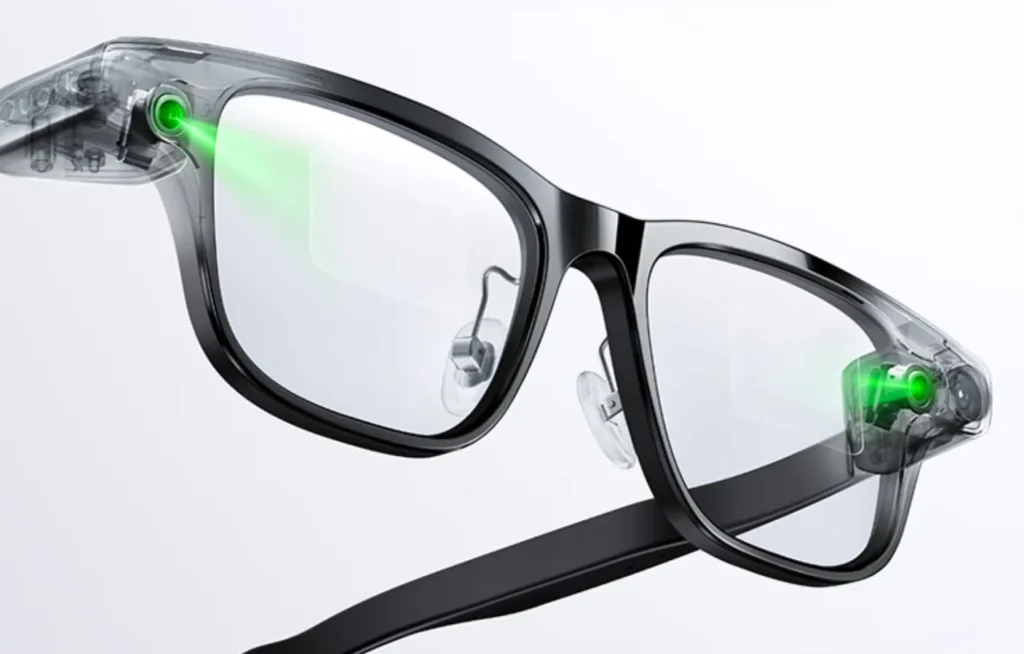
AI describes software capabilities. AR describes digital information presented alongside the physical world. A product can combine both.
The following distinctions help prevent misleading comparisons between devices with different purposes.
| Product Category | Main Role | Important Evaluation Question |
| AI camera glasses | Capture images and audio; provide assistant access | Can the device complete the intended capture or assistant task? |
| Compact display glasses | Present captions, prompts, notifications, or directions | Is information readable and easy to control during the task? |
| Spatial computing glasses | Support larger virtual screens and interactive apps | What processing hardware, connections, and software does the complete system require? |
These categories overlap. A camera, a display, and an AI assistant are separate purchasing criteria, even when one product includes all three.
A virtual monitor and an environment-aware app platform can both appear under AR marketing. Ask the supplier to demonstrate the experience behind the label, including what remains functional when the connected device or service changes.
The six companies below illustrate different approaches. Their product architectures offer a more useful comparison than a single overall ranking.
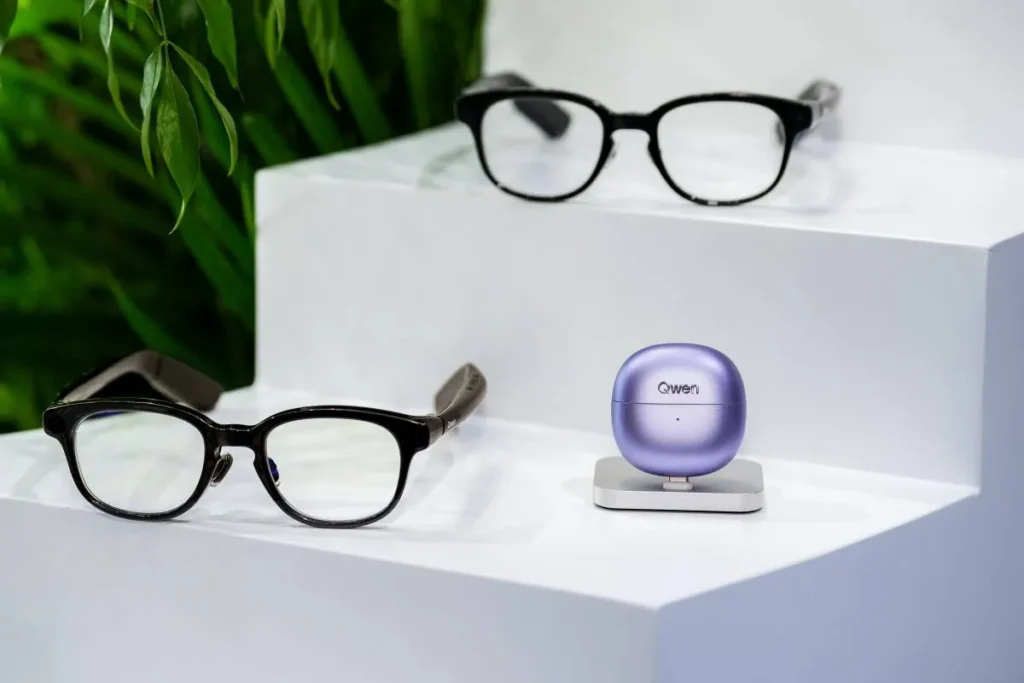
Alibaba’s Qwen N1 series went on sale in China in October 2026. The company’s hardware announcement describes a 50-megapixel sensor, with eye tracking and iris-based payment on the N1 Pro.
That combination suggests a commercial direction: connect what a person looks at with an identifiable, authorized action. The opportunity involves the services behind that action, including product information and transactions.
A potential partner should verify the supported payment flow, account requirements, and territory. The Pro’s documented capabilities also require separate consideration from the standard N1.

Xiaomi’s 2025 interim report documents the June 2025 launch of its 40-gram AI glasses. The company lists a 12-megapixel camera, third-party video calls, livestreaming, and open-ear audio.
Its current HyperConnect documentation also describes using the glasses as a camera in supported calls and livestreams, subject to connection and account requirements.
This makes Xiaomi worth studying for content workflows. A product demonstration could show the employee’s perspective while leaving both hands free. The useful test is how easily footage reaches the team’s existing communication and publishing tools.
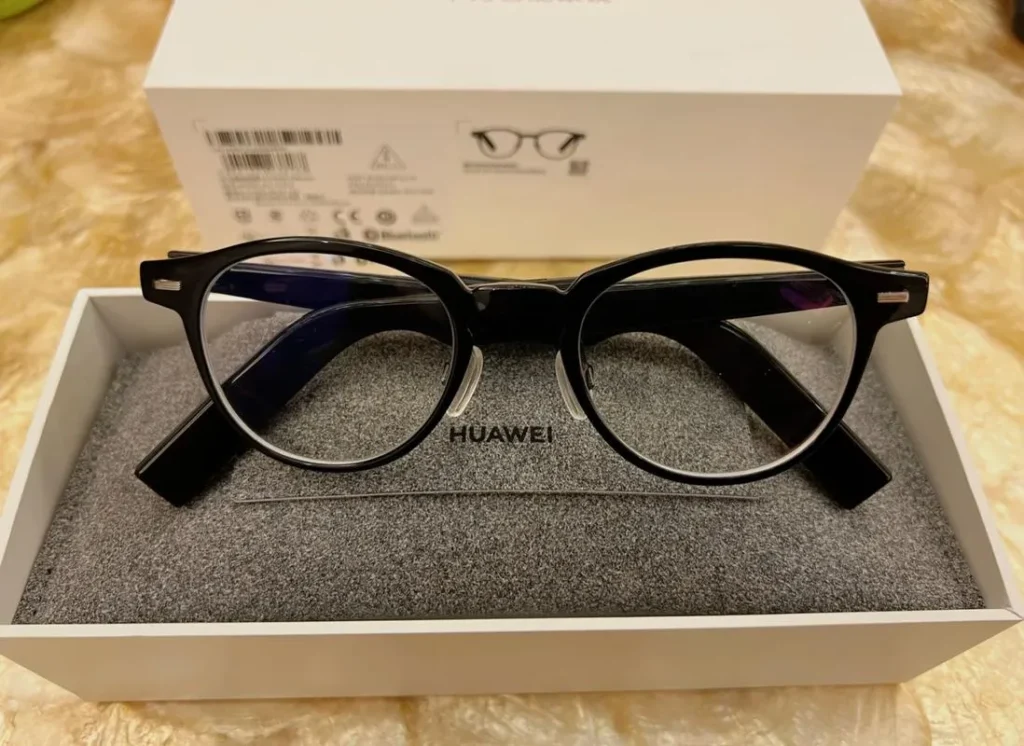
Huawei’s 2026 AI glasses combine a camera with voice assistance and connected services. Its support documentation reveals a material restriction that broad product comparisons can miss.
The compatibility list dated October 1, 2026 requires supported phones running HarmonyOS 6.0.0.130 or later. Devices outside the supported list receive Bluetooth calling and music functions, without the full camera, video, and AI capabilities.
For a business deployment, the existing phone fleet therefore shapes the potential user base. Budget calculations should include any required handset changes, not just the glasses’ purchase price.
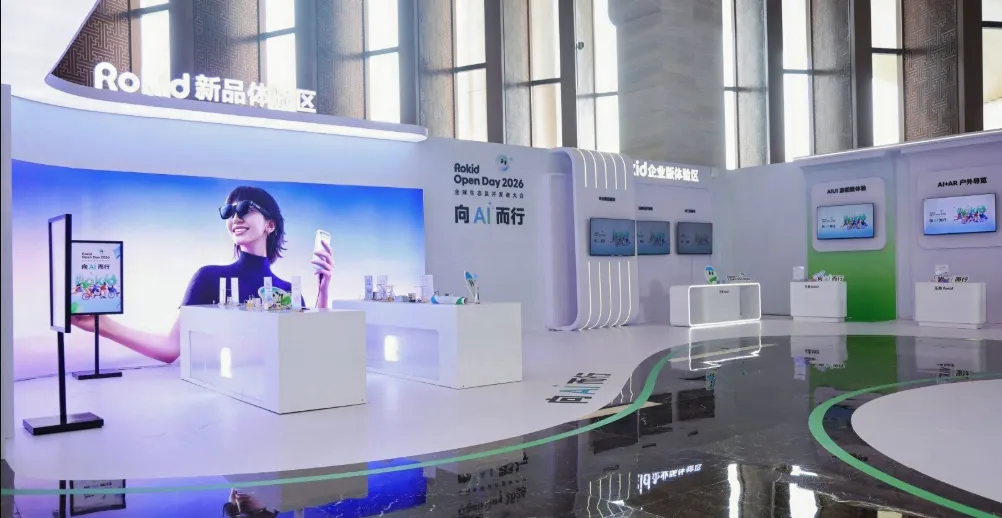
Rokid introduced Glasses 2 on October 27, 2026. Its official Glasses 2 page documents meeting notes, call translation, prompting, navigation, and several control methods, including ring interaction.
The less obvious issue is input. A useful display still needs a practical way to select, confirm, and move through information. Voice commands may suit one setting; touch or ring controls may suit another.
A trial should measure accidental actions and confirmation errors. Those results can reveal more about operational usefulness than the length of a feature list.
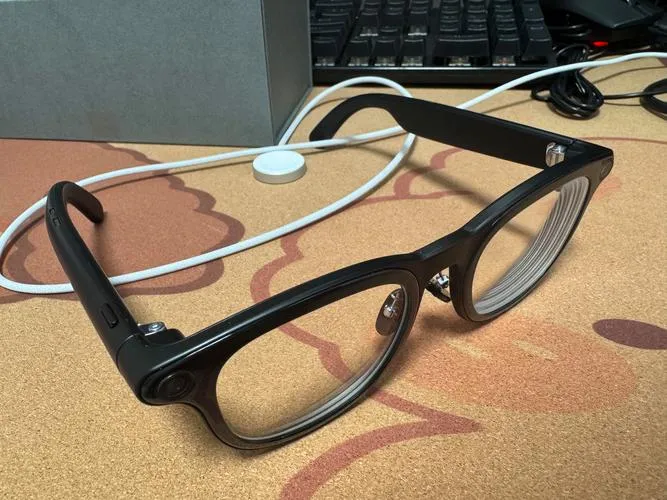
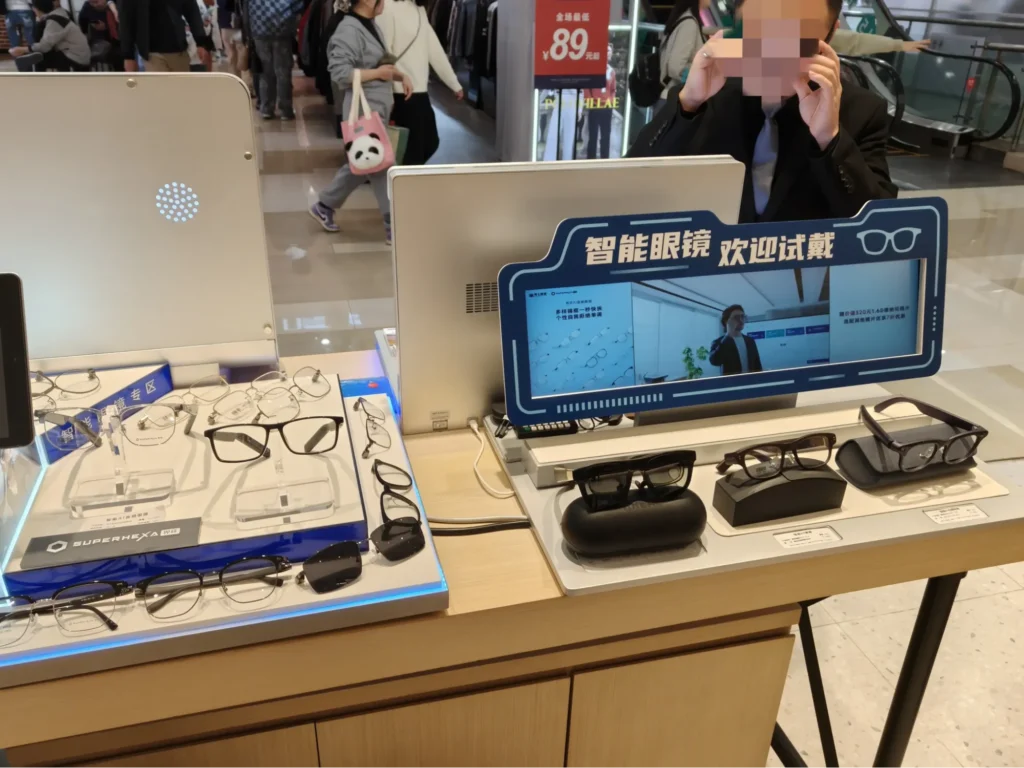
RayNeo’s current range shows why brand-level comparisons can mislead. The iO uses a monochrome display without a camera. The X3 Pro combines full-color MicroLED displays, cameras, and Google Gemini assistance.
This gives buyers distinct options for information access and visual AI. A team can consider a display without automatically accepting image capture.
Audio still needs attention. RayNeo markets recording and meeting notes on iO, so a camera-free design still calls for a review of recording permissions and data handling. The appropriate configuration depends on the information a workplace permits the device to collect.
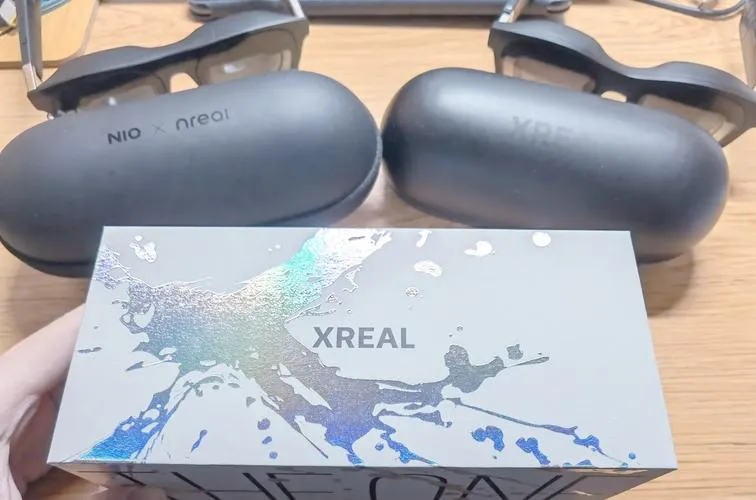
XREAL AURA combines Android XR glasses with a separate computing Puck. XREAL lists 95 grams for the glasses and 265 grams for the Puck: 360 grams combined before other accessories.
That distinction matters when comparing wearable comfort with total equipment carried. The Puck supplies processing, connectivity, battery power, and a touchpad.
As of this review, the US store expects shipping to begin in batches in mid-November 2026. That remains an estimate. AURA deserves attention for its software platform and spatial workflows, with the complete wired setup central to any evaluation.
These designs suggest that commercial value depends on who controls the completed task. Hardware, operating systems, AI models, identity checks, and connected services can involve different companies.
For Chinese smart glasses, a useful partnership review maps those dependencies before discussing scale. Who can change service access? Who sets AI usage charges? Who owns the customer relationship after a transaction?
A practical pilot should then follow one recurring job end to end, such as a showroom demonstration or supplier walkthrough. Compare completion time, errors, and participant acceptance with the existing process. Repeat the trial after the initial novelty fades.
Record the support burden too: setup minutes, training time, failed sessions, and help requests can reveal costs that a successful demonstration hides.
Request evidence of continued use and support requirements before expanding. That approach turns China’s product experimentation into a concrete learning opportunity and gives the next purchasing or partnership decision a defensible basis.
An opportunity in Chinese smart glasses starts with clear questions about users, competitors, and commercial partners. ChoZan’s China research, expert calls, and learning expeditions help businesses investigate China’s innovation and its practical relevance.
Explore ChoZan’s reports for broader context, or book a consultation to scope a focused research or learning project.
Some models support prescription solutions. RayNeo lists a Lensology option for X3 Pro. Confirm your prescription range, astigmatism support, lens-fitting process, and return conditions before ordering, since custom lenses can change purchase terms.
Offline support depends on the exact feature. Ask the seller to demonstrate your intended task with internet connections disabled. Confirm translation, saved media, recording, and AI assistance separately before relying on the device during travel.
Test your own terminology before relying on translation. Include product names, figures, accents, and overlapping speakers in the demonstration. Ask a fluent colleague to check the output, and retain human review for consequential discussions or decisions.
Request battery results for your intended activity, including continuous recording or translation. Ask which settings, network connection, volume, and display brightness the test used. A standby figure doesn’t show how long an active session lasts.
Check the exact model’s protection rating and care instructions. Huawei lists IP54 protection for its AI glasses and advises against water sports. It also warns users to avoid charging wet glasses and notes that protection can decline.
Some advanced services carry recurring charges. RayNeo’s iO page distinguishes free assistant access from paid access to additional models. Check the included functions, usage limits, billing currency, and cancellation process before comparing the total ownership cost.
Some platforms provide developer tools. RayNeo documents Unity and Android ARDK support for X3 Pro’s Creator Mode. Confirm hardware access, SDK versions, distribution rules, and required permissions before committing engineering resources to a specific application or integration.
Start with the manufacturer’s fit guidance and a measured interpupillary distance (the distance between your pupils). XREAL offers separate AURA sizes. Confirm the correct range and try the fit before extended use whenever possible.
Confirm that the seller supports your delivery country, the companion app is available locally, and the advertised services work with your account. Request written warranty and return terms, including responsibility for international repair shipping costs.
Ask how the device exports transcripts and summaries, which file formats it supports, and how you delete recordings. Test names and speaker labels, then confirm your team can transfer useful notes into its existing systems.