CONTENT

BGI Genomics is a Shenzhen-based company providing genome sequencing, genetic testing, and integrated laboratory solutions. Its activities span research services and clinical applications in reproductive health, cancer, and infectious diseases.
Its strategic relevance comes from the connections between these activities. BGI’s recent announcements show a Chinese technology model that combines instruments, laboratory automation, bioinformatics, and local medical delivery. Its financial results and trade restrictions expose the commercial limits.
The useful starting point is understanding which organization supplies each part of that system.
The listed company’s formal English name is BGI Genomics Co., Ltd. Its 2025 annual report identifies MGI and BGI Research as related parties, separate from its subsidiaries. That distinction matters when assessing ownership, products, or contractual responsibility.
| Organization | Principal role in the system |
| BGI Genomics | Research services, medical testing, and integrated testing solutions |
| MGI | Sequencing instruments, reagents, and related life science tools |
| BGI Research | Scientific research and methods development |
The group’s 2025 milestones document research activity, while the October 2026 federal notice separately describes the commercial entities’ activities.
A sequencing instrument purchase, a research collaboration, and a clinical testing agreement therefore require different assessments. A familiar brand name cannot establish which organization holds the relevant obligations.
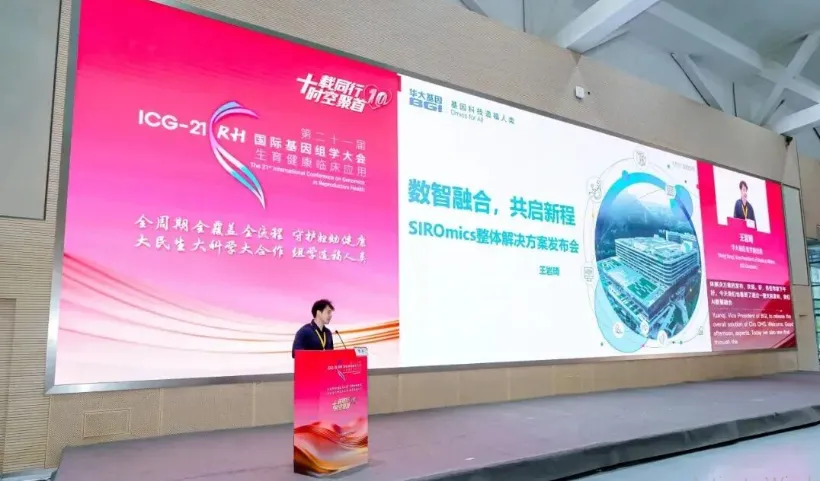
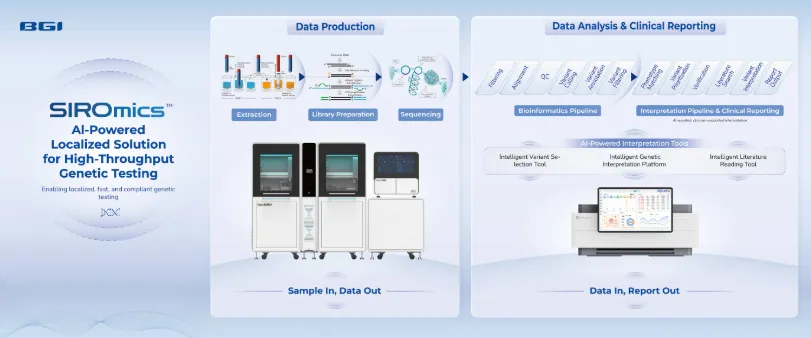
In March 2026, BGI introduced SIROmics, an integrated system for local clinical sequencing workflows. The company describes two connected components: laboratory automation for sample preparation and sequencing, and software for analysis and reporting.
GenSIRO supports sample preparation, library construction, and sequencing setup. Halos provides the analysis environment, including AI-assisted OmicsOne tools for variant selection, interpretation, and literature review. These are company-described capabilities, rather than independently measured performance results.
The commercial implication is practical. BGI DNA sequencing can form part of an ongoing laboratory operation, with software support, training, and workflow integration becoming part of the purchasing decision. Buyers should examine responsibility for each handoff, from sample acceptance to report approval.
A February 2026 Chinese announcement describes an OmicsOne upgrade for newborn genetic screening. It supports local case databases, links sequencing findings with verification results, and offers interfaces to hospital information systems.
The less visible opportunity lies in interpretation infrastructure. Hospitals need to manage evidence, review previous cases, and maintain consistent reporting as knowledge changes. Software that fits those routines can create value beyond the initial sequencing run.
For population genomics projects, the same operating questions deserve attention: how teams document findings, maintain analytical versions, and connect genomic data with approved clinical information. These are evaluation criteria, rather than evidence that one platform guarantees better outcomes.
BGI’s report for the first nine months of 2026 shows 26.21% growth in comprehensive precision medicine testing solutions. Total company revenue grew 0.69% over the same period.
The explanation deserves close reading. BGI says it is moving from independent clinical laboratory services toward an in vitro diagnostics model. Reagent sales for hospital-based testing enter the solutions segment, while external testing services sit elsewhere. The company links the transition partly to policies governing samples sent outside medical institutions.
The figures suggest that delivery location and revenue classification are changing together. Segment growth alone cannot establish equivalent growth in patient demand. A useful assessment would compare test volumes, installed systems, reagent consumption, and revenue per customer.
The 2025 annual report places 84.60% of revenue in mainland China. It also reports an annual loss and cites price pressure, slower customer payments, and delivery-center adjustments as causes.
The first nine months of 2026 brought positive attributable net profit, but operating cash flow remained negative.
This creates a useful distinction between technical scale and financial performance. A large service network still needs attractive contracts, reliable collections, and sufficient laboratory activity. Lower sequencing costs provide only part of that equation.
Customer types also change the economics. A research institute may fund a defined project; a hospital laboratory needs continuity across routine testing. An assessment should therefore examine procurement cycles and repeat activity alongside headline customer counts.
In September 2026, BGI announced that its Mexican partner, Géntodos, had opened a genomics laboratory in Mexico City. The announcement traces the project to cooperation agreements signed in November 2025.
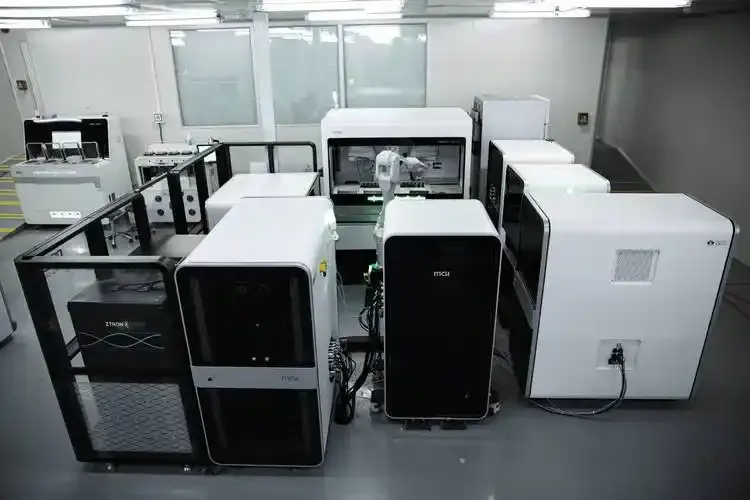
The laboratory combines local sample processing, sequencing, analysis, interpretation, and clinical support. BGI says it will provide technical support for phased technology transfer, assay implementation, validation, and laboratory capability development.
This example illustrates a possible route for Chinese technology abroad: supply the operating system for local delivery. The local partner contributes market access and clinical relationships, while the technology provider helps establish laboratory capability.
The announcement establishes a deployment milestone. It does not establish profitability, reimbursement coverage, or national adoption. Those measures would determine how far the model can expand commercially.
A prospective partner should map operating responsibilities before agreeing on technology transfer. The agreement needs to name who hires specialists, maintains instruments, approves assay changes, and funds downtime. These details determine how much local capability the project actually creates.
A buyer should establish where remote support can access data, who authorizes secondary use, and what happens when the agreement ends.
A local server addresses one architectural question. Consent, access permissions, retention, subcontractors, and research reuse require their own contractual answers. Teams should request a data-flow diagram covering the laboratory, software provider, support staff, and any downstream research partner.
The U.S. government added BGI Genomics, MGI, and BGI Group to the UFLPA Entity List in October 2026 over alleged links to forced labor. The notice applies a rebuttable presumption against importing goods produced by listed entities.
BGI rejected the allegations in its October 29 statement. It said U.S. business represented a limited share of its operations and did not expect a material operational impact. That remains the company’s assessment.
Procurement teams need to assess the specific entity, goods, destination, and applicable restrictions before committing. Technical capability and procurement eligibility require separate checks.
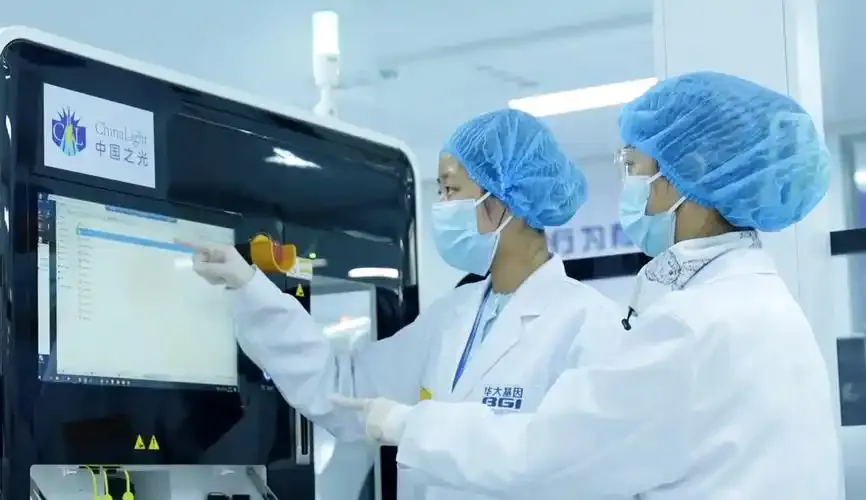
A partnership should start with one defined workflow and a measurable pilot. Acceptance criteria should cover operational performance and the cost of changing suppliers.
A practical pilot should measure cost per accepted report, sample failure rates, repeat work, staff time, and evidence review quality. Teams should also test data portability. The pilot budget should include the hospital’s integration costs and the vendor’s recurring charges.
BGI Genomics raises broader questions about how Chinese technology becomes a workable business model. ChoZan offers China research, expert dialogues, learning expeditions, and strategy workshops to investigate those questions.
Start with our China reports, or book a consultation to define the market, operating model, or partnership you want to examine.
BGI trades on the Shenzhen Stock Exchange under stock code 300676. Its Chinese listed name is 华大基因. Use that identifier when retrieving exchange filings, because searches for the wider BGI brand can return other organizations.
The company’s 2026 third-quarter report states that its products are available on JD Health’s platform. Check the specific listing for eligibility, sample collection arrangements, report scope, and clinical support before ordering a test for personal use.
In August 2026, BGI announced that its NIFTY NIPT library-preparation kit received CE-IVDR certification (Certificate No. V13 125836 0004 Rev. 00) from TÜV SÜD Product Service GmbH. Buyers should verify the certificate’s exact product scope, intended purpose, and applicable regional requirements.
A high-risk NIFTY result indicates increased risk, not a confirmed diagnosis. BGI’s October 2026 guidance advises genetic counseling and consideration of confirmatory diagnostic testing. Your clinician can explain the appropriate next step for your situation.
Request a project-specific quotation that separates sequencing, analysis, shipping, storage, and optional follow-up work. Provide the sample count, required coverage, and intended output. Compare quotations against the same acceptance criteria so scope differences remain visible.
Ask for a written schedule defining when the turnaround clock starts and what constitutes delivery. Include clear milestones for sample quality checks, repeat preparation, analysis, and clinical interpretation. Confirm how failed samples affect the agreed timeline.
Specify the required outputs before signing: raw reads, quality-control summaries, alignment files, variant files, and the analysis report as relevant. Agree on formats, reference versions, transfer methods, and any charges for retrieving archived files later.
BGI’s research services page labels its offering for research use, with exceptions only where specifically stated. A clinical application needs confirmation of the exact assay’s intended use, local authorization, laboratory requirements, and qualified medical interpretation.
The search phrase bgi beijing genomics institute can blur two names. The Beijing Institute of Genomics belongs to the Chinese Academy of Sciences. Confirm the institution’s identity separately from the listed BGI commercial company.
Use the company’s official inquiry channel and provide your research question, sample type, sample count, and requested analysis. Ask the responding team to identify the contracting laboratory and confirm service availability in your project’s jurisdiction.