CONTENT

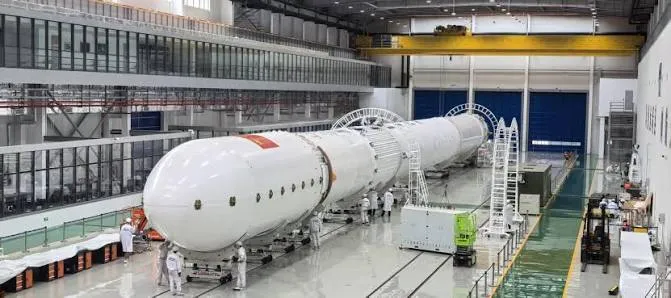
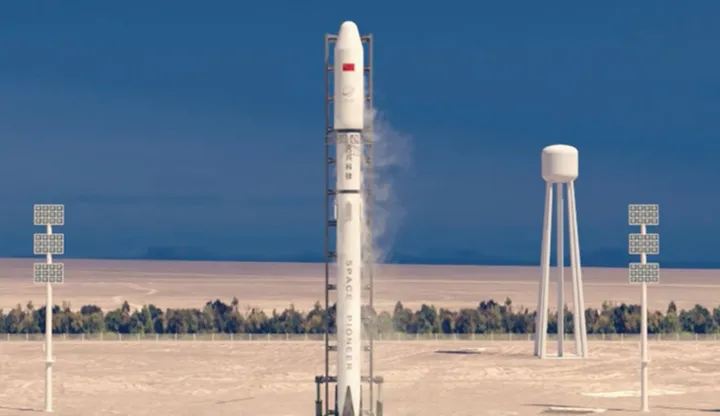
Tianlong-3 is a large liquid-fueled rocket from Space Pioneer (also known as Tianbing Technology), designed for bulk satellite deployment and first-stage reuse. Its April 3, 2026 maiden flight failed.
In September, the company said it had completed assembly and testing of its second vehicle, with a return planned for the fourth quarter. This review found no verified subsequent launch result through October 29.
The business significance extends across satellite deployment, industrial production, and infrastructure. The program shows how China’s technology ambitions encounter the engineering and operational demands of commercial delivery.
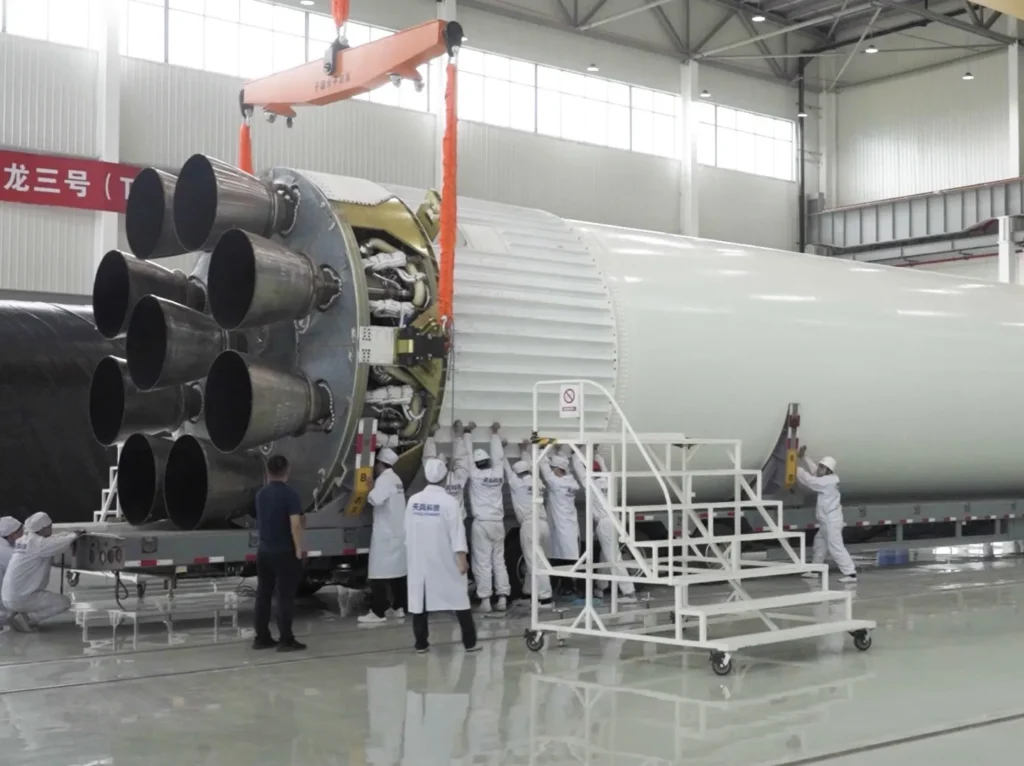
This Tianlong rocket targets missions carrying large batches of satellites. It is designed to carry 17–22 metric tons to low Earth orbit and has a nine-engine first stage.
| Specification | Published design figure |
| Height | 72 meters |
| Diameter | 3.8 meters |
| Liftoff mass | Approximately 600 metric tons |
| Propellant | Liquid oxygen and kerosene |
| First-stage propulsion | Nine TH-12 engines |
| Low Earth orbit payload | 17 to 22 metric tons |
| Sun-synchronous orbit payload | 10 to 17 metric tons |
A quoted payload range needs an accompanying mission definition. The requested orbit and flight configuration determine the capacity relevant to a customer. A satellite operator should request the performance allocation for its particular mission before building a deployment schedule around the maximum figure.
This distinction matters commercially because available lift determines how many launches a deployment plan requires. It also prevents comparisons that place different mission assumptions in the same capacity column.
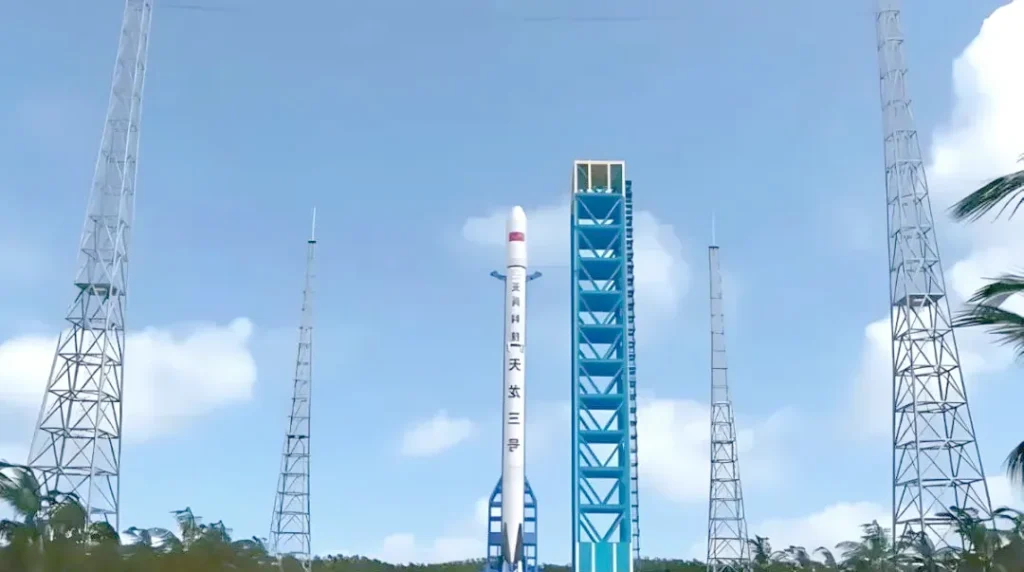
The September failure review identified a chain of interacting problems. According to findings, discharged liquid oxygen flowed toward the rocket’s base. It triggered secondary combustion involving exhaust from the engine turbine.
Heat damaged a connection in the protective skirt, allowing hot gas into the first-stage aft compartment and causing a fire.
This explanation shifts attention toward the interaction between airflow, exhaust, thermal protection, and structural connections. Each subsystem can pass a ground test, but the assembled vehicle faces a different environment in flight.
The commercial lesson concerns acceptance testing. A supplier assessment should examine evidence that interfaces work together under representative conditions. Individual component performance provides only part of that evidence.
In a September 13 interview with Cailian Press, assistant chief designer Zhang Jianhong described changes to oxygen discharge direction, thermal protection, pipe routing, and sensor coverage. He also reported an approximately 200-second hot-fire test of the improved configuration.
Additional sensors matter because the next flight must produce useful diagnostic data alongside its mission result. An engineering program needs enough information to explain deviations and carry lessons into subsequent vehicles.
The Chinese Tianlong 3 program addresses a practical challenge:
How to package and release a large satellite batch safely?
On October 24, 2025, the company conducted a 36-satellite separation test at its Zhangjiagang manufacturing base. Its October announcement described an integrated connection and release system using shape-memory-alloy unlocking mechanisms.
The mechanism deserves attention beyond the satellite count. A launcher must hold its cargo securely through ground handling and ascent, then release it predictably. The release interface therefore becomes part of the service that a satellite customer must evaluate.
A November 18, 2025 update reported completed transport and vibration tests alongside the earlier separation work. The test assembly included simulated satellites, separation hardware, and rocket structure.
These details reveal the work between a payload specification and a deployable service. Ground movement, structural loads, and connections all enter that process. The tests establish progress in ground qualification; orbital deployment remains a separate milestone.
For commercial payloads, a useful next question concerns compatibility: which satellite designs fit the qualified arrangement, and what changes require additional testing? A successful standard configuration can create value through repeatability, while customer-specific modifications can add work and schedule pressure.
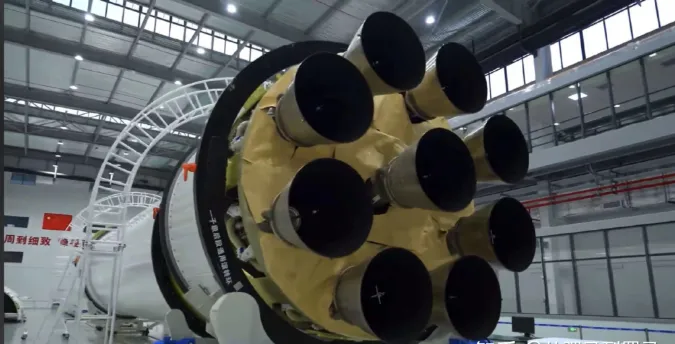
The manufacturer’s current catalog lists a reuse objective of at least 20 uses. That figure expresses a design ambition. It does not establish a demonstrated refurbishment cycle or a proven operating cost.
The Space Pioneer Tianlong 3 program needs an economic record alongside its engineering record. Relevant measures include recovery success, inspection requirements, replacement parts, refurbishment labor, and time between missions.
A reusable launch business also needs enough customers to keep recovered hardware active. A stage that waits months for another mission spreads its capital cost differently from one that returns to service quickly.
The appropriate commercial comparison therefore concerns the complete delivery cycle. Lower hardware replacement requirements could create savings, but operators must account for recovery operations, maintenance, and the performance allocation needed for return. These are evaluation criteria, rather than established savings for this vehicle.
On October 9, 2025, the company announced nearly RMB 2.5 billion (US$350 million) in Pre-D and D financing. The company said it would use the proceeds primarily for rocket and engine production preparation, materials procurement, and next-generation rocket and engine development.
The stated use of funds is commercially revealing. Liquid engines, vehicle structures, and production materials require an organized supply chain before repeated deliveries can begin. Capital committed to production preparation signals the scope of that task.
Factory capacity and delivery capacity require separate assessment. A production plan should show how teams accept components, track serial numbers, control design revisions, and investigate defects across batches.
The Space Pioneer rocket program illustrates why these questions belong in technology assessments. A design change after flight testing must reach supplier instructions, manufacturing documents, inspection procedures, and assembled inventory. Otherwise, the organization can reproduce an earlier configuration while assuming it has implemented the correction.
This is an analytical implication of the program’s development stage. Public financing announcements alone cannot establish production yield, delivery cadence, or profitability.
China’s commercial space policy increasingly addresses the infrastructure behind individual vehicles. The China National Space Administration’s 2025 to 2027 action plan, published in November 2025, calls for greater access to research facilities, public technology platforms, and stronger safety oversight.
In April 2026, the agency published its first equipment-sharing list. It covered 20 items across eight categories. Rocket-related categories included aerodynamic testing, propulsion-system testing, engine testing, and recovery verification.
The strategic implication is that launch competition depends partly on access to expensive validation infrastructure. Shared facilities could reduce duplicated investment and improve access to specialist testing. Actual value will depend on availability, scheduling, fees, and technical suitability.
The next research step is concrete: ask
Those answers can reveal opportunities in China’s launch industry before any single rocket establishes a regular flight schedule.
ChoZan helps businesses learn from China through research, expert dialogues, learning expeditions, and strategy workshops. If Tianlong-3 raises questions about industrial scaling or technology adoption, explore our China research services and expert calls.
Our reports library offers a starting point for broader research. Book a consultation to define the questions that matter to your business.
The Chinese name is 天龙三号, while the manufacturer’s English catalog uses TL-3. Chinese-language searches can help locate dated technical announcements. Check the vehicle designation carefully because related models have separate product pages and development claims.
No. The manufacturer’s current catalog lists them as separate vehicles. Its TL-2 page marks that model as supporting no reuse. Specifications, test results, and mission records should stay attached to the correct vehicle designation.
The maiden flight launched from the Dongfeng Commercial Space Innovation Test Zone in the Jiuquan area. A September 15, 2025, sea-based integrated first-stage propulsion-system hot-fire test took place at the Oriental Aerospace Port in Haiyang, Shandong. The two events took place in different locations and involved different types of testing.
The reviewed sources do not establish a confirmed commercial launch price. Request a mission-specific quotation covering integration, testing, launch support, and contractual remedies. A published cost target cannot establish the amount a customer will pay.
The reviewed 2025 and 2026 evidence does not establish crew certification or an operational passenger service. Readers should distinguish satellite-launch specifications from human-spaceflight approval. A manufacturer’s separate transport concept cannot establish passenger readiness for this vehicle.
No. A customer should also confirm physical dimensions, attachment points, electrical connections, vibration limits, and separation requirements. Ask for the applicable payload interface documentation before assuming a satellite fits a launcher solely because its mass falls below a published limit.
It is a launch vehicle intended to transport satellites. An internet service requires a separate satellite network and operating arrangements. The rocket’s deployment ambitions do not establish consumer coverage, subscription availability, or ownership of a particular constellation.
In the reported review process, guiling requires engineers to identify the problem, explain its mechanism, reproduce it, verify corrective measures, and check related risks. Completion indicates closure of that review process, rather than a new flight result.
Customers should ask separately about payload coverage. China’s 2025 action plan calls for a mandatory insurance system and third-party liability cover. The actual policy must specify insured property, exclusions, compensation limits, and the covered mission period.