CONTENT

The Wenchang Space Launch Site is a coastal rocket launch facility in Hainan, southern China, serving national space missions. Its low latitude, maritime access, and ocean-facing launch routes support large launch vehicles and demanding missions.
The business significance extends across the surrounding industrial district. Wenchang offers a concrete example of China’s technology development through coordinated infrastructure: launch facilities, manufacturing, marine operations, and satellite services.
The useful question is how these parts work together, and which capabilities have reached commercial operation.
The Wenchang spaceport story involves three related entities. They serve different functions, so their launch totals, construction announcements, and business activities require separate treatment.
| Entity | Function | What to examine |
| National launch site | National missions, including space station cargo flights and lunar program development | Mission readiness and rocket-specific facilities |
| Wenchang Commercial Space Launch Site | A separate launch facility serving commercial space activity | Pad compatibility, preparation schedules, and service availability |
| Wenchang International Aerospace City | The surrounding industrial development area | Manufacturing, research, testing, and satellite data businesses |
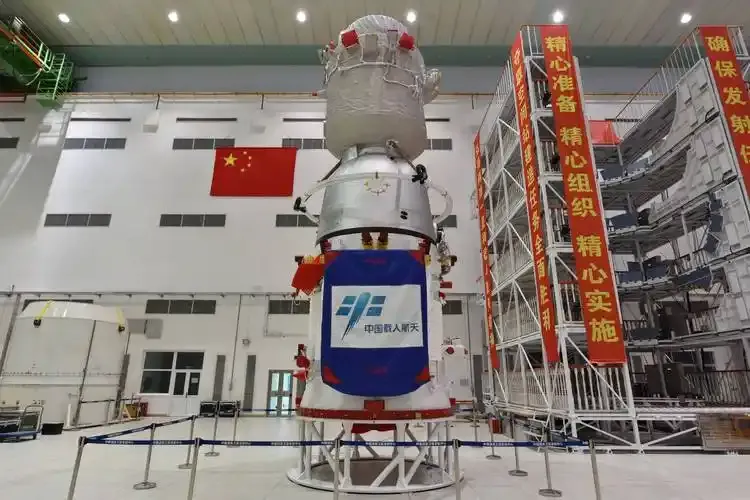
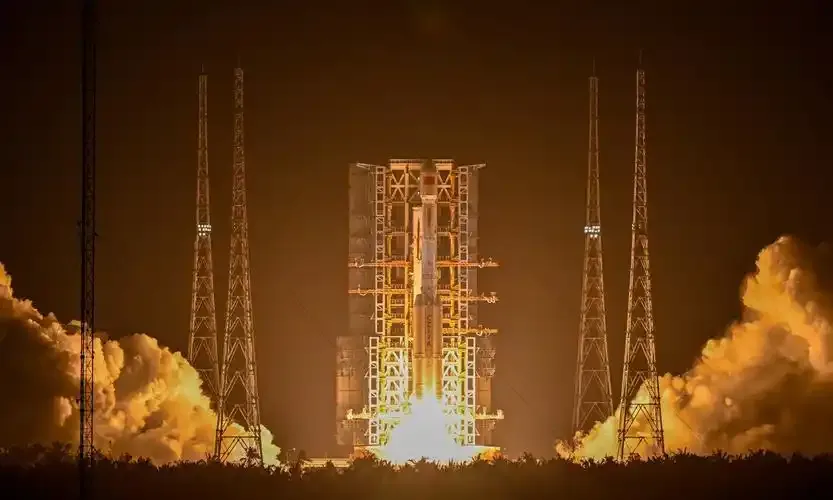
The national site’s work includes different kinds of technical readiness. Tianzhou-10 departed on a Long March 7 in May 2026. A Long March 10 demonstration and Mengzhou spacecraft abort test took place there in February.
Wenchang’s geography affects the physical work of getting spacecraft into orbit. Its advantages extend through transport, launch operations, and recovery.
In an Economic Daily interview published in April 2025, an aerospace city official explained how low latitude helps launches take advantage of Earth’s rotation. The precise advantage depends on the mission and target orbit.
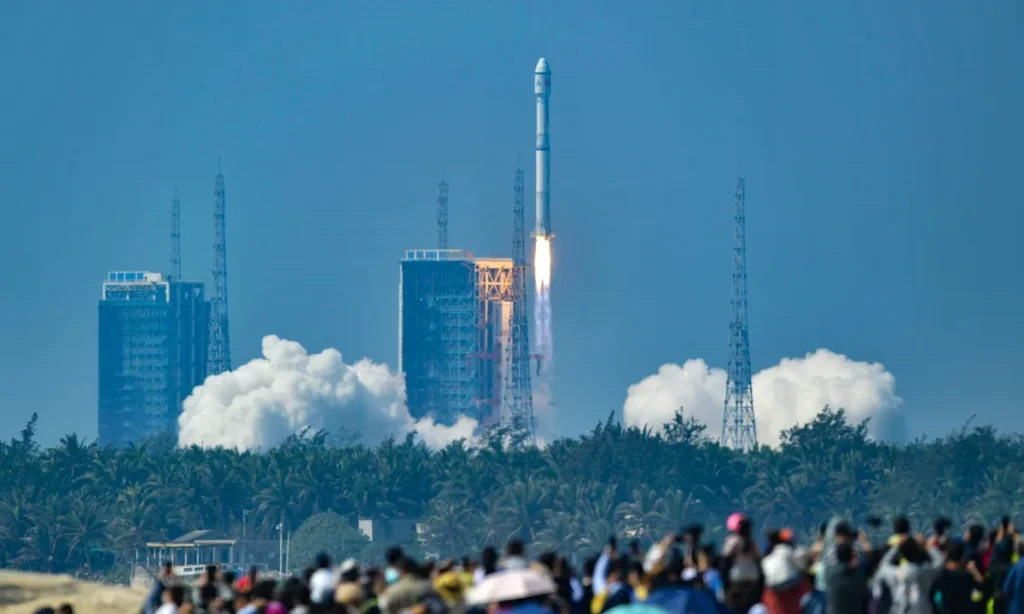
Sea access adds a practical benefit for heavy-lift rockets. Large rocket sections can be shipped to the coast. Hainan Daily’s August 2026 reporting identifies maritime delivery of large-diameter rockets as a local advantage.
The commercial implication is straightforward: production planning must include the journey to the launch facility. A suitable port, transfer roads, handling equipment, and available launch slots should be part of the same delivery plan.
The coastal setting also supports recovery operations. Official reporting records the Long March 10B’s first-stage recovery on a seaborne platform during its July 10, 2026 mission. That demonstrated recovery capability; repeat flights and refurbishment costs remain separate measures of commercial performance.
For an industrial project, that changes the transport question. Port handling, suitable vessels, and the final transfer to the assembly facility become part of the production plan.
The location also brings heat, humidity, salt spray, and typhoons.
A site assessment should therefore examine corrosion protection, backup power, and weather recovery procedures alongside transport access. Geography influences both launch performance and the work required to keep equipment available.
A less visible dependency is industrial gas supply. In January 2026 coverage, a representative of local supplier Fengli Gas explained that shorter delivery distances help manage transport risk, time, and cost. Local teams can also respond when launch dates change.
This illustrates a broader lesson from China’s industrial clusters: proximity has value when suppliers must adjust to the same operating schedule.
The engineering around the rocket deserves attention. Wenchang’s commercial launch pads show how ground systems can influence the time between missions.
The commercial site’s second pad uses a general-purpose design that accommodates rocket diameters from 3.35 to 5 meters.
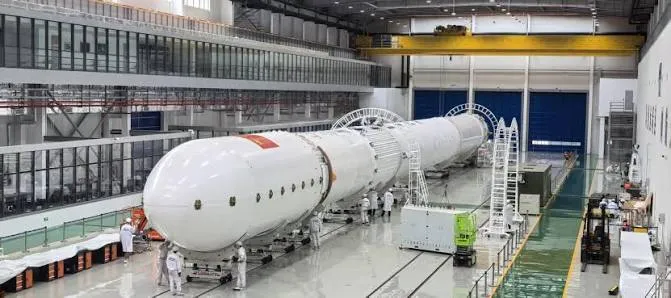
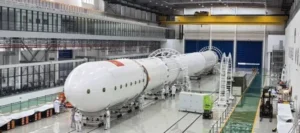
Its operating method also matters. The 2025 Economic Daily report describes horizontal assembly, testing, and transfer before the rocket rises into launch position. This shifts much of the preparation work away from the pad.
The commercial implication is greater scope to share expensive launch infrastructure across rocket programs. Customers should still confirm compatibility for their specific vehicle. A diameter range alone cannot establish that every interface and operating procedure has completed qualification.
Headline turnaround figures can describe different stages of a launch campaign. In January 2026, CASC reported an 18-day launch preparation and testing process for Long March 8A. The developer described seven days for preparation and seven days for restoration as ongoing objectives.
That distinction matters for delivery commitments. Request separate figures for total campaign duration, time occupying the pad, and restoration after launch. A short pad stay can coexist with substantial testing elsewhere.
The surrounding aerospace city seeks to capture more of the work before and after launch. Two developments show the direction and its current limits.
Official coverage in January 2026 described a satellite factory with an announced annual capacity of 1,000 satellites. At the August 17, 2026 briefing, local officials reported that the satellite super factory had entered trial production.
At the August 17, 2026 briefing, officials said the satellite super factory had entered trial production and targeted its first satellite rollout alongside launch readiness for commercial pads 3 and 4 before year-end.
On September 29, the main work on the two new pads was completed, and joint rehearsals began; CASC said it remained on schedule to achieve launch capability before year-end.
The factory’s proximity to launch facilities could reduce transfers between manufacturing, testing, and final delivery. That is the operating rationale. Buyers need to establish which production lines, inspection processes, and acceptance procedures are actually available.
Useful evidence includes completed customer deliveries, production yields, and confirmed testing slots. Facility size and annual design capacity answer different questions from those measures.
The province announced on August 25, 2026, the opening of an international aerospace data service hub in Wenchang. Its stated remit includes cross-border satellite data processing and international applications.
This creates another way to assess the district. A software or analytics business can investigate data availability and customer applications without manufacturing flight hardware.
Commercial questions include image quality, delivery speed, permitted uses, and a customer’s willingness to pay. A hub opening establishes infrastructure and institutional intent; recurring demand requires evidence from paying users.
On July 10, 2026, CASC reported a successful Long March 10B launch and first-stage recovery. The rocket delivered its satellite to orbit, while a net-equipped offshore platform captured the returning booster.
A less visible detail appears in CASC’s account of the marine operation: eight vessels supported the mission. They included the recovery platform, a tug, a command vessel, two support vessels, and three guard vessels. The recovery platform required towing because it lacked its own propulsion.
This shows how reusable launch systems create work across marine logistics, communications, inspection, and equipment maintenance. The operation depends on coordination among businesses with very different skill sets.
The account also specifies Sanya as the recovery platform’s return destination. That route reminds us to map the full service network, including ports outside Wenchang, when assessing the region’s capabilities.
Successful recovery is one engineering milestone. Commercial economics also depend on inspection findings, refurbishment expense, and repeated flights. A procurement team should request those measures before assuming any reuse savings.
Reliability deserves its own assessment. The Long March 7A mission from the Wenchang Space Launch Site failed on August 10, 2026. That event concerns a specific vehicle and mission; it should not become an unsupported judgment about every nearby facility.
For a potential project, begin with three questions:
The Wenchang spaceport offers a useful study in infrastructure coordination. Its strongest lesson for other technology industries is practical: identify the shared bottleneck, specify the interfaces, and measure the service customers actually receive. Those measures make China’s industrial progress easier to evaluate and its transferable lessons easier to apply.
The Wenchang space launch site raises practical questions about industrial coordination and technology commercialization. ChoZan helps teams investigate China’s business and innovation practices through:
Explore its China reports or book a consultation to discuss a focused research brief or learning program.
Confirm the exact facility before booking. Public launch viewing, educational attractions, and access to operational areas require different arrangements. Ask the named venue to confirm current access, identification requirements, and the activities included in your visit.
Yes. A June 2026 provincial government report describes overseas visitors watching launches along the coast. Confirm eligibility directly with any organized facility tour, since public coastal viewing doesn’t guarantee access to every attraction.
Some coastal viewing areas are free, according to the province’s tourism coverage. Before buying a package, ask what the charge covers, such as transport, seating, commentary, or venue admission, and request the cancellation terms in writing.
Start with dated announcements from the mission agency and rocket developer, including CASC’s official updates. Check again shortly before departure. Treat a third-party calendar as a planning aid until the responsible organization confirms the mission window.
Beijing time runs eight hours ahead of UTC. A launch shortly after midnight in China therefore falls on the previous UTC date. Check the time zone before comparing reports or arranging transport to a viewing venue.
Your travel bookings and viewing package may have different change terms. CNA documented families missing a rescheduled launch in August 2026. Keep your itinerary flexible and establish refund or rebooking options before committing to fixed arrangements.
Yes. CNA’s 2026 reporting documents children attending an introductory space video session and touring an iSpace facility. Ask organizers about current availability, suitable ages, language support, and activities that can proceed without a scheduled rocket launch.
As of September 26, 2026, the latest verified notice remains the August 23 postponement. Authorities stated that the mission could not use its planned 2026 window. The announcement supplied no replacement launch date.
Jiufeng Energy disclosed that its local project supplied liquid hydrogen for the commercial site’s March 2025 Long March 8 mission. This confirms one supplier’s documented role, while each rocket’s propellant requirements need separate verification.
Yes. Beihang University announced a January 2026 agreement with HICAL covering research collaboration, an intelligent launch demonstration zone, and joint talent development. These are agreed cooperation areas; the announcement does not establish completed research outcomes.