CONTENT

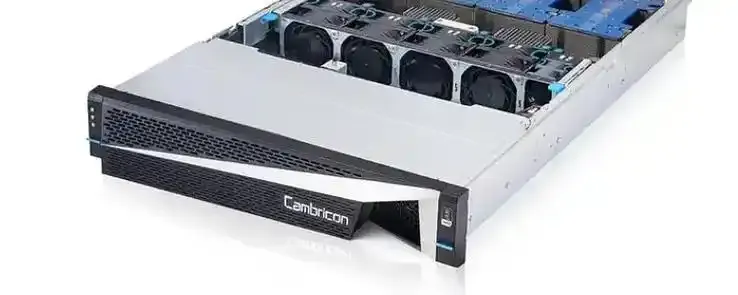
Cambricon is a Chinese AI chip designer whose MLU platform supports model training and AI inference, the computation behind deployed AI services. Its commercial opportunity centers on providing an alternative computing platform as China develops its AI capabilities.
In its October 2026 investor presentation, the company described an integrated portfolio spanning chips, boards, and supporting software.
The business question is where that platform can run useful workloads reliably and economically. Recent revenue growth and software ecosystem participation deserve attention. Supply constraints and implementation costs still require careful assessment.
Inference turns a trained model into a service that answers questions, processes documents, or supports other applications. For this article’s strategic assessment, it provides a useful test of commercial competitiveness:
Can an alternative platform deliver acceptable results at an acceptable operating cost?
A customer support assistant and an overnight document processing service impose different requirements. The assistant needs responsive answers during demand spikes. The document service may tolerate slower individual responses if it completes the workload economically.
Large language model serving also has two stages. The system first processes a prompt, then generates output tokens sequentially. Time to first token captures the initial wait, while time per output token captures the subsequent generation pace.
A headline tokens-per-second result can conceal a mismatch with your request mix. Ask for both measurements under representative conditions, including the document lengths and simultaneous requests your application will handle.
Current benchmarking reflects that diversity. The September 2026 MLPerf Inference v6.1 release added benchmarks for end-to-end retrieval-augmented generation and edge agentic inference workloads. Such system-level evaluation offers a stronger purchasing framework than a processor specification alone.
The opportunity for domestic compute therefore varies across workloads. A supplier can earn business in a defined application before proving competitive across every model or deployment setting.
The company’s third-quarter filing documents substantial commercial growth. Its unaudited results for January through September 2026 show:
| Metric | First nine months of 2026 |
| Revenue | RMB 9.53 billion [US$1.42 billion] |
| Net profit attributable to shareholders | RMB 3.71 billion [US$553 million] |
| Net cash from operating activities | RMB 227.6 million [US$33.9 million] |
Revenue increased 106.76% year over year, while attributable net profit increased 131.49%. However, operating cash flow was about 6.1% of attributable profit, based on the filing.
That gap deserves attention alongside growth. It makes inventory management, collection timing, and procurement commitments useful follow-up questions. These accounts establish sales momentum; they do not identify an inference revenue share or prove a performance advantage over Nvidia.
Software determines how much engineering work a hardware purchase creates. The less familiar the platform, the more important its framework support, debugging tools, and upgrade process become.
In its December 2025 software update, the company described NeuWare support for PyTorch, Triton, and vLLM optimization. It also discussed migration and profiling tools, including tools to check numerical accuracy and identify performance bottlenecks.
The PyTorch Foundation announced Cambricon’s Platinum membership on September 7, 2026. The announcement describes contributions across compilation, runtime, distributed computing, and profiling.
Our interpretation is that this development matters because adoption depends partly on integration with tools developers already use. Participation in a shared framework can reduce maintenance friction.
Membership alone cannot establish deployment quality. The useful commercial questions concern supported software versions, unresolved compatibility issues, and responsibility for fixing failures after an upgrade.
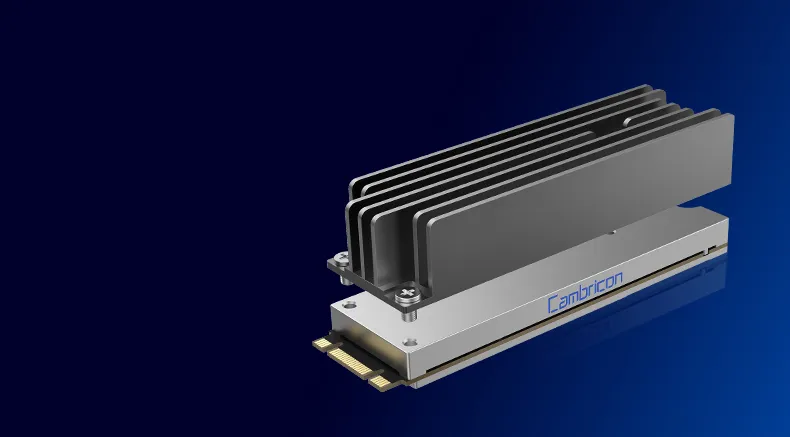
The semiconductor supply chain introduces constraints beyond chip design. The company’s 2025 annual report describes a fabless operating model that outsources wafer fabrication, packaging, and testing.
High-bandwidth memory, or HBM, is one pressure point. A 2026 report indicated that rising memory costs have prompted higher processor prices from Chinese suppliers. Its sources described a 20% to 30% increase for the tentatively named 690; the company did not comment.
Treat that report as a reason to obtain dated quotations, rather than as an official price list. A proposed hardware saving needs reassessment if component costs change before delivery.
Export controls add another source of uncertainty. In January 2026, BIS changed its licensing policy for Nvidia H200, AMD MI325X, and similar chips to conditional, case-by-case review.
That event illustrates why procurement plans should track dated rules and specific products. Chip design progress, manufacturing access, and legal access to competing products need separate assessments.
A useful comparison starts with the application and a defined service target. Ask each supplier to evaluate the same model, software configuration, input lengths, and demand pattern. Otherwise, apparently comparable performance figures may describe different operating conditions.
| Evaluation area | Evidence to request |
| Load tolerance | Response times during expected demand and sudden traffic spikes |
| Output quality | Results on representative tasks under the proposed configuration |
| Operating cost | Server, power, software, support, and migration costs |
| Delivery | Contracted quantities, acceptance criteria, and replacement arrangements |
Product status also needs discipline. At the October 26 earnings briefing, management withheld specific shipment figures and schedules for the 690 and sixth-series products.
A Cambricon AI chip assessment should therefore distinguish a demonstrated configuration from a proposed roadmap. Request a pilot on hardware the supplier can actually deliver, with written acceptance criteria.
The pilot should include upgrade, restart, and failure recovery tests. Ask the supplier to name support owners and document what happens if a model update breaks deployment. A successful demonstration needs an operating plan before it becomes a production commitment.
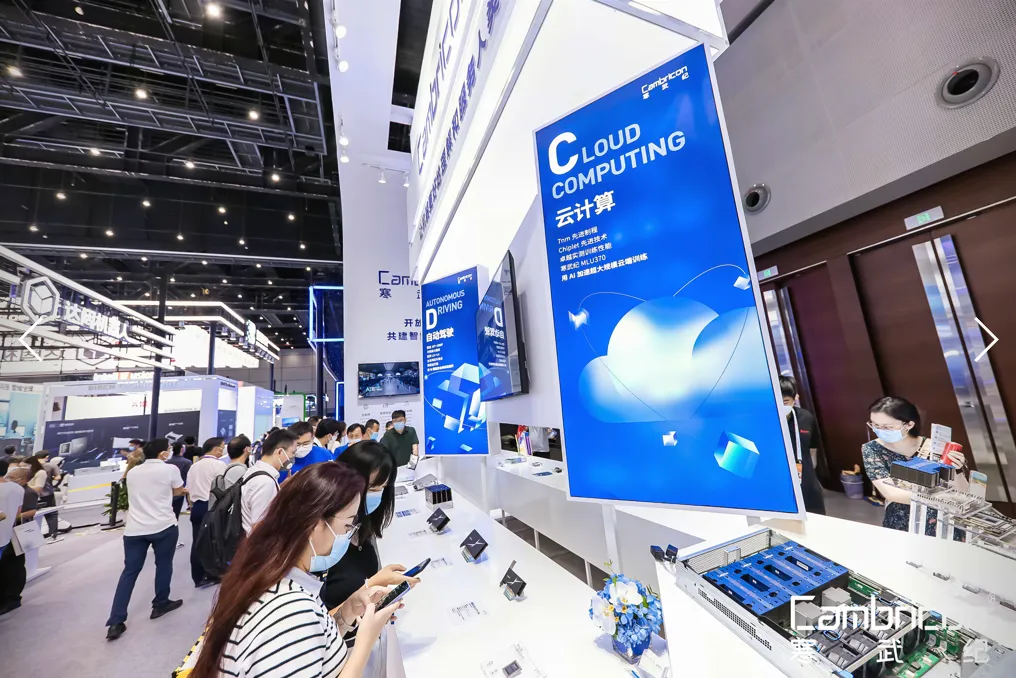
The strategic lesson extends beyond replacing one processor brand. China’s progress offers a case study in connecting hardware development, software integration, and customer requirements under supply constraints. Each layer creates a different commercial question.
A software company can investigate the engineering cost of supporting another backend. A cloud buyer can compare service quality across available infrastructure. A strategy team can assess where demand creates opportunities for integration, testing, or technical support.
These are areas to investigate, rather than automatic market opportunities. The next step should match a specific operational need.
For operations spanning several markets, define service requirements consistently while allowing infrastructure choices to vary. That makes local alternatives easier to compare without assuming one platform must serve every region. This approach can preserve purchasing flexibility while keeping regional operations accountable to shared standards.
Cambricon raises wider questions about China’s technology capabilities and their business relevance. ChoZan offers China research, expert calls, and learning expeditions to support that investigation. Our report collection provides additional context.
Explore these resources or discuss a focused research brief with the team to identify which developments deserve closer assessment. Book a consultation to explore the questions that matter most to your business.
Yes. The company trades on the Shanghai Stock Exchange’s STAR Market under stock code 688256. Use that identifier when checking regulatory announcements, since English news coverage may appear later than the original Chinese filings.
Its Chinese brand name is 寒武纪, and its legal name is 中科寒武纪科技股份有限公司. These names help you locate original financial reports, investor questions, and company notices that English searches may miss or summarize incompletely.
The December 2025 developer update describes optimization work for DeepSeek and Qwen model families. Confirm the exact model release, accelerator, software version, and deployment configuration before assuming that support extends to your chosen implementation.
Its October 2026 investor presentation describes a supplier of chips and supporting software, rather than a seller of final AI applications. For a chatbot purchase, identify the application provider and its separate service commitments.
The reviewed sources do not establish broad international retail availability. Request written confirmation of authorized distribution, delivery destination, warranty coverage, technical support, and applicable trade requirements before assuming a domestic quotation applies to an overseas purchase.
Start with the official developer community and the company’s GitHub organization. Check release dates and version compatibility carefully, since public repositories may show older packages than those discussed in recent software announcements or supplied commercially.
The October 2026 earnings presentation identifies Chen Tianshi as chairman and general manager. For governance checks, consult the latest exchange disclosures, which distinguish board responsibilities, management roles, and changes that short company profiles may omit.
No. The October 2026 operating update identifies revenue targets within its employee equity incentive framework. Such targets define performance conditions; they do not establish secured orders, completed deliveries, or guaranteed financial results for future periods.
The 2026 third-quarter filing lists government grants among nonrecurring items. Compare attributable net profit with the figure excluding nonrecurring gains and losses, then review the notes to understand the accounting treatment and reporting period.
No. Ask for a dated customer announcement, exchange disclosure, or reference you can verify directly. Distinguish model compatibility, a trial, an initial order, and recurring production use; each supports a different level of commercial confidence.