CONTENT
China’s embrace of renewable energy after 2025 has been nothing short of spectacular. China’s renewable energy rollout is redefining the global energy landscape and shifting the axis of power toward clean technology.
Government policies, massive investments, and cutting‑edge engineering have converged to transform China from a fossil-fuel-reliant economy into a world‑leading clean‑energy powerhouse.
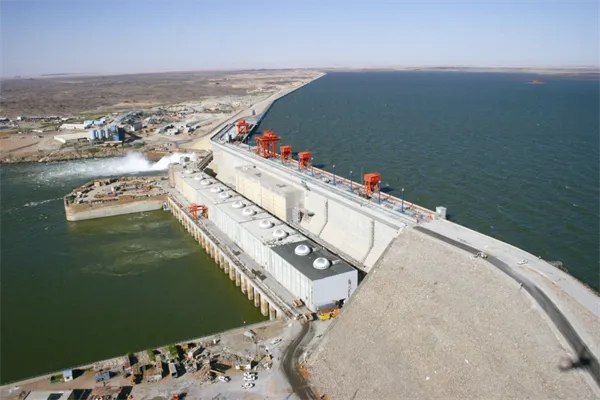
Recent data confirm that renewable energy has become central to China’s power system. By the end of 2025, the country’s total installed renewable energy capacity had reached approximately 2.34 TW (2,340 GW), accounting for more than 56% of China’s total installed power generation capacity.
Renewable electricity generation also reached a record 3.76 trillion kWh during the year, supplying 35.6% of the nation’s total electricity output.
The rapid expansion of renewable energy contributed to the first annual decline in thermal power generation in a decade, with coal-fired electricity generation falling by about 1% despite record-high electricity demand, signaling that China’s power-sector emissions are beginning to plateau.
The momentum continued into 2026. National Energy Administration (NEA) statistics released in April 2026 show that total installed solar generation capacity reached 1,234 GW, while wind capacity rose to 650 GW.
With combined renewable capacity exceeding coal for the first time, China’s total power generation capacity stood at 3,950 GW. The renewable boom is expanding across all provinces, with 311 GW of solar and 119 GW of wind added in 2025 alone.
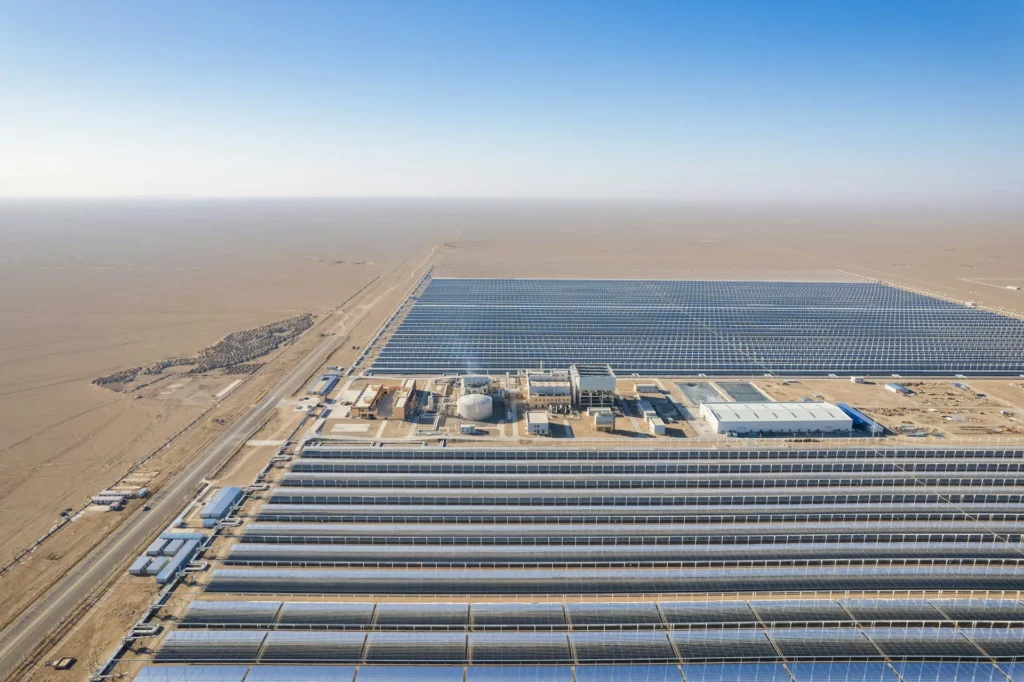
China’s solar expansion remained unparalleled in both pace and scale throughout 2025. During the year, the country installed a record 315 GW of new solar photovoltaic (PV) capacity—more than half of all new solar capacity added globally—bringing its cumulative installed solar capacity to around 1.2 TW (1,200 GW) by the end of the year.
Solar power generation increased by 43% year over year, helping drive China’s total clean electricity generation to 4,326 TWh in 2025. Together with wind power, solar played a central role in expanding the share of renewable electricity in the national grid, reducing reliance on coal-fired generation despite continued growth in electricity demand.
China’s solar module makers continue to drive down costs and deploy next‑generation technologies such as TOPCon and perovskite cells. The expansion has also turned China into the heart of the global solar supply chain. According to an analysis compiled in 2025, Chinese firms manufacture over 80 % of the world’s solar panels.
Their dominance in polysilicon, wafers, cells, and modules has made solar equipment more affordable worldwide. The government, however, now faces the challenge of managing overcapacity and consolidating producers while maintaining international competitiveness.
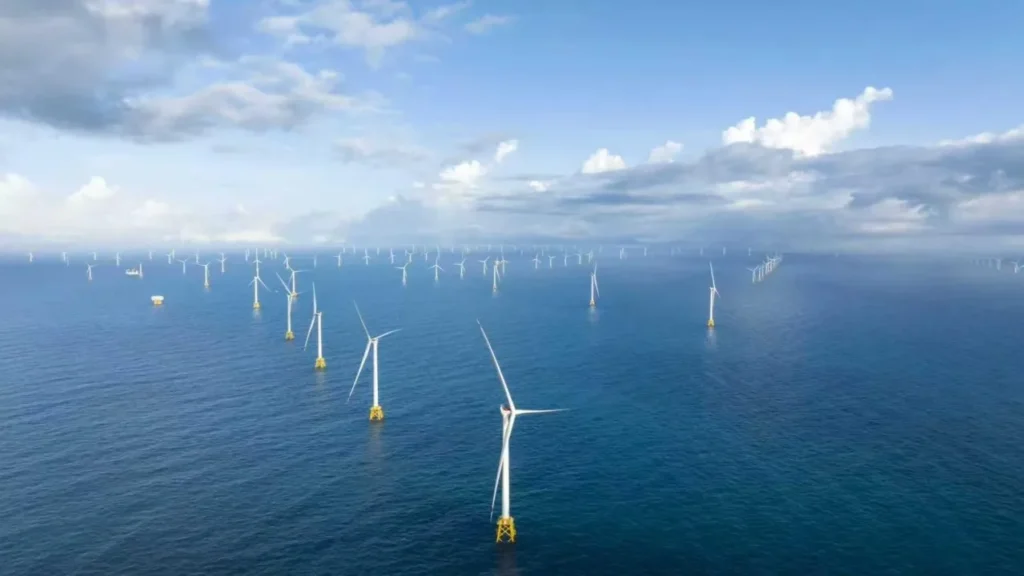
Wind power remained a cornerstone of China’s renewable energy expansion throughout 2025. During the year, China added a record 119 GW of new wind capacity, accounting for nearly 73% of all new wind installations worldwide. By the end of 2025, the country’s total installed wind capacity had reached approximately 640 GW, maintaining its position as the world’s largest wind power market for the 15th consecutive year.
Annual wind electricity generation surpassed 1 trillion kWh for the first time, highlighting the growing role of wind in China’s electricity mix and supporting continued investment in both onshore expansion and offshore wind innovation.
Growth is strongest across northern and coastal provinces, with Inner Mongolia, Gansu, and Hebei leading on resource quality. In 2025, wind and solar combined overtook coal capacity for the first time, showing how quickly China’s power mix is changing.
In February 2026, China Three Gorges Corporation connected the world’s first 20 MW offshore wind turbine to the grid at the Zhangpu Liuao Phase 2 project in Fujian.
Co-developed with Goldwind, the turbine has a 300 m rotor diameter, 147 m blades, and an expected annual output of more than 80 GWh, enough for about 44,000 households. Offshore wind capacity could reach around 150 GW by 2035.
China’s 2035 NDC targets 3.6 TW of installed wind and solar capacity, roughly triple the 2025 level. To support this, the policy encourages more than 200 GW of annual wind and solar additions from 2025 to 2027. Analysts expect wind additions to average about 120 GW per year over the next five years, reinforcing China’s position as the world’s largest wind market while increasing pressure for faster grid upgrades.
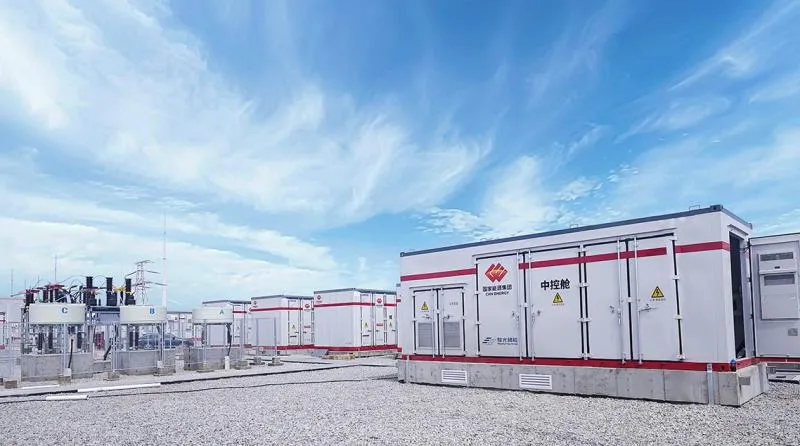
China is scaling storage to support rapid renewable deployment. In December 2025, cumulative installed energy storage capacity reached 213.3 GW, up 54 percent year on year. New energy storage, mainly lithium-ion batteries, accounted for 144.7 GW, up 85 percent. Average discharge duration rose to 2.58 hours in 2025.
Large grid-connected projects now dominate the market. Independent storage facilities make up 58 percent of new energy storage deployments. Pumped hydro still provides about 31.3 percent of total storage capacity and remains important for long-duration balancing. The Special Action Plan for Large-Scale Construction of New Energy Storage targets more than 180 GW of new storage capacity by 2027.
Hydrogen is also entering the storage mix. The National Energy Administration’s 2025 hydrogen pilot initiative supports green hydrogen projects using electrolyzers with a capacity of at least 100 MW, powered by more than 80 percent renewable energy.
It also includes hydrogen pipelines of at least 100 km, liquid hydrogen plants producing 5 tonnes per day, and hydrogen or ammonia co-firing at coal plants with blend rates of at least 10 percent.
China’s 2025 Energy Law gave renewables a stronger legal role in energy planning, grid dispatch, and consumption. The 14th Five-Year Plan also required energy from sources other than fossil fuels to exceed 20 percent of primary energy consumption by the end of 2025.
The 2035 NDC raises the next benchmark. China now targets more than 30 percent of its energy from sources other than fossil fuels and 3.6 TW of combined wind and solar capacity by 2035.
Implementation is moving through demand rules, industrial policy, and market reform. NDRC draft measures add minimum renewable consumption quotas for industrial sectors. Zero-carbon industrial parks and green certificates help companies verify clean power use. In 2025, the national emissions trading system expanded to steel, cement, and aluminum, covering more than 60 percent of national CO₂ emissions.
Pricing is also changing. Since mid 2025, new renewable projects have moved from fixed subsidies to competitive bidding. Provinces are also requiring storage for new solar and wind projects. NEA guidance sets renewable consumption at 1.1 billion tonnes of standard coal equivalent in 2025 and 1.5 billion tonnes by 2030.
China’s renewable energy policy now centers on dispatch, demand, storage, and industrial consumption.
China remains the world’s largest clean energy investor. Clean energy technologies accounted for more than 90 percent of investment growth in 2025, with solar, wind, batteries, EVs, and green hydrogen becoming core economic sectors.
China also dominates global output. It supplies about 60 percent of the world’s wind turbines and 75 percent of EVs and their batteries. In energy storage, Chinese lithium-ion cell shipments reached 612 GWh in 2025.
Grid investment is rising as the buildout progresses. State Grid planned to invest about USD 90 billion in distribution networks in 2025 to support renewable integration, storage, and new power market participation.
China’s green technology leadership now depends on manufacturing depth and system integration. Battery firms are scaling up sodium-ion, solid-state, compressed-air, and flow-battery projects. Industrial policy is also pushing companies beyond equipment exports toward full renewable ecosystems, including project development, financing, and operation.
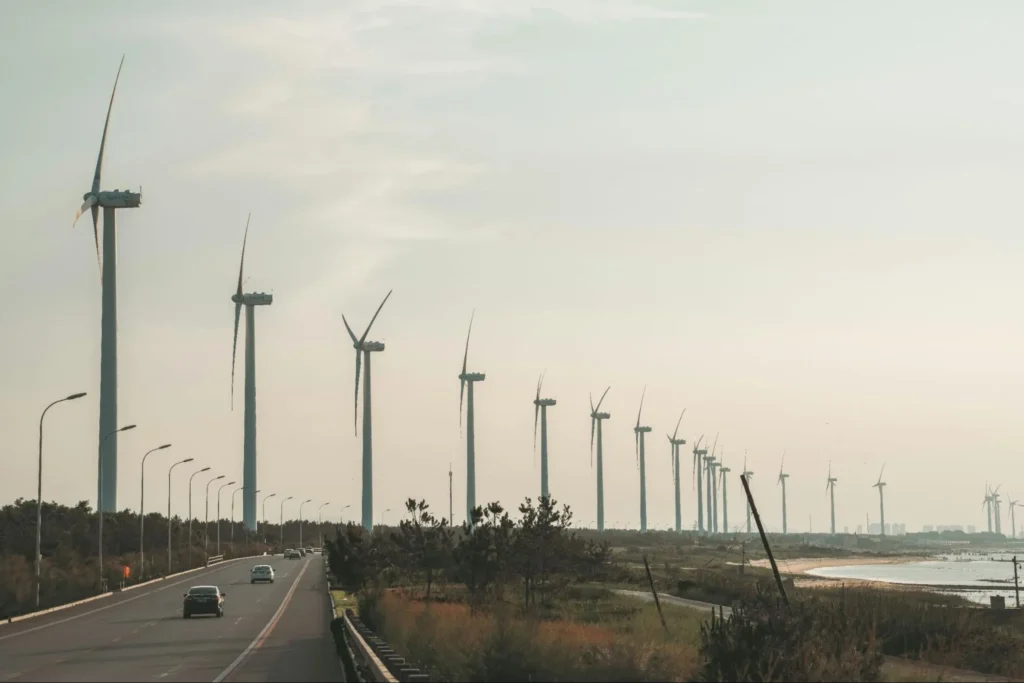
China’s renewable buildout now depends on grid flexibility. If sources other than fossil fuels reach 63 percent of the power mix in 2026, China will need stronger transmission, better forecasting, storage, demand response, and more flexible dispatch.
Coal capacity remains a constraint. New coal additions of 80-100 GW in 2025 could weaken demand for renewable power contracts and slow coal retirements. Capacity payments and spot market pricing are being introduced to reward flexible resources.
Regional imbalance adds pressure. Western provinces have strong solar and wind resources, but transmission limits still create curtailment risk. China is responding with grid-friendly project design, direct supply of green power, local consumption models, and zero-carbon industrial parks.
Solar overcapacity is also forcing consolidation, quality upgrades, and stronger technology discipline.
China’s renewable energy trajectory makes an emissions peak before 2030 increasingly realistic. If renewable capacity continues to expand while total energy demand growth slows, clean power can meet more of the new demand across industry, transport, and buildings.
Electrification is central to this shift. Electricity already plays a larger role in final energy use, and it could reach about 30 percent by 2030 as EVs, heat pumps, industrial electrification, and digital infrastructure scale.
The 15th Five-Year Plan keeps green growth at the center of China’s energy strategy. Priorities include green hydrogen, advanced batteries, large-scale storage, zero-carbon industrial parks, and cleaner industrial power use. Fossil fuels will continue to support energy security, but coal plants face pressure to improve efficiency through biomass co-firing, ammonia co-firing, and carbon capture pilots.
China’s renewable energy buildout is moving from policy ambition to real industrial execution. ChoZan helps global leaders understand what this shift means for strategy, innovation, supply chains, and market opportunity.
Through China innovation tours, executive briefings, research, and expert calls, ChoZan turns China’s fast-moving green technology ecosystem into practical business insight. Book a consultation to explore what China’s clean-power transition means for your organization.
Companies can buy renewable electricity in China through green power trading, green electricity certificates, or direct procurement arrangements where available. The right route depends on the province, load profile, reporting needs, and the clarity with which consumption can be documented.
China’s green electricity certificates prove the environmental attributes of renewable power generation and consumption. For corporate buyers, they help document clean electricity claims, support ESG reporting, and separate verified renewable use from simple electricity procurement.
Green power trading buys renewable electricity and its related environmental value together. Green certificates can verify renewable attributes separately, so companies must check retirement rules, timing, location, and reporting compatibility before using them for claims.
Yes, foreign-owned factories in China can use verified renewable electricity for Scope 2 reporting when records match accepted accounting standards. Buyers should keep contracts, certificates, meter readings, proof of cancellation, and local market documentation together.
Virtual power plants support China’s integration of renewable energy by coordinating rooftop solar, batteries, EV chargers, and flexible industrial loads. This helps grid operators shift demand, reduce curtailment, and use distributed clean power more efficiently.
Yes, solar panels from China can be reliable for commercial renewable projects when suppliers provide bankable warranties, third-party test reports, traceable bill of materials, and recognized certifications. Lowest-price modules still need careful quality checks.
Buyers should check factory identity, module certifications, warranty terms, production capacity, shipping documents, tariff exposure, and after-sales support before importing photovoltaic panels from China. A pre-shipment inspection helps catch quality issues before payment closes.
China’s solar panel pricing changes quickly because polysilicon costs, factory utilization, export demand, shipping rates, and technology upgrades shift in tandem. Buyers should compare the total landed cost, not only the module price per watt.
Renewable energy in China can lower supply chain emissions by reducing factory electricity emissions for electronics, EV parts, textiles, metals, and data operations. The impact depends on verified use of clean power and credible supplier-level reporting.
Data centers matter because AI, cloud, and livestreaming increase electricity demand in major hubs. China’s renewable energy rules for new data centers push operators toward green power procurement, greater efficiency, and stronger evidence of clean electricity use.