
CONTENT

Digital life in mainland China operates through an interconnected system of search engines, social platforms, and super apps rather than a single gateway. Baidu remains the country’s primary structured search provider, yet younger consumers increasingly begin their journeys inside content-driven environments such as RedNote, Douyin, and WeChat.
Understanding Chinese search behavior requires examining how these layers interact rather than treating search as an isolated channel.
This article analyzes Baidu’s continuing authority, the growth of in-app search across social ecosystems, and the role each plays in shaping purchase decisions.
Search in China now functions as a behavior distributed across platforms. It no longer begins with a blank query box. Instead, it emerges after exposure to content, recommendations, or community discussion.
Baidu continues to handle the majority of formal queries in 2025. Users rely on it to access corporate websites, academic material, and service-related information in sectors such as healthcare, finance, education, and B2B procurement.
However, discovery increasingly takes place elsewhere. Consumers often encounter products through social feeds before they ever conduct a structured search. The act of searching, therefore, comes later in the journey and serves a different purpose than it did a decade ago.
Search in China now signals confirmation rather than initial curiosity.
Chinese consumers frequently turn to Baidu after encountering a product or brand on social platforms. They use structured search to confirm legitimacy before committing to a transaction.
Typical verification behavior includes checking:
This pattern reflects a broader sensitivity to credibility shaped by past platform controversies and regulatory scrutiny. Visibility on Baidu, therefore, functions as institutional validation. When a brand cannot be located through structured search, users often interpret the absence as a warning signal rather than a neutral gap.
For companies entering China, Baidu’s presence supports trust infrastructure more than it drives traffic.
While Baidu retains authority in formal queries, search behavior on social platforms is growing faster in daily use.
RedNote has become a research environment for lifestyle and cross-border consumption. Douyin captures intent around trends and immediate purchase interest. Zhihu supports knowledge-driven evaluation. WeChat enables navigation within private domain ecosystems.
These searches rarely resemble traditional keyword inputs. Users frame questions through situations, problems, or personal goals. Platforms respond by surfacing user-generated experiences, creator comparisons, and embedded commerce pathways. Search has become conversational, contextual, and socially embedded.
In China, exposure to content frequently precedes deliberate inquiry. Algorithmic feeds introduce products, ideas, or ingredients that trigger curiosity. Users then conduct follow-up searches across multiple platforms to understand what they have seen.
A typical journey may begin with a Douyin video introducing a product concept. The viewer searches RedNote for long-form content, checks Baidu for regulatory or corporate information, and then returns to Douyin to complete the purchase via a livestream or storefront.
Search, therefore, operates inside a behavioral loop rather than at the top of a funnel. Treating Baidu as an awareness channel overlooks how attention actually forms in the Chinese market.
Baidu’s integration of its ERNIE large language model is reshaping how results appear and how users frame queries. Conversational responses increasingly summarize information before presenting traditional links, combining structured data with authoritative sources.
This evolution affects how visibility is earned. Inclusion within trusted data environments becomes as important as ranking for keywords, since AI-generated answers may satisfy informational intent without requiring users to visit external sites.
For marketers, the strategic question is shifting from keyword ownership to data authority. The presence of credible sources now influences how AI systems represent a brand in search interfaces.
Search in China today is hybrid.
Baidu dominates structured information retrieval. Social platforms dominate discovery and contextual inquiry. AI layers reshape interface expectations. Regulation shapes trust perception. Consumers cross platforms fluidly before making purchase decisions.
Any market-entry strategy that isolates a single search channel from the broader ecosystem will yield incomplete results.
By 2025, Baidu no longer functioned solely as a keyword-based search engine. It operates as part of a broader infrastructure spanning artificial intelligence, cloud services, structured data ecosystems, and industry-specific digital solutions.
For analysts and market entrants, the relevant question is no longer how much traffic Baidu controls. The issue is how Baidu participates in China’s systems of verification, compliance, and information authority.
Baidu’s long term strategy centers on embedding artificial intelligence across both consumer search and enterprise environments. Its ERNIE model supports conversational responses, enterprise tools, and sector-specific deployments in finance, manufacturing, and public services.
Search interfaces increasingly present synthesized answers before directing users to external sources. As a result, visibility depends less on attracting clicks and more on being incorporated into recognized data sources that inform those summaries.
Monetization is gradually expanding beyond advertising toward enterprise AI services, APIs, and infrastructure partnerships tied to digital transformation initiatives.
Advertising on Baidu now operates under tighter oversight. Sensitive industries require extensive documentation, and approval timelines can extend campaign launches. Competitive sectors continue to face high cost-per-click levels.
Paid traffic alone rarely produces sustained results. Campaign performance improves when users already recognize the brand from other ecosystems, suggesting that advertising now reinforces credibility rather than creating it independently.
Baidu advertising, therefore, works best as one layer within a broader visibility strategy.
Baidu’s mobile environment incorporates news feeds, video, knowledge panels, and mini programs designed to retain users within its ecosystem. These features respond to competition from platforms that capture attention earlier through content.
Despite this expansion, Baidu remains strongest in situations that require formal research rather than lifestyle exploration. Its differentiation lies in structured inquiry rather than experiential discovery.
Baidu Cloud represents a major pillar of the company’s repositioning. AI services support industrial automation, transportation systems, and public-sector data platforms, while Apollo’s autonomous-driving initiatives continue to receive policy-level backing in selected regions.
These activities diversify revenue and align Baidu with national technology priorities, reinforcing its identity as an infrastructure provider rather than a consumer internet company alone.
Baidu’s knowledge graph continues to shape what appears as a recognized fact within search results. Verified profiles, encyclopedia entries, and credible media citations contribute to how entities are represented across the platform.
Maintaining accurate, structured data, therefore, affects not only search listings but also how AI-generated answers reference a brand. Information consistency becomes a strategic asset rather than a technical detail.
Baidu’s trajectory depends on three interconnected developments:
If conversational interfaces further reduce external traffic, brands will need to focus on authoritative inclusion rather than ranking position. If enterprise AI growth accelerates, Baidu’s revenue mix will continue to shift away from reliance on advertising.
Baidu remains essential for institutional credibility even as discovery disperses across other platforms.
In 2025, Chinese consumers increasingly treat social platforms as functional search environments because these spaces provide context, usage evidence, and peer interpretation alongside information. Traditional search remains important, yet social search answers different questions by showing how products perform in lived situations.
This shift changes how demand forms. Discovery often begins within content ecosystems, while structured search later confirms institutional credibility.

RedNote has become a primary research destination for lifestyle-driven categories because users value detailed personal accounts over abstract brand messaging. Searches frequently describe situations or concerns, that surface posts documenting routines, comparisons, and long-term results.
The platform’s influence comes from its ability to aggregate experiential knowledge at scale. Content that addresses practical anxieties or explains tradeoffs tends to perform better than highly polished promotional material.
For beauty, wellness, parenting, and premium brands, visibility on RedNote shapes early perceptions of reliability and suitability.

Douyin embeds search directly into entertainment-driven consumption. Users encounter products through short video content and then submit follow-up queries without leaving the platform.
This behavior compresses the distance between curiosity and transaction. Demonstrations, comparisons, and creator explanations often function simultaneously as tools for discovery, evaluation, and conversion.
Brands must actively manage narrative presence because third-party content can shape brand perception before official messaging reaches users.

WeChat search primarily operates as a navigational layer within a closed environment. Users look for official accounts, mini programs, articles, and service pathways associated with brands they have encountered elsewhere.
This function makes WeChat essential for continuity between interest and action. Once intent forms, users expect to quickly locate verified touchpoints, whether for purchasing, customer service, or localized campaign engagement.
Operational readiness within WeChat, therefore, supports conversion confidence rather than initial awareness.
Zhihu plays a distinct role in purchases requiring justification or technical understanding. Users consult long-form discussions to examine advantages, limitations, and long-term value before committing.
Content that explains mechanisms, cost structures, or performance tradeoffs aligns well with this environment. Lifestyle storytelling tends to carry less influence here than transparent analysis.
Zhihu often functions as the stage where emotional interest is translated into rational approval.
Social search in China does not replace Baidu. It changes the meaning of the query. A Baidu query often asks for legitimacy and proof. A social platform query often asks for lived experience and outcomes.
That split creates a practical strategy framework for 2025 and 2026. Brands need social search assets that reflect real-world usage, and then they need structured search assets that confirm safety, legality, and corporate presence.
Agencies that build both layers achieve higher conversion stability by reducing uncertainty at each step. Investors who track attention flows should watch where query intent forms, since that is where pricing power and platform leverage tend to accumulate.
Chinese purchase journeys can be understood as a four-stage process of trust construction rather than a linear funnel. Each stage reduces a different form of uncertainty before commitment occurs.
Breakdowns at any stage interrupt momentum because trust has not fully formed.
The same architecture appears across sectors, but emphasis shifts according to perceived risk.
Chinese consumers do not move from awareness to purchase. They construct confidence layer by layer across platforms. Market strategy, therefore, requires synchronized visibility:
Fragmented presence signals risk. Coordinated presence signals reliability.
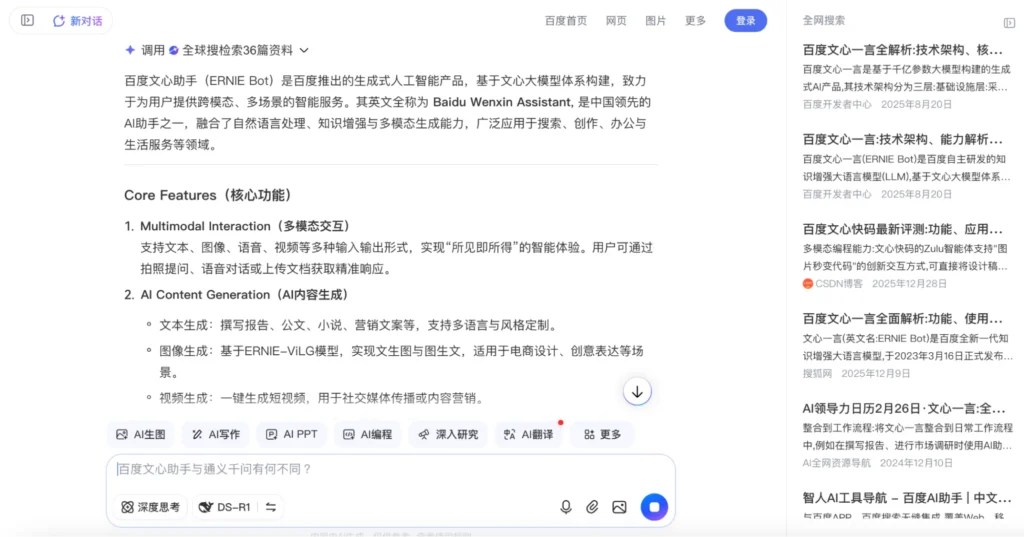
Generative AI is becoming embedded across Chinese platforms, transforming search from link navigation into answer delivery. Baidu integrates ERNIE into results, while other ecosystems deploy their own models to summarize content, refine recommendations, and assist user interaction.
As answers appear directly within interfaces, attention shifts toward summarized authority rather than individual webpages. Inclusion within trusted data environments, therefore, becomes more influential than traditional ranking visibility.
Search strategy increasingly intersects with information governance, structured data management, and cross-platform credibility signals.
Generative interfaces challenge traditional sponsored result models. Users who receive direct answers scroll through extended listings less frequently. Paid placements tied to broad informational queries may therefore decline in relative performance.
Advertising remains relevant for transactional queries, branded searches, and product-level intent. However, broad educational traffic becomes less predictable.
Platforms respond by refining ad formats, embedding sponsored elements into conversational flows, and expanding enterprise AI services to diversify revenue streams.
By 2026, conversational search will likely set the baseline for user expectations across Chinese platforms. Consumers will expect complete, contextual answers rather than lists of links.
Western brands entering China must prepare for AI-mediated visibility. This preparation requires structured corporate data, authoritative media references, and coordinated content presence across major ecosystems.
Search exposure will increasingly depend on being machine legible, compliant, and contextually trusted within AI training and retrieval layers.
Chinese consumers use search as an ongoing verification tool across multiple platforms rather than a single starting point. Exposure often begins on Douyin, RedNote, or WeChat, followed by in-platform queries to evaluate user experiences. Baidu searches then confirm official information such as brand ownership, pricing consistency, and authorized distribution.
The data reflect how embedded this pattern has become. CNNIC reports that nearly 70% of internet users rely on search engines to find products and services. On RedNote, over 80% of users say posts influence purchase decisions, and 73% actively search on the platform. Around 70% of Douyin users also search for content they view.
These figures show that search primarily reinforces decisions shaped by social discovery. Users confirm specifications, safety details, shipping terms, and return policies before completing a purchase.
Retail events intensify this behavior. During 618 and Singles’ Day, search activity rises across both Baidu and social platforms as consumers compare offers and verify sellers. Promotional exposure triggers simultaneous verification.
For brands, visibility and proof must go hand in hand. Campaign momentum generated through creators or platform media must align with clear, indexed information, or confidence erodes before conversion.
China’s search environment requires more than visibility. It requires coordinated credibility across platforms, data sources, and consumer touchpoints. That is exactly where ChoZan positions its work: helping global organizations understand China’s digital ecosystem and translate those insights into practical strategy and transformation initiatives.
Founded as a research-driven consultancy focused on China’s digital economy, the firm supports multinationals and technology leaders through trend analysis, strategic advisory, and capability building so they can “learn for China and learn from China.”
ChoZan has supported multinational brands and global institutions across industries, delivering research, consulting, and upskilling initiatives to help them interpret China’s rapid digital transformation and apply its lessons globally.
If you are exploring how China’s search evolution affects your own strategy, you can continue the conversation through ChoZan’s reports, briefings, and learning programs, where we unpack the structural changes behind the headlines and translate them into actionable insight for global teams.
Explore more perspectives at ChoZan to stay informed on how China’s digital landscape continues to redefine how businesses build trust, reach consumers, and compete in an AI-driven environment.
Yes, a locally hosted site supports Baidu SEO China and reassures users that a brand is legitimate. Chinese-language content, fast load times, and clear company information help search engines, and consumers view the brand as established.
Regulatory readiness is essential for sustainable visibility. Securing an ICP license in China signals compliance and enables digital assets to operate properly, thereby strengthening discoverability while reducing friction for platforms, partners, and consumers evaluating legitimacy.
Success often comes from nurturing traffic in China's private domain through owned communities, loyalty programs, and ongoing engagement. This approach encourages repeat interaction, strengthens trust, and reduces reliance on constant paid acquisition.
Yes, KOL marketing in China remains influential because creators shape early perception and discussion. Their content often becomes searchable reference material that reinforces credibility while helping audiences understand how products fit into real situations.
WeChat mini programs create a seamless space for service, commerce, and communication within one familiar platform. They allow brands to guide users from initial interest to after-sales support while maintaining a consistent, trusted experience.
Brands should evaluate trust signals, search visibility consistency, and engagement quality as part of a broader China digital marketing strategy. Metrics tied to credibility and repeat interactions often better predict sustainable growth than raw visit numbers.
Social commerce in China blends storytelling, community feedback, and purchasing into a single journey. Brands must design experiences that educate and reassure users within content environments rather than expecting them to transition into separate shopping channels.
Consistent brand information improves recognition by both users and algorithms, shaping AI search in China. Accurate names, descriptions, and credentials across platforms help systems validate authority and present brands confidently in summarized results.
Leaders should view entry as an ecosystem-integration challenge, not just as expansion. A thoughtful China market-entry strategy aligns operations, content, compliance, and partnerships so that every touchpoint reinforces credibility and supports confident decision-making.