CONTENT
China’s social media landscape in 2025 is grappling with a long-standing open secret: the prevalence of fake accounts and fabricated engagement on major platforms, especially Sina Weibo. Weibo – often referred to as China’s Twitter – has 588 million monthly active users, but not all are genuine individuals.
A vast ecosystem of “zombie” followers, professional “water armies” (shuijun, or paid online manipulators), and bot networks has evolved to manufacture popularity and influence. This phenomenon of fake accounts on Weibo isn’t just a quirky side-note – it distorts trending topics, deceives consumers, and erodes user trust. In recent years, Weibo and Chinese authorities have ramped up crackdowns, purging tens of millions of fake accounts and even jailing social media fraudsters.
Yet the underground industry persists, fueled by profit and competitive pressures. This article delves deeply into why fake accounts flourish on Weibo, the tactics used, the real-world impacts, and how 2025’s countermeasures are striving – and struggling – to restore authenticity on China’s iconic microblogging platform.
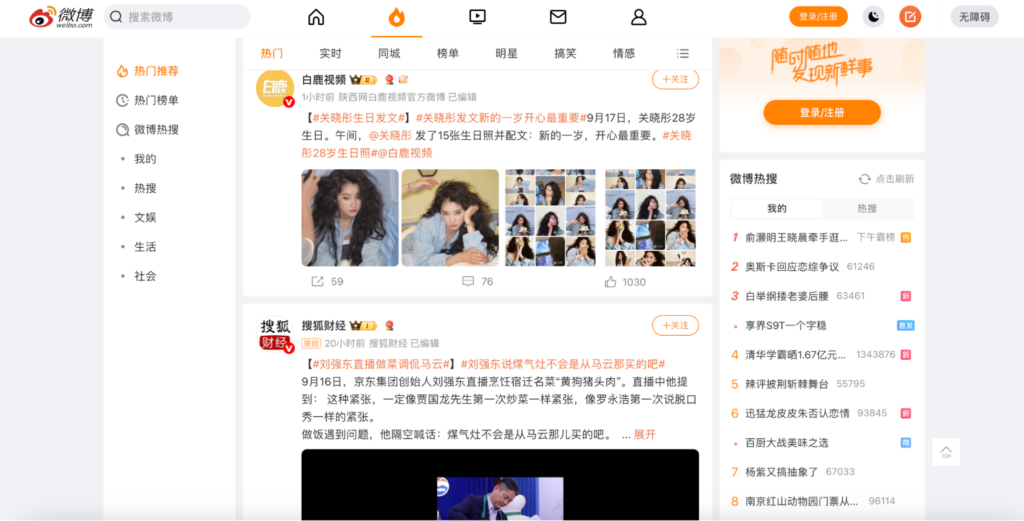
Not all fake accounts are created equal – over the years, a variety of fraudulent personas and techniques have proliferated on Weibo. Here are the most common types and tactics:
These are dormant or automated follower accounts, often with nonsensical usernames and little to no personal content, purchased en masse to boost one’s follower count. They are called “zombie fans” (僵尸粉) due to their lifeless behavior.
For buyers with bigger budgets, “advanced zombies” were available at higher prices – these are fake accounts equipped with profile photos, posts, and even scripted opinions to appear more convincing. Despite occasional purge campaigns by Weibo, zombie followers remain a persistent problem.
One interviewee who had bought 1 million fake fans in 2013 admitted that even after a large-scale cleanup in 2015, most of those fake followers remained in place. This highlights the difficulty of completely eliminating dormant fake accounts once they’ve been introduced into the system.
The ” Water Army” (水军) is the Chinese term for organized groups of fake accounts (or the individuals operating them) that flood online discussions on command – much like an army of soldiers following orders.
On Weibo, water armies often manifest as swarms of comments, likes, or reposts that appear to be human but are actually coordinated behind the scenes. Some are pure bots – automated accounts that repost and like content programmatically. Others are real, human-operated accounts, sometimes “small accounts” (小号), which are controlled in bulk by a single user.
Manipulators place more value on these human-seeming accounts because they can evade detection longer than obvious bots. In fact, many water army operations blend the two: a core of bot accounts to provide scale, supplemented by a layer of real (or stolen) accounts run by paid part-timers for a veneer of authenticity.
Water armies can be hired for various purposes:
Copy-and-paste comments are a telltale sign – it’s common to see Weibo posts (especially by celebrities or brands) receive floods of nearly identical replies, filled with excessive emojis and exaggerated praise. As one 2024 analysis put it, on Weibo’s hot topics, “a closer look finds many posts are copy-pasted scripts; the presence of marketing accounts, water armies and robots is everywhere”.
In other cases, water army accounts will engage in “控评” (controlling the narrative in comments) by posting repetitive positive remarks – Chinese netizens jokingly call these saccharine, repetitive praises “rainbow farts”. The net effect is that genuine user voices get drowned out, contributing to Weibo’s authenticity problem.
Automation Tools – Cloud Phones & Scripts
The more advanced fake-account syndicates deploy sophisticated tools to amplify their reach. A stark example came to light in late 2023, when police in Jiangsu cracked a major Weibo bot ring: the perpetrators had amassed over 6,000 “cloud phones” (devices or virtual phone emulators) and used special group-control software to command them in unison.
This setup allowed a handful of operators to control thousands of Weibo accounts simultaneously, all performing likes, shares, or follows at computer-executed speeds. Investigators noted that these accounts could like or repost content within fractions of a second – “some in one second, some in even half a second” – an impossible feat for any human user and a red flag for authorities monitoring traffic patterns.
The perpetrators would simply input a target Weibo post or topic into their central control panel, and the scripts would automate a blitz of engagement actions from the army of devices. To avoid easy detection, such scripts often randomize behavior or use distributed IP addresses (hence the use of cloud-based phones that can simulate different locations). This is an arms race in technology: as Weibo improves its anti-spam algorithms, the fake engagement firms respond with more nimble, stealthier tools.
In 2025, the use of AI bots and even deepfake accounts is a looming concern, raising the bar for what counts as a “real” user. But even without bleeding-edge AI, the current toolkit – bulk-registered accounts, cloud device farms, automation scripts – is alarmingly effective at mimicking genuine buzz on Weibo.
Another class of fake accounts includes those that impersonate others. This ranges from impersonating celebrities or officials (to scam users or spread false information) to obtaining a verified status under pretenses.
In mid-2023, China’s Cyberspace Administration reported shutting down 13,000 fake military-related accounts (with names like “Chinese Red Army Command”) and 25,000 accounts impersonating public institutions.
Weibo, being a semi-public square, has had issues with accounts masquerading as government outlets or news sources. At the same time, a cottage industry emerged to help regular people get the coveted verified badge (a colored “V”) via backdoor channels.
Undercover reporters found brokers offering Weibo verification for a few hundred yuan – for example, a self-media “yellow V” for ¥330, or an “interest-topic” blogger verification for ¥580, with dozens of fields to choose from. Owning a verification badge can lend credibility to a fake persona, making it easier to carry out scams or influence campaigns.
In response, Weibo has tightened some rules (e.g., stricter ID checks for high-follower accounts, and since 2022, it publicly displays each user’s IP region to expose accounts pretending to be local). Still, impersonation remains a subset of the fake account problem – these accounts might be “real” people at the keyboard. Still, they are fake identities, often leveraged to peddle rumors or fraudulent schemes.
In practice, the lines between these categories blur. Celebrity fan clubs, for instance, often purchase fake followers to inflate their numbers, mobilize armies of supporters to boost engagement, and may even utilize semi-automated tools to coordinate mass postings. This all happens under the surface, while on the surface, a casual observer just sees a Weibo supertopic with millions of enthusiastic posts.
Fake accounts aren’t just inflating numbers—they’re fueling scams.
Police investigations show a rise in high-imitation accounts that copy friends’ avatars and names with minor punctuation changes, tricking victims into urgent money transfers.
Case examples:
Key tactics scammers use:
Police warn that 80% of victims are women aged 20–40. Users should verify requests through other channels, preserve chat logs, and report suspicious accounts. These scams show fake accounts are not just vanity tools—they’re part of a serious fraud network exploiting Weibo’s private messaging system.
These are the twin drivers behind Weibo’s fake account economy. In China’s vibrant digital ecosystem, bigger numbers mean bigger opportunities – whether it’s fans, followers, views, or likes. Advertisers and sponsors often judge influencers by their follower counts and engagement metrics, which creates immense pressure to artificially inflate those numbers.
“In order for advertisers to look at influencers, they must have at least 1 million fans,” an intermediary told Caixin. This minimum benchmark has led many Key Opinion Leaders (KOLs) to purchase fake followers quietly and likes to pad their statistics.
In fact, a report by Tencent’s anti-fraud unit found over 300 of the top 500 social media influencers had benefited from fake traffic in some form. Pseudo-influencers with inflated metrics can command sponsorship deals they might not earn organically, so the incentive to “fake it till you make it” is strong.
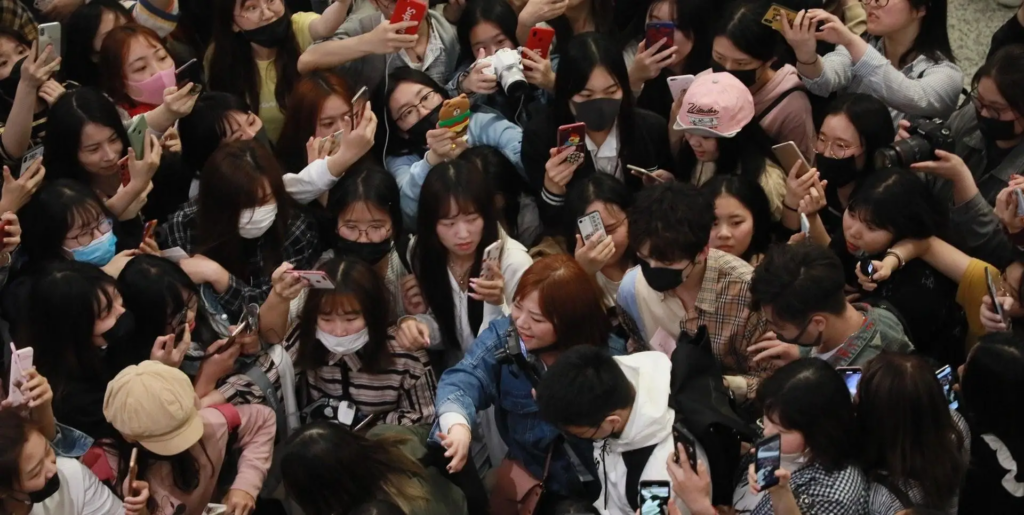
Fan culture further accelerates fake engagement. Weibo is a hub of China’s celebrity and fandom activity, and passionate fan clubs often go to great lengths to push their idols to the top.
In one famous 2019 incident, fans of singer Jay Chou organized to boost his popularity index on Weibo, successfully vaulting the mid-40s pop star above a rival teen idol on the trending charts. However, the victory was short-lived – the surge was soon hijacked by fake traffic generators, forcing moderators to restrict posting on the topic after detecting that many of the posts were not from genuine fans.
This episode revealed how even sincere fan campaigns can be augmented by bot networks and click farms once a trend gains momentum. In China’s “fan quan” (fan club) culture, metrics are a source of pride and influence, so some fan organizations themselves function as “complete fake traffic-generating systems”.
Many big fan clubs have “data teams” whose daily job is to pump up their idol’s Weibo stats – mass-posting comments, sharing posts, and even suppressing negative remarks. The result is a heated arms race where rival fandoms and their hired bots battle to out-shout each other on Weibo’s trending topics.
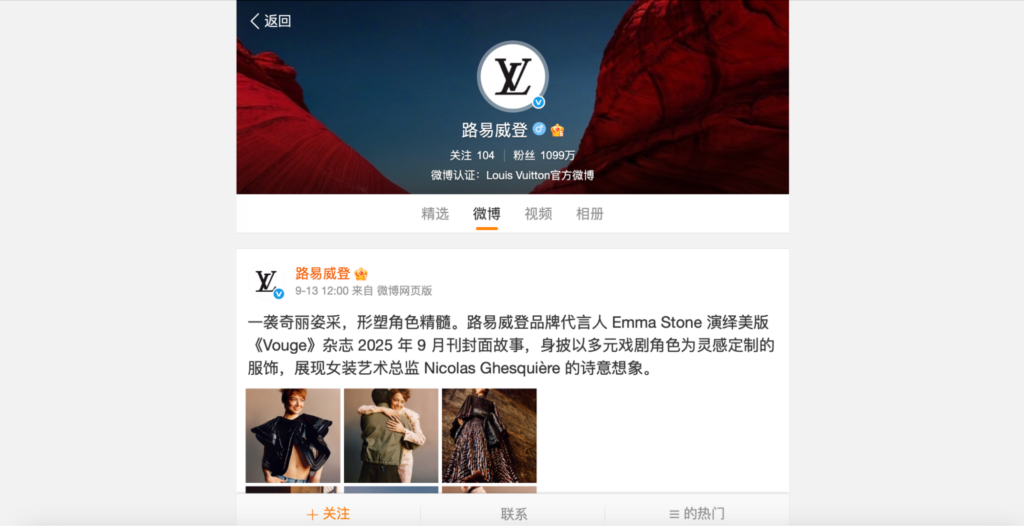
These also contribute to the problem of fake accounts. In China’s booming social commerce scene, being seen is the key to sales. Companies know that a product or campaign that appears popular on Weibo can translate into real revenue. This has led some unscrupulous marketers to buy fake “buzz” – paid posts and inflated share counts – to create the illusion of a viral trend.
As a consequence, trending hashtags can sometimes be bought on the black market. Industry insiders have revealed that, for roughly ¥30,000 RMB ($4,500), a topic can be promoted to Weibo’s Top 5 trending list for a short time. (Weibo officially denies that trending positions can be purchased and says it labels all ads, but the underground reality tells a different story).
There is even a gray market for obtaining the coveted verification badges on Weibo – reporters found vendors offering to arrange a yellow “V” (verified status for influencers) for a few hundred yuan. By faking credibility and popularity, businesses aim to attract genuine users through a “fake it to make it” strategy.
Ultimately, the motivation behind fake accounts is simple: profit and prestige. China’s digital advertising spend is substantial, and vast sums of money flow toward those who command user attention. This has created a shadow economy where clicks, follows, and likes are their own currency.
The creation and distribution of fake accounts on Weibo has evolved into a full-fledged underground industry, with supply chains, price lists, and hierarchies. It’s not just lone hackers or a few bad actors – it’s a shadow market serving this demand. Here’s how it works:
Investigations reveal that many fake engagement operations operate like startups. A typical setup is a rented apartment serving as a “water army workshop,” equipped with smartphones or cloud servers.
In Sichuan in 2024, police busted a nationwide network run by a brother-sister duo, employing over 10 staff working in shifts 24/7 to fulfill orders. The business was hidden behind a fake online “shoe store” that sold followers, likes, and comments.
Clients placed self-service orders, and the team executed them in the back end. These teams often advertise on QQ or WeChat groups using coded language. Internally, they use management software to track orders and distribute work to automated systems or human operators.
The hierarchy typically includes a leader, tech specialists who maintain scripts, and low-paid staff or freelancers who operate accounts and write posts.
Much of the labor comes from ordinary people earning small payments for online tasks. Xinhua profiled “Jiang Rui,” a young woman who logs into multiple accounts nightly to post content and comments as instructed. She joined a QQ group distributing micro-tasks for China’s entertainment industry, such as posting praise for TV dramas.
Each post earns a few mao to a few yuan. Pay is low—about ¥0.5 per like and ¥2 per comment—but thousands participate for flexible work. These workers often use one phone per account or multi-login apps, following scripts from group admins.
Recruitment spreads through referral links promising easy “copy-paste” tasks. Some schemes offer bonuses for recruits, expanding networks like MLM communities. This human element makes fake engagement harder to detect, as workers adjust wording and interact naturally.
Pricing is transparent. In early 2025, a journalist obtained a rate card showing that 10,000 Weibo likes cost ¥248 (~$35) and 10,000 reposts cost ¥95. Comments cost ¥188 per 1,000 or ¥1,680 per 10,000. One million video views cost ¥866; 100,000 views cost ¥98. Trending list placement starts at ¥20k–30k, and removing a topic incurs additional costs.
Some packages charge ¥0.03 for likes, comment, and reposts. Such pricing makes fake engagement cheaper than legitimate advertising, tempting influencers and small businesses.
Low unit prices mask huge revenue potential. In Jiangsu, a ringleader and his team earned ¥42 million (~$6.6 million) by boosting posts to the top of hot searches. A Sichuan-based ring operating in 10+ provinces resulted in 27 arrests and the seizure of ¥4 million seized.
These groups process thousands of daily orders, subcontracting overflow to partner teams. Short video growth keeps demand strong. One botmaster said Douyin’s Dou+ tool didn’t affect his business; clients wanted deeper manipulation.
The market includes account sellers, “养号” (account nurturers), and content creators. Buyers can purchase aged accounts for scams or propaganda. Some groups started with fake e-commerce reviews and expanded to social media. Investigations refer to it as a “gray industry chain” with niche providers. Some consultancies even teach clients to mix legitimate marketing with fake engagement to avoid detection.
Platforms have faced criticism for benefiting from fake traffic. Inflated engagement drove ad revenue and helped impress investors. Experts say that platforms sometimes overlook fake activity to keep celebrities and influencers engaged. Weibo, reliant on celebrity-driven traffic, was “reluctant to fully eradicate fake traffic”. By the late 2010s and 2020s, the issue of fake accounts forced platforms to take stronger action.
The Jiangsu Investigation: Inside a Botnet
In early 2025, Jiangsu police exposed one of the largest Weibo manipulation networks to date. The operation seized 5 million zombie accounts, over 10,000 IoT SIM cards, and a sophisticated hardware-software stack designed to bypass Weibo’s defenses.
At the center was the “Ferris Wheel” app, a group-control tool that allowed operators to select a Weibo post, input scripted comments, and trigger hundreds of thousands of reposts in seconds. Police described its interface as “as simple as a checkbox,” yet it could overpower trending algorithms instantly.
The gang’s hierarchy resembled a production line:
Investigators say the network generated billions of fake engagements and normalized a pay-to-win environment on Weibo. The case has become a blueprint for authorities’ crackdowns, illustrating how deeply entrenched these underground economies have become.
The ubiquity of fake accounts and engagement on Weibo has far-reaching consequences for the platform’s community, extending beyond to society and commerce. Here are some of the key impacts:
Manipulated trending lists and comment sections have eroded confidence in Weibo’s content. Users complain about feeds filled with bots, scripted comments, and clickbait. Articles in 2024 describe Weibo as losing its “human touch,” shifting from a space for personal updates to a controlled, trend-driven feed.
By 2024–2025, genuine interactions had declined sharply, and many younger users moved to Douyin or Xiaohongshu, platforms that emphasize grassroots content. User time on Weibo has stagnated, while competitors with genuine engagement continue to grow.
Weibo plays a significant role in shaping public conversations, making manipulation more dangerous. Bot campaigns have inflated records, such as Lu Han’s 100-million-comment post, but also disrupted discussions about scandals by flooding the space with irrelevant content, as seen with the “Purple Pavilion gutter oil” meme.
Regulators in 2022–2023 specifically targeted accounts that hype sensitive issues, impersonate officials, or monetize chaos, warning that these distortions damage trust in information and destabilize discourse.
Fake engagement wastes advertising budgets. Brands pay influencers with inflated metrics, while consumers are misled by artificially high likes or viewership on livestreams. Police classify this as commercial fraud and unfair competition.
Investigations reveal that water armies are boosting trust in products with fake metrics, and malicious campaigns have targeted businesses with counterfeit reviews or negative posts. Fake engagement also spreads across RedNote, Dianping, and Tieba, undermining the entire digital marketing chain and forcing companies to spend more on verification.
Many fake accounts are created with stolen or purchased IDs, exposing serious privacy risks. Part-timers are often unaware that they could face charges—ranging from defamation to “picking quarrels” or engaging in illegal business operations—for paid commenting.
The system exploits fan loyalty and youth labor while normalizing manipulation, thereby pressuring honest creators to cheat to remain competitive.
Fake accounts have weakened Weibo’s core value: authentic interaction. They contribute to user attrition, misinformation, fraudulent commerce, and regulatory crackdowns. Weibo’s long-term survival depends on regaining trust among users and advertisers, a goal that has driven intensified platform and government action since the late 2010s.
Weibo’s fake account problem is not just a marketing or cultural issue—it is a cybersecurity challenge. Investigations and CCTV reports confirm that zombie accounts function like nodes in a botnet, a network of compromised or controlled devices used for coordinated attacks.
How it works:
This mirrors global cybercrime tactics: botnets are commonly used for spam, phishing, and denial-of-service attacks. In Weibo’s case, they are optimized for content manipulation, allowing fraudsters to simulate viral popularity and influence trends.
For Weibo, combating this threat requires cybersecurity-grade defenses:
Treating zombie accounts as a botnet ecosystem reframes Weibo’s fake engagement crisis. It is not merely “digital marketing fraud” but an arms race between platform security teams and organized cybercriminals operating at industrial scale.
Weibo and regulators have escalated anti-fake-account efforts since 2018, with 2024–2025 marking the most vigorous enforcement yet. The goal is to restore user trust, protect advertisers, and control illegal engagement networks.
China’s mandatory real-name policy requires verified phone numbers and IDs for all social accounts. In 2022, Weibo began publicly displaying users’ IP regions to reveal posting locations, making it harder for overseas bot farms to appear local. Regulators also considered requiring influencers with over one million followers to display real names. These measures aim to limit the creation of mass anonymous accounts.
Weibo has strengthened its detection algorithms to identify suspicious spikes in reposts and duplicate content. In 2019, it capped visible reposts and comment counts at “1M+” to curb metric-stacking contests. Crackdowns intensified under the Cyberspace Administration of China’s (CAC) “Clear and Bright” campaign, which in 2023 removed 67,000 accounts and deleted 1.4 million posts across platforms.
Weibo added functions to help users manage fake engagement.
Chinese regulators now treat fake traffic as a criminal offense. Offenders face charges ranging from Illegal Business Operations to Rumor-Mongering.
Major Chinese tech companies now share intelligence on fake-account rings. Tencent’s “Waterproof Wall” and Alibaba’s anti-fraud units exchange data with Weibo. Machine learning models analyze posting frequency, repost ratios, and time patterns to identify water armies.
Researchers and netizens contribute to detection efforts by sharing tips, such as the “一眼假” (“fake at a glance”) method, to spot bots.
Weibo integrates AI moderation, user reporting, and coordinated takedowns. The platform claims these combined strategies have improved its ability to catch fake trends before they go viral.
Weibo reports measurable progress. Prominent spam trends, such as nonsense phrases reaching the #1 spot in Hot Search, are now rare. Bot operators face higher costs and greater risks, leading some to shut down their operations. Arrests, fines, and strict oversight have made fake traffic a less viable business. In 2025, fake accounts remain a challenge, but the unregulated chaos of the mid-2010s is behind us.
Here’s a draft for your Cross-Platform Fake Traffic Economy section. This fits well with “Crackdowns and Countermeasures” to demonstrate that Weibo’s issues are part of a much larger ecosystem.
Weibo is not an isolated case—China’s fake traffic industry spans multiple platforms, forming a mature gray market that links e-commerce, social apps, and advertising.
Investigations show that:
This interconnected industry means fake Weibo engagement isn’t just a platform-level problem; it’s a national challenge involving telecom operators, payment providers, and tech companies. Fraudsters frequently switch between platforms—accounts used to fake Weibo traffic may also post fake reviews on e-commerce platforms or upvote content on Dianping and Tieba.
China’s regulators have responded by promoting cross-platform data sharing. Tencent’s “Waterproof Wall” team and Alibaba’s anti-fraud division collaborate with Weibo to trace fake activity across the ecosystem. Still, the high profit margins and low entry barriers mean fraud networks remain resilient, constantly shifting strategies to evade detection.
Fake accounts and manipulated metrics are deeply entrenched, but users and brands can take proactive steps to protect themselves.
Fake accounts and manipulated metrics on Weibo are not just a marketing issue — they’re a systemic risk to brand reputation and campaign performance. ChoZan, with a team of over 30 people in Shanghai, Shenzhen, and Hong Kong, has been analyzing China’s digital ecosystem since 2016. They specialize in evidence-driven research and strategy for brands, agencies, and organizations operating in China
We provide:
ChoZan doesn’t provide generic social media advice. It delivers actionable intelligence grounded in field research, helping clients like Coca-Cola, Disney, and BMW secure authentic engagement and avoid paying for manipulated traffic in one of the world’s most competitive digital markets.
A major driver of fake account proliferation is the gray market for SIM cards. Brokers buy IoT cards in bulk under corporate names, illegally activate them, and resell them. These SIM cards enable fraud rings to mass-register Weibo accounts, bypassing strict real-name registration requirements, making detection and takedowns significantly harder for regulators.
Weibo remains a top arena for celebrity marketing, political discourse, and news sharing. Its visibility makes it lucrative for manipulation. A trending hashtag on Weibo can influence stock prices, product sales, or public opinion. Fraudsters exploit this influence, knowing the platform’s high traffic amplifies their fake campaigns and delivers immediate financial gains.
No, while celebrity and fandom manipulation are common, scams extend beyond entertainment. Fraudsters use fake accounts for phishing, Ponzi schemes, and counterfeit product promotions. Impersonation scams, where criminals pose as friends or brands, are increasingly reported. The scale of Weibo makes it a versatile tool for scammers targeting individuals, investors, and companies alike.
Brands can audit influencers by analyzing engagement ratios, follower activity, and comment quality. Sudden spikes in followers, repetitive comments, or high views with low interaction are red flags. Third-party tools and services like ChoZan’s influencer vetting frameworks provide in-depth audits, ensuring businesses invest in genuine engagement instead of manipulated metrics.
Buying fake followers violates Weibo’s terms and Chinese anti-fraud regulations. Users risk account suspensions, public blacklisting, and even legal action under the Anti-Unfair Competition Law. In 2023, courts began issuing fines and prison sentences to repeat offenders, demonstrating the seriousness with which authorities view manipulation that harms consumers and undermines market integrity.
Weibo’s backend algorithms analyze posting speed, IP clustering, and identical engagement patterns to flag suspicious accounts. Tools like Ferris Wheel simulate devices and locations, but platforms now use machine learning to identify behavior that’s impossible for real users. Frequent purges show platforms are catching up with automation technologies.
Fake accounts are a systemic issue across China’s tech ecosystem. Platforms like Xiaohongshu, Dianping, and Douyin also face review manipulation and bot campaigns. The same fraud networks often sell services across multiple apps, making Weibo part of a broader gray-market chain that requires cross-platform collaboration for meaningful progress.
Yes, foreign companies are frequent targets because they often lack local expertise. Scammers exploit their unfamiliarity with China’s digital ecosystem, selling fake traffic or fabricating crises to extort payments. International brands require dedicated monitoring teams or local partners to promptly detect fraud signals and safeguard their reputations in the Chinese market.
Criminals buy or steal personal IDs to bypass real-name verification. Stolen credentials allow fraudsters to create “trusted” accounts that evade detection longer. Victims of ID theft may unknowingly be linked to spam, scams, or illegal operations, creating legal risks. Platforms and regulators now prioritize ID leak prevention and tighter verification systems.
Fake metrics undermine advertiser confidence and inflate costs. Brands spend millions on influencer campaigns, only to discover half the engagement is fake. This forces companies to invest heavily in verification and erodes trust in digital platforms. Agencies now demand real-time analytics and deeper audits before allocating ad budgets.
Many fans participate in mass “data support” campaigns for celebrities, unaware they’re funding fraud rings. When fan clubs purchase fake engagement, they often pay companies linked to broader botnet networks. This normalizes manipulation, exploits fan loyalty, and fuels an economy where criminal groups profit from celebrity culture.
Yes, fake accounts have been used to amplify propaganda or suppress sensitive topics. Coordinated bot campaigns can bury discussions, create distractions, or promote state-approved narratives. While commercial fraud is the most common issue, the same tools can be repurposed to influence public sentiment or censor debate, raising broader security concerns.
Users should enable two-factor authentication, avoid authorizing unverified third-party apps, and verify suspicious messages through alternate channels. Regularly reviewing your followers, reporting fake accounts, and staying informed about scams helps reduce risks. Simple habits like ignoring suspicious payment requests can prevent common impersonation fraud cases seen on Weibo.
Courts now treat large-scale fake engagement as a criminal business operation, with prison sentences and multi-million yuan fines. Landmark rulings in Jiangsu and Sichuan have created precedents for holding individuals, agencies, and platform partners accountable. This legal shift has raised the stakes, making manipulation a high-risk activity for fraudsters.