CONTENT

In the fast‑paced world of humanoid robotics, business models matter as much as mechanical innovation. The Chozan report from the 2026 Top 15 Global Humanoid Robots survey notes that robots-as-a-service (RaaS) is rapidly becoming the default gateway for enterprise adoption.
Instead of buying expensive humanoids outright, companies now pay predictable monthly or per‑task fees that bundle hardware, software, maintenance, and updates. This shift turns capital expenditure into operational expenditure (OpEx) and lowers risk for buyers while creating a recurring revenue stream for robot providers.
The following article explores how the robots-as-a-service model works, why it appeals to businesses, current market trends, and real‑world examples, and what to watch for next.
For decades, robots have demanded large upfront investments and dedicated engineering teams. The RaaS model overturns that paradigm.
According to market analysts, the global robots-as-a-service market was valued at approximately $2.70 billion in 2025 and is projected to reach $3.31 billion in 2026. Forecasts suggest the market could reach over $16 billion by 2034 as companies across manufacturing, logistics, retail, and healthcare embrace subscription‑based robotics.
Another research firm estimates that robotics-as-a-service could achieve a compound annual growth rate (CAGR) of roughly 18.7 percent between 2026 and 2035, rising from $3.3 billion in 2026 to $15.6 billion by 2035.
These projections underscore a major shift: businesses are moving away from capital‑intensive purchases toward flexible service agreements.
Several factors now make robotics-as-a-service easier to adopt. Labor shortages and rising wages push companies toward automation, while AI, machine vision, and cloud connectivity make humanoids more useful in real environments.
Because RaaS reduces upfront costs, companies can test robots with lower financial risk and then scale fleets during peak demand. China is moving fastest, supported by affordable subscriptions from firms such as Pudu Robotics, Keenon Robotics, Gaussian Robotics, and Youibot.

Under RaaS, customers do not buy robots; they subscribe to them. Agreements are typically structured as monthly subscriptions or per‑task pricing. For example, a small restaurant might lease a service robot waiter for a modest monthly fee rather than paying tens of thousands of dollars upfront.
In some markets, the monthly rent for a single service robot is estimated to be half to one‑third of a worker’s salary. Logistics and manufacturing companies may choose time‑based leases (weekly or monthly) or task‑based models, paying only for the tasks the robot performs.
Analysts note that leasing 50-100 robots outright could cost $2–4 million, whereas a robot subscription spreads the cost over time.
A key benefit of robotics as a service is that providers handle all maintenance, upgrades, and troubleshooting. Customers receive robots as part of a bundled service that includes hardware, AI software, remote monitoring, maintenance support, and replacement parts.
Providers push software updates over the air and swap out aging hardware when needed, keeping fleets current. These maintenance bundles provide uptime guarantees; if a robot goes offline, the vendor is contractually obligated to restore operation promptly. This reduces risk for enterprises and accelerates ROI validation.
RaaS mirrors cloud computing’s elasticity. Businesses can add more robots during holiday rushes and return them afterward. Pay‑as‑you‑go structures enable experimentation without long‑term commitments.
A pilot program might involve renting a few humanoids for a warehouse and expanding the fleet only after performance is validated. Because costs align with usage, operational expenditure becomes predictable.

Traditional robots require heavy capital investment. Robotics as a service eliminates that hurdle by converting a major purchase into a monthly or per‑task expense. This allows even small businesses to adopt automation.
The predictable payment schedule aids budgeting and aligns costs with revenue streams. In some cases, the monthly fee for a delivery robot is less than hiring an additional staff member.
With RaaS, businesses can gradually expand automation as confidence grows. They can lease additional units during high‑demand seasons and return them during lulls.
Because vendors manage maintenance and repairs, customers avoid unexpected expenses and internal engineering overhead. This setup reduces adoption risk and shortens payback periods.
Robots-as-a-service companies collect usage data from fleets operating in factories, warehouses, and storefronts. This data feeds into the AI model training and improves navigation, manipulation, and task performance.
Providers can push new capabilities via software updates, ensuring customers always have access to the latest features. When hardware advances, vendors can swap robots for new models within the same subscription, protecting customers from obsolescence.
Because RaaS expenses are treated as operational expenditure, CFOs can avoid large capital outlays. This appeals to firms that want to maintain asset‑light balance sheets and preserve cash. Predictable recurring expenses also simplify forecasting and internal approvals.
The 2026 RaaS market is global. North America accounts for roughly 35% of revenue, while Europe holds about 25% and Asia‑Pacific around 30%. Country‑level data shows Germany contributing 10 percent of Europe’s share and Japan about 12 percent of the Asia‑Pacific market.
In the United States, the market is estimated at about $1.1 billion in 2026, driven by logistics automation and high wages that make robotics adoption attractive. Europe’s market, valued at roughly $957 million, benefits from sustainability policies and strong manufacturing sectors in Germany and France. Japan’s market, estimated at $132 million, is propelled by aging demographics and government support.
China leads in service robot production and RaaS adoption; domestic vendors accounted for nearly 85 percent of global commercial service robot shipments in 2024, and output increased 13.8 percent year‑over‑year in May 2025.
Logistics and warehousing represent the largest robotics-as-a-service market segment. Businesses use RaaS for picking, sorting, and stock management, reducing labor costs and enhancing fulfillment speed.
Manufacturing also sees significant adoption, especially in assembly, welding, and material handling. Healthcare institutions deploy robots for surgery assistance, sterilization, and patient care, while agriculture uses RaaS for crop monitoring and harvesting.
The integration of AI and Internet of Things (IoT) technologies is reshaping how enterprises use robotics. Cloud‑enabled robots can be monitored and controlled remotely, reducing maintenance complexity and enabling fleet management across multiple sites.
Machine learning improves predictive maintenance, quality inspection, and process optimization. These capabilities drive adoption across diverse industries.
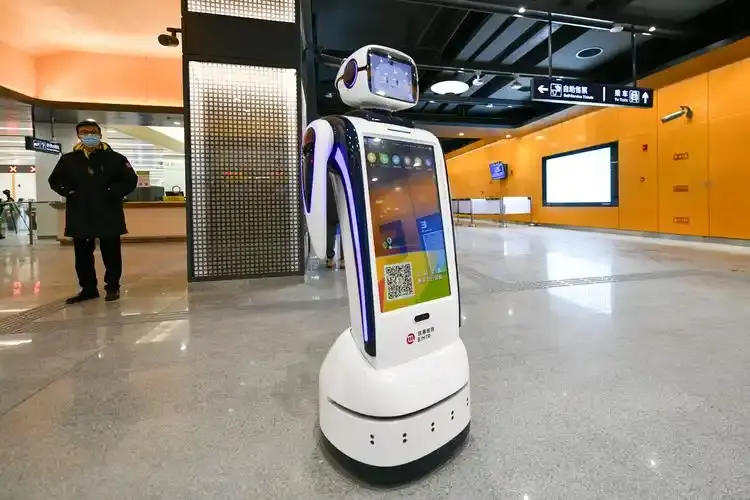
Agility Robotics’ Digit is the first commercially deployed humanoid robot. In 2025, Agility shifted to a robot-as-a-service model, allowing warehouse customers to lease fleets rather than buy them.
This lowers upfront risk by spreading costs over time. Digit’s subscription is estimated at $2,000 to $4,000 per robot per month. Tesla Optimus, by comparison, is expected to cost about $30,000 per unit, or roughly $500 to $800 per month when amortized over three to five years.
Digit’s humanoid robot rental model suits logistics operators because it removes upfront capital expenditure and includes maintenance. Digit already operates in Amazon and GXO warehouse environments, moving totes, sorting packages, and integrating with conveyor systems.
These deployments help validate RaaS ROI because companies can expand fleets after proving performance. Agility’s RoboFab facility in Oregon also has the capacity to build more than 10,000 units annually, supporting broader fleet deployment.
Service robots in restaurants, hotels, and shopping malls often operate on monthly subscriptions. RaaS packages include software updates, maintenance, and even seasonal content, such as new dialogues or dance routines.
In China, early adoption is fueled by low production costs and a complete supply chain; domestic companies offer competitive monthly robot fees. Robots greet guests, guide shoppers, and deliver meals, enhancing customer experience and freeing staff for higher‑value tasks.
Hospitals use robots to deliver medications, transport supplies, and assist with mobility. Elder care facilities lease humanoid assistants that transfer patients from bed to wheelchair, monitor safety, and provide companionship.
RaaS contracts in healthcare often include regulatory compliance and specialized training. Because procurement cycles are long and budgets are tight, subscription models reduce financial risk and secure upgrades as capabilities evolve.
In industrial settings, enterprises are buying outcomes rather than individual robots. RaaS providers bundle humanoids into automation cells for tasks such as kitting, assembly, and packaging, providing a single point of contact and a clear ROI.
Managers find it easier to approve automation of a specific line with predictable payback than to justify purchasing general‑purpose humanoids. This outcome‑based model mirrors how robot arms have been sold for years in welding or painting cells.
For robotics companies, robots as a service creates stable, recurring revenue, which is attractive to investors and improves cash flow forecasting. Providers maintain close relationships with clients, collecting data that informs design improvements and new features.
Successful RaaS vendors align pricing with customer value while absorbing technical risk. By owning the robots and ensuring uptime, they turn maintenance and support into core competencies.
RaaS vendors continually refine software based on real‑world usage. Connected fleets generate data on navigation, manipulation, and wear, enabling engineers to optimize performance and extend battery life. This feedback loop accelerates innovation and ensures robots adapt to changing conditions.
In China, for instance, companies release AI updates that enable a single robot to perform multiple service roles through modular software, thereby accelerating versatility.
Traditional robot manufacturers like Tesla may offer direct purchase options, appealing to companies with deep pockets and a desire to own assets. However, enterprises seeking to test humanoid automation with minimal risk gravitate toward the RaaS approach.
Market analysts suggest that as the humanoid sector matures, hybrid models will emerge: companies may initially lease robots and buy them later, or maintain mixed fleets for peak demand.
RaaS solutions rely on cloud connections for monitoring and updates. This raises concerns about cybersecurity and data privacy, particularly in regulated industries like healthcare and finance.
Enterprises must evaluate vendor security practices and compliance standards. Continuous connectivity is also crucial; interruptions can disrupt operations and erode trust.
Implementing RaaS requires integration with existing workflows, IT systems, and facility layouts. A lack of standardized protocols across robotic platforms can increase deployment time and costs. Organizations may need to invest in training, site preparation, and change management.
Because RaaS shifts ownership risk upstream, customers become reliant on vendors for uptime and performance. While service-level agreements help manage expectations, any failure on the vendor’s part could affect business operations.
Enterprises should negotiate clear terms around uptime guarantees, response times, and penalties for service interruptions.
Experts agree that robots as a service will dominate humanoid deployments for the foreseeable future. Falling hardware costs, advancing AI, and the need for flexible automation will continue to fuel adoption.
Companies like Agility Robotics, Figure AI, Sanctuary AI, Boston Dynamics, and Tesla are racing to scale production and refine their models. China’s integrated supply chains and supportive policies will keep it at the forefront of service robotics.
New applications are emerging in construction, agriculture, and even space exploration. As RaaS matures, expect deeper integration with enterprise software, improved human‑robot collaboration, and more sophisticated pricing models.
Humanoid robotics is moving from demonstration to deployment, and China is one of the best places to understand that shift in real time. ChoZan helps global leaders study China’s robotics, AI, automation, and innovation ecosystems through research, executive briefings, expert dialogues, and tailored learning expeditions.
If your team wants to understand how robotics-as-a-service, humanoid deployment, and China’s automation models could shape your industry, ChoZan can help you turn market signals into practical strategy.
Book a consultation with ChoZan to explore what China’s robotics ecosystem means for your business.
Companies should choose a site with repetitive workflows, measurable labor gaps, stable connectivity, and clear safety controls. The first pilot should prove operational value before larger fleet expansion.
Useful KPIs include task completion rate, uptime, error frequency, human intervention rate, cost per task, deployment time, safety incidents, and workflow impact across each shift.
Most pilots need enough time to capture normal demand, peak demand, maintenance events, and staff adaptation. A rushed pilot may miss integration problems or overstate early performance.
Buyers should ask about uptime commitments, repair response times, data ownership, upgrade schedules, cybersecurity controls, cancellation terms, insurance coverage, and performance benchmarks tied to real workflows.
Yes, but multi-site deployment requires standardized workflows, strong vendor support, centralized fleet monitoring, and local training. Companies should scale only after one site proves repeatable results.
RaaS usually shifts human workers toward supervision, exception handling, customer interaction, and higher-value tasks. The strongest programs plan retraining before robots enter daily operations.
Most sites need reliable connectivity, safe robot paths, charging areas, workflow mapping, access permissions, and staff training. Complex sites may also need system integration with warehouse or facility software.
Companies should compare real deployment history, uptime performance, maintenance coverage, software maturity, integration support, safety certifications, pricing transparency, and evidence from similar customer environments.
RaaS works for both. Temporary use suits peak demand, seasonal hiring gaps, and pilots. Permanent use suits repetitive workflows where predictable monthly costs support long-term automation planning.
The biggest mistake is treating RaaS as a plug-and-play purchase. Successful deployment needs workflow redesign, staff buy-in, vendor accountability, and clear performance targets from day one.