CONTENT
Shanghai is entering 2026 with a sharper technology mandate. The Shanghai tech story now sits at the intersection of industrial upgrading, AI deployment, life sciences, and mobility infrastructure. The city’s three-year advanced manufacturing plan, released in January 2026, targets higher R&D intensity, more large-output manufacturers, and full digital intelligence coverage across large enterprises by 2027. This matters for global executives because Shanghai now serves as more than a market-entry city. It is becoming a place to test how technology moves from research to regulated commercial use.
The city’s strongest advantage is the way different parts of the innovation system connect across districts, industries, and commercial use cases.
Shanghai’s technology agenda is now tied to manufacturing quality, not vague digital ambition. The 2026 to 2028 advanced manufacturing plan prioritizes integrated circuits, biomedicine, embodied intelligence, commercial aerospace, low altitude economy, and AI in manufacturing. It also supports research centers, open innovation platforms, and subsidies for companies that increase basic research spending.
This gives the Shanghai tech ecosystem a practical edge. The city is turning innovation into factory upgrades, clinical translation, product design, logistics, and mobility services. For global companies, the point is simple: Shanghai is a place to study industrial adoption patterns before they appear in many other markets.
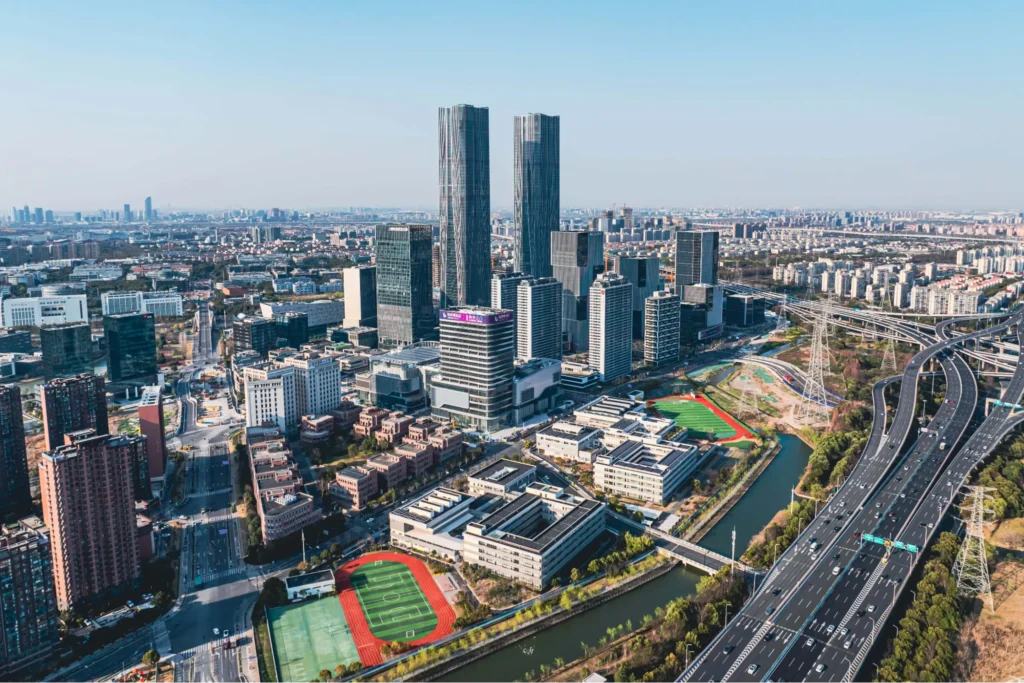
For executives searching for Shanghai Zhangjiang Hi Tech Park or Zhangjiang Hi Tech Park Shanghai, Zhangjiang should be understood less as a real estate cluster and more as a hard-tech operating system.
Pudong’s 2026 cluster plan aims to build clusters for integrated circuits, biomedicine, intelligent connected vehicles, and software and information technology services, each reaching 500 billion yuan, about $71.55 billion. AI and smart terminals are targeted at 200 billion yuan.
That policy frame explains why Zhangjiang keeps mattering. The new Zhangjiang AI Innovation Town plan covers about two square kilometers and is designed around the Model Matrix Twin Towers, Community, Island, and Field. The goal is to integrate incubation, enterprise clustering, scenario display, and commercial convention services into a single, focused AI application district.
In 2026, the three leading industries (integrated circuits, biomedicine, and artificial intelligence) are expected to generate RMB 300 billion in total revenue within the park. The zone aims to cultivate eight unicorn and “hidden champion” companies, achieve R&D expenditure of 5.5% of revenue, and file 600 PCT patent applications annually.
Fifteen标杆智能 factories certified by the Shanghai municipal government are targeted, alongside over 2 million square meters of new industrial space
Zhangjiang’s value lies in its density of functions. A company can engage with AI application platforms, biomedical resources, enterprise services, investment channels, and research partners within a single Pudong system. For global teams, this reduces the distance between insight gathering and partnership design.
The sharper question is what Zhangjiang can teach us about China’s current approach to innovation. Shanghai is advancing technology for vertical applications, such as smart transportation, healthcare, manufacturing, shipping, education, and digital finance.
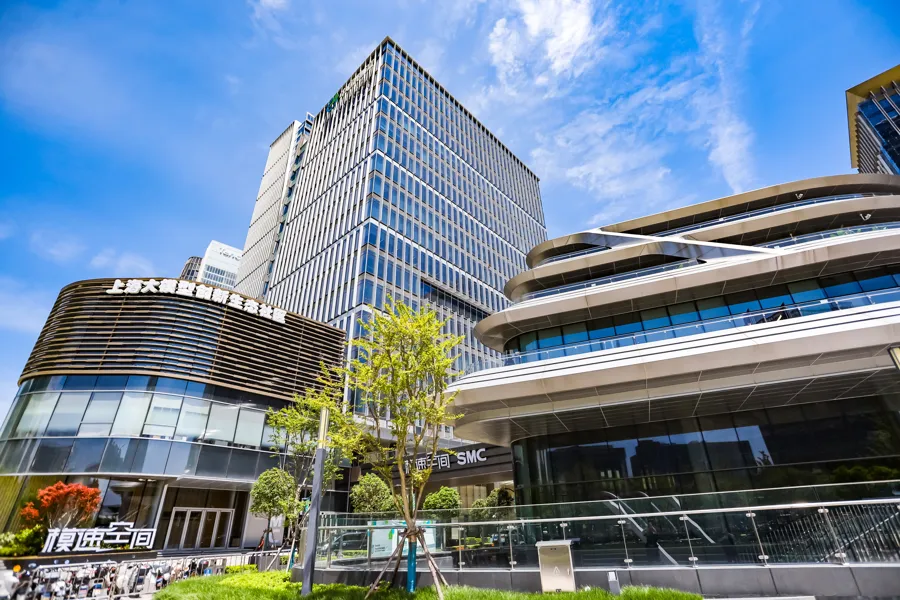
The Shanghai Foundation Model Innovation Center demonstrates how Shanghai is working to move large model companies from isolated model training to applied industry networks. In February 2026, China’s first incubator focused on foundation models was launched, with support including rent subsidies, talent attraction assistance, and business partner matching.
More important is the shift toward AI for science. In March 2026, the Shanghai Academy of Artificial Intelligence for Science expanded its ecosystem with an upgrade to the NovaInspire platform and the “Dasheng” AI agent at the Shanghai Foundation Model Innovation Center. The platform integrates over 400 scientific models and tools, 22 petabytes of high-value data, and 500 million papers and patent records.
For companies, this is commercially meaningful because Shanghai is channeling AI toward research workflows, industrial problem solving, public services, and vertical foundation model applications. Pudong’s Zhangjiang AI Innovation Town plan sets a 2027 goal of clustering more than 800 enterprises focused on vertical AI foundation model applications and developing over 30 model application scenarios.
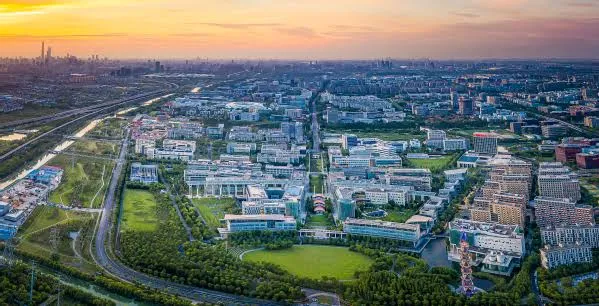
Biotech is one of the clearest examples of Shanghai’s application-first logic. In May 2026, Shanghai’s official portal reported that pharmaceutical companies in Pudong were accelerating the integration of AI and biomedicine.
Insilico Medicine’s LabClaw system, designed for its LifeStar2 automated laboratory, uses five collaborative AI agents and 28 specialized skill modules to coordinate target discovery, compound screening, automated experiments, data analysis, and report generation.
This matters because AI drug discovery is moving from software promise to laboratory operations. The strategic value goes beyond faster screening. It is the creation of repeatable research workflows in which AI agents, robotics, compliance checkpoints, and human review are integrated into the same R&D process.
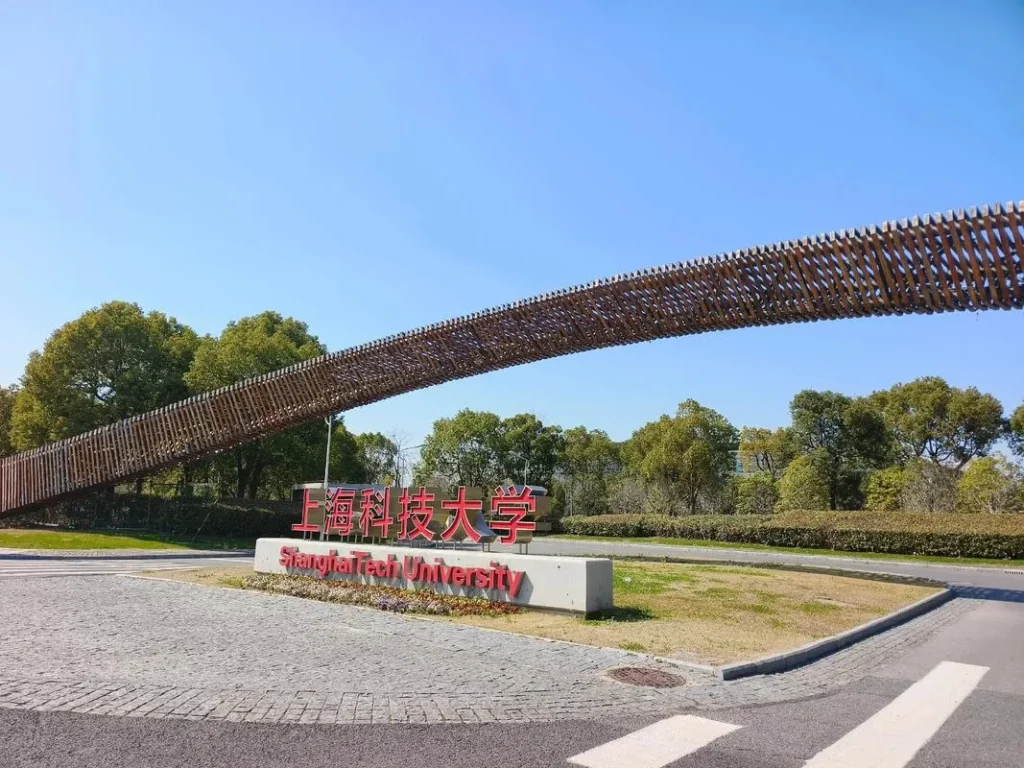
ShanghaiTech University plays a foundational role in talent development and in the commercialization of research. In May 2026, the university officially launched its Research Center for Brain-Computer Interface, advancing research on brain-machine integration.
The university hosted its Spring 2026 University-Enterprise Cooperation Meeting, bringing together enterprises including Bank of Shanghai, Shanghai Pharma, XPENG, AMIES, and WuXi Biologics. The university’s School of Life Science and Technology combines world-class research output with a training system designed to supply the biopharmaceutical industry with talent who understand both frontier science and engineering logic.
ShanghaiTech also served as a science education base for the 2026 Shanghai Science Festival, opening national key laboratories and biomedical engineering facilities to the public.
Smart mobility is becoming another proof point for Shanghai’s innovation. Pudong’s 2026 cluster plan includes intelligently connected vehicles among the 500 billion yuan cluster targets. Shanghai is also part of a broader China conversation on vehicle intelligence, software-defined vehicles, C-V2X, vehicle-road cloud coordination, AI perception, and in-vehicle large models.
At MWC Shanghai 2026, the Smart Mobility Summit framed the market around intelligent vehicles and the low-altitude economy. Its agenda focused on perception models, vehicle decision systems, C-V2X coordination, cloud edge vehicle intelligence integration, autonomous driving from L2 to L4, and smart cockpit AI.
The commercial implication is clear. Shanghai is building an environment where automakers, telecom operators, cloud companies, AI providers, and infrastructure players can test system-level mobility. Audi and SAIC’s 2026 plan to establish an Audi Innovation and Technology Center in Shanghai, focused on intelligent electrification and whole vehicle development for intelligent connected vehicles, reinforces this local R&D logic.
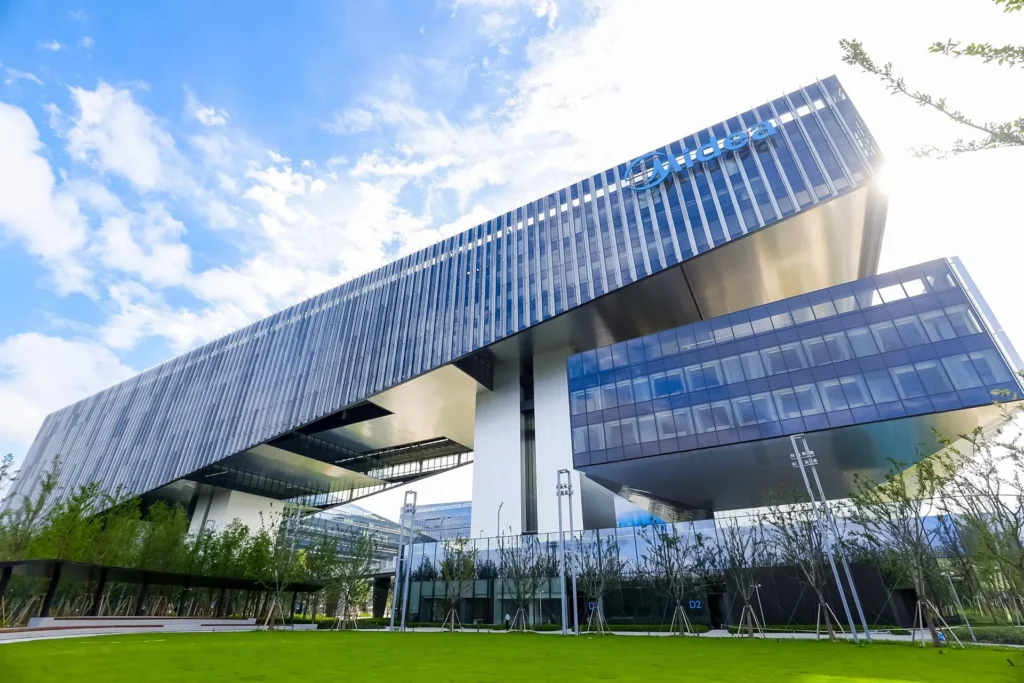
The Midea Global Innovation Headquarters Shanghai topic matters because enterprise R&D campuses are now integral to Shanghai’s technological identity. In March 2026, the Information Office of Shanghai Municipality named the Shanghai Midea Global Innovation Campus one of the landmark high-level R&D centers completed and put into operation in the Hongqiao International Central Business District.
This shows a different side of Shanghai innovation. Zhangjiang provides the hard tech cluster model. Xuhui supports foundation model incubation. Pudong links biomedicine, mobility, and manufacturing. Hongqiao adds corporate R&D headquarters and international business connectivity.
The first batch of nearly 2,000 R&D personnel has already settled in the park, covering AI, new energy, new materials, robotics, and healthcare. The campus serves as one of Midea’s two global innovation centers, alongside Foshan, forming part of a “2+4+N” global R&D layout
The Shanghai Technology Innovation Center’s story is about understanding how China builds application velocity. Shanghai connects policy targets with district specialization, then ties those districts to companies, universities, hospitals, industrial parks, and capital channels.
A global company can use Shanghai as a learning base in three practical ways. It can observe how vertical AI applications reach industry users. It can identify which biotech and mobility scenarios are gaining institutional support. It can map where local partnerships make sense before committing capital.
Shanghai is a coordinated system for turning frontier technology into market scenarios. For executives, the opportunity is to read that system early, then decide where partnership, localization, investment, or executive learning can create a durable advantage.
Chozan helps global business leaders understand China’s innovation economy with clarity, context, and commercial relevance. From China learning expeditions and executive workshops to custom research, expert briefings, and digital transformation consulting, Chozan turns fast-moving market signals into practical strategy. Book a consultation to explore how the Shanghai tech ecosystem can inform your next decision on China growth, innovation, or partnerships.
Shanghai is strong in AI because it connects foundation model incubation, application scenarios, policy support, research talent, and enterprise users. The city’s 2026 priority is the vertical adoption of AI in sectors such as healthcare, manufacturing, mobility, and finance.
Zhangjiang supports foreign technology companies through cluster density, enterprise services, policy funding, research partners, and access to scenarios. Its 2026 AI Innovation Town plan is useful for firms that need local partners, pilot settings, or industry visibility.
Shanghai is strong in both, but the most interesting opportunity sits between them. Pudong’s 2026 AI drug discovery activity shows how biomedicine, lab automation, robotics, and foundation models can combine within a single R&D workflow.
ShanghaiTech University adds research depth, talent, and translational platforms to the city’s innovation system. It’s 2026; work in brain-computer interfaces and robot tactile intelligence shows how academic research can feed into applied health and robotics opportunities.
Shanghai differs from Shenzhen through its mix of finance, life sciences, advanced manufacturing, universities, hospitals, and multinational R&D. Shenzhen is stronger in hardware speed, while Shanghai is valuable for regulated sectors and complex enterprise adoption.
Global executives can use Shanghai as a living laboratory for China’s applied technology direction. Site visits, expert briefings, and partner mapping can reveal how policy priorities become product pilots and procurement opportunities.
The Shanghai Foundation Model Innovation Center matters because it provides foundation model startups with space, access to partners, and ecosystem services. Its role is strategic because Shanghai wants AI models tied to real sector applications.
The Midea Global Innovation Headquarters Shanghai signal shows Hongqiao’s role in corporate R&D and international business connectivity. For global companies, Hongqiao can combine headquarters functions, access to talent, product research, and proximity to exhibitions.
Yes, Shanghai can help companies localize AI products because its policy system encourages application scenarios, public service pilots, and enterprise adoption. The strongest route is usually sector-specific, such as healthcare, manufacturing, mobility, or finance.
Investors should watch vertical AI applications, biotech automation, brain computer interfaces, embodied intelligence, intelligent connected vehicles, and enterprise R&D platforms. The key is to track where policy support and commercial demand overlap.