
China offers useful examples of how to help customers discover products, connect shopping across channels and design services around everyday needs. Global retail leaders can study these practices without planning to enter China. The opportunity is to find a better way to serve customers at home, not to copy a Chinese platform or store format wholesale.
Perhaps your products are easy to find but hard to get excited about. Perhaps your stores, website and social content feel like different businesses. Or your team keeps hearing about Chinese retail innovation without knowing which parts deserve attention.
Start with those questions. They provide a more useful reason to learn from China than a list of impressive technologies.

What could your team learn?
Make value visible
Help customers discover.
Connect the journey
Make the next step easier.
Rethink convenience
Fit real shopping occasions.
Learn from the practice. Find the relevance to your market.
Why look to China for retail ideas?
China is worth studying because it offers concrete alternatives to familiar ways of selling. Kuaishou connects product content with shopping. Freshippo, also known as Hema, connects grocery stores with mobile ordering and fulfilment. These examples make it possible to examine a customer journey in practice, rather than discuss innovation in the abstract.
The useful question is not whether China is ahead in every area. It is whether a different approach reveals something your own business has overlooked.
- Discovery: Are we helping people understand why a product matters, or only making it searchable?
- Continuity: Can shoppers move from inspiration to purchase without starting again?
- Convenience: Does our service fit what customers are trying to get done?
None of these needs belongs exclusively to China. The platforms, shopping habits and operating conditions differ, but the underlying business questions can be familiar.
This article focuses on those transferable ideas. For the wider consumer-growth picture, explore our Consumer Growth & Retail Innovation hub.
What can China teach us about helping customers discover products?
Show the customer a useful situation, not just a product specification. A demonstration can explain a benefit that a catalogue image leaves unclear: how something fits, what it makes easier or who it is designed for.
Kuaishou’s Q3 2025 results describe a shopping journey connecting short-video recommendations, livestream purchasing and follow-up videos. Its search and shopping-mall commerce also contributed more than 32% of e-commerce GMV that quarter. Content-led discovery and deliberate product searches coexist; one does not simply replace the other.
For a global brand, the lesson is broader than launching a livestream. Consider where a customer needs to see a product in use before its value becomes obvious. That might be a demonstration on a product page, a creator explaining a specific problem or a store colleague comparing two options.
A Chinese brand applying the idea overseas
A January 2026 Zhejiang Daily report describes how Made4Pets, a brand of Chinese pet-products manufacturer Tianyuan Pet, found different product demand on Amazon and TikTok Shop. A large scratching post that had struggled in physical retail attracted orders when a video showed a large cat using it. Customer comments also informed changes to pet stairs, including a gentler slope and non-slip fabric.
This is a company-reported example, not proof that video guarantees profitable growth. It does, however, make a useful distinction: content can help a team learn what customers value, as well as help customers understand the product.
The question to bring back to your team: which of our products would make more sense if customers could see the problem it solves?
What can we learn from the way Chinese retailers connect stores, content and delivery?
Look at the connections between channels, not only at each channel’s performance. A shopper may discover an item in a video, compare it on a product page and expect a nearby store to help complete the purchase. Each handover can make that journey easier or more frustrating.
Freshippo: the store has more than one job
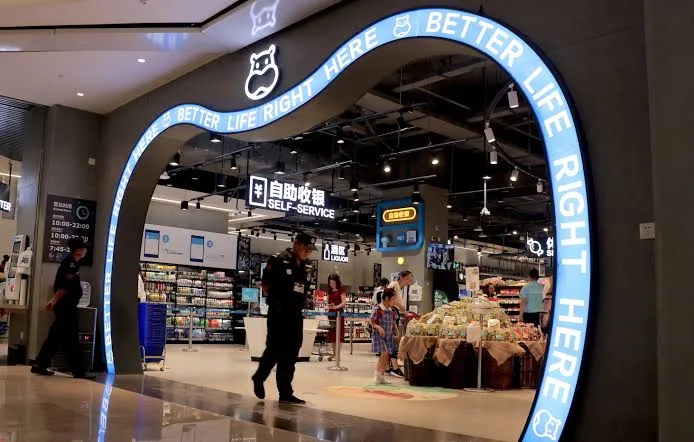
Freshippo illustrates the connection between physical shopping and fulfilment. Alibaba’s published accounts describe stores that also fulfil online orders, alongside an app through which customers shop remotely or access product information in-store. Its current business profile highlights a 30-minute mobile-order delivery option.
The important lesson is not that every supermarket should promise the same delivery speed. It is that the store, ordering interface and fulfilment service can be designed around the same shopping need.
For a retailer elsewhere, a useful first application might be much simpler: showing reliable local availability, making collection straightforward or helping customers order an unavailable size from the shop floor. These are possible adaptations, not claims about Freshippo’s exact processes.
Kuaishou and Freshippo illustrate different parts of this picture. One connects content with commerce; the other connects grocery shopping with local fulfilment. Neither proves that every retailer needs one all-purpose app.
What to notice: where does the customer move smoothly to the next step, and where does your own experience ask them to repeat the work?

Curious whether a China tour is right for your team?
Tell Jemma your industry, preferred cities and timing. Explore which retail topics could make a visit relevant to your team.
Which of these lessons could work in your market?
Start with a shared customer problem. Then choose the local version of the solution.
You do not need the same apps or delivery infrastructure to learn from a practice, but those differences matter when deciding how to use it.
If your team is asking…
Why don’t customers understand what makes this product different?
A lesson worth exploring
Demonstrate a specific use or benefit.
A possible local version
Add problem-led demonstrations to product pages, creator briefs or store displays.
If your team is asking…
Why do shoppers get lost between our channels?
A lesson worth exploring
Make the next shopping step clear and consistent.
A possible local version
Connect content to the exact product, availability information and buying options.
If your team is asking…
Why does our service feel inconvenient?
A lesson worth exploring
Design around a real shopping occasion.
A possible local version
Improve collection, ordering or delivery choices for that occasion.
These are starting points for exploration, not a universal rollout plan. Local customer preferences, staffing, technology and costs will shape what is practical.
There are also reasons to look beyond the most visible digital examples. How brands explain a premium and how they serve smaller households may be closer to your immediate priorities. Our articles on premium versus value and solo-living consumption occasions explore those questions in more detail.
The aim at this stage is a focused learning agenda: one or two practices worth understanding better, rather than a commitment to copy an entire business model.
What could your team learn by seeing it firsthand?
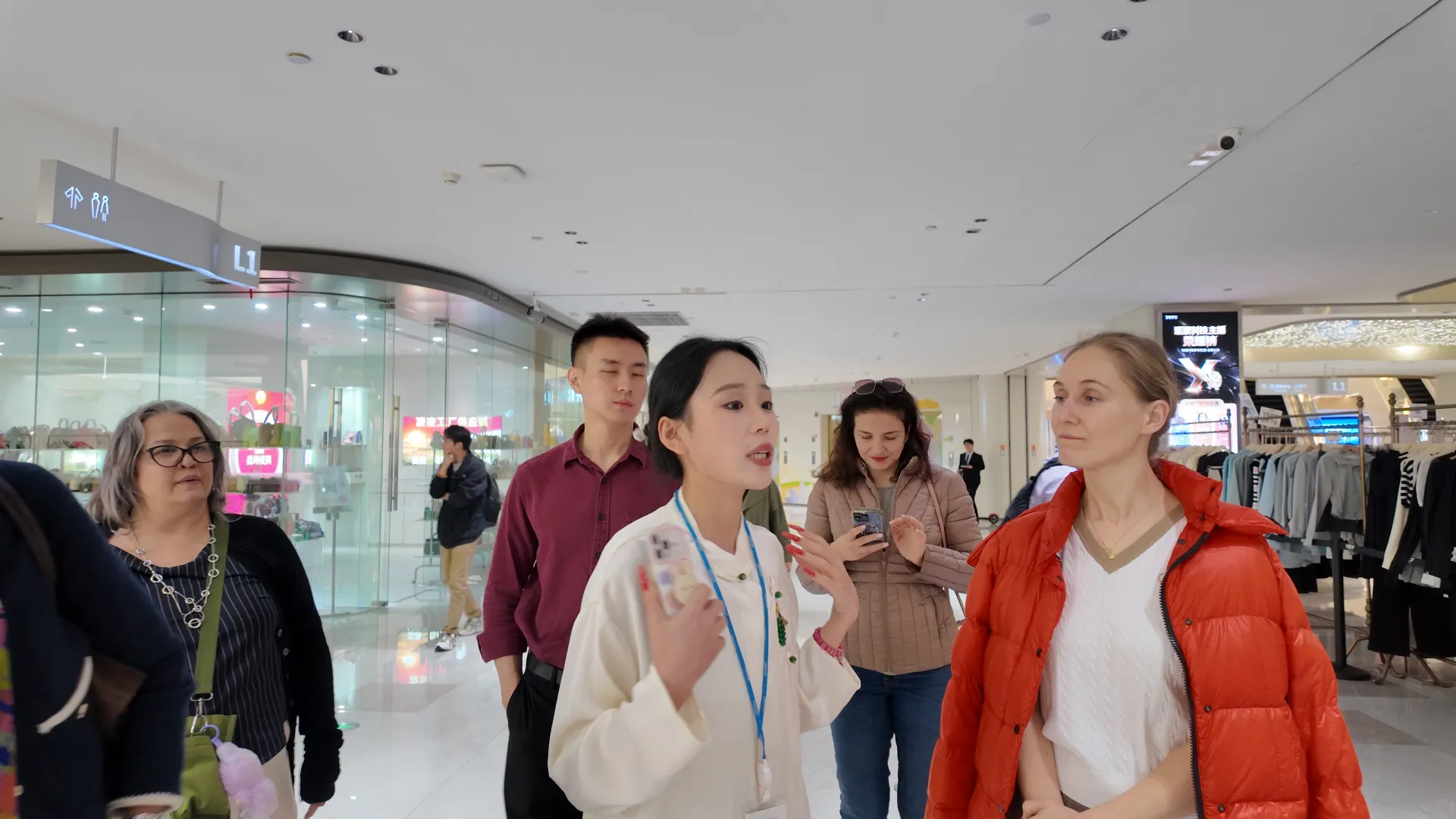
A visit adds value when it reveals how the experience actually works. A report can describe an app or a store. On the ground, your team can examine product presentation, follow the available shopping steps and compare the experience with what your customers encounter at home.
For product discovery, notice what demonstrations explain and what questions remain unanswered. For connected retail, follow the handover from browsing to ordering or collection. For convenience, consider the occasion the service is designed around, not just how fast it looks.
Where conversations with operators are available, they can help clarify the work behind the experience. A visible feature alone cannot tell you its profitability, how widely it has been replicated or whether customers consistently value it.
You do not need a China market-entry plan to find this useful. You need a relevant question about your own customers and an interest in seeing how another business approaches it.
Already considering a visit? Read what retail leaders should investigate on a China learning expedition for the practical next step.
See what could inspire your next retail idea.
Explore how businesses in China help customers discover, shop and solve everyday needs. Bring your team’s questions and see which practices could offer a fresh perspective for your own market.
Specific visits and access are subject to confirmation.
Frequently asked questions
Is learning from China relevant if we do not sell there?
Yes, if the practice addresses a customer problem you recognise. Product demonstrations, clearer shopping handovers and occasion-led services can provide ideas for an existing market. Learning from China and entering China are different objectives.
Which China retail lessons should we explore first?
Start with your current friction. If customers do not understand a product’s value, examine discovery and demonstration. If they struggle between channels, examine the shopping journey. If your offer does not fit daily routines, examine convenience and consumption occasions.
Do we need Chinese platforms to apply the ideas?
Not necessarily. A clear demonstration or a better connection between content and shopping can use tools already available in your market. Platform-specific functions, payment methods and delivery promises need a separate assessment of local feasibility.
What does a learning expedition add beyond online research?
It lets your team compare real environments and examine details that published accounts may omit. Where access permits, discussions can provide further context. A visit complements research; it does not automatically validate a business model or guarantee access to internal data.

Consumer Growth & Retail Innovation

Premium vs. Value