CONTENT

Doubao AI has become a central figure in China’s generative AI race. Developed by ByteDance, the company behind TikTok and Douyin, it was launched in August 2023 and quickly rose to prominence. By early 2026, it had over 155 million weekly active users, more than any other AI chatbot in China.
During the Lunar New Year holiday in February 2026, the app’s daily active users surpassed 100 million. This surge was driven by a partnership with the Spring Festival Gala, during which the assistant handled 1.9 billion queries in a single evening. These numbers place Doubao AI among the world’s largest generative AI platforms.
Many international observers still ask what Doubao is and what its meaning is in the AI ecosystem. In simple terms, Doubao AI is ByteDance’s generative AI assistant and model platform designed to power chat, automation, and multimodal applications across consumer and enterprise environments.
To understand why it is so influential, one must look beyond the simple idea of a chatbot and consider how ByteDance operates within the ecosystem of Chinese social media platforms, where content, discovery, and digital services intersect.
ByteDance integrates the assistant into its social, cloud, and hardware ecosystems. This article explores what Doubao AI is, how its technology works, its capabilities, how it compares with global peers, and how businesses can evaluate its relevance in 2026.
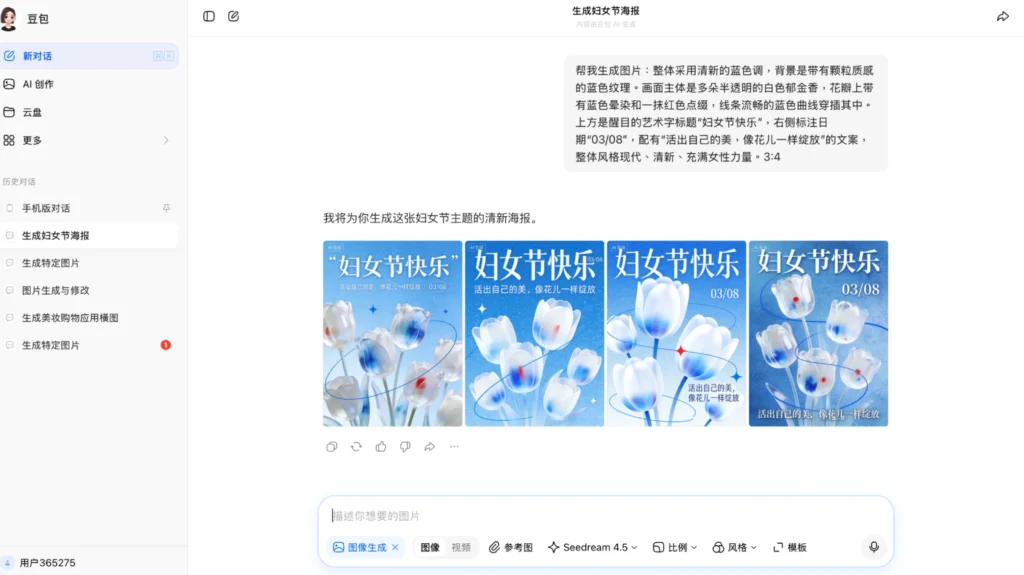
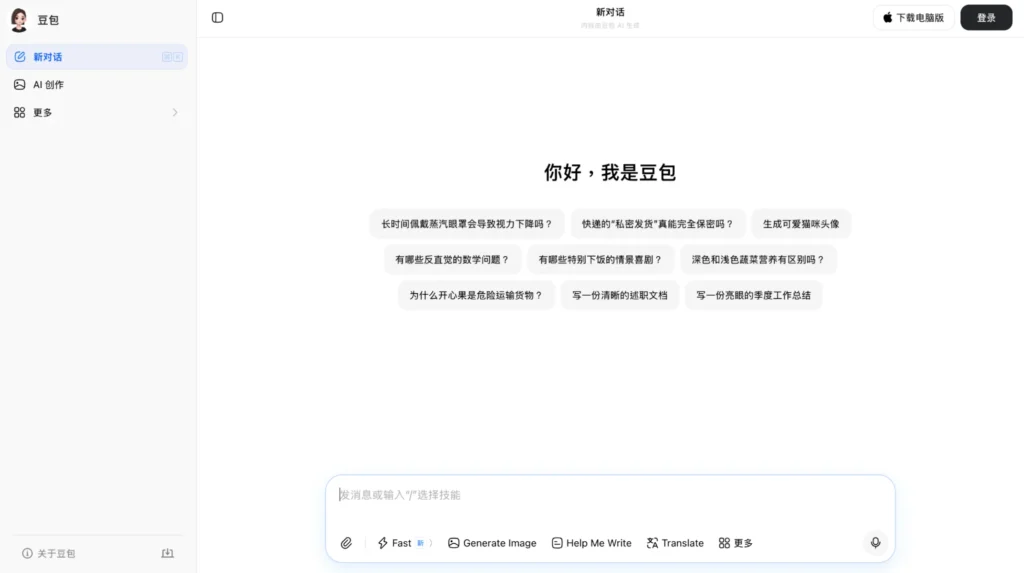
At its core, Doubao AI is an intelligent assistant available via mobile apps, desktop clients, and a web interface. Users can converse with it in Chinese or English, ask factual questions, get article summaries, create images or short videos, translate between languages, or act out role-playing scenarios.
The assistant supports multiple interaction modes, including text, voice and images. Doubao AI supports 18 international languages and 20 Chinese dialects, giving it global reach while maintaining strong localisation.
The 2025 upgrade, dubbed version 1.6, introduced adjustable reasoning modes. Users can select minimal, low, medium, or high “thinking length” to tailor the depth of responses. The upgrade reduced output token usage by 77.5 percent and response time by 84.6 percent while maintaining quality. ByteDance also offers a lighter 1.6 lite model with faster inference speed and a favourable cost profile.
Doubao AI is powered by the Doubao Seed model family, a ByteDance AI model architecture designed for conversational intelligence, coding assistance, and multimodal generation. Variants include general models (Doubao Pro), domain-specific models such as Seed Code for programming and Seed TTS for speech synthesis, and multimodal models like Seedance for video generation.
Earlier model generations, such as Doubao 1.5 and Doubao 1.5 Pro, significantly improved reasoning depth and inference efficiency. The doubao-1.5-pro model introduced longer context handling and stronger coding capabilities, helping ByteDance attract enterprise developers before the release of the newer 2.0 generation.
The 2024 release of Doubao Seed Code introduced a programming assistant that supports over 200 programming languages and provides a 256-k token context window. It matches or exceeds Anthropic’s Claude Sonnet 4.5 on the SWE Bench benchmark while costing significantly less. The 2026 release of Doubao Seed 2.0 brings the assistant into the “agent era”.
The pro version executes complex real-world tasks through reasoning, planning, and tool use. ByteDance notes that the model’s cost per token is roughly an order of magnitude lower than global competitors such as OpenAI’s GPT 5.2 and Google Gemini 3 Pro.
The 2.0 pro model includes capabilities for multi-step task execution, tool invocation, and advanced search agent functions, achieving top scores on evaluation suites like HLE Text. ByteDance’s voice models also stand out. The Seed TTS 2.0 and Seed ICL 2.0 releases in late 2025 offer emotional expressiveness and accurate reading of complex formulas.
ByteDance delivers Doubao AI through its Volcano Engine cloud platform. The cloud service provides Doubao APIs that allow companies to embed the models into their own products. It holds nearly half of China’s public cloud large model services market — Volcano Engine commanded a 49.2 percent share in the first half of 2025.
Volcano Engine supports model fine-tuning, inference, context caching, and plugin ecosystems. Developers can access Doubao AI through standardised protocols. Developers also experiment with integrations, such as LangChain Doubao connectors, enabling the model to run within agent pipelines and automated AI workflows.
Models are compatible with Anthropic’s API and can serve as a drop-in replacement for Claude, lowering switching friction for global developers.
The platform also includes hardware integration: ByteDance released a Doubao Phone in December 2025 with system-level AI functions such as voice control and form-filling; the second generation is planned for mid 2026. This combination of cloud, software, and hardware positions Doubao AI as more than just a chatbot; it is part of a multimodal and multi-device ecosystem.
Unlike monolithic large language models, the Doubao LLM architecture uses a sparse mixture-of-experts design. Each input activates only a subset of the network’s experts, reducing computational cost and enabling efficient scaling.
Doubao Pro uses a sparse mixture of experts and emphasises that training data does not rely on other models’ datasets. Reinforcement learning with sandbox feedback helps refine the system, and the training runs on thousands of GPUs with tens of thousands of concurrent sessions.
By dynamically activating different experts, the model gains a sevenfold performance boost while keeping parameter usage low.
A striking metric is the amount of data processed. Doubao’s daily token usage grew from 12.7 trillion in March 2025 to over 30 trillion by September 2025. By December 2025, the models were processing more than 50 trillion tokens per day. This is more than Google’s reported 43.3 trillion tokens processed daily.
Volcano Engine’s context cache reduces the cost of long context tasks by 80 percent, allowing enterprises to run large documents at a fraction of the price. These numbers highlight the robustness of ByteDance’s infrastructure and its ability to handle massive user demand.
A notable aspect is the model’s independence. Doubao does not rely on open source model data or distillation; it trains on ByteDance’s own datasets. Reinforcement learning with feedback loops allows continuous improvement.
The Seed Code training involved 100 000 container images. The decision to avoid distillation means the models do not inherit biases or safety issues from other systems, giving ByteDance greater control over the model’s behaviour.
The technical design of Doubao AI supports multimodal processing across diverse data types.
The system can interpret text, analyze images, understand speech, and generate visual content inside the same environment. This capability allows the assistant to respond to more complex requests that combine multiple information formats.
ByteDance has also developed specialized models integrated into the Doubao ecosystem, including systems for:
For example, speech synthesis models can reproduce emotional tone and regional accents, while visual generation models allow users to create images through natural language descriptions.
Within the developer ecosystem, tools such as Doubao Translate, Doubao Embedding, and Doubao TTS enable companies to build multilingual assistants, semantic search systems, and voice-enabled interfaces powered by the Doubao model family.
Video generation capabilities have also expanded with the Seedance model family, which focuses on synchronized audio-visual generation. These systems support applications such as AI video production and automated visual storytelling.
ByteDance’s video generator, Seedance 2.0, went viral in early 2026 and drew comparisons with DeepSeek’s video models. It allows users to create short videos using text, images, and audio prompts. The Doubao app also features video editing tools and integration with Douyin, enabling users to publish AI-generated clips directly to a social platform.
In February 2026, ByteDance released Doubao Seed 2.0, which positions the assistant for complex tasks. The pro version achieves world-class performance in mathematics and programming competitions. It earned gold medals at the International Mathematical Olympiad and the International Collegiate Programming Contest benchmarks, and even surpassed Google’s Gemini 3 Pro on the Putnam test.
These accomplishments illustrate that Doubao AI is not only a consumer assistant but also a high-performance model for specialised tasks.
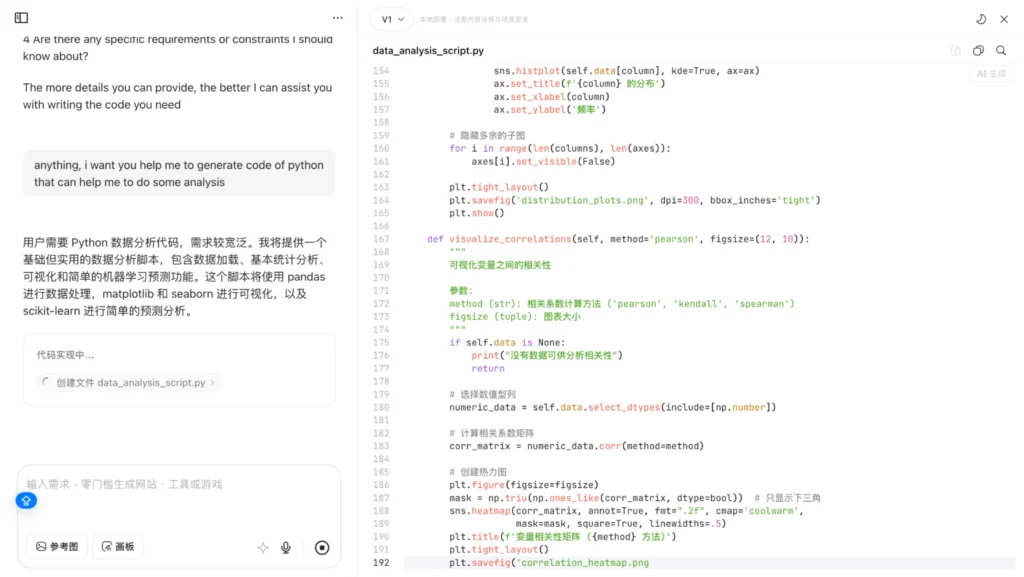
The Seed Code model powers Doubao AI’s programming assistance. It supports over 200 programming languages and offers context windows of up to 256k tokens, which is 28 percent larger than Claude Sonnet 4.5. It excels at code generation, explanation, bug detection, performance optimisation, refactoring, and unit test generation.
Benchmarks show that Doubao Seed Code achieves state-of-the-art performance on SWE Bench and other tasks while offering roughly 93 percent cost savings compared with Claude Sonnet 4.5.
Doubao 2.0 signals a shift toward agent-based AI. An agent can plan and execute multi-step tasks using tools and external systems. The 2.0 pro model supports instruction-following, tool invocation, and search-agent functions, achieving top scores on tests of instruction adherence and tool usage.
ByteDance emphasises that such capabilities will be essential for real-world applications where AI must perform tasks rather than simply answer questions.
For example, the Doubao agent can plan a travel itinerary, book tickets, summarize news, generate code, and then deploy it through integration with the user’s development environment.
Doubao AI’s rapid growth is intertwined with ByteDance’s distribution channels. Doubao is deeply integrated into Douyin (the Chinese version of TikTok) and Toutiao (a news app). Social-first features, such as automatic watermarks on generated images, one-click sharing to Douyin, and text-to-speech memes, encourage virality.
The platform supports dialect voices and role-playing games, fostering community engagement. These features also align with the rapid growth of China’s livestream commerce industry, where creators combine entertainment and real-time product promotion.
DataGlobeHub notes that the Chinese version of Doubao supports twenty regional dialects and enjoys 17.5 times more users than the international Dola/Cici version.
A partnership with CCTV’s Spring Festival Gala, where the assistant responded to 1.9 billion queries in real time. After the holiday, active users dropped but remained higher than those of Alibaba’s Qwen and Tencent’s Yuanbao, according to a private survey.
ByteDance’s ecosystem also includes financial incentives and hardware. During the Spring Festival, the company launched a “red envelope” campaign that allowed users to interact with the AI and receive cash rewards. The Doubao Phone, released in December 2025, sold out its 30,000-unit initial run and integrates the assistant at the system level.
With 175 million monthly active users and 100 million daily users, Doubao ranks as China’s number one AI chatbot. Its international reach, under the Dola brand, is limited to emerging markets such as Mexico, Malaysia, and the Philippines due to regulatory hurdles in the United States, Canada, and Australia.
| AI Platform | Company | Core Strength | Primary Use Cases | Strategic Advantage |
| Doubao AI | ByteDance | Multimodal AI and creator ecosystem integration | Content creation, coding, AI assistants | Integration with Douyin, Toutiao, and creator tools |
| DeepSeek | DeepSeek AI | High-performance reasoning models | Research, AI development, technical tasks | Open model approach and strong benchmark results |
| Qwen | Alibaba | Enterprise AI integration | E-commerce automation, business applications | Integration with Alibaba Cloud and commerce platforms |
| ERNIE Bot | Baidu | Search and knowledge systems | Search, enterprise AI tools | Integration with the Baidu search ecosystem |
| Yuanbao | Tencent | Messaging ecosystem integration | Customer service, consumer assistants | Integration with WeChat and payment infrastructure |
When comparing Doubao AI with leading Western models such as OpenAI’s GPT 5.2 and Google’s Gemini 3 Pro, several differences emerge. Doubao emphasises cost efficiency.
The Seed Code API charges around $1.29 per million tokens, while ChatGPT 5.2 costs roughly $15.75 per million tokens, and Google Gemini 3 Pro costs $14.
Doubao’s context window is 256 k tokens, which is twice that of ChatGPT 5.2 (128 k) and larger than Gemini’s 128 k. GPT 5.2 delivers faster response times (213 tokens per second versus 30 tokens per second for Doubao Seed Code). Doubao’s use of reinforcement learning and a mixture-of-experts approach makes it cost-effective for large-scale tasks.
DeepSeek, an open-source Chinese model, shocked the market in early 2025 with performance comparable to ChatGPT. Doubao regained the top position by April 2025 and maintained a 19 percent lead in monthly active users over DeepSeek.
DeepSeek excels in research benchmarks but lacks the social integration and multimodal features that Doubao offers. Qwen, developed by Alibaba, focuses on enterprise integration and has strong e-commerce capabilities. In February 2026, Alibaba spent 3 billion yuan ($417 million) on coupon giveaways to boost Qwen’s user base, raising daily active users from 7 million to 58 million.
Yet Doubao still led with 155 million weekly active users. Qwen’s strength lies in integrating shopping and payment functions; Doubao’s advantage is its embedded presence in social apps and multimedia creation.
Tencent’s Yuanbao benefits from WeChat’s ecosystem and offers integration with the WeChat Pay service. During the Lunar New Year, Yuanbao reached 50 million daily active users but saw a sharp decline after its coupon campaign ended. Doubao’s user retention is stronger due to content-driven growth and social features.
Enterprises should evaluate Doubao AI’s ability to handle complex tasks, maintain reasoning quality, and support multimodal inputs. The 2.0 pro model demonstrates strong performance in mathematics and programming tasks, indicating robust reasoning.
Companies should test the model on domain-specific queries, such as financial analysis or legal drafting, to gauge its depth and accuracy.
Doubao’s pricing is a compelling argument for adoption. At about $1.29 per million tokens, it is significantly cheaper than ChatGPT 5.2 and comparable models, which can cost $15 or more per million tokens.
The context cache feature further reduces costs by 80% for long-running document tasks. Businesses with high token consumption, such as media companies processing long scripts or legal firms reviewing long contracts, stand to benefit.
A key advantage of Doubao AI is its compatibility with existing developer tools. The models support the Anthropic API and work with IDEs such as VS Code via standard protocols. ByteDance’s Trae IDE provides native integration for coding workflows.
Enterprises should assess how easily they can integrate the AI into their pipelines and whether the available SDKs support their programming languages.
Finally, companies must consider whether ByteDance’s broader ecosystem fits their strategy. Doubao is deeply integrated into Douyin and Toutiao. Organizations evaluating Doubao AI often begin with three practical pilots: multilingual translation assistants, long-document analysis tools, and developer coding copilots powered by the Doubao model family.
Brands targeting Chinese consumers may benefit from seamless distribution and marketing through these channels. Firms outside China may find limited support because of restrictions in North America and other regions.
The rise of Doubao AI has wider implications for the AI industry. Its rapid expansion reflects broader shifts in China’s digital transformation, in which artificial intelligence, cloud infrastructure, and platform ecosystems are reshaping entire industries.
ByteDance’s investments in Doubao Phones and upcoming wearables indicate a goal of embedding AI at the operating system level.
Despite its strengths, Doubao AI faces several challenges. The infrastructure required to process 50 trillion tokens daily demands enormous computing resources; any disruption to GPU supply could hamper growth.
Monetization remains an issue: Chinese AI apps generated only $500 000 in iOS revenue over twelve months, compared with ChatGPT’s $1.7 billion. This gap suggests that advertising and cloud services must bear the revenue burden, which may not be sustainable. Doubao’s availability in major Western markets is limited due to regulatory concerns.
Security and privacy remain critical; while ByteDance claims independent training data, the company must maintain user trust through transparent policies. As competitors like DeepSeek, Qwen, and Yuanbao continue to innovate, Doubao will need to maintain its lead in both technology and user experience.
Looking ahead, Doubao AI is poised to expand its presence. ByteDance plans to release a second-generation Doubao Phone in mid-2026 and is exploring other smart devices, such as glasses and earbuds.
The shift to agent-based AI suggests that the assistant will move beyond chat into autonomous execution. Improved multimodal capabilities, including longer videos and more advanced image editing, are expected to roll out.
International expansion through the Dola brand may continue in emerging markets, though regulatory barriers in the West remain. Overall, Doubao AI exemplifies how AI is becoming an integral layer of digital life, embedded in social networks, devices, and workflows.
Doubao AI illustrates how quickly generative AI can scale when embedded within an existing digital ecosystem. ByteDance did not introduce the assistant as an isolated chatbot. Instead, the company integrated AI capabilities into creator tools, recommendation systems, enterprise infrastructure, and consumer applications that already attract hundreds of millions of users.
This strategy allowed Doubao AI to evolve from a simple conversational assistant into a platform supporting media production, marketing workflows, research tasks, and software development.
For companies studying China’s AI landscape, the lesson extends beyond a single model. Understanding patterns of Chinese consumer behavior also helps explain why new digital tools can scale quickly across the country’s platform ecosystems.
The most successful AI deployments combine technology, distribution, and real user workflows. Platforms that connect these elements tend to expand far faster than standalone AI applications.
Understanding these ecosystem dynamics is essential for any organization that wants to interpret China’s rapidly evolving generative AI market.
China’s AI industry is evolving at exceptional speed. New platforms, research breakthroughs, and ecosystem strategies appear almost every month. For global companies, interpreting these developments requires both technical understanding and deep knowledge of China’s digital economy.
ChoZan works with international brands, technology companies, and innovation teams that want to understand how emerging technologies are reshaping the Chinese market.
Our work focuses on three areas:
Strategic intelligence: We analyze China’s digital platforms, AI ecosystems, and technology trends to help companies understand how innovation unfolds inside the Chinese market.
Executive briefings and advisory: Senior leaders often request focused briefings that explain how developments such as generative AI, social commerce, and digital ecosystems influence global competition.
Learning expeditions and innovation programs: ChoZan organizes curated learning experiences that allow international teams to observe China’s technology ecosystem directly through company visits and expert discussions.
If your organization wants to understand how AI platforms like Doubao AI fit into China’s broader technology landscape, our team can help translate these developments into practical strategic insight.
Contact ChoZan or book a strategy briefing with Ashley Dudarenok to explore how China’s AI ecosystem is evolving and what it means for global businesses.
Doubao AI offers free access for general users through its mobile app and web interface. However, businesses that integrate the model via ByteDance’s Volcano Engine platform may incur usage-based fees based on token consumption and infrastructure requirements.
Yes. Developers can access Doubao AI models through APIs provided by ByteDance’s Volcano Engine cloud platform. These APIs allow companies to integrate language models into applications such as chat assistants, document processing systems, and software development tools.
Early adoption of Doubao AI has been strongest in industries such as digital marketing, e-commerce, software development, education technology, and media production. These sectors benefit from AI tools that automate writing, data analysis, and content creation workflows.
Yes. Many companies use Doubao AI to automate tasks such as customer support responses, document summarization, internal knowledge search, and marketing content generation. Enterprise deployments usually run through ByteDance’s Volcano Engine infrastructure.
Doubao AI’s Seed Code model supports more than 200 programming languages. Developers commonly use it for tasks such as debugging scripts, generating code snippets, explaining programming logic, and improving software documentation.
Doubao AI supports long context windows, allowing users to upload large documents for analysis. The system can summarize reports, extract key insights, and reorganize information into structured outlines for easier reading and interpretation.
Yes. Many users rely on Doubao AI to practice translations, explain grammar rules, and simulate conversations in different languages. Because the assistant supports multiple dialects and languages, it can serve as a conversational language-learning tool.
Companies involved in digital media, e-commerce, software development, and customer support may benefit most from testing Doubao AI. These sectors often require frequent content generation, data analysis, and automated communication tools.
Organizations using Doubao AI should evaluate data handling policies and regulatory requirements before integrating the platform. Like most cloud-based AI systems, security depends on how data is transmitted, stored, and managed within enterprise workflows.
AI assistants are more likely to complement existing tools rather than fully replace them. Many companies use systems like Doubao AI alongside traditional software platforms to automate repetitive tasks and improve productivity.
11. Can Doubao AI connect with other software tools?
Yes. Through ByteDance’s developer infrastructure, Doubao AI can connect with external applications and software environments. This allows companies to embed the AI assistant inside business tools, developer platforms, and automated digital workflows.