CONTENT

Chinese e-commerce has been reshaped by PDD Holdings, the parent company of Pinduoduo and Temu. In less than a decade, the company evolved from a niche platform into a global commerce player by combining social shopping, data-driven systems, and large-scale logistics.
According to the 2026 ChoZan report, PDD Holdings accelerated its AI-driven commerce and supply chain strategy in 2025, while Temu expanded into more than 90 countries. At the same time, Q3 2025 revenue grew 14 percent, supported by subsidies and rapid user growth.
PDD Holdings now operates as an integrated commerce system that connects farmers, factories, and consumers through AI-driven coordination. This article explains how Pinduoduo and Temu built a scalable social commerce and supply chain model that is redefining global retail.

PDD Holdings is a commerce infrastructure company that helps merchants acquire traffic, convert demand, and improve operational efficiency across its platforms. It operates through Pinduoduo in China and Temu globally, both built on the same underlying model but applied to different markets.
In practice, Pinduoduo functions as the domestic engine, while Temu extends that model internationally. This structure allows the company to replicate its demand aggregation and supply coordination capabilities across regions without rebuilding its core system.
The company was founded in 2015 by Colin Huang, a former Google engineer, to combine value retail with interactive shopping. Pinduoduo introduced a group-buying model in which users team up on social platforms to secure lower prices, turning purchasing into a shared activity rather than an individual transaction.
Temu applies the same logic at a global scale. It connects merchants to international consumers through coordinated logistics, fulfillment partnerships, and operational tools that streamline production and distribution. As a result, PDD Holdings converts a China-developed operating system into cross-border retail execution at scale.

PDD Holdings scales through structural advantages that traditional e-commerce players struggle to replicate. The first is demand aggregation. Group buying and social sharing reduce customer acquisition costs by turning users into distribution channels.
The second is pricing control. Algorithmic systems adjust pricing dynamically based on demand intensity, inventory levels, and competitive signals. This allows the platform to maintain high conversion without relying on fixed margins.
The third is supply chain responsiveness. Demand signals flow directly into supplier decisions, allowing factories to adjust production quickly and reduce unsold inventory. This improves capital efficiency across the system.
Together, these mechanisms create a self-reinforcing loop. Lower prices drive more users. More users generate better demand data. Better data improves supply chain efficiency. This cycle compounds over time.
Artificial intelligence sits at the core of PDD Holdings’ operating model. The company is investing RMB 100 billion into rural logistics, AI personalization, and supplier ecosystems. Its internal “Juneng AI” platform powers risk control, merchant tools, and logistics planning, enabling scale with a lean workforce.
PDD strengthened its logistics layer by chartering cargo flights and establishing warehouses in the United States and Europe. Predictive AI pre-stocks high-demand items, reducing Temu shipping times from around fifteen days to five to seven days.
Recommendation systems extend beyond product suggestions. They generate short video feeds, automate customer service, detect counterfeit goods, and adjust subsidies through dynamic pricing engines in real time. New tools such as virtual stylists, gift finders, and conversational search shift the platform from search-based commerce to discovery-driven experiences.
At a deeper level, PDD is moving toward AI-guided manufacturing, where demand forecasts directly influence factory output. This closes the loop between consumption and production.
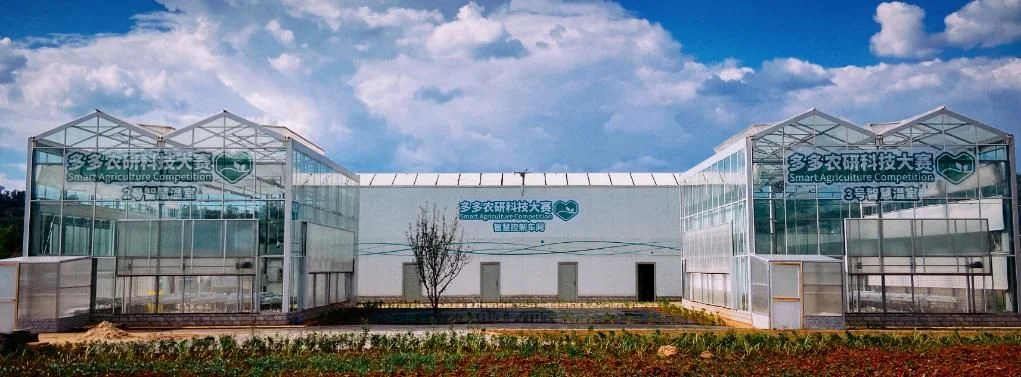
PDD Holdings has expanded beyond low-cost goods to become China’s largest online marketplace for agricultural products. Pinduoduo moves tens of billions of RMB worth of produce annually while using AI forecasting to help farmers plan production.
The company is scaling its agri-cloud platform through computer vision grading, AI-driven planting recommendations, and IoT partnerships. Investments in rural logistics and cold chain infrastructure improve freshness and reduce waste.
In 2025, PDD launched the “Duo Duo Local Specialties” initiative, using AI and cold-chain systems to optimize the distribution of regional produce. This aligns with China’s rural revitalization strategy and positions Pinduoduo as a direct link between farmers and urban consumers.
By combining training, digital tools, and logistics infrastructure, the platform enables small producers to access larger markets more efficiently.
Gamification remains a core growth driver for PDD Holdings. Pinduoduo integrates group-buy incentives, lotteries, and mini-games that encourage users to invite others and explore products interactively.
These experiences are reinforced by recommendation algorithms that generate short-video content and targeted promotions. Computer vision and behavioral AI automate much of this content creation, reducing reliance on traditional marketing.
This model has delivered scale. In 2025, Pinduoduo surpassed 900 million annual active buyers while maintaining net margins near twenty percent. The “Ten Billion Subsidy” program expanded to premium brands such as Apple iPhone, Nike, and Dyson, attracting higher-income users and improving product perception.
Subsidies, combined with dynamic pricing and personalization, drive repeat purchases and strengthen user loyalty.

The core strength of PDD Holdings lies in supply chain optimization. Its platforms help merchants streamline manufacturing, inventory, and fulfillment, reducing costs and improving efficiency.
This system operates through a factory-to-consumer model supported by supplier ecosystems. Demand signals from users feed directly into merchant decisions, creating a continuous feedback loop between consumption and production.
More users attract more merchants. More merchants increase product variety and price competition. Improved manufacturing and logistics then deliver greater value back to users. This self-reinforcing cycle drives PDD’s algorithmic efficiency and cross-border logistics performance.
Leadership has made this direction explicit. In March 2026, Co-CEO Jiazhen Zhao emphasized supply chain investment as the company’s primary focus for the next decade. Lei Chen reinforced this strategy by highlighting continued investment in ecosystem stakeholders. Together, these signals point to long-term structural investment rather than short-term margin optimization.
PDD Holdings posted strong financial results despite a shift toward high-quality development. Fiscal year 2025 revenue totaled RMB 431.8 billion (USD 61.2 billion), a 10 percent year-over-year increase.
Net income for the year reached RMB 99.4 billion, down 12% from 2024, due to a surge in fulfillment costs and an “all-in” investment in research and development.
The company now holds a cash and short-term investment balance of RMB 422.3 billion, surpassing its largest domestic rival for the first time. These cash reserves enable continued subsidies, logistics expansion, and potential acquisitions.

PDD Holdings is transitioning from a high-growth disruptor to a global commerce infrastructure player. Its 2026 strategy focuses on scaling systems rather than expanding features.
AI-driven discovery and video commerce will deepen personalization and increase conversion rates. Smart manufacturing will extend the consumer-to-factory model, allowing real-time demand data to guide production.
At the same time, stricter compliance and quality control systems will support expansion into regulated markets. Agriculture digitization will continue through AI, IoT, and computer vision, strengthening PDD’s rural supply base.
Geographic expansion remains a key growth lever. Markets such as Brazil and Mexico are emerging priorities, supported by new warehouses in Latin America. The company may also pursue acquisitions of Western retail brands to accelerate local market entry.
PDD Holdings shows how China’s commerce leaders are no longer marketplaces. They are AI-driven systems that integrate demand, supply, pricing, and logistics into a single, coordinated engine. Platforms like Temu scale globally by translating data into execution across manufacturing, distribution, and user acquisition.
At ChoZan, we help global executives move beyond observation and turn these shifts into actionable strategy.
The shift you see in PDD Holdings is not a trend. It is a new operating model for global commerce.
If you want to understand how to apply it, not just analyze it, book a consultation with ChoZan.
PDD Holdings uses AI to reduce return rates by improving product matching accuracy before purchase. Its systems analyze user behavior, product attributes, and feedback loops to minimize mismatches, thereby lowering logistics costs and improving customer satisfaction over time.
Temu offers lower prices by connecting consumers directly with manufacturers and optimizing cost structures through data-driven supply coordination. This removes intermediaries and enables real-time pricing adjustments, which helps maintain competitiveness across diverse global markets.
Pinduoduo differs by prioritizing demand aggregation and interactive shopping instead of search-driven browsing. Its model encourages group participation and algorithmic discovery, reducing acquisition costs and driving engagement through social behavior rather than transactional intent alone.
Cross-border compliance plays a critical role by ensuring product standards, tax regulations, and data policies align with local markets. Temu invests in localized operations and regulatory adaptation to sustain growth while avoiding disruptions in highly regulated regions.
PDD Holdings manages quality control through AI-based monitoring, supplier scoring systems, and automated risk detection. These systems flag inconsistencies, enforce standards, and incentivize reliable suppliers, which helps maintain trust while scaling across thousands of merchants.
PDD’s model shifts competition toward efficiency and data integration rather than brand dominance. Optimizing pricing, logistics, and production simultaneously puts pressure on global retailers to rethink margins, supply chains, and customer acquisition strategies.
Social commerce influences behavior by turning shopping into a shared, interactive experience. Users engage through recommendations, group deals, and social validation, thereby increasing trust and conversion rates compared to traditional solo-browsing models.
Real-time inventory optimization relies on predictive analytics, machine learning forecasting, and integrated logistics data. These technologies synchronize demand signals with production and warehousing, reducing overstock while ensuring fast fulfillment across regions.
PDD Holdings’ subsidy strategy remains sustainable due to its strong cash reserves and efficient cost structure. Subsidies act as a growth accelerator, while underlying supply chain optimization ensures long-term profitability once scale and user loyalty stabilize.
Future innovations will likely include autonomous supply chain orchestration, deeper AI-driven manufacturing integration, and advanced personalization engines. These developments could further reduce friction between demand and production, creating a fully adaptive commerce ecosystem.