CONTENT
NIO Inc. is a Chinese electric‑vehicle (EV) company founded in 2014 with a mission to accelerate the premium EV segment. The company designs and sells smart electric sedans, SUVs, and compact models under three brands — NIO, ONVO, and Firefly.
In March 2026, NIO’s cumulative vehicle deliveries surpassed 1.08 million; its March 2026 delivery update reported 35,486 vehicles delivered, with 22,490 premium NIO models, 6,877 ONVO vehicles, and 6,119 Firefly cars. NIO also reports that its all‑new ES8 SUV achieved its 80,000th delivery in 181 days, highlighting strong customer uptake.
The company positions itself as a premium EV manufacturer offering high‑performance vehicles with advanced autonomous‑driving capabilities and an innovative battery‑swap network. Its user‑centric services include NIO House community spaces and the NOMI in‑car assistant. NIO’s strategic investments focus on research and development, with more than 9,900 patents filed by late 2025.
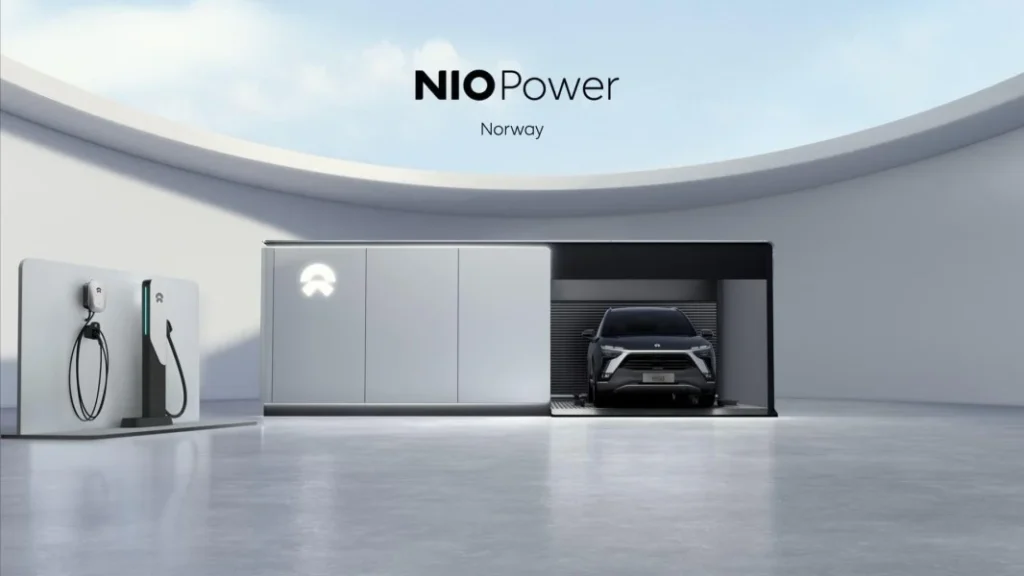
A core differentiator for NIO cars is NIO Power, its battery swap ecosystem. Instead of waiting at a charger, drivers enter a Power Swap Station and receive a fully charged battery in about three minutes.
Key 2026 milestones:
By early 2026, NIO had deployed 3,790 Power Swap Stations worldwide, including 1,020 highway stations. The company plans to add 1,000 more stations in 2026 and expand Power Journeys to 100 routes.
NIO also began trial operation of fifth-generation swap stations in late 2025. These stations increase capacity by 20 percent, which helps support growing demand across NIO, ONVO, and Firefly vehicles.
NIO’s Battery as a Service model separates the car from the battery. Buyers can purchase a NIO car without the battery, then pay a monthly fee to access different battery packs.
What it changes for buyers:
BaaS also supports NIO’s battery swap model. Subscription revenue funds the swap network, while centralized battery management extends battery life. Drivers can also rent larger packs for long trips without having to replace the vehicle.
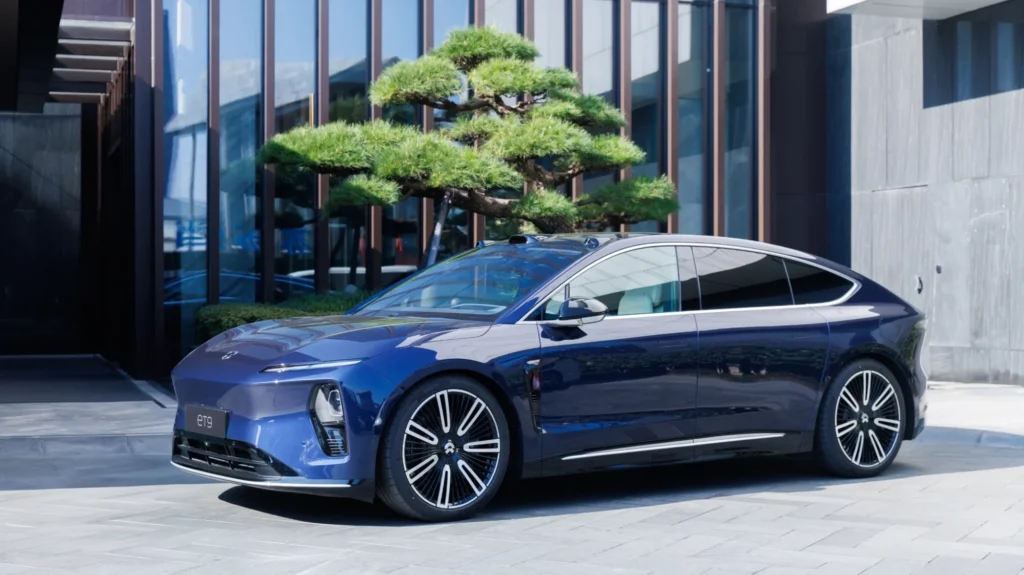
The NIO ET9 is the brand’s highest-end sedan. It was introduced in late 2024, with deliveries starting in March 2025.
Key ET9 highlights:
The ET9 competes with premium executive sedans like the Mercedes-Benz S-Class. It strengthens NIO’s premium positioning through space, smart driving technology, and a more distinctive luxury EV experience.
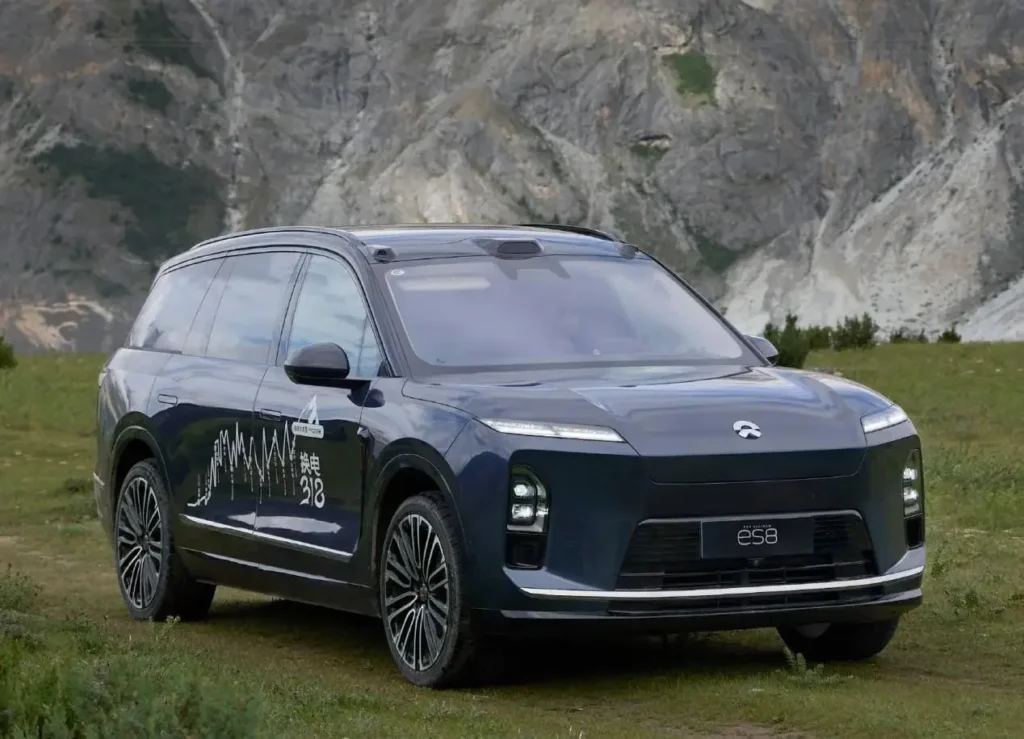
The ES8 is NIO’s largest electric SUV. The third-generation model, unveiled at Nio Day 2025, targets premium family buyers seeking space, comfort, and smart EV technology in a single large SUV.
Key ES8 highlights:
In NIO’s lineup, the ES8 works as the premium family flagship. It gives the NIO car brand a large-SUV anchor while supporting the company’s broader battery-swapping and BaaS strategy.
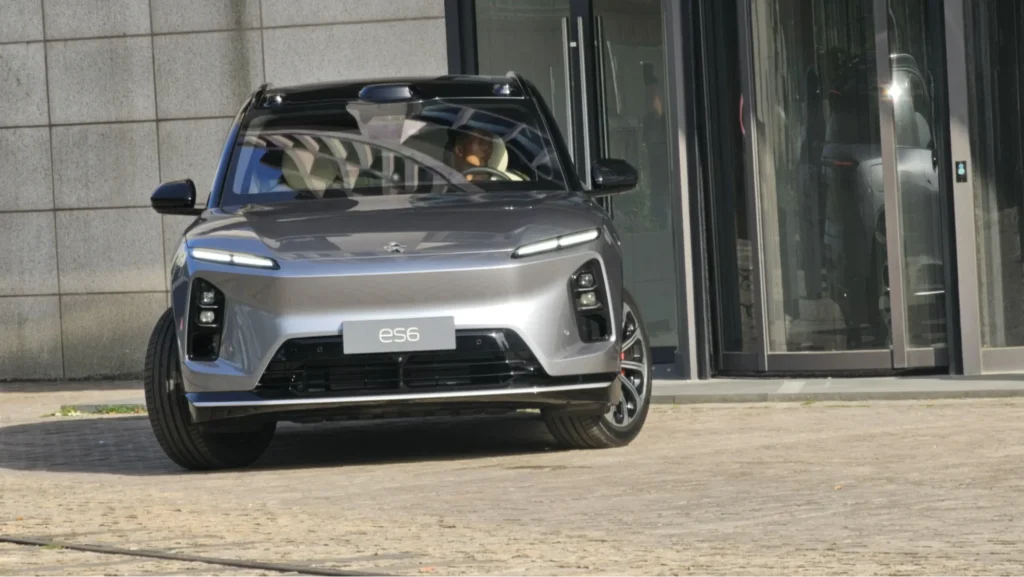
NIO refreshed the ES6 and EC6 in May 2025 with stronger comfort, cockpit, and smart driving upgrades. Starting prices stayed at 338,000 yuan for the ES6 and 358,000 yuan for the EC6.
Key upgrades:
NIO also offered limited-time benefits, including five-year free power-swapping and battery-upgrade vouchers. This made the ES6 and EC6 more competitive in China’s premium electric SUV segment.
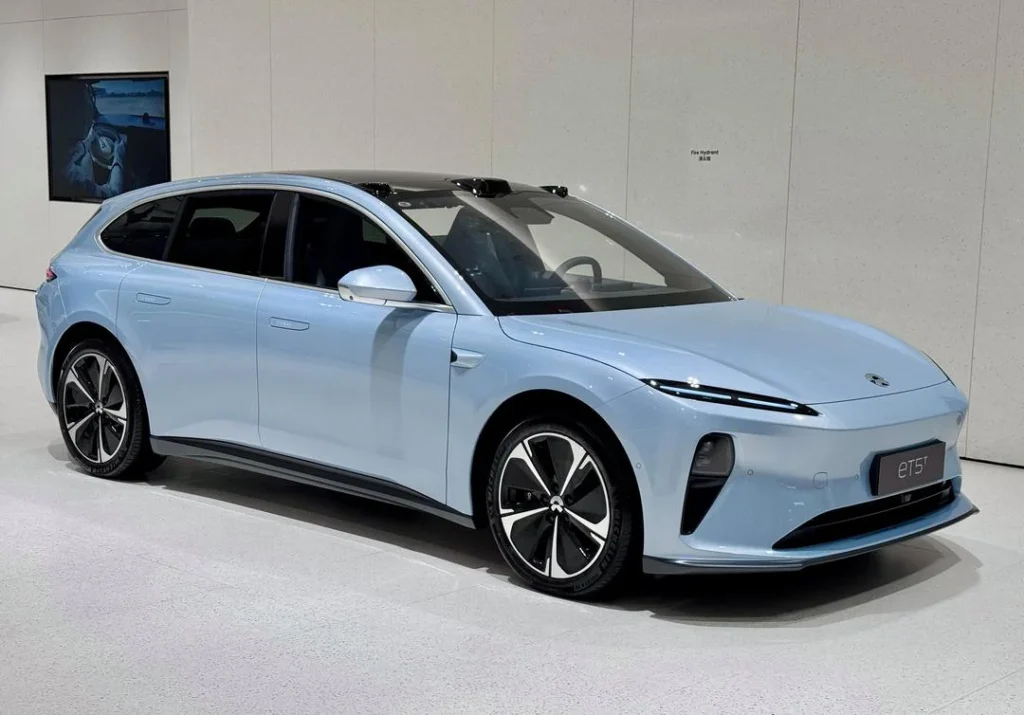
NIO upgraded the ET5 sedan and ET5 Touring in May 2025 with more than 500 improvements. Both models kept a starting price of 298,000 yuan, while the battery subscription lowered it to 228,000 yuan.
Key upgrades:
The ET5 gives NIO a premium sedan option, while the ET5 Touring adds more lifestyle and cargo flexibility.
In April 2026, NIO updated the ET5, ET5 Touring, ES6, and EC6 while keeping their starting prices unchanged. The refresh focused on smart driving visibility, comfort, and special edition design.
Key 2026 changes:
In March 2026, the third-generation ES8 had become NIO’s new sales pillar, with 16,255 deliveries in that month alone.
Launched as a sub‑brand targeting mainstream family buyers, ONVO offers spacious electric SUVs priced below NIO’s premium models. The 2026 L90 is the flagship mid‑large SUV; an updated version launched on April 21, 2026, adds LiDAR for enhanced smart driving and introduces dual‑tone colors and new wheel designs.
The existing L90 comes in six‑ and seven‑seat configurations, priced between 265,800 and 299,800 yuan. Deliveries since August 2025 have exceeded 49,000 units, and March 2026 sales reached 3,360 units, reflecting a 155 percent rebound from February.
ONVO is also preparing a five‑seat L80 SUV to expand its product lineup. NIO’s June 2025 update noted that ONVO delivered 6,400 vehicles that month and 52,623 vehicles cumulatively by mid‑2025, underlining the brand’s momentum in the mid‑market segment.
Firefly is NIO’s small electric car brand for urban buyers. Its four-meter hatchback targets dense city markets, especially in Europe, where compact size, efficiency, and price matter.
The model won the 2026 World Urban Car of the Year award and uses a 41.2 kWh LFP battery with an estimated WLTP range of about 330 km. Its rear-mounted motor produces 105 kW and 200 Nm, while 100 kW DC charging takes the battery from 10 percent to 80 percent in about 29 minutes.
Pricing starts at 119,800 yuan with the battery included, or 79,800 yuan under BaaS. Deliveries began in April 2025 and passed 50,000 units by March 2026.
Firefly first launched in Norway and the Netherlands, then expanded to Greece, Denmark, Austria, Portugal, Singapore, and Thailand. This gives NIO a lower-priced urban EV entry point beyond its premium models.
NIO is expanding beyond China through Europe, the Middle East, and selected international markets. By mid 2025, it operated in Norway, Germany, the Netherlands, Sweden, Denmark, the UAE, Israel, and Azerbaijan.
NIO’s infrastructure is expanding with the brand. By June 2025, the company had 3,445 swap stations and 4,676 charging stations worldwide. It also connected users to more than 1.886 million third-party chargers.
In 2026, NIO plans to add at least 1,000 new swap stations. Its fifth-generation stations add 20 percent more capacity, which supports higher usage across NIO, ONVO, and Firefly vehicles.
The Yunnan-to-Tibet battery swap route also underscores NIO’s long-distance ambitions. It covers more than 2,700 kilometers with 19 swap stations.
NIO faces pressure from every side of China’s EV market. BYD leads on scale, Tesla China pressures pricing, while XPeng, Li Auto, and Zeekr compete for smart EV buyers.
NIO’s answer has been to protect premium positioning rather than chase pure discounts. It kept starting prices stable on core models, then added stronger features, BaaS savings, and faster product refreshes.
The updated 5566 lineup, ET9, ES8, and L90 show this strategy clearly. NIO wants buyers to see more value in each refresh, not only a lower sticker price.
Still, the business remains expensive to scale. R&D spending, battery swap stations, and global expansion continue to pressure margins. NIO reported a RMB 6.75 billion net loss in Q1 2025, even as deliveries improved.
Internationally, NIO is prioritizing Europe, the Middle East, and Central Asia. U.S. entry remains difficult because of tariffs, regulations, and market access barriers.
Battery swap partnerships with Changan and Geely may help reduce infrastructure pressure. They also give NIO a stronger chance of making battery swapping a widespread industry standard.
NIO differentiates itself through community‑building. NIO House locations serve as showrooms and lounges for users; by June 2025, there were 187 houses worldwide. Owners receive benefits such as free battery-swap vouchers, software‑defined upgrades, and invitations to exclusive events.
The NOMI voice assistant, now in its third generation, interacts with occupants and fosters brand loyalty. The company also sponsors programs such as the Clean Parks initiative, which inspires the design of nature‑themed special‑edition vehicles.
NIO’s user enterprise model encourages feedback and co‑creation. At Nio Day events, users vote on new features and design elements, reinforcing community engagement. This holistic approach positions NIO not just as a carmaker but as a lifestyle brand.
In 2026, NIO plans to launch the flagship ES9 SUV, expand Onvo’s lineup with the five‑seat L80, and push Firefly into more global markets. The company aims to deploy fifth‑generation battery swap stations and extend coverage along major highways.
International expansion will continue across Europe and parts of Asia, leveraging local partnerships to overcome regulatory hurdles. With rising competition and pressure on margins, NIO’s success depends on scaling deliveries and achieving profitability while maintaining its premium positioning.
NIO’s battery swap model shows how China turns EV competition into a story about infrastructure, services, and user ecosystems. For global leaders, the real lesson is not only the car. It is how Chinese companies connect hardware, software, mobility services, and long-term user retention.
ChoZan helps executives understand these shifts through China innovation research, expert briefings, workshops, and curated learning experiences. Its China Innovation Tour is built for founders, corporate leaders, investors, and innovation teams who want direct exposure to applied AI, mobility, robotics, policy, and real-world technology deployment in China.
For teams studying NIO, BYD, XPeng, Li Auto, and China’s wider EV ecosystem, ChoZan turns market signals into practical strategic insight.
NIO’s Chinese name, Weilai, means Blue Sky Coming. The phrase reflects the company’s sustainability philosophy and user-centric brand identity, which explains why NIO often links cars, services, and community into a single mobility ecosystem.
NIO Inc is listed on the NYSE, HKEX, and SGX. This gives global investors access to the Chinese EV company, although its performance still depends heavily on deliveries, model launches, and infrastructure scale.
The NIO EP9 is an electric supercar, not a mainstream road car. NIO launched it as an early performance halo product, using extreme power and track capability to build credibility before consumer models scaled.
No. NIO Assisted and Intelligent Driving supports driver assistance, not full autonomy. The driver must stay attentive and take over when road, traffic, or weather conditions require human judgment inside the vehicle.
NIO ES6 and NIO EL6 usually refer to the same core SUV platform in different markets. ES6 is the Chinese name, while EL6 is used in Europe due to regional naming and trademark considerations.
The NIO ET7 is known for executive sedan positioning and long-range capability. Its 150 kWh battery option gives it a range of more than 1,000 km in NIO’s official real-life range challenge.
The NIO app supports the brand’s user-enterprise model by connecting drivers to vehicle services, community features, and digital ownership tools. App listings position it within NIO’s broader lifestyle and service ecosystem.
NIO focuses more on premium smart EVs, service, and battery swapping. BYD has a broader scale and a wider price ladder, with Reuters noting that lower-priced cars make up a large share of domestic sales.
CATL matters because battery supply and swap standards shape NIO’s infrastructure economics. In 2025, CATL agreed to support NIO’s swap network and invest up to RMB 2.5 billion in NIO Power.
Battery swapping could expand if more automakers, battery firms, and infrastructure partners align around shared standards. CATL’s investment in swap networks signals growing industry interest, although charging will still remain important.