CONTENT

Shenzhen sits at the center of China’s 2025 innovation story because it brings together research, factories, suppliers, founders, investors, and global logistics in one city.
For executives studying Shenzhen Technology, the city shows how Chinese innovation moves from lab idea to scaled product. Its strongest clusters cover electronics, AI, robotics, electric vehicles, telecom, software, advanced manufacturing, and green technology.
In 2025, Shenzhen’s GDP reached 3.87 trillion yuan, up 5.5 percent, while strategic emerging industries contributed 1.67 trillion yuan. That mix explains why Shenzhen China Technology matters to global brands, industrial firms, and investors.
Shenzhen’s advantage begins with proximity. Hardware teams can test components, adjust industrial design, update tooling, refine packaging, and coordinate export logistics within a single dense operating environment. This compressed loop gives Shenzhen Manufacturing a speed advantage that many global innovation cities still struggle to match.
The phrase Shenzhen China Factories still brings buyers to the city. The stronger 2025 reality centers on engineering depth, supplier responsiveness, design support, and rapid production feedback. A founder can meet a component supplier in the morning, review a prototype by afternoon, and revise a small batch before the week ends.
That speed matters across consumer electronics, smart devices, drones, medical devices, robotics modules, and EV components. Shenzhen’s 2025 industrial data shows the same trend: output of 3D printing equipment rose 45.1%, industrial robots rose 43.1%, and civilian drones rose 40.1% year on year.
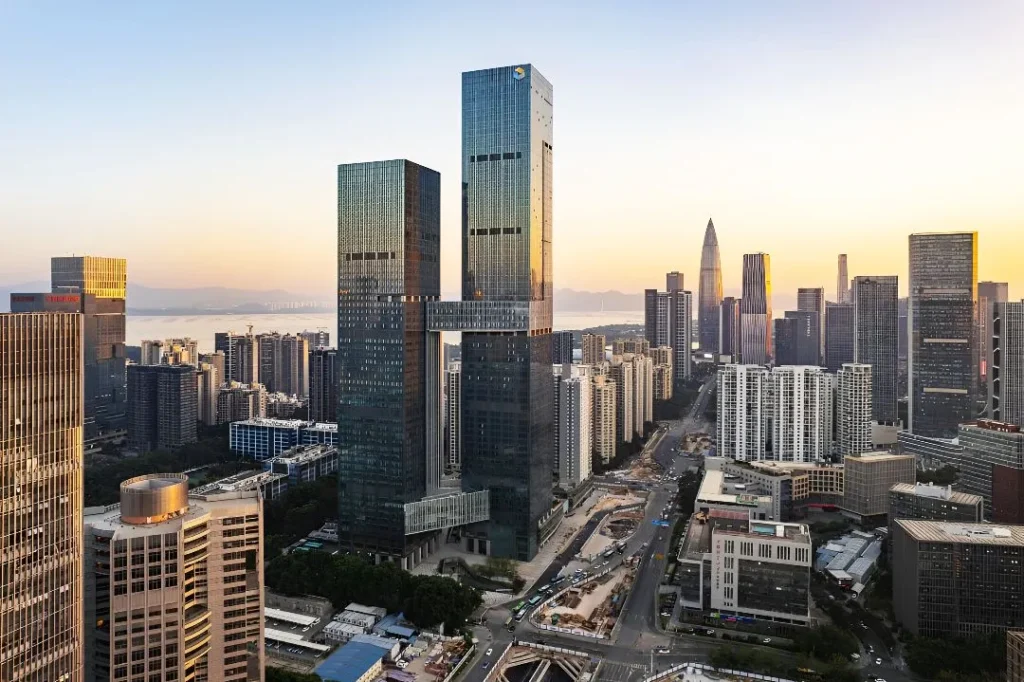
Shenzhen Nanshan District has become the clearest symbol of the city’s innovation economy. In 2025, Nanshan crossed the 1 trillion yuan GDP mark, reaching about 1.01 trillion yuan and becoming one of China’s most powerful district-level economies. Its economy grew by 6.3% in 2025, faster than Shenzhen’s citywide growth rate of 5.5%.
Nanshan’s strength comes from density. The district is home to Tencent, ZTE, DJI, UBTECH, universities, research institutes, listed companies, and thousands of high-tech enterprises. China Daily reported that Nanshan has 218 listed companies, more than 6,000 national high-tech enterprises, and more than 860 invention patents per 10,000 residents, around 22.9 times China’s national average.
Strategic emerging industries now account for about 60% of Nanshan’s GDP. Robotics is a major part of that story: the district has more than 20 companies capable of producing complete robots, as well as more than 200 upstream and downstream robotics enterprises.
Within Nanshan, Shenzhen Hi-Tech Industrial Park and the Shenzhen Bay Innovation Center point to a broader urban model. Offices, labs, apartments, services, transport, capital, and supplier networks sit close together. That density supports faster hiring, faster collaboration, and faster product iteration.
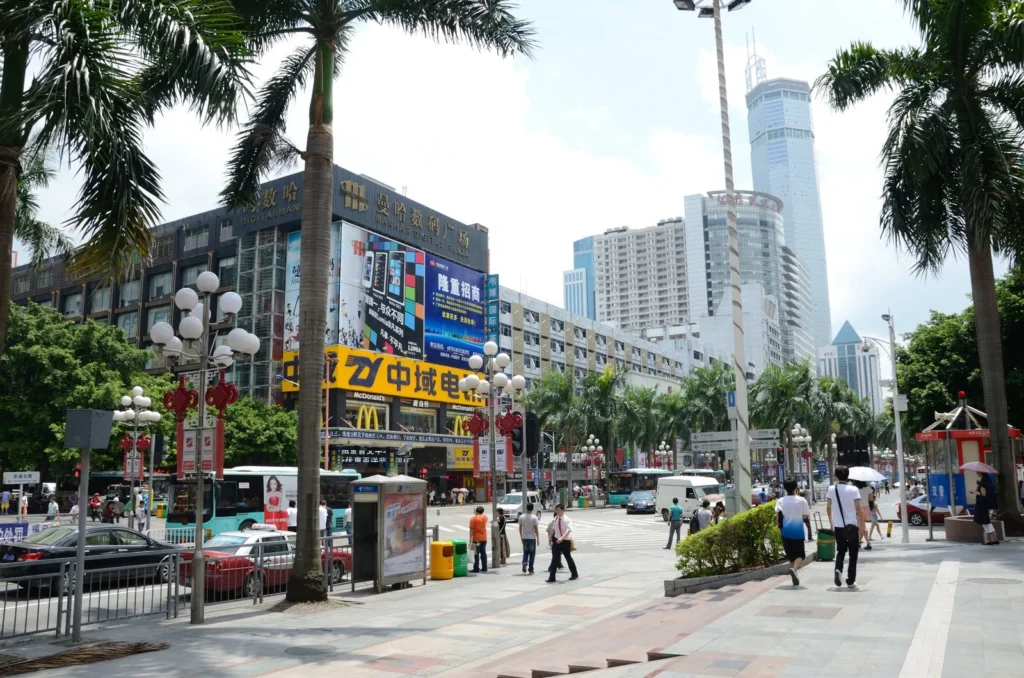
Global attention often shifts to AI, EVs, and humanoid robots. Still, Shenzhen Electronics remains the base layer that supports many higher-profile sectors. Sensors, boards, batteries, cameras, chips, displays, connectors, antennas, motors, and controllers shape product design long before a consumer sees the final device.
This is why Shenzhen China Electronics still matters after the first prototype. The city provides engineering teams with component choices, supplier options, troubleshooting expertise, and quick replacement options. That depth reduces friction during development, since teams can solve technical problems near the source of supply.
For global brands, Shenzhen’s electronics ecosystem offers more than procurement. It helps teams understand how Chinese suppliers approach modularity, material choices, miniaturization, performance trade-offs, and speed.
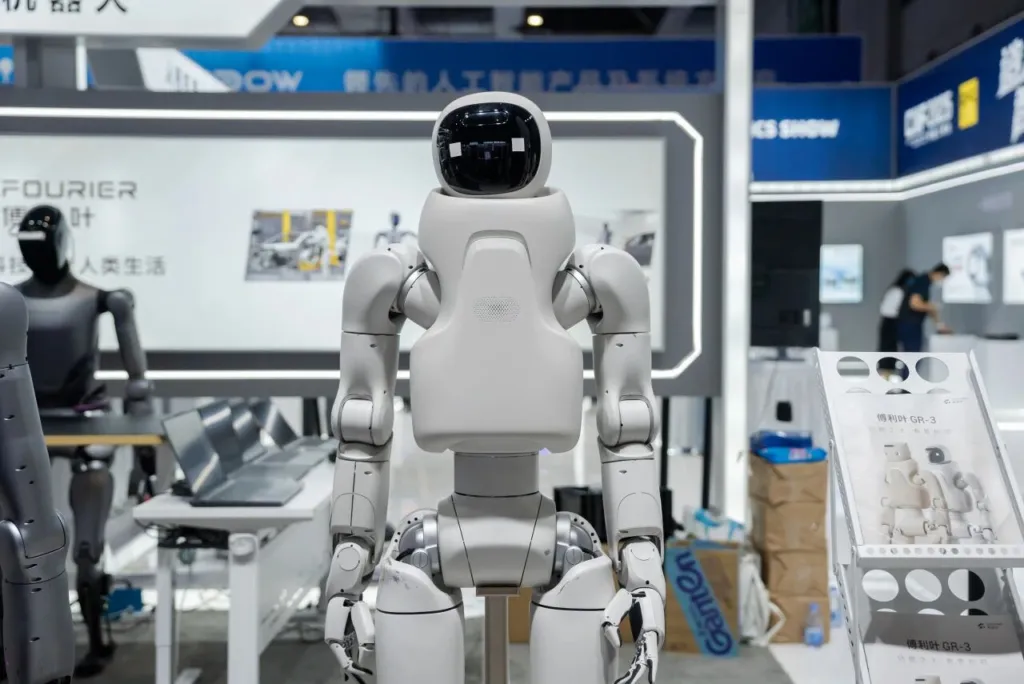
Shenzhen’s robotics sector moved into a stronger commercial phase in 2025. The city’s robotics industry reached 242.6 billion yuan in output value, up 20.56% year on year, according to the Shenzhen Robot Industry Development White Paper 2025. Industrial robot production reached roughly 194,900 units, accounting for 25.2% of China’s national share, while service robot production reached 7.96 million units, or 42.9% of the national market.
The wider Shenzhen Tech Hub also benefits from scale. By 2026, Shenzhen had more than 1,000 core robotics enterprises and over 2,600 AI enterprises above a designated size, giving the city a deep supplier base for robot bodies, sensors, motors, controllers, edge computing, machine vision, and application software.
For manufacturers, the value lies in deployment knowledge. Shenzhen robotics companies work close to factories that need inspection, assembly, welding, CNC loading, sorting, cleaning, delivery, and warehouse automation. That local feedback loop pushes robots closer to practical industrial use.
AI gives the sector another push. Shenzhen has positioned AI and robotics as major growth priorities, and Reuters reported that the city created a 10 billion yuan AI and robotics fund as part of China’s broader push into humanoid and embodied AI.
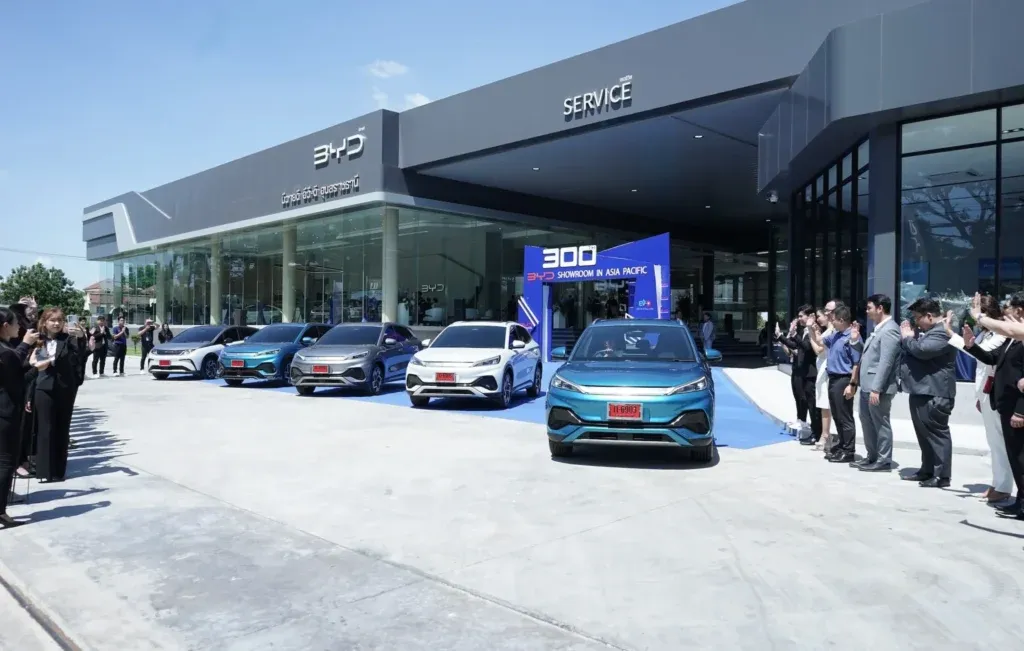
Electric vehicles give Shenzhen Technology another powerful growth engine. Shenzhen’s 2026 government work report said strategic emerging industries had grown to 1.67 trillion yuan, while the city’s intelligent connected vehicle, network and communications, and software and information service clusters each surpassed 800 billion yuan in scale.
BYD gives Shenzhen a visible global symbol, while the deeper ecosystem includes battery materials, thermal systems, power electronics, display suppliers, sensors, vehicle software, and charging hardware. This matters because EV competition increasingly depends on manufacturing efficiency, software integration, component control, and quick model refresh cycles.
For global companies, Shenzhen’s EV value spans the product stack, from battery safety to cabin electronics and from driver-assistance hardware to connected services. That full-stack depth makes the city relevant to automakers, suppliers, energy firms, fleet operators, and mobility investors.
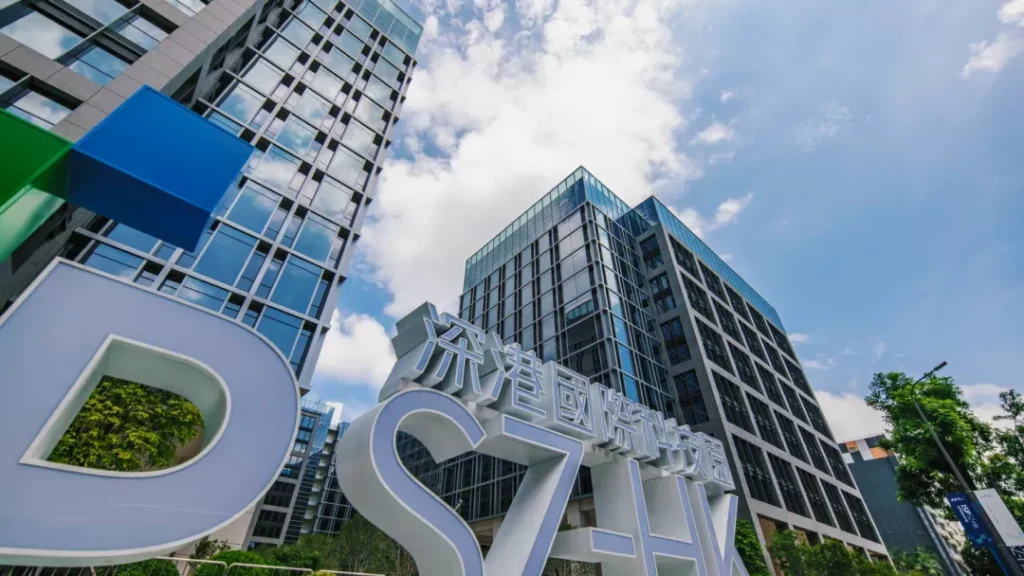
The Hetao Shenzhen-Hong Kong Science and Technology Innovation Cooperation Zone has become one of the most important new pieces in Shenzhen’s innovation map. The zone covers about 3.89 square kilometers, including a 3.02-square-kilometer Shenzhen Park and a 0.87-square-kilometer Hong Kong Park. Shenzhen’s government describes it as a pilot area for Shenzhen-Hong Kong tech cooperation, a testing ground for international innovation rules, and a hub for Greater Bay Area transformation.
Hetao adds research depth to Shenzhen’s manufacturing speed. As of January 2026, Hetao’s official site listed 13 specialized parks, 8 Fortune Global 500 R&D centers, 10 national-level major research platforms, 20 Hong Kong university research projects, more than 200 high-end research projects, and over 15,000 researchers.
In 2025, Hetao launched China’s first public ERP system for research institutions. The platform supports process, project, warehousing, inventory, and customs management, helping research organizations move high-value instruments and specialized materials more smoothly across the Shenzhen-Hong Kong innovation corridor.
The Shenzhen Loop Area Institute also held its first open day in March 2026, highlighting Hetao’s role as a bridge between global AI research and the Greater Bay Area’s industrial ecosystem. The institute reported more than 100 faculty members and 237 PhD students enrolled from universities in the mainland, Hong Kong, and Macao.
Shenzhen’s rise now carries global validation. In 2025, the World Intellectual Property Organization ranked the Shenzhen-Hong Kong-Guangzhou cluster first among global innovation clusters. The ranking looked at international patent filings, scientific publications, and venture capital deals, which gives the result strong relevance for technology commercialization.
This matters for executives because Shenzhen’s story no longer depends only on factory strength. The city now sits inside a wider Greater Bay Area cluster that connects invention, capital, universities, ports, manufacturers, and consumer markets. That structure gives Shenzhen a different role from classic research cities.
A company can use Shenzhen Innovation Hub resources for prototype speed, Nanshan for software and robotics partnerships, Hetao for research collaboration, and Greater Bay Area networks for talent and capital.
Global teams should treat Shenzhen as a deployment ecosystem. Start with a clear product use case, then map partners across design, engineering, certification, manufacturing, software, logistics, and market validation. A factory visit alone will not reveal the full scope of the opportunity.
For hardware products, begin with supplier mapping and component strategy. For robotics, study application readiness, safety requirements, maintenance models, and integration partners. For EVs, evaluate battery supply, vehicle software, charging infrastructure, and local policy direction.
The key is commercial discipline. Ask which capability shortens time to market, which partner improves product quality, and which use case can scale beyond a pilot. Shenzhen rewards teams that move fast, but it rewards prepared teams even more.
Shenzhen Technology now represents a full innovation system, not a single industry category. The city combines Shenzhen Electronics, Shenzhen Manufacturing, EVs, robotics, AI, software, research zones, export channels, and dense supplier networks.
In 2025 and 2026, the signal is clear: Shenzhen has moved deeper into high-value technology commercialization. Nanshan shows the power of concentrated tech companies. Hetao shows the next stage of Shenzhen-Hong Kong research collaboration. Robotics and EVs show the city’s ability to scale advanced industries. And the WIPO ranking shows that Shenzhen’s innovation story now has global evidence to back it up.
Shenzhen moves fast, and the right local insight can make all the difference. Chozan helps global executives, founders, and innovation teams understand China’s technology ecosystem from the inside—spanning hardware and robotics, EVs, AI, manufacturing, and market strategy.
Whether you’re exploring partnerships, planning a China innovation tour, or looking to understand where the next wave of growth is coming from, Chozan can help you connect the dots.
Discover Shenzhen with Chozan and turn China insight into smarter business decisions.
Book a consultation to explore how Shenzhen technology, robotics, EVs, AI, and manufacturing can shape your next China growth strategy.
Huaqiangbei is the best area for quick electronics discovery and component scouting. For deeper supplier checks, buyers should combine market visits with factory audits, sample testing, and verified sourcing support before placing larger orders.
Yes, foreign companies can source directly from Shenzhen, China factories, but due diligence matters. Teams should verify business licenses, inspect samples, review production capacity, confirm export experience, and check quality control before committing to volume orders.
Yes, Huaqiangbei remains useful for prototypes, spare parts, repair components, and price discovery. Serious importers should still move beyond market stalls when they need stable quality, factory traceability, warranty support, and repeatable supply.
Executives should plan a Shenzhen tech hub visit around clear learning goals. A strong itinerary may include Huaqiangbei, Shenzhen Nanshan District, Qianhai, Hetao, robotics sites, EV showrooms, and meetings with vetted local operators.
Hardware startups go to Shenzhen because the city shortens the path from idea to prototype. Teams can access components, engineers, tooling partners, packaging suppliers, testing support, and production feedback inside one concentrated ecosystem.
Shenzhen is stronger for hardware speed, electronics sourcing, robotics supply chains, and manufacturing proximity. Shanghai has deeper strengths in corporate headquarters, finance, biotech, and multinational R&D, so each city supports different technology priorities.
Qianhai supports Shenzhen technology exports through cross border business services, e-commerce resources, legal cooperation, and foreign investment incentives. This helps local companies reach overseas markets with stronger training, compliance support, and ecosystem connections.
Yes, Shenzhen is a strong city for consumer electronics product development because design, components, testing, tooling, assembly, and export partners sit close together. This proximity helps teams reduce delays during early product refinement.
Buyers should watch for inconsistent quality, unclear warranties, counterfeit risk, grey market goods, and limited documentation. A safer process includes supplier verification, written specifications, sample approval, inspection reports, and payment terms tied to quality checks.
Shenzhen technology will move deeper into applied AI, smart mobility, advanced materials, industrial software, and cross-border innovation services. Manufacturing will remain important, but higher-value growth will come from expertise in system integration and commercialization.