CONTENT
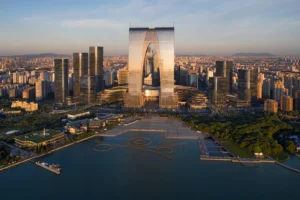
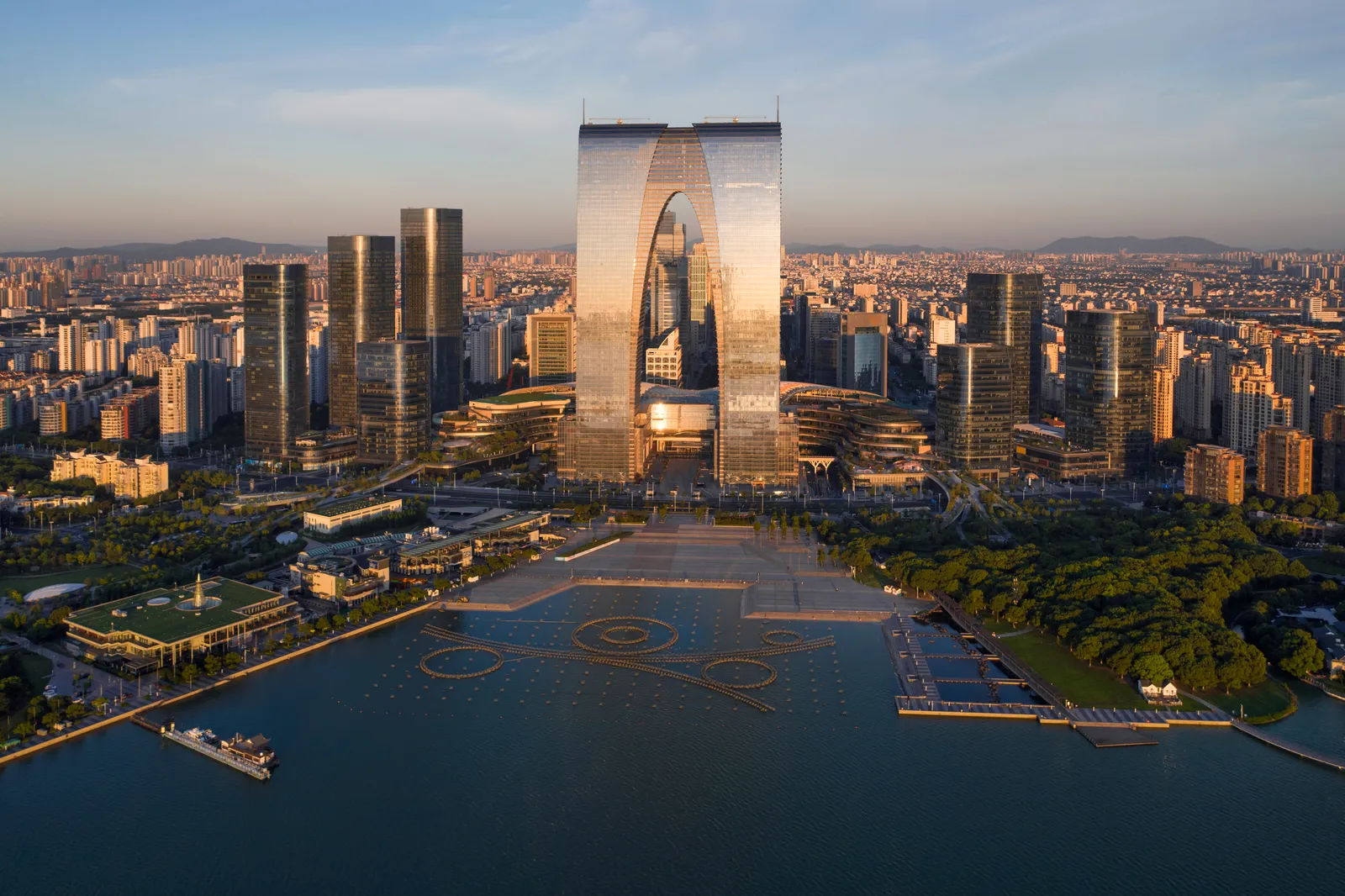
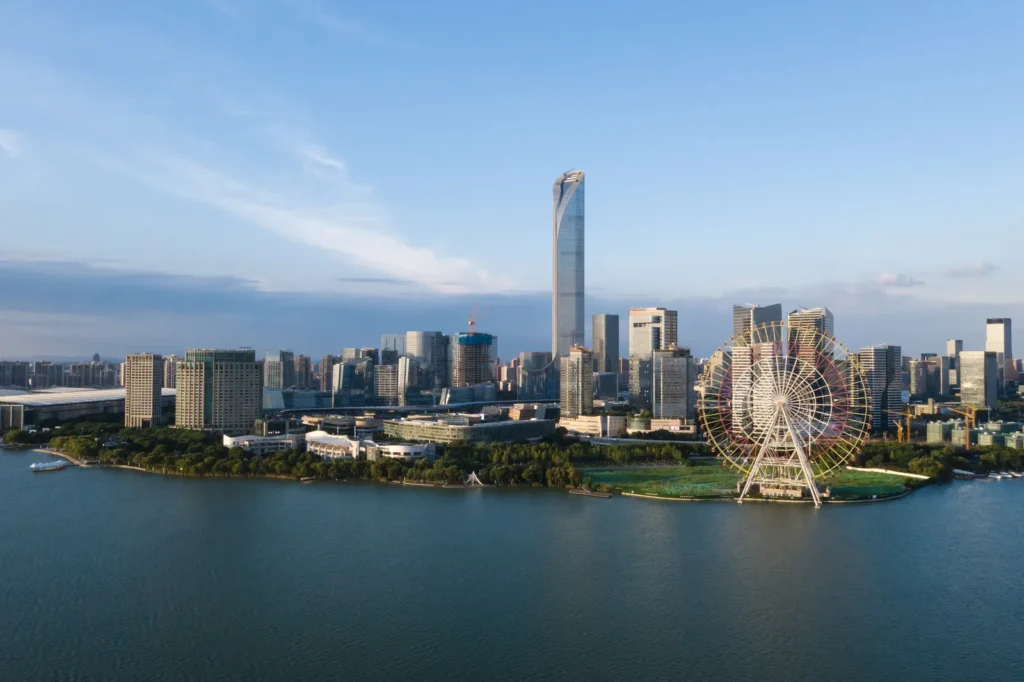
Suzhou Industrial Park (SIP) in Jiangsu province has become one of Asia’s most dynamic innovation hubs. Established in 1994 as a flagship joint venture between China and Singapore, the park covers 278 square kilometres along the scenic Jinji Lake.
Three decades of policy experiments and investment have turned SIP into a model for high‑quality development, combining advanced manufacturing, biotechnology, nanotechnology and green innovation.
Today the Suzhou Industrial Park stands at the forefront of China’s drive to upgrade its industrial base and cultivate a globalised innovation ecosystem.
A major reason investors and researchers pay attention to Suzhou SIP is the park’s constant evolution. State‑owned enterprises have built more than 10 million square metres of industrial facilities in SIP to support priority sectors such as integrated circuits, biomedicine, nanotechnology and artificial intelligence.
In 2025, construction advanced on the China‑Singapore Green Digital Hub and on the third phase of the Sungent I‑Center, while an embodied AI‑focused industrial park also made progress. These projects are part of SIP’s effort to create a next‑generation industrial ecosystem where manufacturing plants sit alongside research labs, venture‑capital funds and talent training centres.
Policy support and physical infrastructure mean companies can quickly scale up. Resonac Materials’ Suzhou industrial park China branch celebrated its 20th anniversary in February 2025.
As the company’s most important semiconductor packaging and photosensitive dry film base, the plant in the High‑end Manufacturing and International Trade Zone has improved productivity and was recognized as a “Smart Manufacturing Workshop in Jiangsu”.
Officials encouraged the firm to bring more advanced projects into SIP, underscoring the park’s commitment to continuous upgrading.
Global companies view Suzhou Industrial Park in Jiangsu as a testing ground for smart manufacturing.
In November 2025, Nexteer Automotive broke ground on its Asia‑Pacific Smart Manufacturing Project in SIP.
The 10‑hectare facility will be developed into a green factory that adheres to LEED Platinum standards and employs digital twin technology, full‑process automation, and AI‑driven insights. Nexteer plans to consolidate its operations at this facility once it opens in late 2026, improving efficiency and enabling faster response to customer needs.
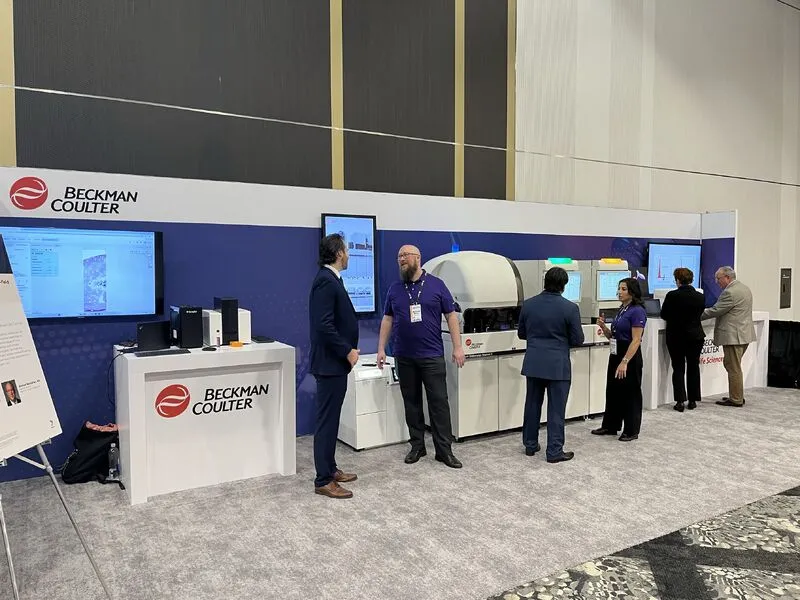
Beckman Coulter Life Sciences rolled out its first Biomek automated workstation manufactured in China at its BioBAY Suzhou branch in October 2025. The system brings R&D, production, sales, and service under one roof and uses modular design to support high‑throughput screening and liquid handling.
By localizing manufacturing and technical support, the American company combines global standards with “China speed” to deliver precision instruments for biotechnology and pharmaceutical laboratories.
Even logistics providers see SIP as a platform for innovation. In December 2025, the German freight‑forwarding group Deugro established a supply chain management arm at the Yangchenghu Peninsula Tourist Resort.
The new platform provides logistics services for clinical trials and drug commercialization and includes a specialized medicine warehouse in BioBAY. Efficient logistics underpin the park’s high‑tech supply chains, allowing companies to scale globally.
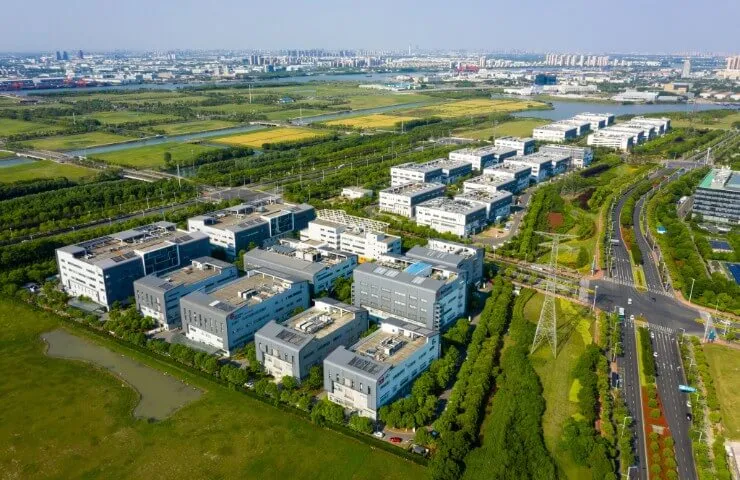
Located within the park, BioBay Suzhou has become one of China’s leading biomedical innovation hubs. In December 2025, six innovative drugs developed by BioBAY companies were added to the national medical insurance list, thereby lowering treatment costs and accelerating patient access.
Drugs included:
The inclusion of these novel drugs highlights BioBAY’s role in producing globally competitive therapies.
BioBAY hosts both domestic and multinational companies.
Suzhou Molarray, a high‑tech enterprise focusing on molecular diagnostics and gene detection, has developed over 40 devices for genetic testing and continuous tumor-cell monitoring. The company holds more than 160 patents and 40 software copyrights and has obtained eight Class III medical device licenses in China, along with 27 CE certifications in the European Union.
Since establishing its headquarters in SIP in 2010, Molarray has expanded rapidly, building marketing channels across Southeast Asia, the Middle East, Africa, and Europe.
BioBAY also enables multinational firms to adapt to the Chinese market. Beckman Coulter’s local manufacturing base, mentioned earlier, demonstrates how international companies leverage SIP’s advanced infrastructure to localize R&D and production.
Meanwhile, Deugro’s logistics platform provides essential supply chain services to support clinical trials and commercialization. These examples underscore why investors consider the Suzhou Industrial Park in China an ideal place to launch or expand biotechnology ventures.
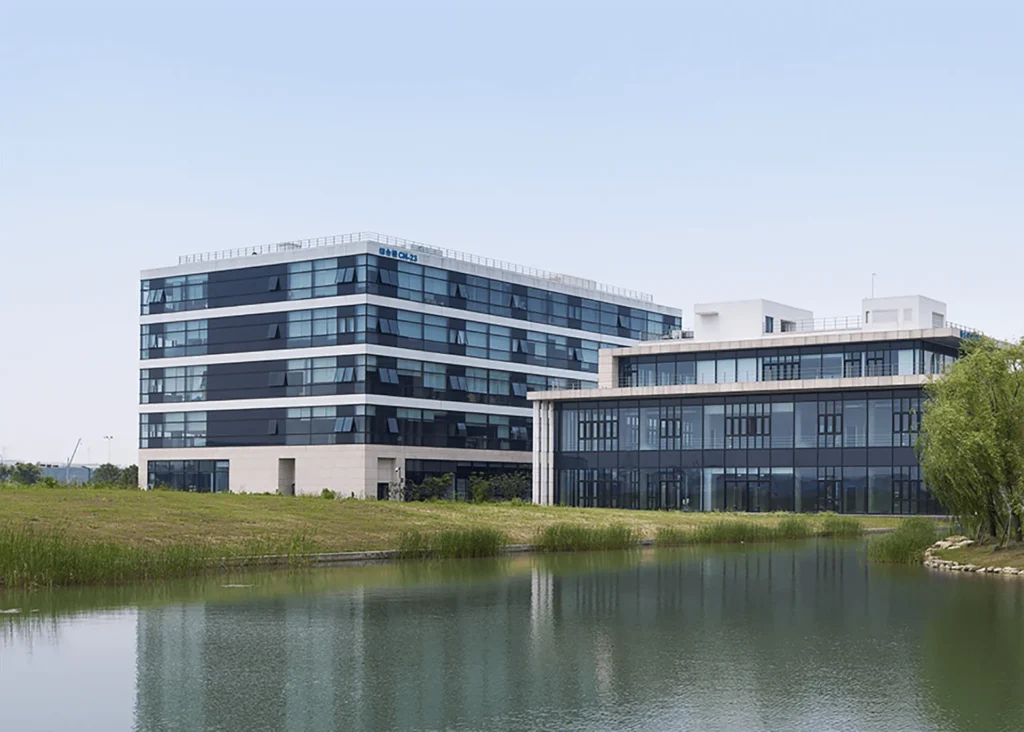
Adjacent to BioBAY lies Nanopolis Suzhou, an urban campus dedicated to micro‑ and nanotechnology. State‑owned enterprises have created a service system in Nanopolis that supports businesses at every stage of development and now benefits more than 500 nanotech companies. The cluster covers semiconductors, new materials, and precision manufacturing, anchored by research institutions and close ties to nearby universities.
Talent development is central to Nanopolis’s success. In August 2025, SIP launched a talent training program designed to build the “623” industrial system—6 industrial clusters and 23 key industry chains.
A training class on micro- and nanofabrication and new materials was held in Nanopolis, attracting participants from more than 30 companies working on nanomaterials, semiconductors, photoelectronics, and precision manufacturing.
The program, co‑sponsored by SIP Human Resources and Social Security Bureau and SIP Science and Technology Innovation Committee, integrates lectures, on‑site practice and field surveys to hone skills and align talent with industry needs. This initiative demonstrates SIP’s commitment to building a pipeline of technical expertise.
Nanopolis has also become a launchpad for cutting‑edge AI security companies. In March 2026, Suzhou Anxin Lingxi Intelligent Technology unveiled “ClawGuard,” a security assistant designed to protect users of OpenClaw, an open‑source framework for AI automations.
The company, founded in December 2025 and based in Nanopolis, focuses on AI security including private deployment of large models, security protection and data privacy.
The ClawGuard product uses keyword recognition, intelligent model assessment and deep local protection to prevent privacy leaks and dangerous commands, illustrating how Nanopolis encourages novel applications at the intersection of AI and nanotechnology.
The park continues to attract new materials companies. On December 29 2025, Suzhou Simairui New Material Technology, which develops key nanocomposite technologies for the polarizer industry, opened in Nanopolis. Such investments broaden the cluster’s scope from micro‑fabrication to advanced materials, strengthening SIP’s positioning within global supply chains.
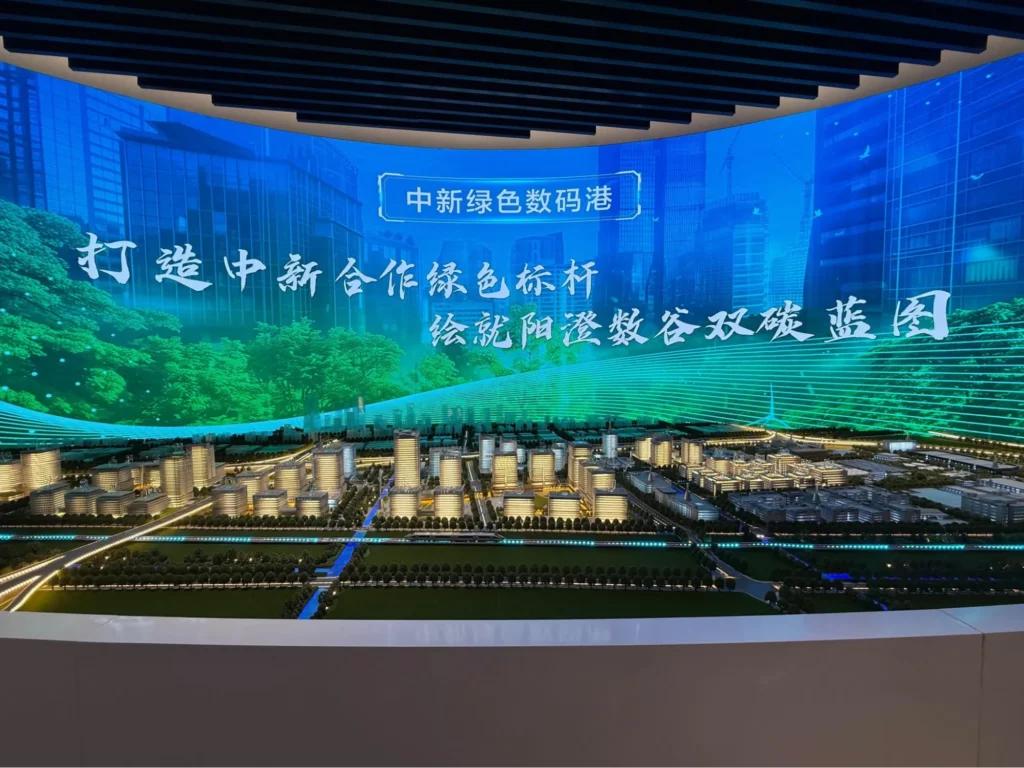
Alongside high‑tech factories, the park hosts a 6.7‑billion‑yuan China‑Singapore Green Digital Hub. A highlight of the hub is a joint China‑Singapore zero‑energy building equipped with rooftop photovoltaic panels, small wind turbines, and an AI‑controlled lighting and climate system.
This structure demonstrates how clean energy and smart management create carbon‑neutral workplaces. The building has been certified by standards organizations in the United States and Singapore, showing that Chinese carbon‑reduction technologies meet international benchmarks.
This green hub promotes the integration of green industries and emerging services. Policies in China call for establishing groups of zero‑carbon industrial parks, and SIP’s example shows how such parks can enhance innovation capability and energy efficiency.
By combining renewable energy, smart microgrids, and sustainable materials, SIP aims to cut emissions while boosting industrial competitiveness.
Suzhou Industrial Park’s success also comes from its expanding international partnerships. In November 2025, SIP hosted a project roadshow at Biosparc, where nine medical technology projects from the University of Hong Kong were presented to local investors and medical institutions.
Cooperation with Hong Kong is also growing. The Hong Kong Applied Science and Technology Research Institute launched an initiative in SIP to co-develop an innovation ecosystem.
The Nano and Advanced Materials Institute also held an event at Nanopolis to showcase breakthroughs in electronic materials, battery technology, and low-carbon building materials. It signed memoranda of understanding with companies such as GCL and Suzhou Bond, and a representative office is planned in SIP.
State-owned enterprises support this growth through investments in more than 200 funds, helping SIP attract start-ups, research teams, and multinational companies across the Yangtze River Delta innovation corridor.
Suzhou Industrial Park shows how China is building the next generation of advanced manufacturing, biotech, nanotechnology, and green innovation clusters. For global leaders, the key question is not only what is happening in SIP, but also how these shifts affect market strategy, partnerships, supply chains, and technology adoption.
Chozan helps brands, executives, and innovation teams understand China’s fast-moving business landscape through research, expert briefings, learning expeditions, and strategic workshops. We connect market signals with practical business implications, so your team can make sharper decisions in China and beyond.
Book a consultation to explore how ChoZan can support your China strategy.
Suzhou Industrial Park is located in Suzhou, Jiangsu province, east of Suzhou’s historic city center and near Jinji Lake. Its position in the Yangtze River Delta gives companies access to Shanghai, regional suppliers, and export routes.
No, Suzhou Industrial Park and Suzhou New District are separate development zones. SIP grew from China-Singapore cooperation, while Suzhou New District developed as a national high-tech zone with its own industrial base and policy focus.
Foreign companies choose Suzhou Industrial Park for its mature infrastructure, policy support, skilled workforce, and proximity to Shanghai. The park offers a practical base for manufacturing, R&D, regional headquarters, and China market expansion.
Suzhou Industrial Park is close to Shanghai, making it attractive for companies that need regional connectivity without Shanghai’s higher operating costs. High-speed rail and expressway links support business travel, logistics, and executive access.
The China Singapore Suzhou Industrial Park model combines Chinese development scale with Singaporean planning, governance, and urban management practices. This structure helped SIP become a benchmark for industrial park China development.
Yes, Suzhou Industrial Park can suit startups in technology, life sciences, advanced materials, and industrial innovation. Its value comes from incubators, investment channels, research links, and access to larger companies within the ecosystem.
Suzhou Industrial Park differs from traditional manufacturing zones because it combines factories, R&D platforms, residential districts, universities, finance, and public services. This integrated model supports innovation rather than only low-cost production.
Yes, Suzhou Industrial Park has access to higher education resources through the Dushu Lake Science and Education Innovation District. This area supports research collaboration, talent development, and industry links across science and technology fields.
Yes, Suzhou Industrial Park is part of the Yangtze River Delta economy. Its location connects companies with Shanghai, Jiangsu, Zhejiang, suppliers, ports, universities, investors, and advanced manufacturing clusters across eastern China.
Suzhou Industrial Park best fits companies in advanced manufacturing, semiconductors, biotechnology, medical devices, artificial intelligence, new materials, and green technology. It also suits service firms supporting logistics, finance, R&D, and industrial commercialization.