CONTENT
China’s nuclear energy matters now because China has moved from experimentation to industrial-scale deployment. Solar, wind, storage, and ultra-high-voltage grids remain central to the energy transition, yet nuclear power adds another layer of firm clean power near coastal demand centers, industrial clusters, data infrastructure, and export-oriented manufacturing bases.
By the end of 2025, China had about 62 GWe of operating nuclear capacity and around 43 GWe under construction. Its Fifteenth Five-Year Plan, approved in March 2026, targets 110 GWe of nuclear capacity by 2030.
That makes nuclear energy in China a strategic power story, not only an electricity story. It connects energy security, industrial upgrading, reactor localization, green finance, and global technology influence.
China’s nuclear energy strategy cannot be understood as a simple backup to wind and solar. It sits inside a much larger clean power system that includes renewables, grids, storage, hydrogen, industrial electrification, and long-term energy security.
China’s clean power system now has an extraordinary level of renewable capacity. The IEA reported that China’s solar PV capacity surpassed 1 TW in May 2025, while wind and solar capacity together exceeded thermal capacity.
Still, solar and wind growth does not eliminate the need for stable generation to support heavy industry, ports, semiconductor zones, cloud campuses, and advanced manufacturing corridors.
This is where China’s nuclear program becomes strategically relevant. Nuclear power can operate at high output for long periods and can be located closer to coastal demand than many wind and solar resources. The country is building a layered system in which renewables provide scale and nuclear adds a reliable, low-carbon energy supply for energy-intensive growth.
Reuters reported that China’s mostly coal-based thermal generation fell 1 percent in 2025 to 6.29 trillion kWh, marking its first annual decline in a decade. At the same time, total electricity consumption passed 10 trillion kWh for the first time, while nuclear generation rose 7.7 percent.
That combination shows why nuclear energy in China has become part of the discussion on the next power system. Demand keeps rising, and clean supply must keep pace.
The 2030 target provides China’s nuclear energy program with a clear planning framework. It sits inside a national goal to expand nonfossil energy and reduce reliance on coal without weakening industrial stability.
China’s latest plan positions nuclear energy at the intersection of energy security, technological innovation, and global engagement.
China’s power demand is shaped by electrification, EV production, AI infrastructure, advanced materials, and high-end manufacturing. Renewables can absorb much of that growth, yet nuclear strengthens the clean baseload layer.
This is why China-style narratives about solar panels cannot fully explain China’s energy transition. Nuclear belongs in the same strategic map as grids, storage, hydrogen, and industrial electrification.
Most large nuclear projects are located in coastal provinces because these regions combine high electricity demand, heavy industry, export manufacturing, and large urban markets.
This matters for global companies with supply chains in Guangdong, Fujian, Zhejiang, Jiangsu, Shandong, and Guangxi. Power stability affects factory scheduling, carbon reporting, procurement resilience, and future site selection.
For investors, China and nuclear power also signal where public capital, state enterprise balance sheets, and long-cycle infrastructure planning still carry decisive weight. Nuclear projects require licensing, state approval, safety oversight, engineering depth, and patient financing.
They reveal how China mobilizes infrastructure when a technology aligns with national priorities.
The reactor story shows how China’s nuclear energy is also an industrial policy story. China is not only buying technology. It is localizing design, scaling repeatable reactor types, and building domestic supply chains for equipment, fuel services, construction, operations, and engineering standards.
Hualong One, also known as HPR1000, has become the clearest symbol of China’s third-generation nuclear localization.
Hualong One is a roughly 1,100-MW net pressurized water reactor developed by CNNC, and is expected to become China’s mainstream third-generation thermal reactor by 2030.
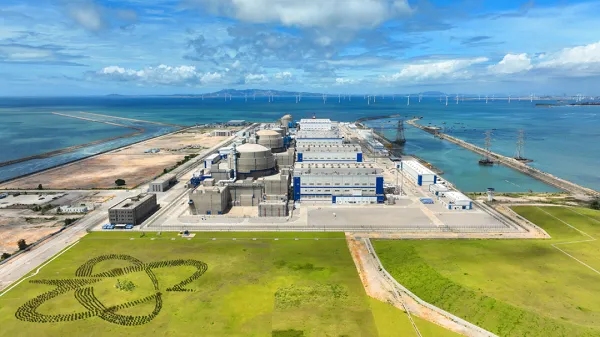
Zhangzhou shows how this fleet model works in practice.
World Nuclear News reported that Zhangzhou Unit 2 entered commercial operation on January 1, 2026. The unit is a 1,126 MWe net Hualong One reactor and the second of six planned Hualong One units at the Fujian site.
Once the full six-unit Zhangzhou plant is complete, it is expected to provide more than 60 billion kWh of clean electricity per year.
The Zhangzhou project matters because it reflects a move toward fleet-style construction. Repeated deployment reduces engineering uncertainty, deepens supplier experience, and helps Chinese companies standardize delivery.
In China’s current nuclear strategy, scale matters, but repeatability matters even more.
Taipingling gives the strategy a regional-industrial angle.
World Nuclear News reported that Taipingling Unit 1 entered commercial operation on April 19, 2026, becoming the first of six planned Hualong One reactors at the Guangdong site.
CGN said the unit will generate more than 9 billion kWh annually, enough to meet the electricity needs of about one million residents in the Greater Bay Area, while avoiding roughly 8.4 million tonnes of CO₂ emissions per year.
The full Taipingling site is planned around six Hualong One units, with total investment exceeding CNY120 billion, or about USD17 billion.
Construction also began on Taipingling Unit 4 in May 2026, and CGN said the completed six-unit site would generate more than 55 billion kWh annually while reducing standard coal consumption by about 16.65 million tonnes and CO₂ emissions by about 50.82 million tonnes per year.
This indicates that China’s reactor buildout is moving through multiple project phases rather than isolated showcase units.
CAP1400 gives China another domestic reactor pathway.
CAP1400 is a design developed by State Power Investment Corporation, and its large-scale deployment is still in its early stages compared with Hualong One.
This matters because reactor diversity can support supplier competition, regional deployment needs, and technology learning across state-owned groups.
For global energy companies, the key point is that nuclear energy in China is not tied to a single company or a single design. China is building a portfolio of reactor platforms that may serve different sites, ownership structures, and export ambitions.
China is also investing in small modular reactors.
Linglong One, also called ACP100, is often linked in Chinese policy messaging to heating, hydrogen production, and desalination. Yet China has not announced a second Linglong One unit, which suggests that commercial replication still needs proof.
For executives, this is a useful signal. SMRs may become relevant for industrial parks, islands, remote regions, and process heat.
Still, large reactors remain the practical center of China’s nuclear energy buildout in 2026.
China’s nuclear industry is led by a small group of powerful state-owned enterprises. They operate as builders, owners, technology developers, project financiers, and international relationship builders. Understanding these companies helps global leaders read project momentum and commercial opportunity.
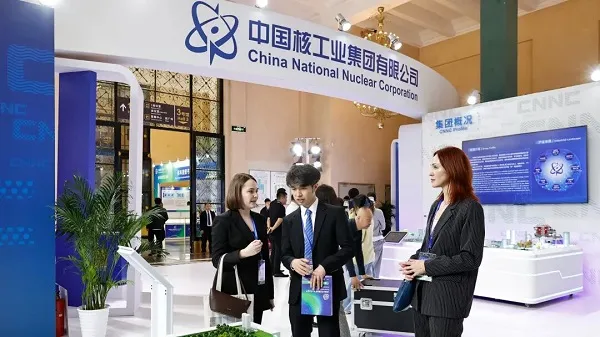
China National Nuclear Corporation has deep roots across nuclear engineering, fuel cycle capabilities, reactor design, operations, and overseas activity. Its role in Zhangzhou shows its importance in Hualong One deployment.
CNNC also remains closely tied to China’s broader nuclear technology ecosystem, including research institutes and international cooperation.
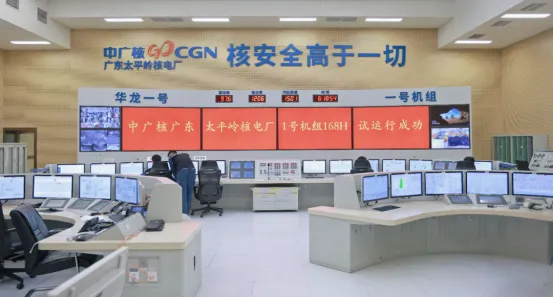
China General Nuclear is strongly associated with coastal nuclear development, especially in southern China. Taipingling demonstrates how CGN links nuclear power to the Greater Bay Area’s industrial electricity demand.
After Taipingling Unit 1 entered commercial operation, CGN said the number of operating nuclear power units it manages, including associates, increased to 29 units, with operating installed capacity rising to 33,040 MW.
CGN also matters because of its Hong Kong-listed financing channels and capital-market communications, which make parts of China’s nuclear buildout more visible to investors.
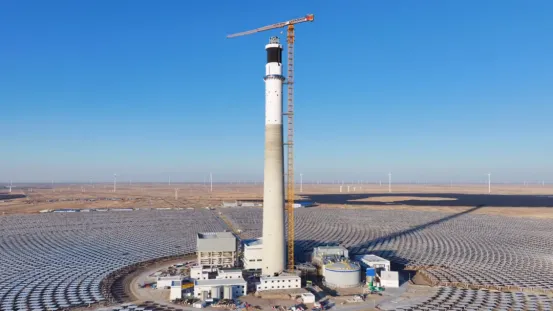
State Power Investment Corporation brings a broader perspective on power utilities. Its CAP1400 pathway sits alongside renewables, thermal power, hydrogen, and grid-connected energy systems.
For companies tracking China and nuclear power, SPIC matters because it links nuclear with diversified energy investment and utility-scale deployment.
China’s nuclear buildout remains state-led, yet the financing model is becoming more flexible.
Reuters reported that China planned stronger policy support for private investment in major energy projects, including nuclear power, hydropower, and cross-regional transmission.
Officials said private firms had been allowed stakes of up to 20 percent in some major nuclear projects.
This does not mean nuclear power in China is becoming a private-sector market. It means Beijing wants more capital channels around strategic infrastructure.
The sector remains regulated and state-controlled, but private participation can take the form of minority stakes, suppliers, engineering services, digital systems, materials, and specialized equipment.
China joined the pledge to triple global nuclear energy capacity by 2050 at the Paris Nuclear Energy Summit in March 2026. China submitted its 2035 climate commitment in November 2025, targeting a higher share of nonfossil energy. These moves place China’s nuclear energy inside global climate, technology, and diplomacy conversations.
China continues to view nuclear exports as part of global engagement, especially through the Belt and Road Initiative. Hualong One remains the flagship export design, while CAP1400 exports appear more complicated due to their technological lineage and geopolitical constraints.
Nuclear projects create decades of cooperation around training, services, fuel, maintenance, safety standards, digital systems, and infrastructure financing. This gives nuclear energy in China relevance beyond domestic electricity generation.
The next phase of China’s nuclear energy will depend on project execution.
Reactor approvals, construction starts, grid connection, safety performance, cost control, and supplier reliability will matter more than headline targets.
The sector’s commercial signal lies in deployment rhythm, not only capacity ambition.
Boards should watch five practical indicators:
For global companies sourcing from China, this subject affects energy procurement, carbon accounting, supply chain resilience, and regional manufacturing choices.
Nuclear energy in China is now part of the operating environment for advanced manufacturing, not a niche energy topic.
Chozan helps global executives understand China’s energy transition, industrial policy, and innovation ecosystem through research, briefings, workshops, and learning expeditions. If your team wants to understand China’s nuclear energy, renewables, storage, grids, and industrial decarbonization within a single strategic framework, Chozan can help turn complexity into business insights.
Book a consultation with Chozan to explore China’s clean power strategy and its implications for your sector.
China’s nuclear energy is growing through new commercial operations, construction starts, and approved reactor pipelines. The key 2026 signal is not only the capacity added but also China’s ability to repeat the Hualong One deployment across multiple coastal sites.
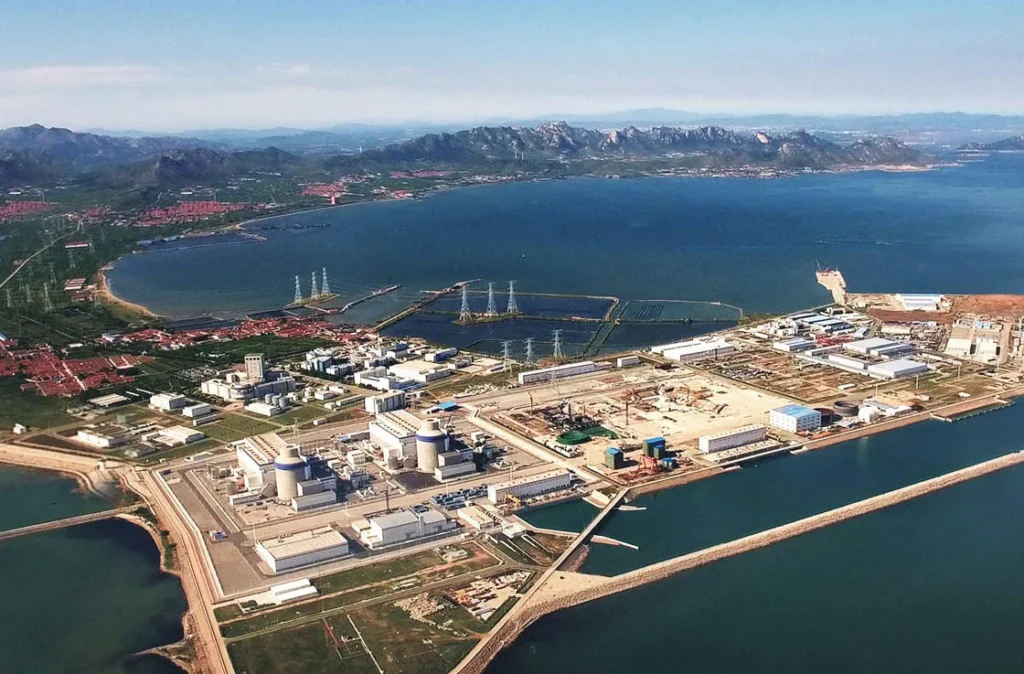
China’s breakthrough is shifting from imported nuclear technology to domestic, repeatable reactor deployment. Hualong One shows this progress, while Shidaowan HTR-PM highlights China’s move into advanced reactor designs beyond conventional nuclear plants.
China’s biggest source of energy is still coal. Despite rapid growth in solar, wind, and other clean power sources, coal remains central to electricity generation and heavy industry, reflecting the sheer scale of China’s energy demand.
China’s nuclear matters because renewables need firm, clean power support across industrial regions. Nuclear power can supply stable electricity near coastal demand centers, helping manufacturing clusters manage growth, electrification, and carbon reduction.
CNNC, CGN, and SPIC dominate China’s nuclear energy sector. Each has a different role across reactor technology, project ownership, construction, operations, capital markets, and long-term domestic deployment strategy.
Yes, Hualong One is the most visible domestic reactor platform in China’s nuclear energy strategy. Its value comes from repeatable deployment, domestic supply chains, and relevance for future export discussions.
Nuclear energy in China supports industrial decarbonization by adding reliable low-carbon electricity near major demand centers. This can help factories, ports, digital infrastructure, and heavy industry reduce dependence on coal-based power.
Yes, China’s nuclear energy can affect global supply chains through cleaner electricity availability, regional power stability, equipment demand, and carbon reporting. Manufacturing buyers should watch nuclear growth in coastal production provinces.
Foreign direct participation remains limited because China’s nuclear projects are highly regulated and state-led. Opportunity is more likely in equipment, advisory, safety systems, digital tools, materials, and carefully structured partnerships.
Executives should track China’s nuclear energy because it shapes energy security, industrial costs, clean power access, technology localization, and export influence. It also reveals how China scales complex infrastructure under national planning.