CONTENT
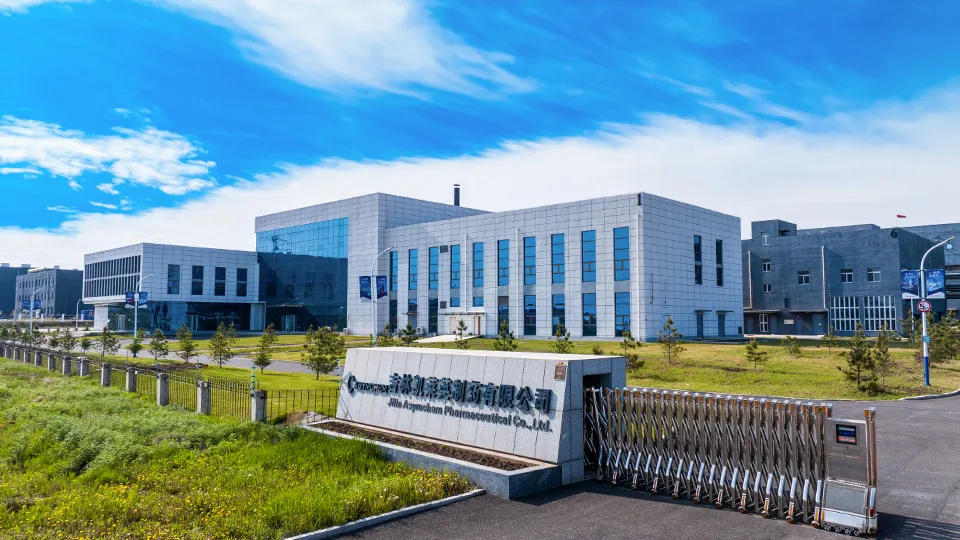
Asymchem is a China-based CDMO (contract development and manufacturing organization) that develops production processes and manufactures drug ingredients and finished products for pharmaceutical companies. Its model connects process research with specialized equipment, quality controls, and commercial supply.
Recent disclosures point to three key developments: larger peptide facilities, Chinese-developed equipment operating in the UK, and closer coordination between ingredient production and finished medicines.
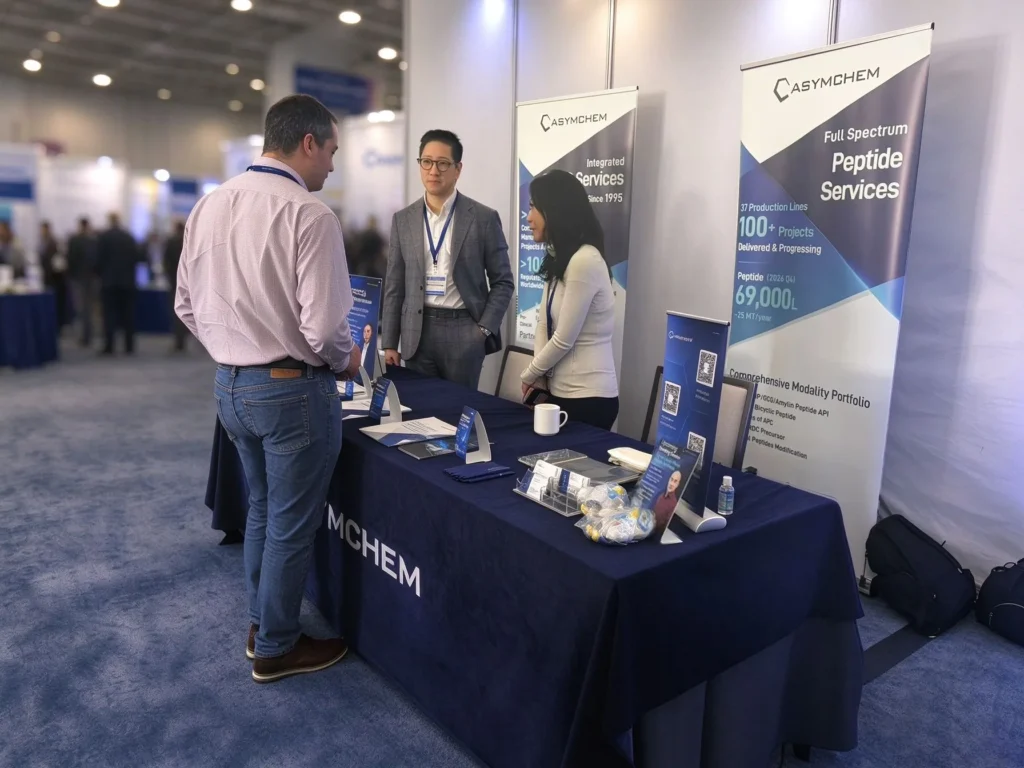
A successful laboratory reaction does not establish a commercially reliable manufacturing process. Larger production runs introduce different equipment conditions, material requirements, and quality risks. The development work must establish how the process behaves before a customer commits to launch volumes.
CMC, meaning chemistry, manufacturing, and controls, connects a drug’s characteristics with its manufacturing and quality-testing documentation. The company defines this work in its annual results glossary. APIs are active pharmaceutical ingredients, the substances that provide a medicine’s intended activity.
The company’s validation-readiness framework addresses starting-material designation, critical process parameters, operating ranges, and control strategies. These details determine what a manufacturing team needs to consistently reproduce a process.
A useful supplier comparison should examine the evidence behind that consistency. Ask how the proposed process responds to changes in material quality or equipment conditions. Request a clear explanation of which parameters require tight control and which have a demonstrated operating range.
A competitive batch quote has limited value if the process still requires substantial development before commercial production.
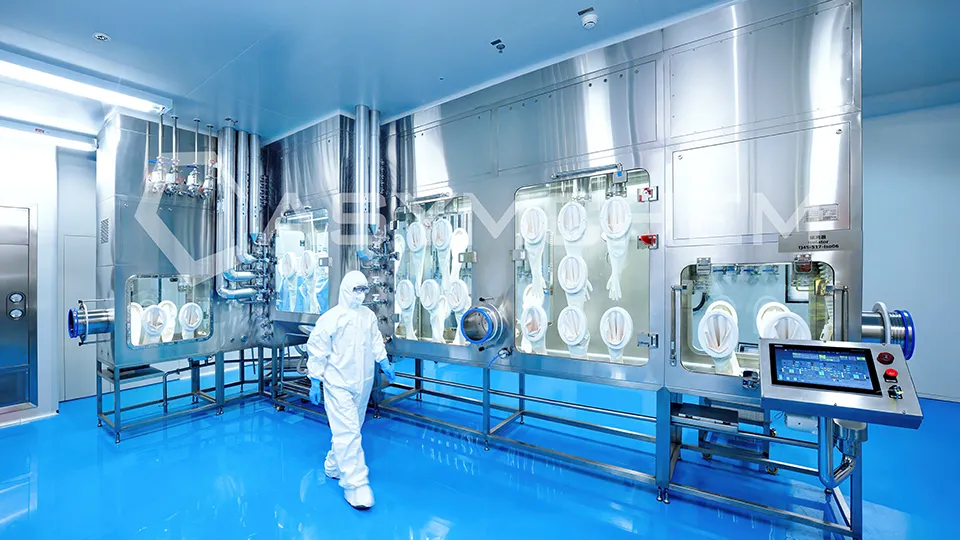
The company’s April 2026 TIDES announcement reported a manufacturing network with more than 45,000 liters of solid-phase peptide synthesis reactor volume. It stated annual peptide capacity exceeding 22.5 metric tons. The later 2026 interim report retained a year-end expansion target exceeding 69,000 liters.
These measures answer different questions:
| Capacity Measure | Commercial Interpretation |
| Reactor volume in liters | Indicates installed synthesis equipment; does not establish annual shipments |
| Annual output capacity in metric tons | Describes stated production capability; actual output depends on the molecule and process |
| Future expansion target | Signals planned investment; buyers still need a commissioning and qualification schedule |
A procurement team should separate nameplate capacity from capacity available for its program. Ask for the proposed production slot and changeover assumptions. A large shared reactor network does not reveal how much equipment remains available during another customer’s launch.
The April announcement described multicolumn countercurrent solvent gradient purification, alongside continuous cleavage and precipitation technologies. These downstream operations matter because synthesis capacity must translate into material that meets the required specifications.
A practical assessment of peptides should ask how much acceptable product the entire process delivers. Relevant measures include isolated yield, impurity removal, purification time, and solvent consumption per kilogram.
A further distinction concerns financial reporting. The chemical macromolecule business grew 123.72% in 2025, but that category includes peptides, oligonucleotides, toxin linkers, and lipids.
In June 2025, Asymchem announced it deployed its proprietary flow-chemistry equipment at its Sandwich facility in the UK. The installation included laboratory-scale plug-flow reactors, hydrogenation and biocatalysis platforms, and the company’s control systems.
It provides a concrete example of Chinese-developed pharmaceutical engineering being deployed overseas, although laboratory-scale operation does not establish commercial readiness for every process or molecule.
A commercial comparison should include the cost of adopting the equipment. Capital expenditure, operator training, maintenance access, and process qualification can change the value of a faster reaction. Suppliers should explain those costs alongside laboratory performance.
In July 2026, Asymchem announced that its Dunhua 2 carbapenem facility had completed its first FDA inspection. The company’s announcement described a pre-approval inspection supporting a commercial ingredient process using continuous material feeding and reaction technology. The inspection took place April 27 to 30, 2026.
This is a site-specific regulatory milestone. Buyers evaluating GMP manufacturing, meaning production under good manufacturing practice requirements, should examine the designated facility and proposed process. A company-wide description of quality standards cannot substitute for that review.
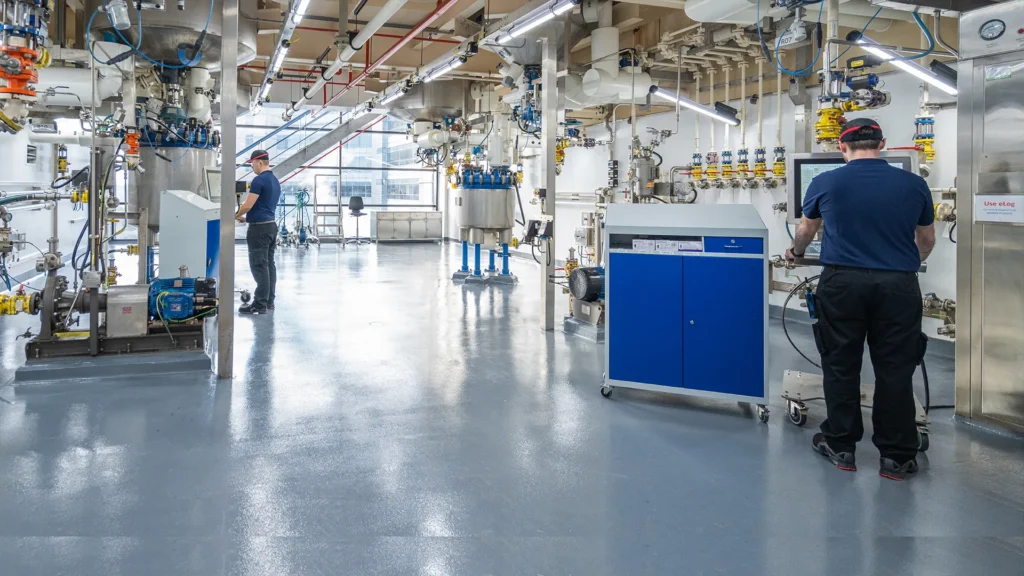
An ingredient manufacturing expansion creates another question: can the finished-product operation accommodate the intended dosage form?
The April 2026 announcement stated that the TJ4 prefilled-syringe line was GMP-operational, with annual capacity of approximately 45 million units. It described a cartridge workshop with planned annual capacity of up to 100 million units and an expected June start.
The later interim disclosure listed a cartridge workshop among facilities expected to begin operations during 2026. It does not confirm the earlier June start. Request current commissioning and qualification evidence for your intended production line.
For injectable formulations, the commercial assessment should extend to filling, packaging compatibility, and product release. The commercial rationale for placing ingredient and drug-product capabilities together is fewer organizational handoffs.
That is an interpretation of the operating model, rather than evidence of a measured reduction in lead time. A supplier should demonstrate the actual project benefit through its proposed production and release schedule.
The first-half 2026 financial results recorded 13.13% revenue growth and a 15.71% fall in net profit attributable to shareholders. The company attributed the decline mainly to currency fluctuations. Adjusted net profit rose 12.90%, reflecting a different calculation.
Asymchem’s October 2026 third-quarter report provided a more recent view of performance. For the first nine months of 2026, revenue grew 16.52% year-on-year, while net profit attributable to shareholders increased 6.49%. Adjusted net profit rose 21.81%. These figures indicate an improvement from the first-half profitability trend, although they cover a longer reporting period.
Those figures require a careful reading. Expanding demand and reported profitability can move differently. Neither the revenue increase nor the profit decline establishes the performance of an individual customer’s manufacturing program.
Financial review should separate operating economics from currency effects and adjustments. Compare the same reporting measure across periods, and ask how new facilities will reach productive utilization. Expansion spending creates a commercial commitment before every customer program reaches market.
An integrated supplier can become a concentrated operational dependency. The commercial assessment should therefore include a realistic interruption scenario.
Ask the supplier to identify the replacement facility if the designated site becomes unavailable. Request the transfer requirements and an estimated interruption period. Confirm which starting materials would still depend on the same upstream source.
The answer should distinguish an available building from a qualified alternative production route. That exercise reveals dependencies that a global facility map cannot resolve, and gives procurement teams a practical basis for evaluating supply continuity.
The Asymchem case raises useful questions about which Chinese operating practices could fit your business. ChoZan offers China research and expert calls to examine sector developments and compare approaches.
Our report library provides a starting point. Bring a specific operating question to the team to shape the next stage of your China research.
Book a consultation to discuss your research needs.
Asymchem manufactures small-molecule APIs, peptides, oligonucleotides, antibody-drug conjugate payloads, and finished formulations.
Its drug-product capabilities include prefilled-syringe manufacturing, with a cartridge production facility planned to begin operations in 2026. Its services span early-phase CMC through commercial GMP manufacturing
The company lists A shares under 002821 in Shenzhen and H shares under 6821 in Hong Kong. Buyers can consult exchange filings to review its finances and confirm which entities sit within the listed group.
GLP-1 programs can involve different molecule types. The first-half 2026 report identified five small-molecule GLP-1 projects, including a commercial program. Assess a supplier’s obesity-related work according to each project’s chemistry and production requirements.
The company announced an operational OEB5 facility in July 2025 for highly potent ingredients, including payload-linkers and small molecules. Buyers should confirm containment requirements for their compound and the suitability of the specific proposed production line.
Yes. The company operates a UK R&D and manufacturing site at Discovery Park, Sandwich, and a US process chemistry laboratory in Woburn, Massachusetts. It also agreed to acquire US-based Snapdragon Chemistry for USD 57.94 million.
A CDMO contributes manufacturing expertise and documentation. Clinical results and regulatory decisions remain separate outcomes. Ask suppliers to distinguish contracted deliverables from assumptions about trial progression, approval timing, and eventual demand for a drug.
Process performance qualification examines how a manufacturing process performs under defined production conditions. It forms part of validation. Before interpreting a project milestone, buyers should ask which site, equipment, operating ranges, and acceptance criteria the qualification covers.
A transfer should define the receiving site’s equipment requirements, process instructions, analytical methods, and responsibilities. Request an agreed plan to resolve differences between sites, demonstrate process performance, and document readiness before the receiving facility supplies commercial material.
Stability data shows how a compound changes over time under conditions such as heat, humidity, and light. Buyers use those findings to assess shelf life, packaging, storage, and transportation requirements, including the consequences of temperature excursions.
Request process-specific figures for solvent consumption, waste, energy, and yield, with a clear comparison baseline. Ask which production stage each figure covers. A named technology alone does not establish the environmental performance of your proposed manufacturing process.