CONTENT

Ascentage Pharma is a China-based biopharmaceutical company developing cancer medicines, with two products approved for specific indications in China and additional programs in international trials. Its portfolio includes small molecules that address cancer-cell survival, treatment resistance, and signaling pathways.
The company matters because it connects Chinese drug development with global clinical testing and commercial preparation. Assessing its value requires evaluating individual medicines, patient groups, and evidence. A pipeline’s size does not guarantee the success of every candidate.
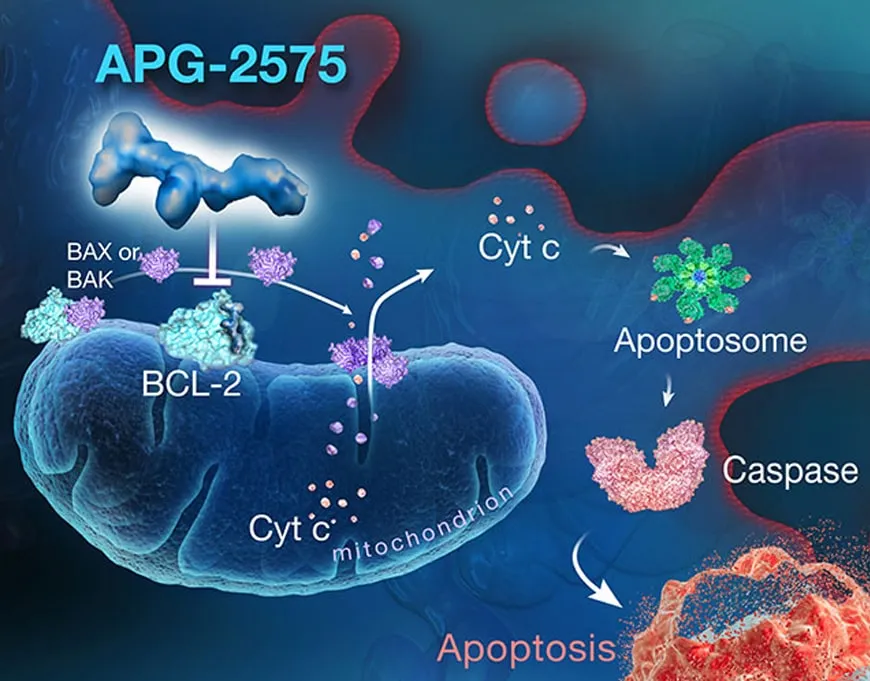
Ascentage Pharma Group International concentrates on oncology, including medicines designed to restore apoptosis, the programmed cell-death process. Cancer cells can evade this process through proteins that keep them alive.
The company’s research platform targets some of these protein interactions. Other assets interrupt cancer-related signaling or recruit the cell’s machinery to remove a target protein.
The research combines new molecules with established biological targets. The commercial distinction comes from clinical performance, tolerability, treatment setting, and usefulness in combinations. A familiar target can still offer research opportunities, but a different chemical structure does not make a medicine better.
The current portfolio overview covers seven drug assets. Two have approved indications in China; their other proposed uses require separate evidence.
| Asset | Target | Development Position |
| Olverembatinib, HQP1351 | BCR-ABL1 | China-approved for specified chronic myeloid leukemia groups; additional Phase III programs |
| Lisaftoclax, APG-2575 | BCL-2 | China-approved for specified adult CLL/SLL patients; additional registrational trials |
| Alrizomadlin, APG-115 | MDM2-p53 | Investigational programs in solid tumors and blood cancers |
| Pelcitoclax, APG-1252 | BCL-2/BCL-xL | Clinical development in lung cancer and other malignancies |
| APG-2449 | FAK/ALK/ROS1 | Clinical development in lung and ovarian cancers |
| APG-5918 | PRC2 | Clinical development in anemia and oncology |
| APG-3288 | BTK degradation | Phase I development in B-cell malignancies |
Olverembatinib adds another route to targeted therapy alongside the cell-death programs. Its POLARIS studies address previously treated chronic myeloid leukemia, newly diagnosed Philadelphia chromosome-positive acute lymphoblastic leukemia, and SDH-deficient gastrointestinal stromal tumors.
These are distinct development programs with different patient populations, rather than interchangeable measures of progress.
On July 10, 2025, the company announced that China’s National Medical Products Administration had conditionally approved lisaftoclax. The authorization covers adults with chronic lymphocytic leukemia or small lymphocytic lymphoma, abbreviated CLL/SLL, who previously received systemic treatment including a BTK inhibitor.
The approval announcement identifies a pivotal Phase II monotherapy study as the basis for authorization. Its primary endpoint measured overall response rate. This evidence concerns a defined treatment setting and does not authorize every combination or disease under investigation.
The GLORA trial record, updated in June 2026, describes a randomized Phase III comparison of lisaftoclax plus a BTK inhibitor against a BTK inhibitor alone. The primary endpoint is progression-free survival, the time until disease progression or death.
That comparison asks if the additional medicine delivers benefit beyond continued BTK inhibition. It is a more demanding development question than establishing activity in a single treatment arm.
Other studies extend the clinical pipeline into previously untreated CLL/SLL, newly diagnosed acute myeloid leukemia in older or unfit patients, and higher-risk myelodysplastic syndromes. Each study can lead to a different eligible patient population, treatment duration, and payer comparison.
Alrizomadlin aims to interrupt the interaction between MDM2 and p53, restoring tumor-suppressor activity and promoting apoptosis. The mechanism offers a different intervention point from BCL-2 inhibition.
At ASCO 2026, the company presented early results in pediatric solid tumors. The alrizomadlin and lisaftoclax combination produced an objective response rate of 23.5% among 17 response-evaluable patients. That represented four responses, including one complete response.
The strategic interest lies in testing two cell-death intervention points together in a difficult treatment setting. The small evaluable cohort leaves considerable uncertainty. These results cannot establish superiority over existing treatments or a long-term survival benefit.
Further development needs to clarify response duration, tolerability, and which tumor subtypes benefit. Those questions determine how an early clinical signal can become a usable treatment proposition.
The company announced U.S. FDA investigational clearance for APG-3288 in January 2026 and China CDE clearance in February.
APG-3288 uses PROTAC technology to recruit cellular machinery that degrades BTK. The design aims to address resistance associated with existing BTK inhibitors. Its Phase I study evaluates safety, tolerability, drug exposure, and preliminary activity.
This addition gives Ascentage another way to pursue blood-cancer research. It also introduces a different set of development questions: can the compound remove its intended protein at tolerable exposure, and does that produce durable clinical benefit?
The clearances permit clinical investigation. They do not constitute marketing approval or demonstrate successful treatment of resistant disease.
A Chinese-language announcement dated September 15, 2026 describes a research agreement with Peking University. Its stated priorities include clinical research platforms, joint talent development, and mechanisms for translating research into treatments for blood cancers.
The business implication is closer coordination between clinical questions and drug-development work. Hospitals can identify unresolved treatment problems, while a company can organize molecule development and regulatory studies around them.
The announcement sets out the agreement and its intended scope. It does not demonstrate completed research outcomes. Future projects and published results will show what the collaboration delivers.
As of June 30, 2026, olverembatinib was on formulary at 394 hospitals in China, compared with 60 for lisaftoclax, according to the interim disclosures. The company also tracks access through direct-to-patient pharmacies.
These channels make distribution a concrete planning issue. A hospital formulary listing doesn’t quantify prescriptions or show how many eligible patients can afford treatment.
A commercial assessment should map treatment centers against product availability, then examine reimbursement and actual utilization. That work can identify gaps in access before additional promotion spending, or inform the choice of a distribution partner.
In August 2026, two leadership appointments assigned separate responsibility for global business development and building the company’s own U.S. commercial organization.
That structure suggests preparation for both partnering opportunities and direct commercial operations. It creates choices around market access, launch spending, and capabilities outside China. A potential partner’s role will depend on the territory and agreement: clinical collaboration, distribution, and licensing place different responsibilities on the parties.
The 2026 interim financial results put the cost in perspective. First-half revenue totaled US$44.5 million, while research and development expenses reached US$102.8 million. Cash and bank balances stood at US$279.4 million on June 30.
R&D expenses were about 2.3 times revenue, based on those figures. First-half revenue therefore did not cover the full research expense. The practical lesson from this Chinese drug developer is that scientific progress, international trial execution, and financing must advance together.
Ascentage Pharma raises questions about how Chinese research becomes an international business. ChoZan offers China-focused research and expert calls to examine market developments and company strategies. Explore our China reports, or discuss a research brief around the business questions your team needs to answer.
Book a consultation to discuss your research needs.
No. The listed parent is Ascentage Pharma Group International. Its 2025 annual report, filed in April 2026, identifies Ascentage Pharma Group Inc. as a U.S. subsidiary, and trial registries name it as a sponsor.
The company trades as AAPG on Nasdaq and 6855 in Hong Kong. Its Nasdaq securities are American depositary shares, with each ADS representing four ordinary shares. The two listings therefore require attention to share representation when comparing prices.
No. Small molecules describe a drug category, not generic status. A company can develop a new small-molecule medicine with its own intellectual property. Generic status concerns the relationship to an existing approved reference product.
They are separate BCL-2 inhibitors. The reviewed evidence does not establish universal superiority for lisaftoclax. A useful comparison must match disease, prior treatment, combination partners, endpoints, and follow-up, rather than compare response rates from unrelated studies.
A 2025 review in Drugs describes a five-day dose ramp-up, reaching the target dose on day six. That initiation schedule matters for treatment logistics, but it does not establish comparative safety or effectiveness on its own.
ClinicalTrials.gov lists studies by drug name, development code, and sponsor. Check each record’s update date, recruitment status, eligibility criteria, and participating sites. The listed study contact can confirm availability when a registry entry needs clarification.
No. A guideline recommendation and a regulatory indication serve different purposes. The company reports broader lisaftoclax recommendations in the 2026 CSCO guidelines, but readers must check the authorized label separately before treating a use as approved.
Yes. A 2025 eClinicalMedicine paper reported a Phase I study of APG-2449 in advanced lung cancer. Full manuscripts provide methods and limitations that short announcements may omit; peer review still does not replace later comparative trials.
Dr. Dajun Yang is chairman and chief executive officer. The company’s 2026 disclosures also identify Dr. Yifan Zhai as chief medical officer, separating overall business leadership from clinical-development direction.
Its April 2026 filing describes a global intellectual property portfolio covering products and candidates. A commercial assessment should examine ownership or licensing, jurisdiction, claim scope, and remaining patent life. Patent protection cannot establish clinical effectiveness.