CONTENT
AI in facility management is no longer a pilot program or a boardroom buzzword. It is a full-scale operational shift transforming how organizations run buildings, factories, and industrial sites worldwide. And if you want to understand where this transformation is heading, the clearest view is coming from China.
China is deploying AI in facility operations at a speed and scale most Western markets have not yet matched, backed by government mandates, national investment funds, and a dense ecosystem of AI companies. For global business leaders, this is essential knowledge.
AI in facility management refers to the application of artificial intelligence to the operations, maintenance, and optimization of physical buildings and industrial environments, from corporate headquarters and commercial towers to manufacturing plants and logistics hubs.
The core capabilities transforming this sector include:
Facilities are no longer passive cost centers. They are becoming active contributors to business performance, sustainability targets, and workforce experience. AI is the engine driving that shift.
China’s position in AI-driven facility management is not accidental. It reflects coordinated national strategy, massive capital deployment, and an ecosystem built to move from concept to real-world application faster than anywhere else.
China’s core AI industry reached more than 1.2 trillion yuan ($173.9 billion) in 2025, with the number of AI companies surpassing 6,200 nationwide. More than 30 percent of manufacturing enterprises adopted AI technologies by the end of 2025, and Chinese companies had released over 300 humanoid robot products.
Backing this momentum, China’s Ministry of Industry and Information Technology and the Ministry of Finance jointly established a 60 billion yuan ($8.2 billion) national AI investment fund to fast-track strategic investments in AI infrastructure and cutting-edge technologies.
The government’s “AI Plus” (人工智能+) initiative is pushing AI into manufacturing, smart cities, logistics, and industrial operations at a national level, backed by real commercial deployments already in operation.
China is not theorizing about AI in facility management. It is doing it, at scale, right now.
Across Chinese facilities and internationally, the following applications are delivering the most measurable results today.
Predictive Maintenance remains the highest-priority use case. Among organizations that have already deployed AI, 47% of facility managers use it for predictive maintenance (Johnson Controls, 2026 AI and Digitalization in Facilities Management Report). AI models analyze sensor and thermal camera data to flag degradation patterns before failures occur.
Energy Optimization is delivering some of the fastest financial returns. Systems learn building-specific occupancy rhythms and adjust energy usage dynamically, with some facilities reporting double-digit reductions in annual energy costs.
Space Utilization is a growing priority. Among organizations using workplace management technology, 75% now use it for space management and planning (Johnson Controls, 2026). AI-driven space intelligence is becoming a competitive necessity as real estate costs rise globally.
Security and Access Control powered by computer vision enables autonomous building monitoring, license plate recognition, unauthorized access detection, and fire prevention systems without manual oversight.
Workflow Automation cuts administrative overhead across facility teams. Work order creation, invoice matching, and inspection logging now run automatically, freeing staff for higher-value tasks.
The following Chinese companies show how AI in facility management is being operationalized at scale, with real deployments across buildings, factories, and industrial environments.
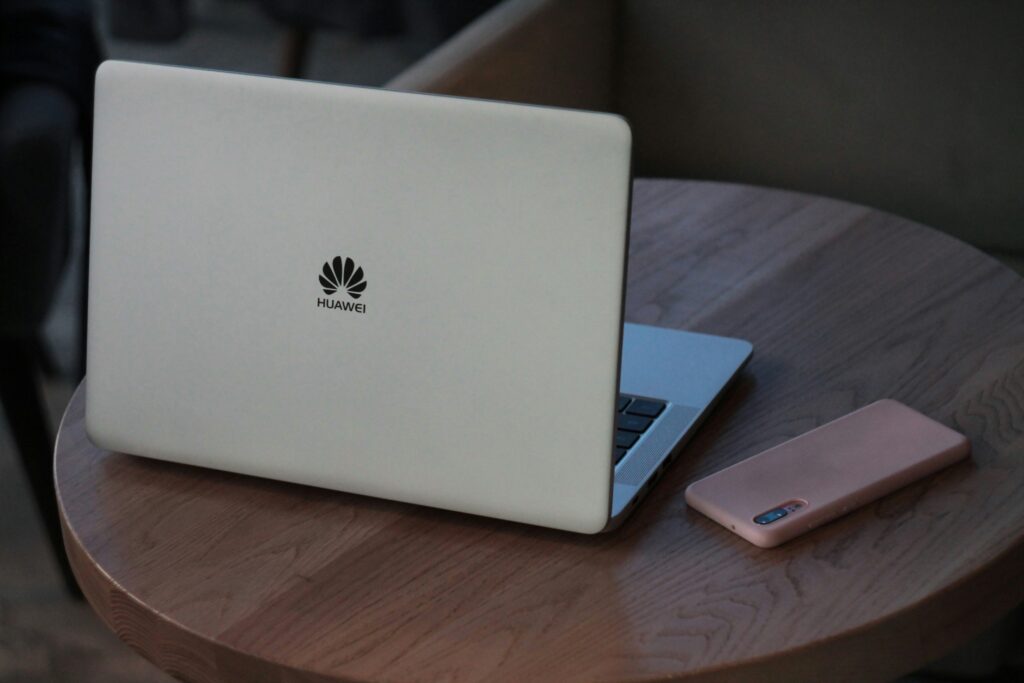
Huawei’s Pangu large model series was built for industry applications, not general consumer use. Its AI powers smart building management, drone-based equipment inspection, and energy monitoring.
The Atlas AI computing platform underpins real-time building automation in manufacturing, telecoms, and smart cities, with 5G and IoT integration providing a distinct edge for low-latency facility environments.
SenseTime is one of China’s most valuable AI companies, with computer vision systems embedded across smart buildings and campuses nationwide. Applications include automated access control, fire risk detection, and real-time occupancy monitoring.
Revenue from its generative AI division surged 72.7% in the first half of 2025, and it has expanded into embodied intelligence for real-world physical environments.
Alibaba’s City Brain (城市大脑) applies AI to urban-scale infrastructure, optimizing traffic, resource allocation, and utility management across cities. In March 2025, Hangzhou launched City Brain 3.0, integrating the DeepSeek-R1 model and digital twin technology, making it one of the first cities in China to embed AI-driven self-evolving intelligence into urban management.
On the enterprise side, Alibaba’s Qwen (通义千问) model has seen rapid adoption across industries. More than 90,000 enterprises have deployed Qwen via Alibaba Cloud’s Model Studio platform, with over 2.2 million corporate users accessing Qwen AI services through DingTalk.
In facilities and operations contexts, Alibaba Cloud enables predictive analytics, real-time alerts, and intelligent decision-support for large commercial campuses and smart city infrastructure alike.
iFlytek applies its SPARK large model to smart facility environments, enabling voice-controlled building systems, automated facility reporting, and AI-powered operations assistants.
With partnerships spanning Huawei, China Mobile, and CHN Energy, and a speech model supporting 74 languages and dialects, iFlytek is well-positioned for multinational facility operations in China.
Hikvision is the world’s largest manufacturer of video surveillance equipment, with AI capabilities embedded in commercial, industrial, and government facilities across China and beyond.
Its DeepInMind AI servers process video intelligence on-site, enabling real-time anomaly detection, perimeter alerts, and fire prevention. Key applications include occupancy tracking, unauthorized access detection, and integrated alarm management for multi-building campuses.
Baidu AI Cloud has been ranked the No.1 AI cloud provider in China for six consecutive years, according to IDC’s most recent report on China’s AI public cloud market. It also leads China’s AI Industrial Quality Inspection market for three consecutive years, per IDC data.
In November 2025, Baidu unveiled ERNIE 5.0, a natively omni-modal foundation model handling text, images, audio, and video, with enterprise deployments available through its Qianfan cloud platform.
Baidu’s autonomous systems expertise, built through its Apollo self-driving program, is also transferring into facility robotics and warehouse logistics, giving it a growing footprint in the physical operations layer of facility management.
Geek+ deploys autonomous mobile robots (AMRs) inside warehouses, distribution centers, and manufacturing facilities, using real-time AI pathfinding to optimize goods flows and cut manual handling. Systems are active at DHL, Decathlon, and Cainiao, across thousands of facilities in Asia, Europe, and North America.
4Paradigm’s Sage AIOS platform helps large organizations embed AI into operational decision-making. In facility contexts, this covers automated anomaly detection, multi-site resource allocation, and compliance monitoring. Designed for non-technical users, it lowers the barrier for operations teams to adopt AI without deep data science expertise.
UBTECH deploys AI-powered humanoid robots in automotive factories, logistics facilities, and commercial buildings. Its Walker S2 is the first humanoid robot with autonomous battery swapping, enabling near-continuous 24/7 operation.
By late 2025, Walker series orders exceeded 800 million yuan ($112 million USD), with deployments at BYD, Geely Auto, FAW-Volkswagen, Foxconn, and SF Express across quality inspection, assembly, and logistics tasks.
CSCEC is the world’s largest construction company by revenue, ranking 14th on the Fortune Global 500 and topping Engineering News Record’s Top 250 Global Contractors list. By 2025, its overseas revenue accounted for 28% of total revenue, with operations spanning more than 130 countries.
CSCEC demonstrates how AI can be embedded from the construction phase itself, not just after handover.
China’s approach offers three clear lessons for global executives.
Speed of operationalization. Chinese companies move from pilot to full deployment faster than Western counterparts, driven by government urgency, competitive pressure, and a high tolerance for iteration.
Lifecycle integration. AI is embedded from building design through construction, handover, and long-term operations. This end-to-end approach creates compounding efficiency gains that single-phase deployments cannot match.
Ecosystem density. AI model developers, hardware makers, robotics companies, and cloud providers work in coordinated proximity, accelerating innovation cycles and simplifying deployment.
The question is no longer whether to adopt AI in facility management. It is how fast to move. China has already built the models worth learning from.
ChoZan helps global business leaders learn from China’s fastest-moving innovations, including the AI transformation of industrial and building operations.
The use of artificial intelligence to automate and optimize building and industrial operations. Core applications include predictive maintenance, energy optimization, space utilization, security, and workflow automation.
China deploys at a scale and speed most Western markets have not yet matched, driven by national investment funds, coordinated industry ecosystems, and government-mandated targets.
Key players include Huawei (Pangu AI), SenseTime (computer vision), Alibaba Cloud (City Brain), iFlytek (voice operations), Hikvision (AI surveillance), Baidu (predictive operations), Geek+ (facility robotics), 4Paradigm (enterprise AI), UBTECH (humanoid robots), and CSCEC (smart building construction).
Yes. ChoZan’s China Learning Expeditions and Innovation Tours bring international executives directly into China’s AI ecosystem, with exposure to the companies and trends covered in this article.
Predictive maintenance, energy optimization, space utilization, computer vision security, and AI robotics for physical tasks. China is leading real-world deployment across all of these areas.