CONTENT

Global supply chain leaders have learned a hard lesson over the past several years. Logistics resilience is not a nice-to-have. It is a competitive necessity. China’s warehouse robotics companies have emerged as the primary engines powering this resilience, not through cheap replication of foreign designs but through relentless iteration at a pace that Western incumbents struggle to match.
The numbers tell a clear story. China’s intelligent logistics equipment market surpassed $11 billion in 2026, with a compound annual growth rate exceeding 25%. Chinese mobile robot exports have shifted dramatically. In 2025, mobile robots accounted for over 40% of all industrial robot exports from China, up from just 25.87% in 2022. This is not a low-cost play. This is a technology export surge built on real operational scale.
For global logistics operators, procurement directors, and supply chain strategists, understanding the Chinese ecosystem is no longer optional. The leading warehouse robotics companies from China now set the global benchmark for density, throughput, and deployment speed.
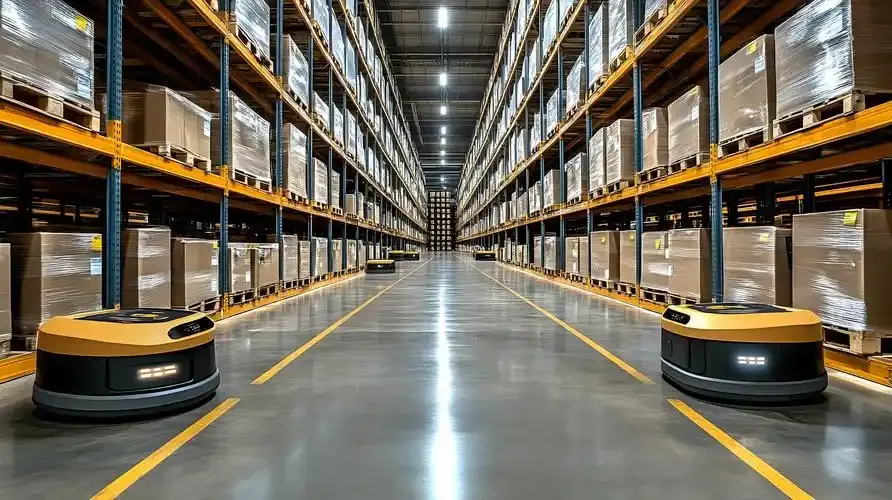
China has a rare combination of manufacturing clusters, demanding e-commerce operations, large logistics networks, and strong policy support for robotics. That combination gives local robotics companies a valuable proving ground. Vendors can test robot fleets in live warehouses, refine fleet software, and learn from high-SKU, high-volume, peak-season operations.
The category has also matured. Buyers are assessing how robots connect with WMS, WES, ERP, MES, conveyors, shuttles, picking workstations, and labor planning. Logistics Viewpoints noted that in 2025, orchestration platforms became central because mixed environments involving AMRs, AGVs, conveyors, shuttles, automated storage, and labor created more complexity than siloed controllers could handle.
That matters for executives. The best logistics automation companies now compete on workflow control, integration quality, uptime, training, local service, and deployment repeatability. Hardware still matters, but robot fleet software and warehouse orchestration decide how much value the buyer captures after installation.
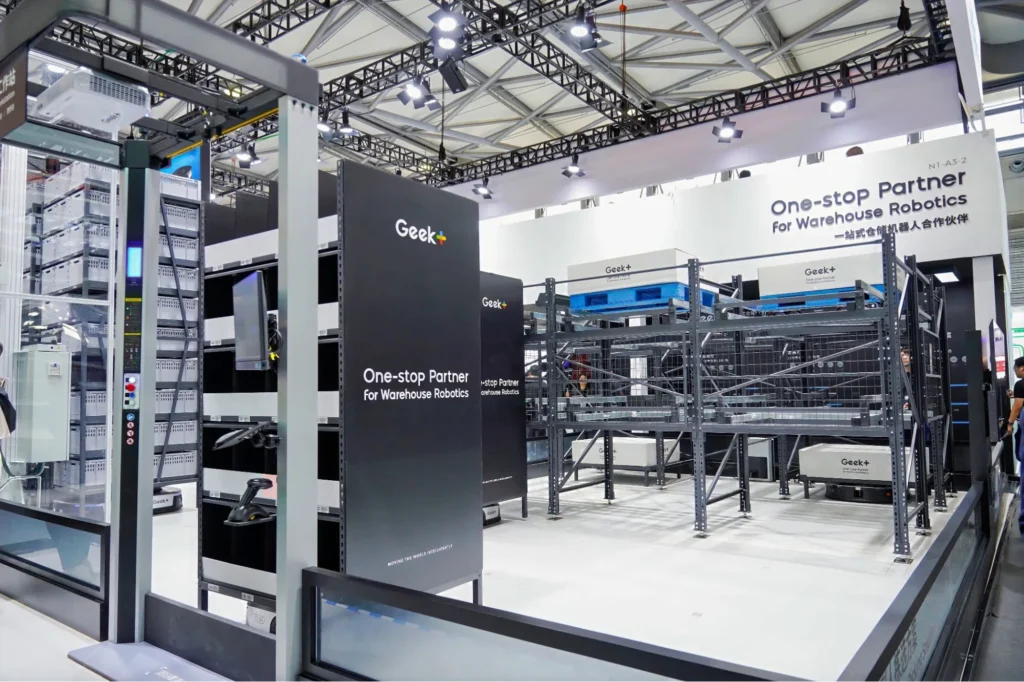
Geek+ remains one of the most visible Chinese AMR robot companies in global fulfillment. Its core proposition encompasses Shelf-to-Person, Tote-to-Person, Pallet-to-Person, sorting, intralogistics, robot-arm picking, and software. The company lists WES, RMS, and IOP as core platforms and highlights ERP, WMS, and MES integration with open APIs.
Its 2026 position is tied to scale and software. Geekplus reported that by the end of 2025, it had delivered more than 72,000 robots across over 40 countries and regions, served around 950 end customers, and added over 90 channel partners during the year. At MODEX 2026, MODEX introduced Geek+ Brain and RoboShuttle V5 for the US market, offering a full stack across tote, pallet, and shelf workflows on a single platform.
For global businesses, Geek+ is strongest where the warehouse challenge involves scale, SKU complexity, and multi-site rollout. Its Robot Arm Picking Station shows where Chinese automation robotics companies are heading: AMRs connected to perception, grasping, and more automated picking. The 2025 launch described Geek+ Brain as a system trained on real-world data to recognize and grasp tens of thousands of SKUs.
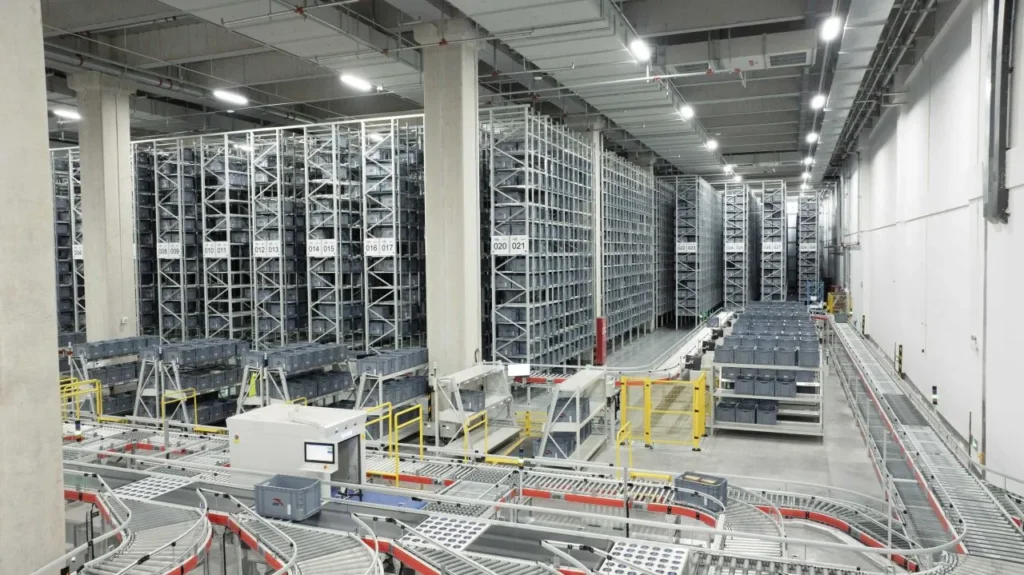
Hai Robotics built its profile around ACRs, or autonomous case-handling robots. This makes it a key supplier for warehouses where vertical storage density matters more than simple point-to-point transport. Its HaiPick systems focus on goods-to-person automation across apparel, e-commerce, 3PL, healthcare, automotive, electronics, grocery, and retail use cases.
The company closed a $100 million Series D+ funding round in June 2026, less than a year after raising $200 million. The round was led by Capital Today and an undisclosed U.S. fund.
The 2025 launch of HaiPick Climb sharpened this position. Hai Robotics said the system climbs racks up to 12 meters and can deliver up to 4,000 totes per hour with minimal infrastructure.
Hai Robotics has delivered over 1,800 projects worldwide. Its HaiQ intelligent management platform can coordinate up to 6,000 robots of different types at a single site. As of September 2025, the company had signed more than 800 customers and employed 516 R&D personnel, accounting for nearly 36% of its workforce. It has filed 2,394 patent applications globallyrobot companies because it addresses a practical buyer problem: many facilities need tote-to-person, shelf-to-person, pallet-to-person, high-density storage, and flexible transport to work as a single
For strategy teams, Hai Robotics is best understood as a density and case-handling specialist. It suits businesses with rising order volume, limited floor space, and facilities that need retrofitting.
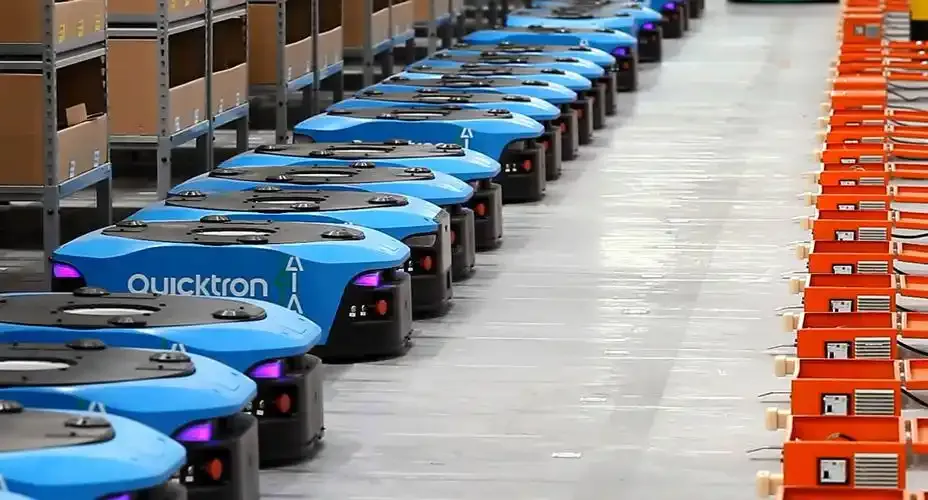
Quicktron has become important among autonomous mobile robot companies because it addresses a practical buyer problem: many facilities need tote-to-person, shelf-to-person, pallet-to-person, high-density storage, and flexible transport to work as one system.
At CeMAT Asia 2025, Quicktron said its QuickMix solution combined tote-to-person, shelf-to-person, pallet-to-person, high-density storage, and flexible transport into a single Robot Control System platform. It described QuickMix as designed for multi-robot collaboration and changing business needs. Quicktron then prepared its first European presentation of QuickMix at LogiMAT 2026.
The company’s RCS story is commercially relevant. Quicktron says its robot control system offers live task monitoring, bottleneck visibility, multi-robot traffic coordination, and path planning across diverse robot types in high-density environments.
For buyers, that places Quicktron among robotic automation companies focused on orchestration depth, rather than simple robot movement.
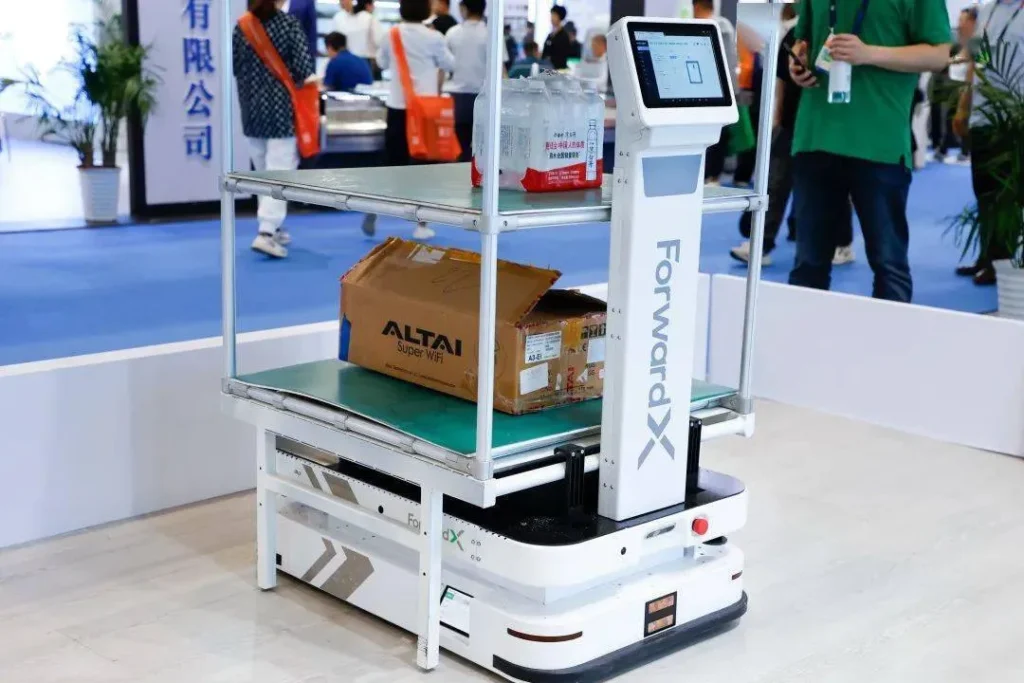
ForwardX Robotics is one of the Chinese autonomous mobile robot companies with a clear focus on manufacturing and warehousing. Its portfolio includes Flex, Max, Lynx, and Apex series robots, plus an f(x) Fleet Manager.
ForwardX’s 2025 Chery project is the strongest recent proof point. The company said 484 AMRs were live at Chery Automobile’s Dalian factory and described the deployment as one of the largest known AMR deployments in the automotive sector. The project used three specialized AMR models for small components, heavy items, and large racks.
ForwardX is worth watching for executives with manufacturing-adjacent logistics needs. Its strength lies in internal material flow, line-side delivery, towing, and AMR coordination in complex factory environments. In May 2025, ForwardX also announced a Benelux partnership with Lynx Automation and said it had more than 4,200 AMRs deployed across over 200 sites worldwide.
Megvii sits slightly apart from the pure-play warehouse robotics companies because it comes from AI and computer vision. In logistics automation, that background appears in its MegBot AMRs, intelligent stacker, HETU software, AS/RS, and 3D pallet shuttle systems.
Its case library covers smart warehouse, micro fulfillment, pharmaceutical, food and beverage, manufacturing, apparel, new energy, retail, and 3PL scenarios.
The company’s manufacturing solution page describes MegBot as a self-developed series of AMRs for internal transportation and logistics. It also positions HETU as a software layer for warehousing, logistics, manufacturing, and supply chain systems, covering planning, simulation, operations, and human-machine coordination.
For global strategy teams, Megvii is most relevant when the automation discussion encompasses perception, AIoT, storage systems, and warehouse software within a single architecture. It may fit buyers who need a broader smart-warehouse build rather than a narrow mobile-robot fleet.
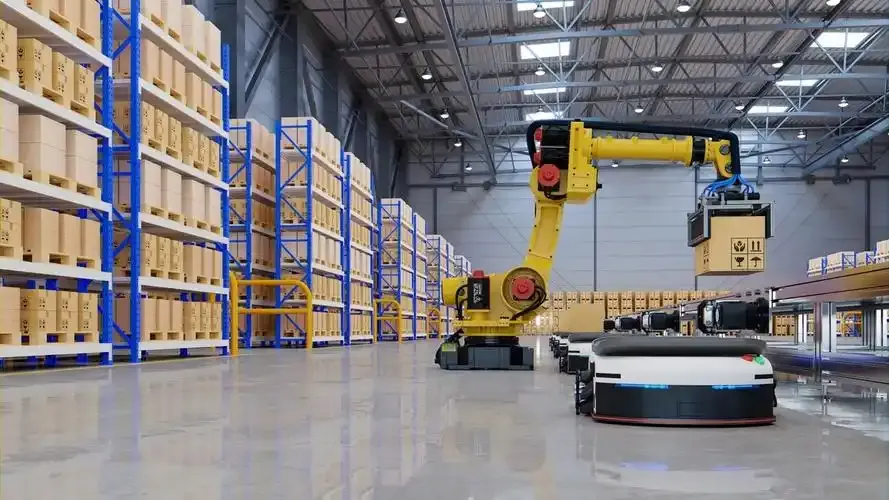
The shortlist should start with workflow fit. Goods-to-person picking, case-handling robots, pallet movement, production-line delivery, micro fulfillment, and cold-chain storage all require different hardware and software logic. A buyer comparing AMR robot companies should map each process before comparing robot counts or prices.
Software is the next filter. Ask how the vendor handles task assignment, congestion, simulation, exception management, third-party WMS integration, and mixed-fleet control. In 2026, a robot fleet without strong orchestration can create operational friction at scale.
Service depth also matters. Geekplus, Hai Robotics, Quicktron, ForwardX Robotics, Hikrobot, and Megvii each address different segments of the automation market, but global rollout depends on local support, spare parts, integration partners, and training. Hikrobot, for example, says its mobile robot business covers AMR, iWMS-1000, RCS-2000, intelligent equipment, and system applications for internal logistics.
The final filter is expansion logic. A good pilot should test the site and provide a template for future locations. The strongest logistics automation companies enable you to start with one workflow and then extend to storage, picking, replenishment, transport, sorting, and warehouse orchestration without requiring a full redesign each time.
Chinese warehouse robotics companies are part of a larger China advantage in applied automation. The country is pushing robotics, embodied AI, intelligent connected new energy vehicles, high-end equipment, and new-generation information technology in the 2026 to 2030 policy cycle. That does not mean every vendor will win globally. It does mean the domestic market will continue to pressure suppliers to improve cost, reliability, and deployment speed.
For retailers, 3PLs, manufacturers, investors, and technology leaders, the main takeaway is simple: evaluate Chinese vendors as operating-system partners rather than equipment vendors. The winners will be the companies that can turn robots into dependable flow, link software to commercial KPIs, and keep warehouses adaptive during SKU shifts, labor pressure, and channel volatility.
Ready to navigate China’s robotics and automation landscape?
At Chozan, we help leaders understand China’s innovation economy with research, executive workshops, learning expeditions, expert calls, and market strategy support. If your team is assessing Chinese warehouse robotics companies, AMRs, AGVs, or broader logistics automation, Chozan can help you separate proven deployment signals from trade-show noise.
Book a consultation to build a clearer view of China’s robotics ecosystem and its strategic relevance for your business.
The strongest names include Geek+, Hai Robotics, Quicktron, ForwardX Robotics, Megvii, and Hikrobot. Each has a different strength across AMRs, ACRs, robot fleet software, goods-to-person picking, internal logistics, or smart warehouse systems.
Amr robot companies usually focus on flexible navigation, dynamic task assignment, and mixed workflows. AGV suppliers may serve structured transport routes well, but AMRs can fit changing warehouse layouts with less fixed infrastructure.
Some autonomous mobile robots companies can serve smaller sites if order volume, SKU complexity, and labor cost support the business case. The best fit is a repeatable picking, replenishment, or transport workflow with measurable bottlenecks.
Ask about WMS integration, traffic management, safety logic, simulation, local service, battery strategy, peak-season performance, and expansion plans. The pilot should prove a scalable operating model, not simple robot movement on the floor.
Chinese robotics companies benefit from dense supply chains, demanding local logistics users, manufacturing depth, and policy attention around robotics and embodied AI. These conditions help vendors test, refine, and commercialize systems quickly.
Hai Robotics is a strong fit for case-handling and vertical storage density. Quicktron and Geek+ also offer goods-to-person and storage-linked systems. The right choice depends on ceiling height, SKU profile, throughput, and integration needs.
Automation robotics companies usually redesign work rather than remove every worker. Robots reduce walking, transport, and repetitive handling. People still manage exceptions, quality checks, replenishment planning, maintenance, supervision, and customer-specific process decisions.
Robotic automation companies help 3PLs handle changing client profiles, uneven demand, and multi-SKU fulfillment. Flexible AMR fleets and warehouse orchestration software can support faster onboarding, cleaner picking workflows, and better space usage.
ACRs retrieve and move cases or totes from storage racks, so they are tied closely to high-density goods-to-person systems. AMRs cover a broader range of transport, picking support, pallet movement, towing, and replenishment tasks.
Yes, leading vendors usually provide APIs or integration layers for WMS, ERP, MES, and warehouse execution systems. Buyers should still test data quality, event timing, exception handling, cybersecurity requirements, and local partner capability before rollout.