CONTENT
Sineng Electric INC is a commonly searched name for Sineng Electric, a Chinese power electronics manufacturer supplying solar inverters, battery storage power conversion systems, and grid-support equipment.
The company’s expansion in India illustrates a broader shift in renewable energy infrastructure. Equipment suppliers are establishing local manufacturing, service networks, and storage capabilities alongside their original solar businesses.
For developers and buyers, key questions include product performance, local support, project delivery, and the difference between announced capacity and actual deployment.
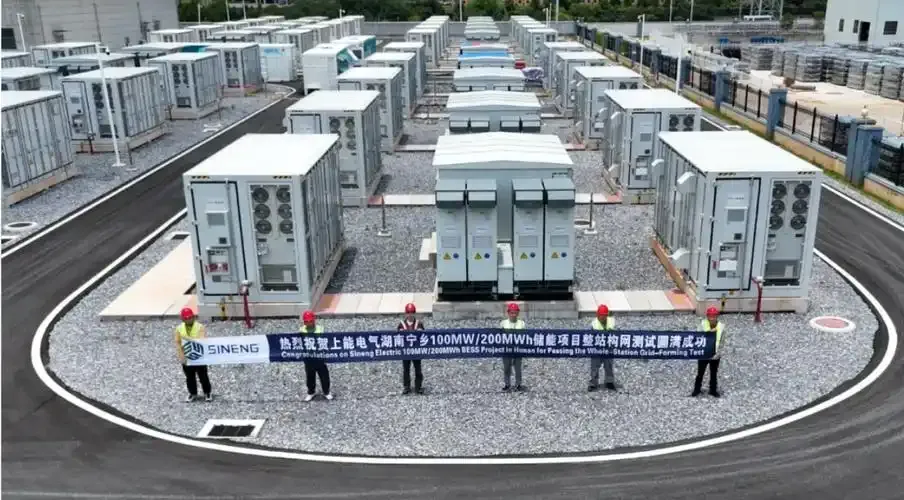
Sineng Electric manufactures photovoltaic inverters, energy storage power conversion systems, hydrogen power supply equipment, and power quality products.
Searches for Sineng Electric INC, Sineng Electric Co, and Sineng Electric Co Ltd generally refer to the wider Sineng business. They do not establish that every search variation represents a verified legal company name.
In India, the business operates through Sineng Electric India Private Limited, also referred to in searches as Sineng Electric India Pvt Ltd.
Commercial contracts should identify the specific legal entity responsible for supply, warranty support, and project execution.
According to Sineng’s August 2026 company announcement, S&P Global Energy ranked the manufacturer third worldwide for photovoltaic inverter shipments in 2025.
The same announcement placed Sineng second in India for inverter shipments.
Separately, Sineng reported first place in Indian utility-scale solar projects commissioned in 2025, citing Crisil Bridge to India.
These rankings measure different activities:
| Metric | Reported figure | What it represents |
| Global photovoltaic inverter shipment ranking | Third in 2025 | Company-reported position based on equipment shipments |
| India photovoltaic inverter shipment ranking | Second in 2025 | Company-reported position in the Indian inverter market |
| India utility-scale commissioned project ranking | First in 2025 | Company-reported position based on projects entering operation |
| India manufacturing capacity | 20 GW annually | Stated production capability rather than verified annual output |
| Cumulative India inverter shipments | More than 20 GW | Total reported inverter shipments over time |
Manufacturing capacity, shipments, and commissioned installations are not interchangeable measures.
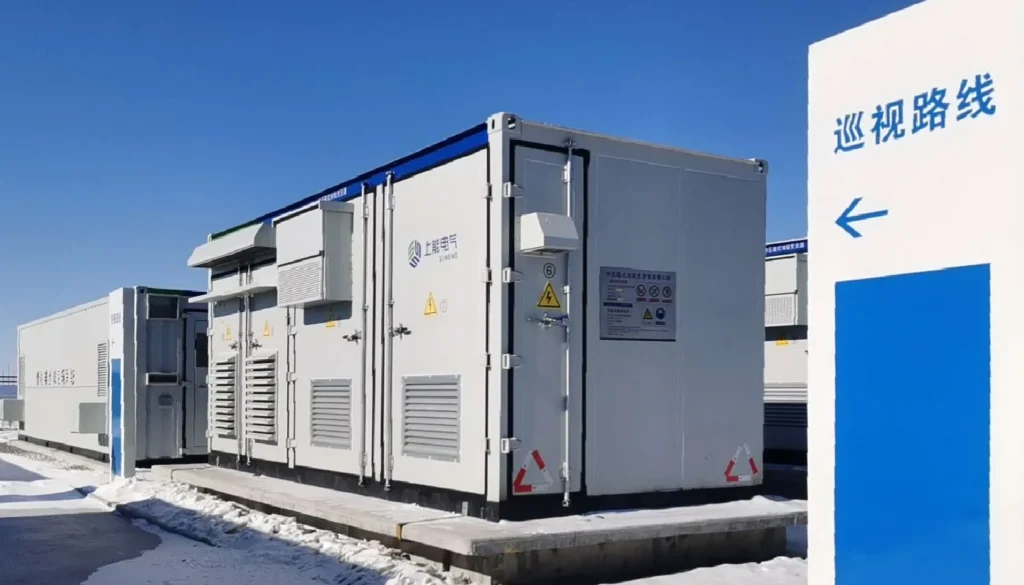
A Sineng inverter converts the direct current produced by solar panels into alternating current suitable for electricity networks.
The company supplies both distributed string inverters and larger centralized conversion systems for utility-scale solar plants.
At Intersolar Europe 2025, Sineng presented a 350 kW string inverter supporting up to 75 amperes per maximum power point tracker.
The company stated that the product can accommodate high-current bifacial modules and a direct-current-to-alternating-current ratio of up to 2.0.
In June 2026, Sineng introduced a 510 kW grid-forming string inverter. The company said the system supports solar subarrays above 7 MW and accepts up to 1,650 volts of direct-current input.
Higher-capacity string equipment can reduce the number of inverter units required across a project, depending on the final electrical design.
Sineng also supplies central inverter systems that consolidate power conversion into larger electrical stations.
Its 8.8 MW medium-voltage turnkey station combines two 4.4 MW central inverters. The company reported inverter efficiency of up to 99% in its 2025 product announcement.
Sineng’s 2026 product portfolio also includes transformer stations rated at 8.96 MW and 11.16 MW.
| Comparison factor | String inverter | Central inverter station |
| Equipment layout | Distributed across solar subarrays | Concentrated in larger electrical stations |
| Sineng product examples | 350 kW and 510 kW models | 8.8 MW turnkey station and larger transformer configurations |
| Project consideration | Unit count, distributed control, and cabling design | Station sizing, transformer integration, and centralized maintenance |
| Main technical assessment | Module compatibility and operating voltage | Electrical integration and the impact of a station outage |
The appropriate architecture depends on project size, maintenance strategy, grid requirements, and site conditions.
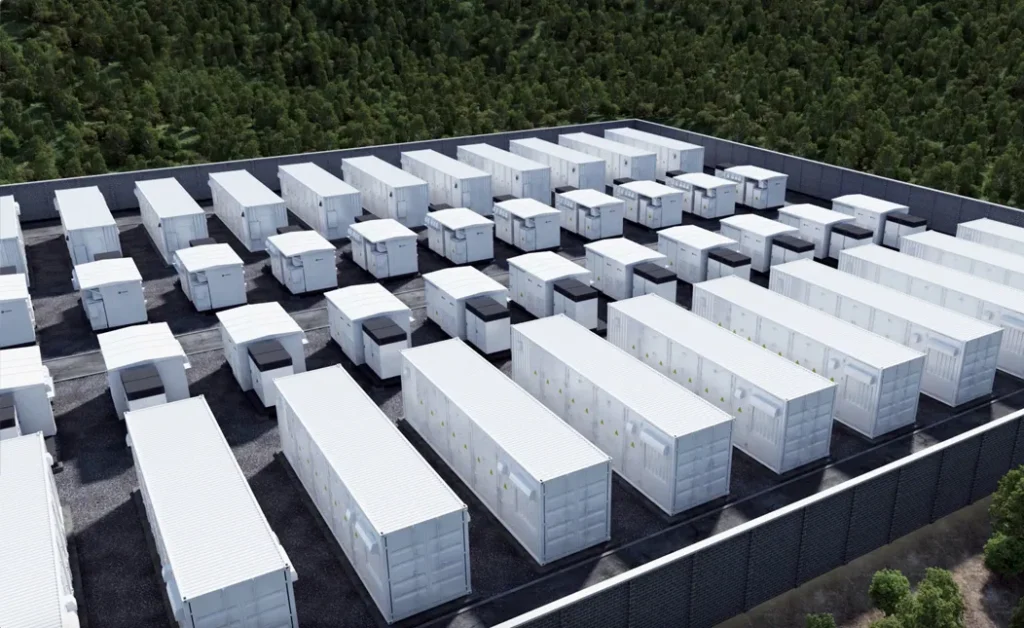
A Sineng PCS, or power conversion system, manages electricity flow between battery systems and the grid.
Unlike a conventional solar inverter, a battery storage PCS must operate in both directions.
During charging, it converts alternating current into direct current for battery storage. During discharge, it converts the stored direct current back into alternating current.
This process supports electricity dispatch, peak-demand management, and the integration of variable renewable generation.
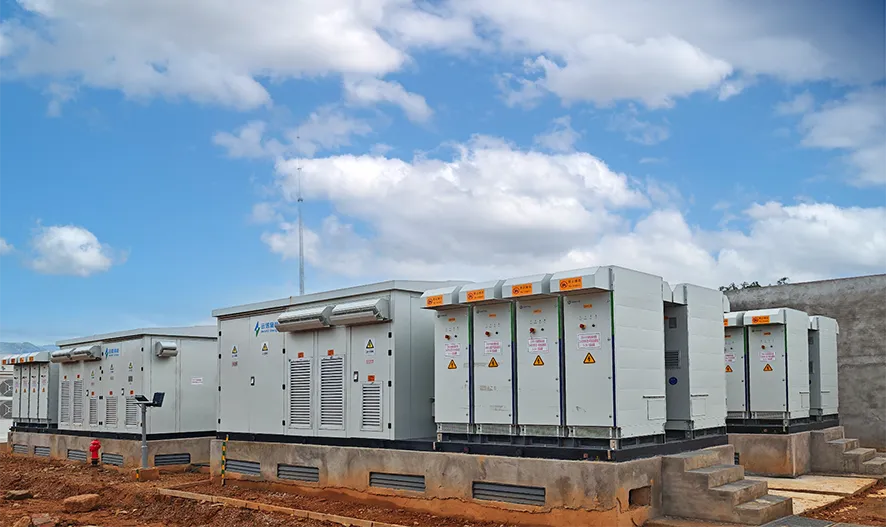
Sineng’s 2026 energy storage product presentation included a 1,725 kW central PCS that can scale to 13.8 MW. The company said the system supports storage durations ranging from two to eight hours.
It also presented a 430 kW string PCS designed for medium-voltage stations ranging from 3.2 MW to 12.5 MW.
Grid-forming equipment can help establish and maintain electrical voltage and frequency.
According to Sineng, its newer systems support frequency regulation, inertia support, recovery after disturbances, transitions between grid-connected and independent operation, and black-start capability.
Black start refers to restarting an electrical system without relying entirely on an existing energized grid.
These functions can be relevant in weaker grids or renewable-heavy power systems. Actual performance depends on project integration, local grid codes, and independent testing.
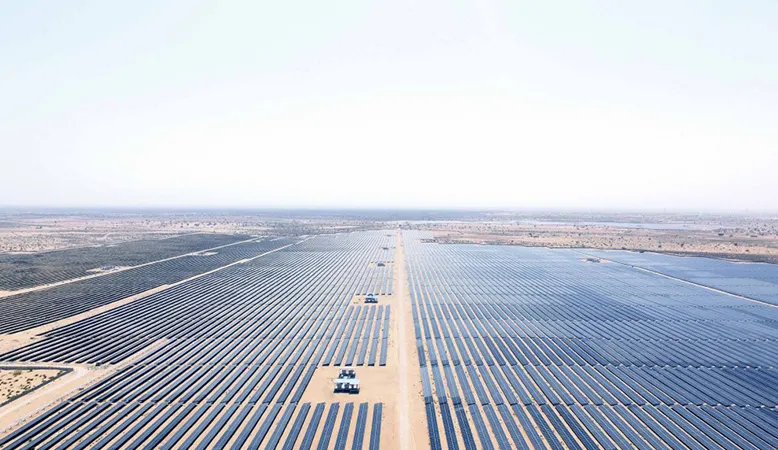
According to Sineng’s July 2026 India market update, the company’s local operations include:
These figures are company-reported operational metrics, not independently audited financial results.
For customers, the local network may influence delivery schedules, technical assistance, spare-parts availability, and equipment maintenance.
Its practical value depends on the staffing, inventory, and contractual support available for each specific project.
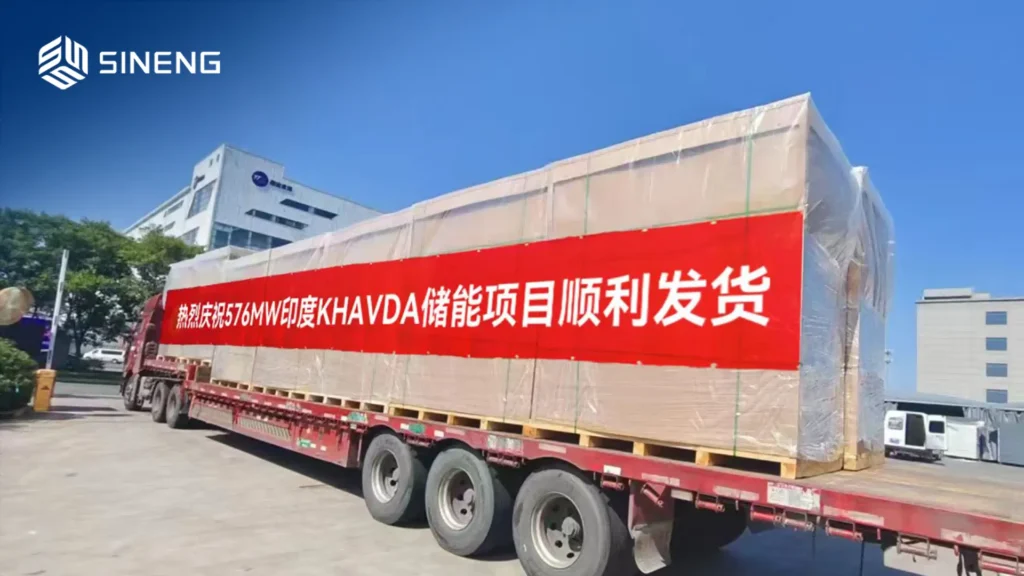
In January 2026, Sineng reported delivering 576 MW of power conversion systems to the Adani Group’s Khavda Energy Park in Gujarat.
The company described the wider battery storage project as having planned capacity of 1,126 MW and 3,530 MWh upon completion.
| Khavda project figure | What it represents |
| 576 MW | Sineng’s reported PCS equipment delivery |
| 1,126 MW | Planned power capacity of the wider battery storage project |
| 3,530 MWh | Planned energy capacity of the wider battery storage project |
The larger project figures do not mean Sineng supplied every component.
For Sineng India, the project demonstrates how existing solar market participation can extend into large battery storage installations.
India’s government is expanding support for battery storage as renewable electricity generation increases. In June 2025, the Ministry of Power approved a funding program for 30 GWh of battery energy storage systems.
The government stated that the initiative would complement 13.2 GWh of battery storage already underway.
A March 2026 government update reported that two viability gap funding programs support approximately 43 GWh of battery storage development.
These policies create demand for more than battery cells. Storage projects also require power conversion systems, transformers, control software, commissioning, safety equipment, and maintenance support.
Sineng’s expansion follows three commercial stages.
This progression can deepen supplier relationships across different stages of renewable project development.
Its commercial strength depends on the combination of equipment capability, local execution, technical support, and verified deployment rather than rankings or manufacturing capacity alone.
A practical procurement review should cover:
These factors provide a stronger basis for evaluating Sineng Electric than shipment rankings or headline capacity figures.
Companies such as Sineng Electric INC reveal how Chinese technology suppliers combine manufacturing, market localization, and infrastructure integration to expand internationally.
ChoZan helps organizations interpret these developments through custom China research, China learning expeditions, expert briefings, corporate workshops, strategic consulting, and practical learning resources.
For a clearer understanding of how China’s renewable energy companies shape global markets, explore ChoZan’s work and arrange a consultation.
“Sineng Electric INC” is a search variation, not a confirmed legal name for the wider group. Buyers should verify the exact company name shown on contracts, registration records, warranties, and official corporate documents.
Yes. Sineng Electric identifies itself as a Chinese power electronics manufacturer with international operations, including manufacturing and service infrastructure in India.
Sineng lists solutions for residential, commercial, industrial, and utility-scale applications. Availability depends on the country, current product range, and local distribution arrangements.
A PCS is the electrical conversion component within a battery energy storage system. The complete installation also requires batteries, control systems, safety equipment, grid connections, and additional infrastructure.
Compatibility depends on the PCS model, battery specifications, control interfaces, communication protocols, and project design. Buyers should request written confirmation of integration requirements before procurement.
Warranty responsibility depends on the contracting entity and project agreement. Buyers should confirm if coverage comes from the Indian business, a parent company, a distributor, or another authorized provider.
Buyers should verify product certifications, local grid-code compliance, electrical safety documentation, and any market-specific approval requirements applicable to the installation.
Megawatts measure the rate at which a battery system can deliver or receive power. Megawatt-hours measure how much energy the system can store or supply over time.