CONTENT

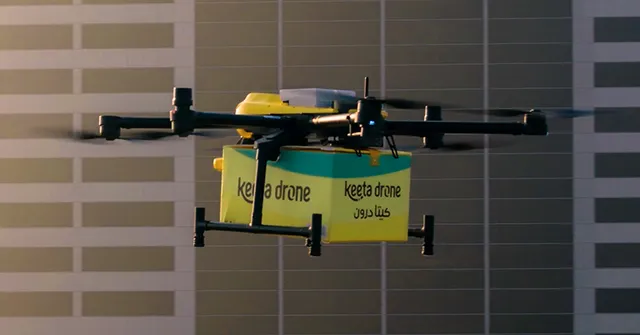
China drone delivery already moves restaurant orders, medical samples, and essential goods along approved aerial routes. Drones connect merchants and institutions with smart lockers, landing stations, and local delivery teams.
As of March 2026, Meituan’s Keeta Drone reported more than 880,000 completed deliveries across 70 routes in cities including Shenzhen, Beijing, Shanghai, Guangzhou, Hong Kong, and Dubai. Those figures describe its combined international network, not mainland China alone.
The commercial significance extends beyond faster takeout. China is building an air-ground logistics layer where software, aviation rules, physical infrastructure, and human couriers work together.
China’s low-altitude economy has grown rapidly, but delivery aircraft represent only one part of its wider drone industry.
The Civil Aviation Administration of China reported more than 4.788 million registered drones and 26.414 million drone flight hours during the first half of 2026. These totals cover all drone categories, including non-logistics applications. They should not be mistaken for delivery-specific figures.
Within that broader system, Keeta Drone says its delivery network serves parks, campuses, offices, residential communities, healthcare facilities, and public spaces. Its platform provides access to more than 160,000 products across its operating regions.
In Shanghai’s Pudong district, a drone delivery covers 5 kilometers in 7 minutes versus 35 minutes by scooter during peak hours. This time compression creates measurable cost advantages for fresh groceries, pharmaceuticals, and prepared meals—categories where speed directly affects product quality and customer satisfaction.
This distinction matters. National drone registrations show industrial depth, while route counts and completed deliveries show actual commercial deployment.
Food delivery represents the most visible application of drone food delivery in China, with Meituan, Ele.me, and KFC China competing for market share. KFC China launched drone delivery from 17 Shanghai locations in March 2026, targeting corporate office parks where lunch orders cluster. The program reduced average delivery time from 32 minutes to 9 minutes for a 3-kilometer radius, with order volumes increasing 45% in participating restaurants.
Drone food delivery in China follows a structured handoff rather than a direct flight to every customer’s doorstep:
Keeta’s customer guidance confirms that customers choose a designated locker, receive an arrival notification, and retrieve the order with a pickup code.
Effective China delivery drones operate within a coordinated network rather than as standalone delivery machines. A 2025 study by researchers from Tsinghua University, Hong Kong Polytechnic University, and McGill University used SF Express data to model how coordinated drone and courier networks can improve delivery time and cost. This drone-courier coordination preserves human involvement in last-mile delivery.
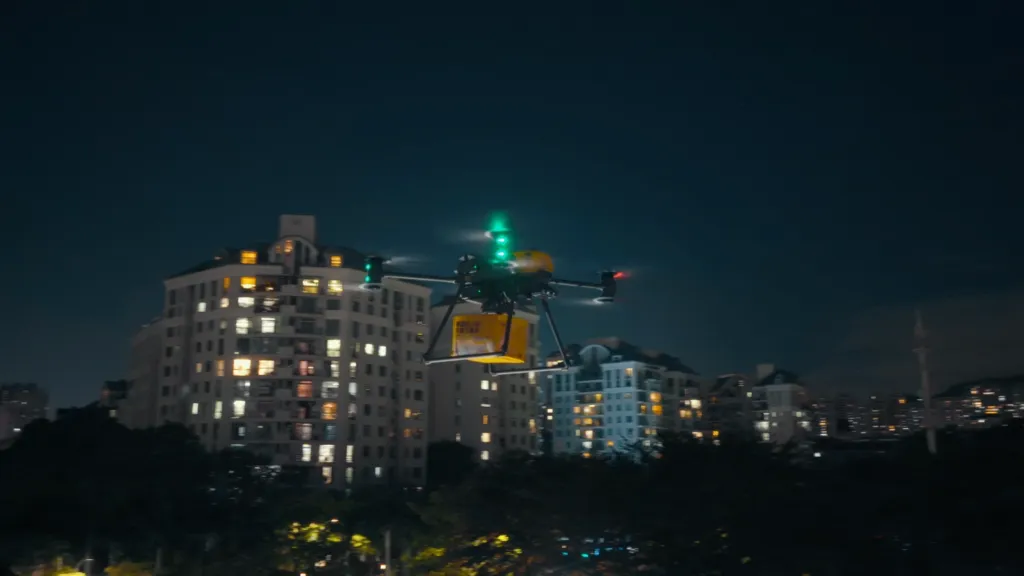
Keeta’s published fourth-generation specifications list a maximum payload of 2.4 kilograms, a maximum range of 10 kilometers, and drone-port capacity of up to 60 orders per hour. These are equipment specifications, not guaranteed performance for every route.
In December 2025, lidar manufacturer Hesai confirmed a partnership to supply solid-state lidar for Keeta’s next-generation aircraft. Its system supports obstacle detection and more dependable positioning in complex urban conditions.
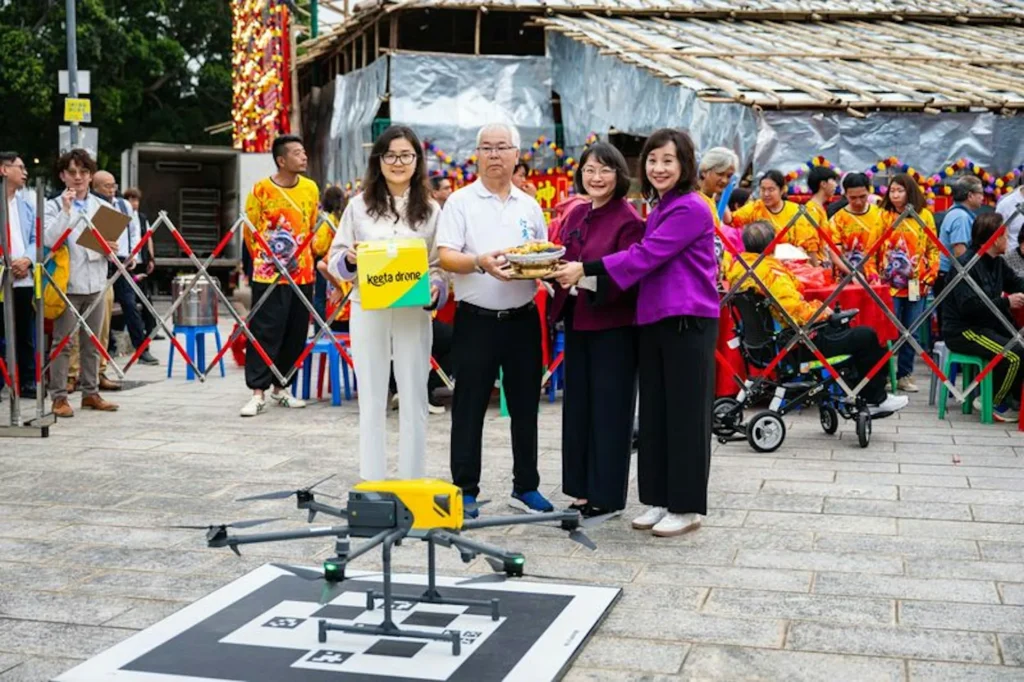
The best food delivery by drone in China connects places where roads, water, park boundaries, or traffic make short physical distances hard to cover.
In a March 2025 Hong Kong demonstration, Meituan identified a route measuring approximately 1.8 kilometers across the water but 7.8 kilometers by bicycle. The ground journey took around 40 minutes.
A later Hong Kong route adjustment moved service toward Tai Po Waterfront Park, where Keeta said customer demand and nearby merchant supply were better aligned. The company also introduced an automated drone port and support for simultaneous aircraft operations.
A China food delivery drone becomes useful when route design improves merchant reach, delivery consistency, and access to locations that ground couriers struggle to serve efficiently.
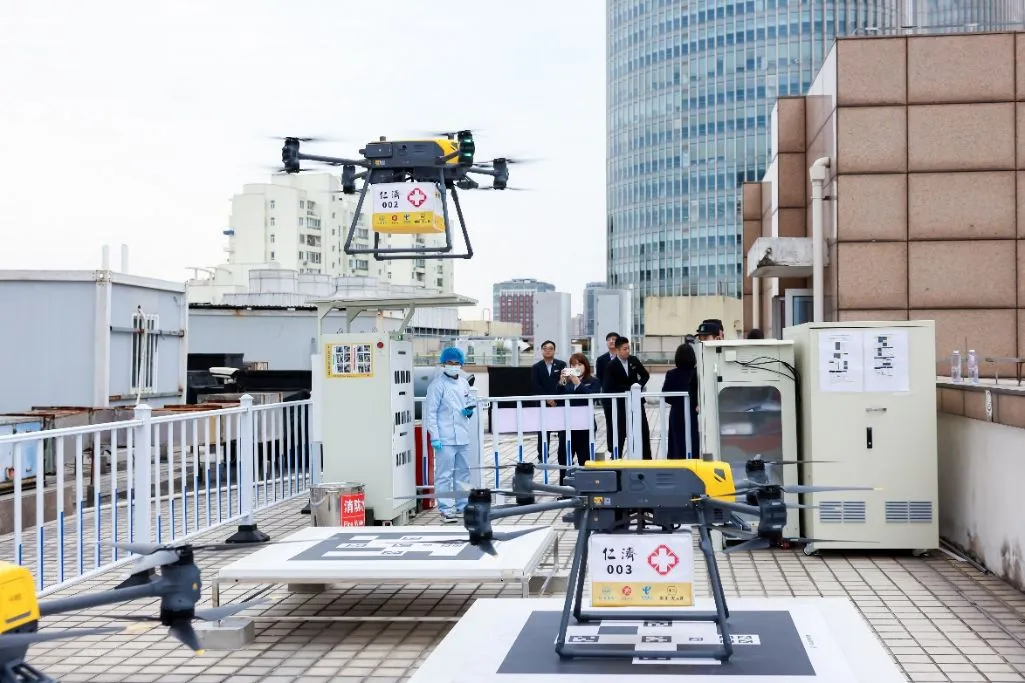
China’s drone delivery support now extends into healthcare, where speed and reliability can carry greater operational value than low delivery fees.
In December 2025, Meituan and Renji Hospital, affiliated with Shanghai Jiao Tong University School of Medicine, introduced regular medical drone routes. One hospital connection reduced reported transport time from 45 minutes to 23 minutes. Another reduced it from 19 minutes to eight minutes.
A February 2026 Hong Kong community project applied the same model to meals for older residents. Keeta reported that a road journey exceeding 90 minutes could become an aerial trip of approximately 10 minutes, while community workers handled the final doorstep delivery.
These cases show how the same network can serve instant retail, medical logistics, and community services without treating every delivery category as economically identical.
Meituan reported 8.2 million delivery drone flights in China in Q2 2026, averaging 91,000 daily deliveries. The company’s proprietary MD-250 drone carries 2.5 kilograms and operates in winds up to 7 meters per second.
A single MD-250 flight typically serves 3-4 customers in a single sortie, reducing per-delivery cost to RMB 4.60 ($0.63) versus RMB 8.20 ($1.13) for scooter delivery in the same corridor.
Meituan’s Shenzhen network demonstrates the scalability potential. The city’s 47 distribution centers cover 78% of the urban area, with delivery times averaging 14 minutes from order to pickup. Fresh produce orders show particular growth, with fruit and vegetable deliveries increasing 210% year-over-year in the first half of 2026.
The company plans to add 180 new routes in Chengdu and Chongqing by December 2026, focusing on areas with high residential density and limited access to ground transport.
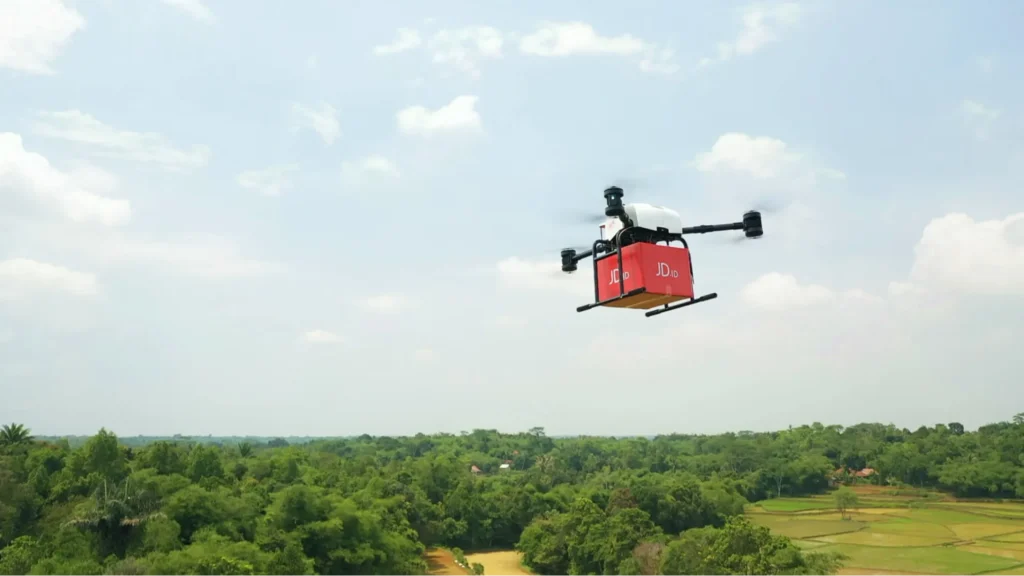
JD.com focuses on regions where ground logistics struggle: mountainous areas, river deltas with limited bridge crossings, and suburban developments with incomplete road networks. The company’s JDX-500 drone carries 5 kilograms over 30 kilometers, making it suitable for connecting county-level distribution centers to village pickup stations.
In Guizhou province, JD.com operates 87 routes serving 240 villages, reducing delivery times from 2 days to 4 hours for essential goods.
Rural economics differ from urban operations. JD.com’s per-delivery cost in Guizhou averages RMB 14.80 ($2.04) versus RMB 28.50 ($3.93) for truck delivery, including last-mile motorcycle transport. JD.com projects 400 rural routes by year-end 2026, targeting provinces with challenging terrain including Yunnan, Sichuan, and Fujian.
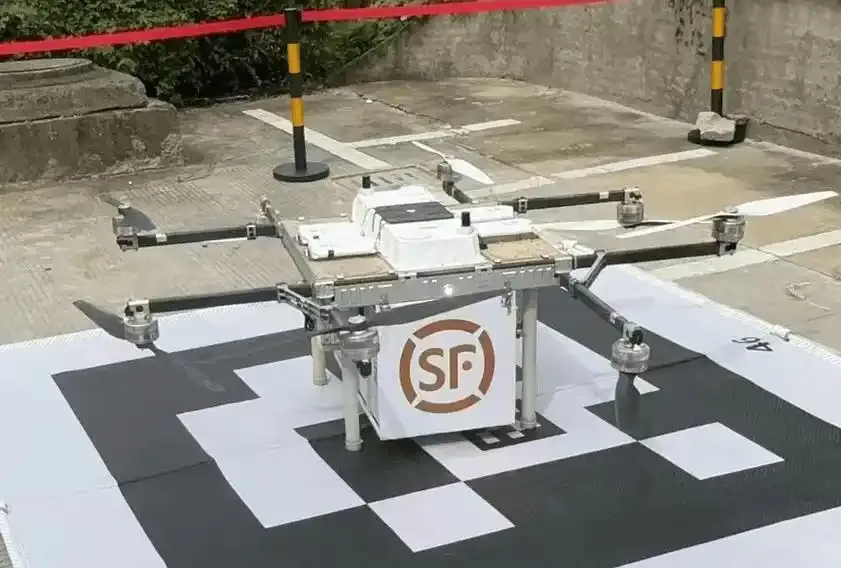
SF Express has pursued a different opportunity around medical and cross-border logistics. In October 2025, its Hong Kong operation described plans to connect Hong Kong with Shenzhen, Dongguan, Guangzhou, and Zhuhai. Those routes were proposals, not confirmation of fully operational cross-border services.
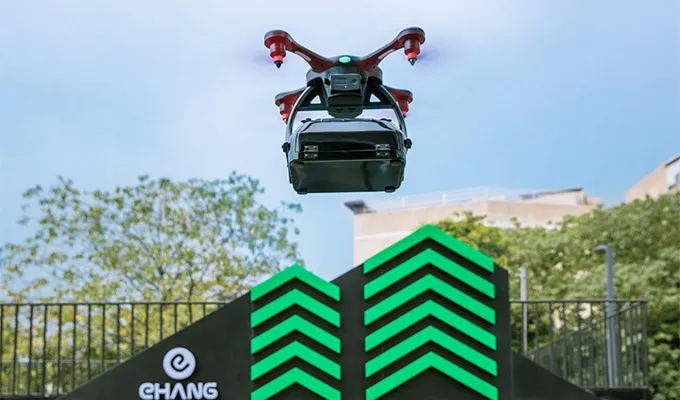
EHang Holdings Corporation received CAAC certification for its EH216-S passenger drone in April 2026, but its cargo variant, the EH216-F, shows more immediate commercial potential. The cargo version carries 5 kilograms and operates on pre-programmed routes connecting commercial districts to suburban communities.
EHang’s partnership with SF Express enables scheduled cargo flights between 22 logistics hubs in the Pearl River Delta, moving time-sensitive documents and small packages.
The CAAC’s Low-Altitude Economy Development Plan (2025-2030) established three tiers of operational certification.
China’s revised Civil Aviation Law took effect on July 1, 2026. It addresses drone airworthiness certification requirements, subject to applicable exemptions, and requires manufacturers to assign unique product identification codes, according to the CAAC’s explanation of the revised aviation law.
As of August 2026, 17 companies hold Tier 3 certification, including Meituan, JD.com, and EHang.
For drone delivery in China, regulatory credibility depends on aircraft certification, approved operating conditions, traceable identification, and ongoing safety oversight.
Solid-state battery adoption accelerated in 2025, with CATL and BYD supplying aviation-grade cells for delivery drones. Energy density reached 420 Wh/kg in production units, up from 280 Wh/kg in 2024 lithium-ion packs.
This improvement extends the MD-250’s range from 8 kilometers to 15 kilometers with the same payload capacity. Battery-swapping infrastructure now includes diagnostic checks that identify degraded cells and remove them from circulation before they cause performance issues.
Wireless charging pads at transfer stations enable top-up charging during 45-second turnaround windows. These pads deliver 2.5 kW, adding approximately 15% range during standard ground time. For extended operations, drones can charge during passenger loading or package transfer, maintaining operational readiness without dedicated charging downtime.
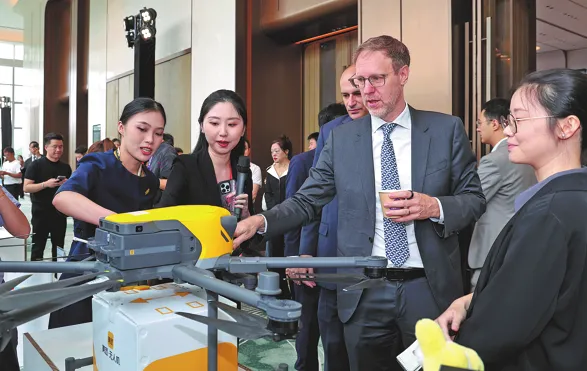
Drone economics depend on order density, station throughput, aircraft usage, battery cycles, staffing, maintenance, weather interruptions, and customer pickup behavior.
A short flight can still become expensive if staff handle multiple transfers or a station receives too few orders. Medical deliveries may justify different pricing because transport delays can affect clinical operations.
No credible public evidence shows that any major Chinese drone delivery business has achieved broad profitability. Meituan reported a companywide adjusted net loss of 16 billion yuan ($2.26 billion) in the third quarter of 2025 amid intense delivery competition. That figure reflects the company as a whole, not the drone division.
Drone service remains restricted to designated routes and participating merchants. Heavy rain, strong winds, operating-hour restrictions, package limitations, and local airspace controls can interrupt availability.
The practical question is not how many drones can fly. It is how many useful orders the full network can complete safely, consistently, and at a sustainable cost.
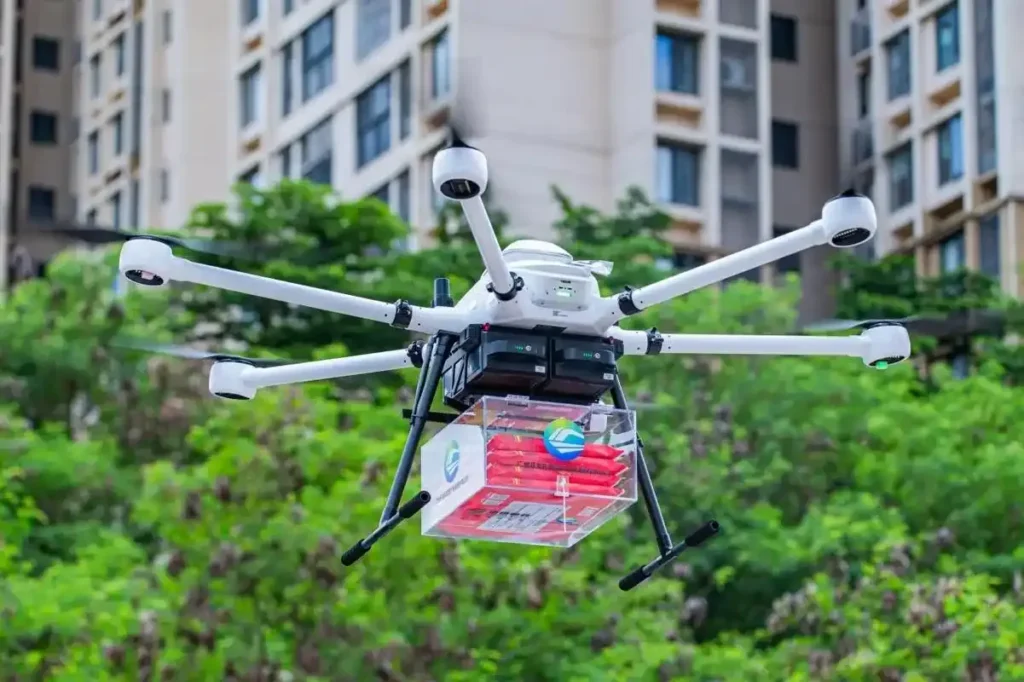
The urban logistics model emerging in China combines existing consumer demand, software-based dispatch, authorized air corridors, landing infrastructure, and human support.
That structure now appears in other markets. On August 17, 2026, Uber announced a partnership with Zipline and set a goal of reaching one million drone deliveries per day by the end of 2029. That figure is a future target, not current operating volume.
The transferable lesson is clear: drone delivery in China becomes commercially relevant when the aircraft fits into an entire fulfillment system. The strongest opportunities emerge where repeated demand, difficult ground access, suitable infrastructure, and reliable regulatory approval intersect.
China’s next logistics layer will take shape through thousands of practical operating decisions, from locker placement and route selection to merchant participation and exception handling.
ChoZan connects China drone delivery with the wider systems shaping Chinese retail, urban infrastructure, and applied technology. Explore its Shenzhen and Guangzhou innovation tour, China research services, and technology and consumer research reports to examine how these operating models translate into practical business insight.
Yes, if they can access the relevant delivery app, select an eligible merchant, and choose a supported pickup location. Availability depends on local coverage, payment setup, account access, and the route operating schedule.
There is no universal drone delivery fee. Keeta states that pricing depends on local operating arrangements, and the applicable charge appears on the order screen before checkout. Fees can differ across locations and campaigns.
Yes. Drinks and liquid foods can travel by drone when they meet the operator’s packaging and delivery requirements. Availability depends on the participating merchant, product suitability, and the options displayed during ordering.
Keeta says orders can remain in a designated locker for up to 12 hours. Customers should collect meals promptly because waiting can affect food quality, and uncollected orders remain subject to platform policies.
Customers should report spilled, damaged, leaking, or incomplete orders through the delivery platform’s customer service system. The operator reviews the issue and determines the appropriate resolution under its order and support policies.
Service may pause or change during heavy rain, strong winds, or other unsafe flight conditions. Aircraft weather resistance does not guarantee continuous service because operators must also consider route safety and local restrictions.
Some routes can support evening flights, but customers should never assume round-the-clock service. Keeta says nighttime availability depends on local operating arrangements, route conditions, applicable regulations, and the hours shown in its app.
Commercial services generally deliver to approved lockers, drone ports, or designated landing points instead of apartment balconies. Controlled handoff locations help operators manage flight safety, package security, pedestrian access, and consistent customer collection.
Keeta says its delivery boxes are reusable. Customers can fold the packaging and place it in a designated recycling bin near the locker, after which the operator collects, disinfects, and reuses the containers.
No. Some companies are exploring cross-border corridors, but published proposals should not be confused with active public services. Reuters reported in August 2026 that a proposed China-Russia drone bridge remained at the trial-planning stage.
Practical service answers reflect Keeta Drone’s current customer support information, with actual availability subject to local conditions.