CONTENT

In recent years, Meituan Food Delivery has come to define how Chinese consumers eat, shop, and travel. This reflects broader shifts in China’s retail trends, where local services, commerce, and logistics are merging into integrated platforms.
In 2025, the company combined meal deliveries, groceries, travel bookings, and entertainment into one local services super app. Backed by a vast merchant network and a flexible rider network, the platform became the dominant food delivery app in China.
This article traces Meituan’s evolution and highlights how global companies can learn from China’s digital transformation through platforms like Meituan.
At the consumer level, Meituan Food Delivery still looks like a familiar Chinese food delivery app. At the system level, it serves as the core traffic engine within a much broader local platform. Meituan’s own segment reporting places food delivery and Meituan Instashopping inside core local commerce, alongside in-store, hotel, and travel services.
In simple terms, Meituan Waimai helps users order meals, groceries, and other local goods through Meituan’s apps, then routes those orders through its own on-demand delivery stack.
This distinction matters because waimai in China now refers to a digital habit rather than a narrow restaurant category. In the first quarter of 2025, Meituan reported RMB 64.3 billion ($9.0 billion) in core local commerce revenue, with delivery services at RMB 25.7 billion ($3.6 billion).
The same update said delivery service growth came from higher on-demand transaction volume, while commission and online marketing growth came from higher GTV and more active merchants. That is a very different profile from a simple food delivery app in China.
The real strategic asset behind Meituan Food Delivery is fulfillment density. Meituan’s 2025 results say core local commerce growth came from stronger transaction volume and GTV, supported by higher annual purchase frequency and cross-selling across services.
That matters because dense order flow improves route efficiency, increases merchant utilization, and gives the platform more opportunities to capture demand throughout the day. Scale in this category does not come from a single large order. It comes from constant order repetition.
That density creates the economic logic for Meituan’s dispatch system, rider network, and demand allocation model. The company keeps adding merchants, users, and service categories into the same urban network, then uses AI to predict demand, improve ETA accuracy, and guide merchant operations.
ChoZan’s report frames Meituan as a local services powerhouse built on dense logistics, AI optimization, and growing automation. Meituan’s own 2025 results reinforce that view, with research and development spending rising to RMB 26.0 billion ($3.6 billion), driven in part by higher investment in AI.
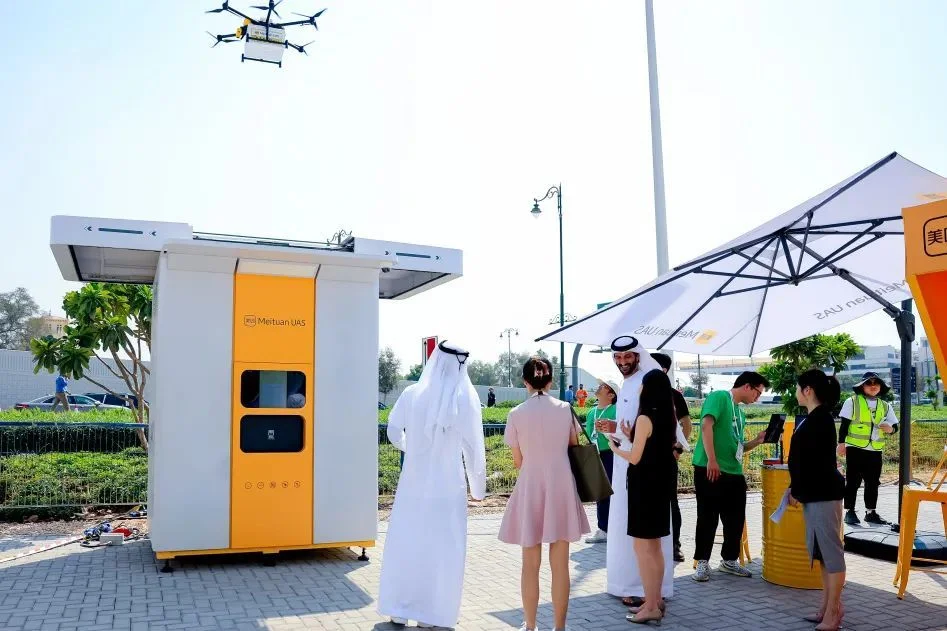
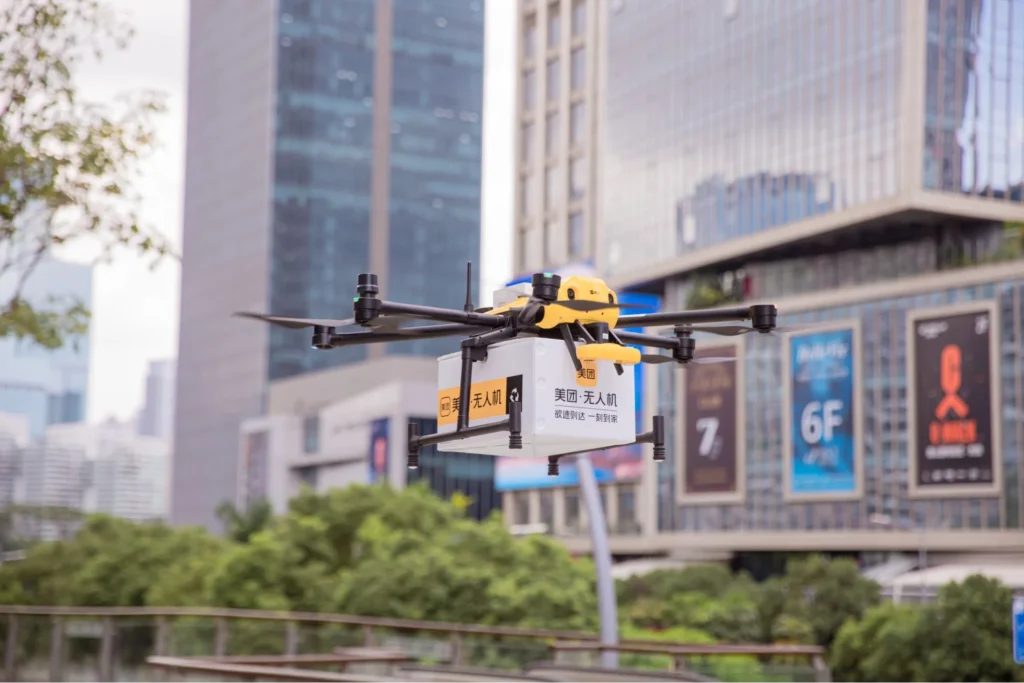
2025 marked Meituan’s shift toward autonomous logistics. In April, the Civil Aviation Administration certified its fourth-generation drones for nationwide low-altitude operations. These aircraft can carry up to 2.5 kilograms and deliver within a three-kilometer radius in about fifteen minutes.
Keeta Drone says that by December 2025, it had launched 70 routes across cities, including Shenzhen, Beijing, Shanghai, Guangzhou, Hong Kong, and Dubai, and had completed more than 780,000 deliveries with access to over 160,000 products.
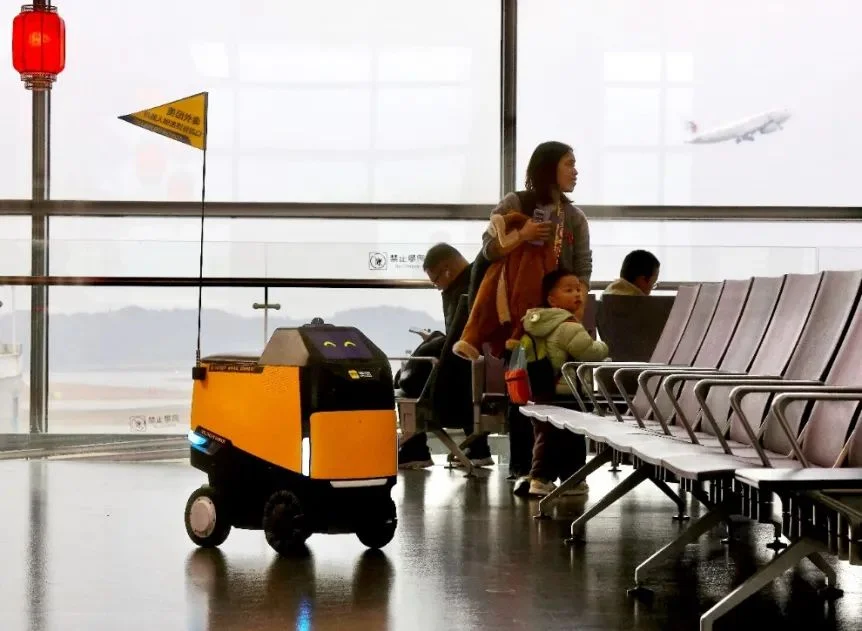
Meituan had surpassed 5 million cumulative unmanned deliveries in Shenzhen by late 2025, using drones and ground robots, with some pilots achieving average delivery times of about 15 minutes.
The company had deployed hundreds of robots in communities in Beijing and Shenzhen. That is a meaningful shift. Autonomous delivery is moving into real operating zones where short-distance urban orders are dense and repetitive. These developments also align with trends highlighted in China’s social commerce and delivery systems, where logistics and demand creation are tightly integrated.
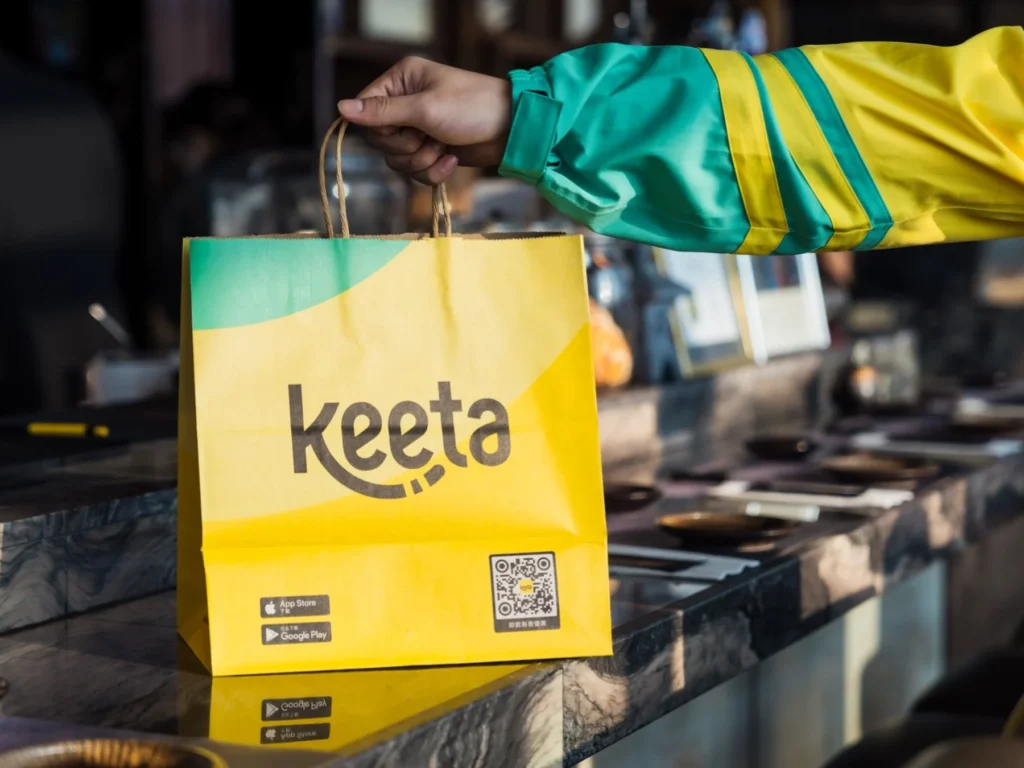
The overseas angle matters because it tests how portable Meituan’s operating model really is. Keeta is not important only as an expansion story. It is important as a proof point. If Meituan can replicate its local logistics discipline, merchant acquisition model, and rider operations outside mainland China, then the company has built something more durable than domestic scale alone. It has built a transferable operating playbook.
Saudi Arabia is the clearest signal so far. Keeta’s 2025 year-in-review says the platform operated in 23 Saudi cities, worked with more than 50,000 restaurant partners and over 38,000 riders, and processed more than 150 million orders, with an average delivery time of about 30 minutes.
For a keeta delivery business that is still early in its life, those numbers suggest Meituan is exporting dense operational know-how, not only capital and subsidies.
Beyond drones, Meituan reorganized its supply chain. Instashopping allows users to order groceries or pharmacy items with delivery in around an hour. This relies on micro-warehouses and local hubs that store fast-moving goods near consumers.
The company also repurposed its community group-buying platform as a logistics backbone, aggregating neighborhood orders to boost fulfillment density and reduce costs. Merchants use mini programs with AI-driven forecasts and integrated payments to keep the dispatch system responsive and align stock with demand.
Meituan’s mini program ecosystem also enables merchants to run targeted advertising campaigns and loyalty programs, while AI-driven demand forecasts guide stock replenishment. This monetization model generates additional revenue and strengthens bonds between merchants and customers.
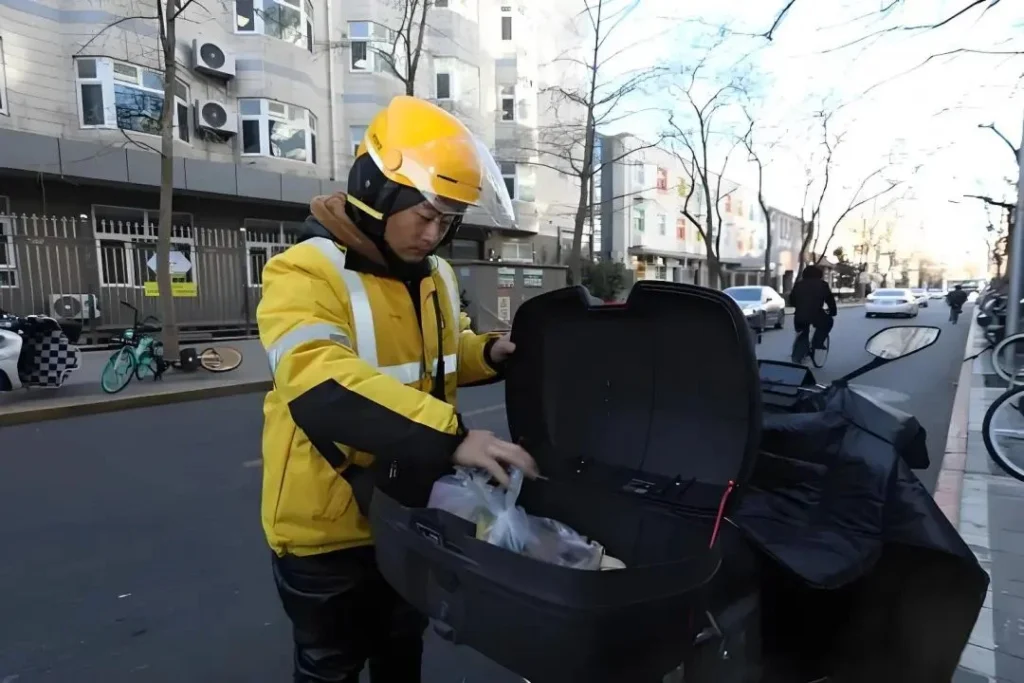
Artificial intelligence underpins Meituan’s scale. In 2025, it launched AI Menu to translate dish descriptions and make personalized recommendations. It also improved arrival-time estimates by accounting for kitchen preparation and provided merchant analytics to refine operations. Couriers benefit from smart helmets, voice navigation, and AI batching that groups nearby orders.
In its 2025 report, announced in March 2026, Meituan disclosed revenue of 364.9 billion yuan ($51.1 billion) but recorded a net loss amid intense competition. CEO Wang Xing highlighted AI as the growth driver. The company is building a language model called LongCat and has rolled out an assistant named Xiaotuan and an independent app Xiaomei.
Users can ask complex queries such as finding a restaurant with parking and a particular cuisine, leveraging Meituan’s huge dataset of merchants and reviews. Wang says this evolution turns the super app into a local life entry point where AI coordinates plans and bookings.
AI also supports restaurants by analyzing dish popularity and recommending menu adjustments, and by improving arrival time estimates that factor in kitchen workload and real-time traffic. These enhancements raise customer satisfaction and help merchants optimize operations.
Meituan matters in China’s 2026 story because it shows what deployment looks like in practice. It is easy to treat food delivery as a mature category. That misses the point. Meituan is turning a high-frequency service into a programmable urban network for local services, local life services, and instant retail.
It is building the connective layer that links merchants, riders, data, fulfillment, and automation within a single system. That is why the company belongs in a report about infrastructure, not only apps.
The pressure in 2025 also makes the strategic picture clearer. Meituan’s full-year results show that higher courier incentives, stronger user incentives, grocery retail expansion, and overseas investment all weighed on margins, while AI investment continued to rise.
That short-term pressure matters because it shows where management believes the next advantage will come from. Meituan is defending its frequency, scale, and logistics reach now to own more of the urban service stack later. In the context of Meituan Food Delivery, that is the real story.
Understanding companies like Meituan at a surface level is not enough. The real value comes from seeing how these systems operate in practice, how logistics, AI, and local services integrate, and how those models can be applied to your own business.
ChoZan works with senior executives, strategy leaders, and transformation teams to translate China’s innovation ecosystem into clear, actionable insight. Through China learning expeditions, innovation tours, executive briefings, and tailored consulting, ChoZan gives you direct access to the companies, technologies, and operating models shaping the next phase of global competition.
Whether you are looking to understand AI-driven logistics, redesign your local commerce strategy, or benchmark China’s digital infrastructure, ChoZan helps you move from observation to implementation with precision and clarity.
If your goal is to turn insights from platforms like Meituan into real strategic outcomes, ChoZan provides the research, access, and guidance to make that transition effective.
Book a consultation to explore how your team can engage directly with China’s innovation ecosystem and apply these lessons to your business.
Yes, foreigners can use Meituan, but the app is still easier with translation support. Guides for 2025 and 2026 say you can register through WeChat or a phone number, browse picture menus, and pay inside the app.
Yes, Meituan’s payment terms say foreign card details may be shared with partner banks for settlement. Even so, activation can vary by issuer and region, so linked Alipay or WeChat Pay still tends to be smoother.
If you want a full English interface, Sherpas is the simpler option. A 2025 foreigner guide recommends it for easier ordering, though it also notes higher prices and a narrower selection of restaurants than on Meituan or Ele.me.
Meituan usually wins on scale and coverage, while Ele.me often fights harder on promotions. Reuters reports that Meituan still holds nearly 70% of China’s delivery market, but travel guides note that Ele.me can be cheaper after applying coupons.
Delivery is usually inexpensive, but the final cost depends on distance, store policy, and promotions. Current guides note that many merchants set a minimum basket for delivery, while Meituan membership can offset fees for frequent orders.
Yes, you can choose a planned arrival time and switch to pickup. Foreigner guides show Meituan lets users select delivery timing at checkout, then swap to pickup mode when collecting from the store, which saves more.
Meituan says the estimated delivery time is a system-generated reference, not a guarantee. Its user terms state that the calculation draws on factors such as merchant distance, preparation time, and other timing inputs that the platform monitors.
Yes, Meituan membership can pay for itself quite quickly if you order often. Meituan’s own savings guide says the monthly pass usually costs about RMB 15 to 25 ($2 to $3.5) and commonly includes six to eight delivery fee coupons.
Yes, Meituan can be useful even when you are not ordering delivery. Trip.com highlights the app’s restaurant deals section, and Meituan’s own guide says group buying packages are often 20% to 40% cheaper than ordering separately.
Because China’s instant delivery market is in a subsidy fight, users are seeing unusually strong promotions. Reuters reports that Meituan, JD.com, and Alibaba have spent heavily on discounts and customer acquisition, squeezing margins and prompting regulatory scrutiny.