CONTENT
Seven Chinese eVTOL Companies currently have distinct market-building roles: EHang leads in certified pilotless passenger aircraft, AutoFlight leads certified heavy cargo development, and ARIDGE is applying automotive manufacturing logic to personal flying vehicles.
Aerofugia, Volant, TCab Tech, and Vertaxi form the next commercial group, with passenger or cargo aircraft moving through certification.
This matters because China is building more than air taxis. It is connecting aircraft production, low-altitude infrastructure, local operating trials, and aviation regulation. The result could shape which aircraft reach real routes first, where foreign suppliers can enter, and which Chinese systems travel overseas.
This list of eVTOL companies organizes commercial relevance through verified certification and operating progress. It does not rank firms by promotional order totals or claimed factory capacity.
| Company | Main aircraft | Primary model | Verified position as of August 2026 |
| EHang | EH216-S | Pilotless sightseeing and short urban flights | Two operators hold CAAC Air Operator Certificates, while public ticketed service still requires further operational clearance |
| AutoFlight | V2000CG CarryAll and V2000EM Prosperity | Cargo first, then passenger mobility | CarryAll holds Chinese TC, PC, and AC approvals; the passenger aircraft remains in certification |
| ARIDGE | Land Aircraft Carrier | Personal and recreational flying | Preparing early deliveries while it works toward Chinese aviation approval |
| Aerofugia | AE200-100 | Piloted urban and regional transport | Type and production certification work is advancing in parallel |
| Volant Aerotech | VE25-100 | Six-seat commercial passenger transport | Completed initial piloted trials and targets certification in 2027 |
| TCab Tech | E20 | Piloted intercity air taxi | Completed piloted transition tests; certification plans were accepted in June 2026 |
| Vertaxi | M1B | Cargo first, followed by passenger transport | Cargo aircraft is in a key certification phase with a 2027 target |
A July 2026 CAAC compliance roster reported by Gasgoo named ARIDGE, EHang, Volant, and AutoFlight. The roster is a regulatory signal, not an exhaustive company ranking or a substitute for aircraft certification.

EHang is the clearest regulatory front-runner. In March 2025, CAAC granted the first Air Operator Certificates for civil human-carrying pilotless aircraft to two EH216-S operators. The approval initially covers sightseeing and flight experiences that return to the same site, rather than scheduled point-to-point passenger transport.
As of August 2026, EHang has delivered 87 EH216-S units across China, Japan, and Southeast Asia. The company’s Q2 2026 earnings report showed revenue of RMB 152 million ($20.9 million), up 240% year over year.
EHang’s operational focus has shifted from tourism flights to city logistics and emergency response, with Guangzhou approving five dedicated vertiport locations in June 2026.
Among the leading eVTOL companies, EHang has the most complete regulatory stack, but the next test is repeatable public operations, route economics, and customer demand.
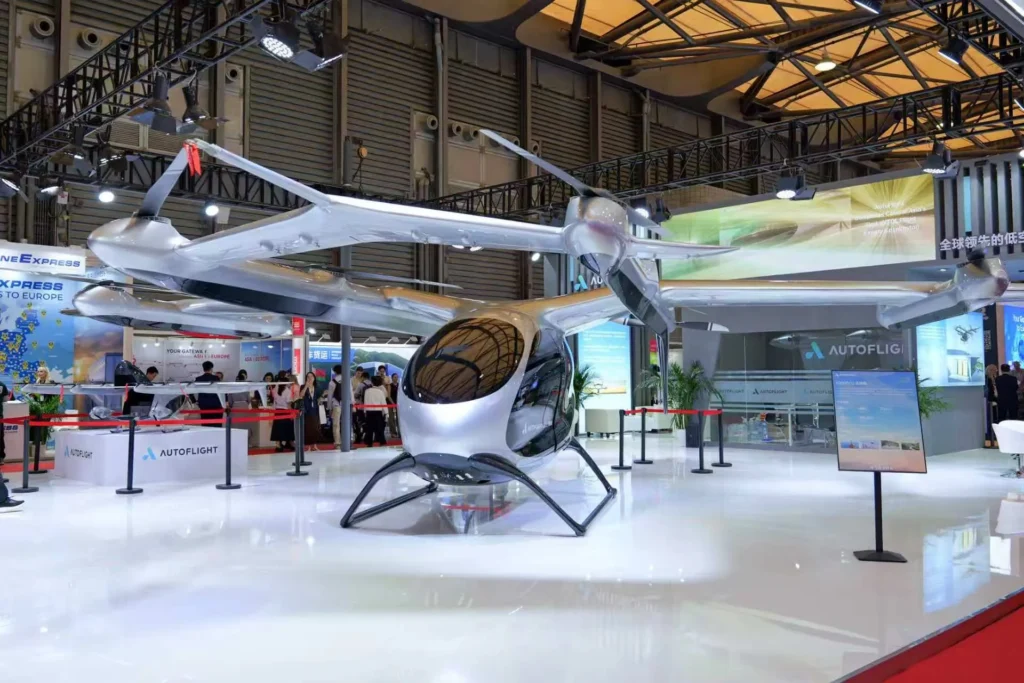
AutoFlight has created a different path. Its V2000CG CarryAll became the first eVTOL above one metric ton to hold a Chinese Type Certificate, Production Certificate, and individual Airworthiness Certificate in July 2025. Indonesia validated the aircraft’s type certificate in June 2026, giving the company a concrete overseas regulatory reference for cargo.
The AutoFlight Prosperity passenger eVTOL conducted its first inter-city flight between Shenzhen and Zhuhai in February 2025, covering 55 kilometers in 20 minutes. The CAAC granted AutoFlight a production certificate for its cargo variant in October 2025, allowing the company to begin volume manufacturing.
AutoFlight announced in April 2026 that it had secured RMB 1.2 billion ($165 million) in Series C funding, led by China Merchants Bank and existing investor Geely. This capital is earmarked for passenger eVTOL certification and production scale-up. The company projects commercial passenger operations by late 2027.
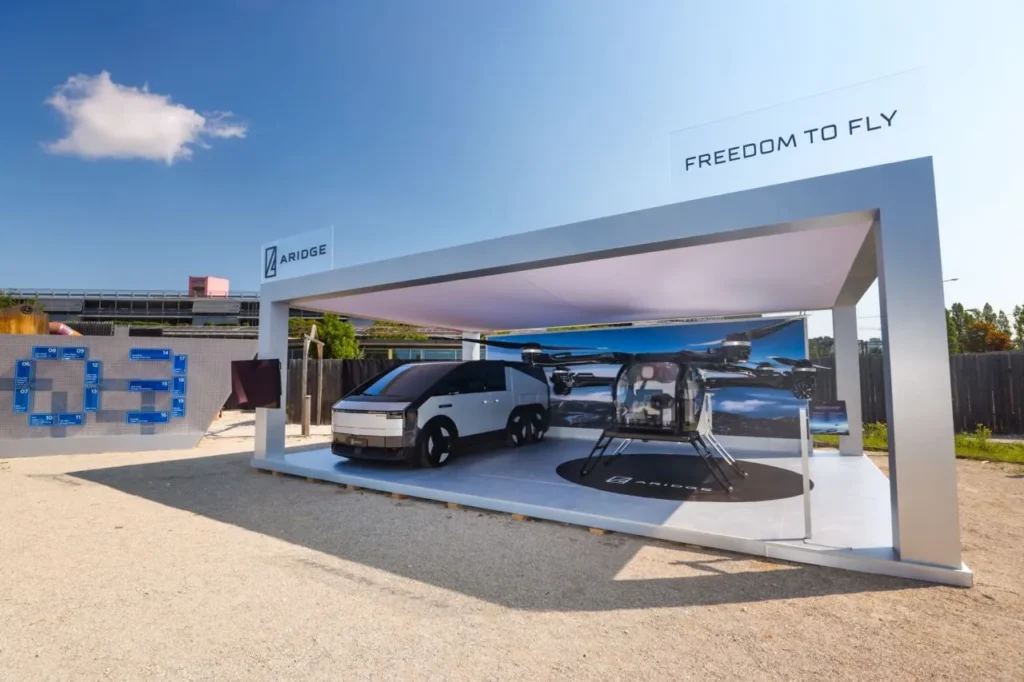
XPeng’s flying-vehicle unit now operates as ARIDGE. Its Land Aircraft Carrier pairs a six-wheel ground vehicle with a detachable eVTOL module. This positions the product closer to personal mobility, tourism, and controlled flying experiences than a conventional city air-taxi network.
ARIDGE’s advantage comes from automotive product engineering, procurement, retail, and factory discipline. Production readiness does not replace aviation approval, however.
XPeng told Reuters in April 2026 that early deliveries could start late in 2026, with large-scale production in 2027, while the company continued seeking regulatory approval. This makes ARIDGE a manufacturing-scale contender, not a certified operator.
At the April 2026 Beijing Auto Show, XPeng Aeroht revealed production specifications for its land-air vehicle, with pre-orders opening in June. The company reported 1,400 pre-orders within the first 30 days, primarily from ultra-high-net-worth individuals and corporate fleet buyers.
XPeng Aeroht’s partnership with CATL for battery technology and its parent company’s manufacturing capabilities give it distinct advantages in cost structure and production scale. The company expects to deliver its first 50 units in Q2 2027.
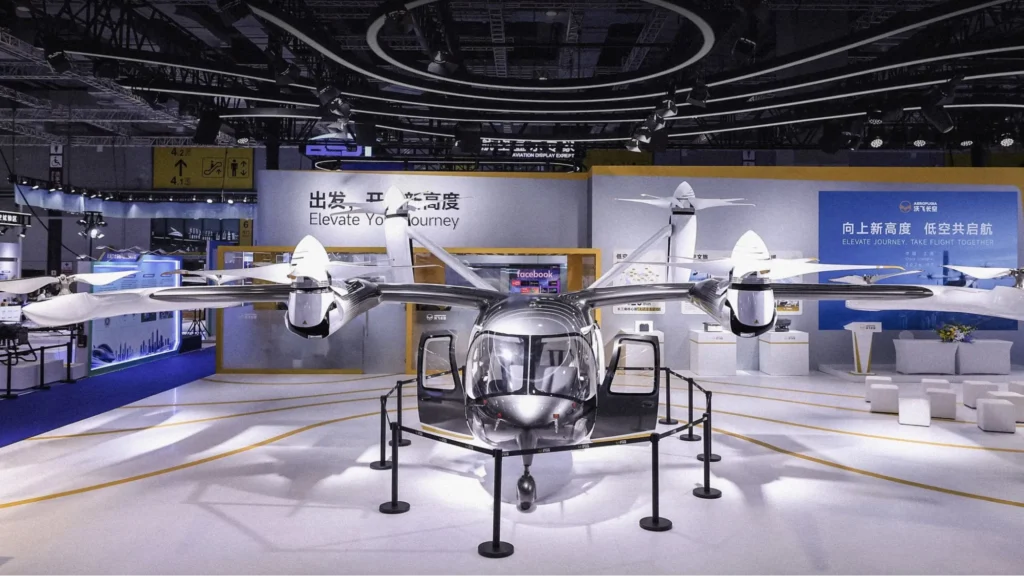
Geely-backed Aerofugia is developing the AE200-100, a piloted tilt-propeller aircraft for urban and regional routes. CAAC accepted its production certificate application in May 2025, while type-certification compliance work continued.
The company is also preparing the operating system around the aircraft. Its current operator qualification supports helicopter-based route and process trials, rather than commercial AE200 flights.
Aviation Week reported in June 2026 that Aerofugia was targeting AE200 certification in late 2026 or 2027. Geely’s industrial base may help with sourcing and production, but aviation compliance still controls timing.
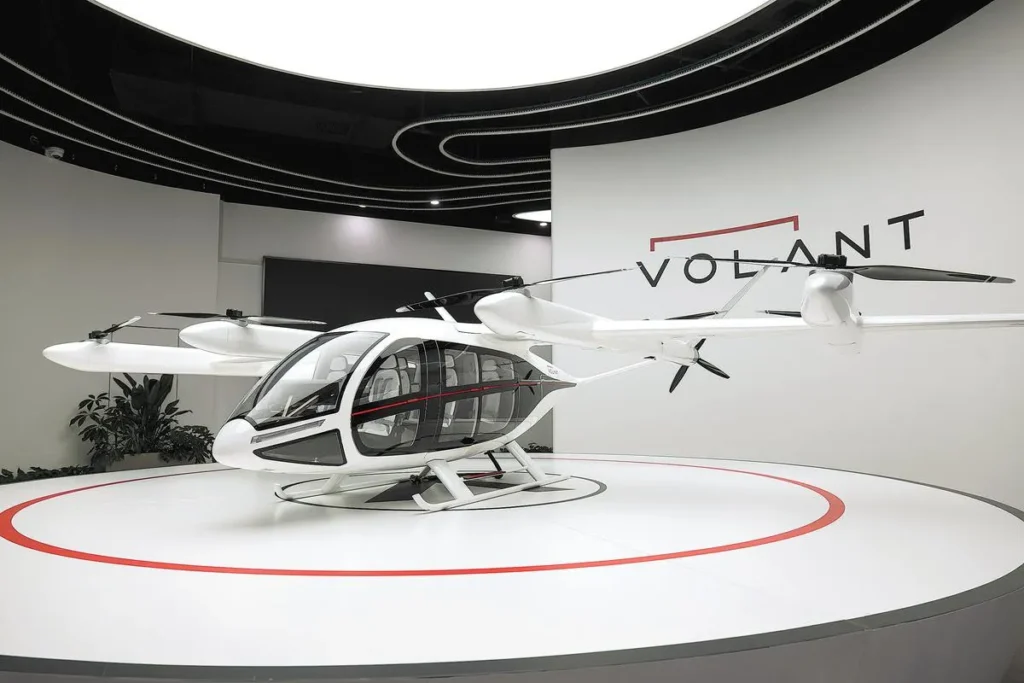
Shanghai-based Volant Aerotech is developing the six-seat VE25-100 for commercial passenger transport. It completed its first series of piloted flight trials in October 2025, then secured major Series C capital in 2026 to support certification and delivery preparation.
Volant’s focus on cabin capacity and operator economics separates it from two-seat sightseeing aircraft. AIN reported in June 2026 that new funding supported a 2027 certification goal.
The CAAC granted Volant a special airworthiness certificate for its TRON 1 cargo eVTOL in May 2026, allowing commercial logistics operations. The company raised RMB 800 million ($110 million) in a Series B round led by state-owned China Aerospace Science and Technology Corporation.
For commercial buyers, the key proof points are conforming-aircraft testing, certification closure, maintainability, and dispatch reliability.
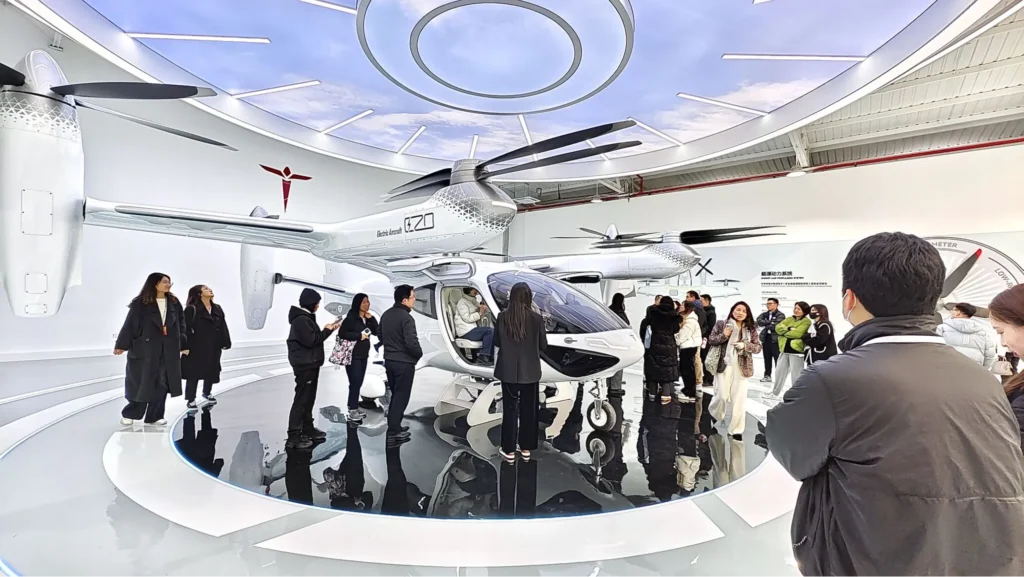
TCab Tech’s five-seat E20 uses tilt-rotor technology for vertical flight and faster forward cruise. The company broke ground on a Wuhu manufacturing facility in August 2025 and completed piloted transition tests that December.
Its official certification timeline shows that CAAC accepted the E20’s means of compliance in April 2026 and certification plans in June. Xinhua later reported a fourth-quarter 2027 type-certification target.
TCab demonstrates why a factory, flight tests, and large memoranda of understanding must be read separately from legal readiness.
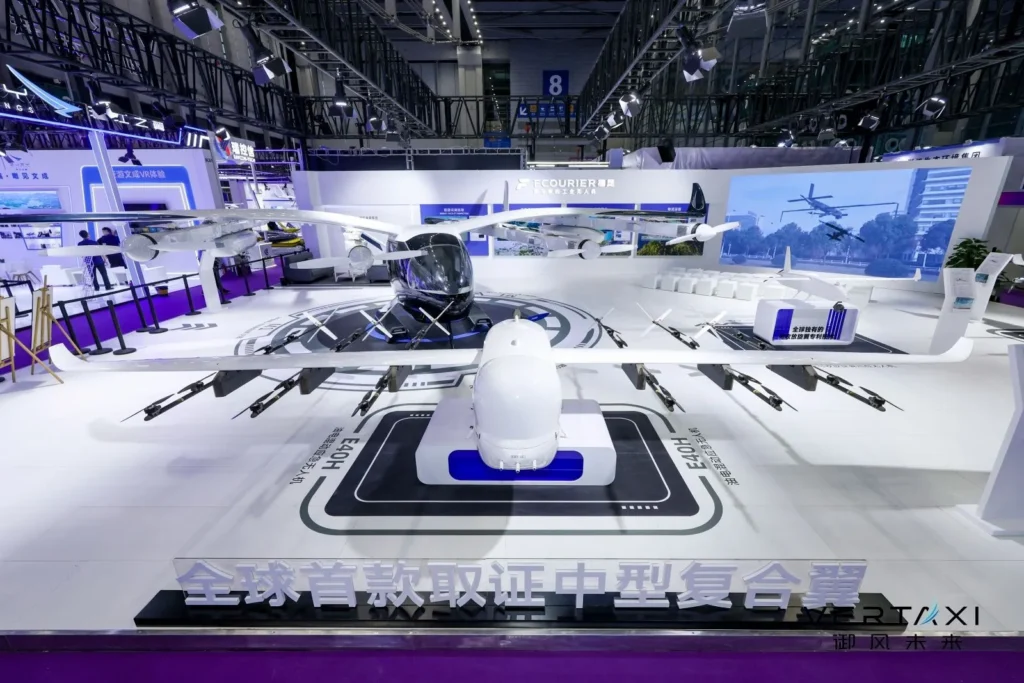
Vertaxi is developing the M1B cargo aircraft before its six-seat passenger model. This sequence could produce operational evidence in offshore logistics, island transport, emergency response, and firefighting without starting with public passenger service.
Earlier schedules pointed to faster approval, but the current date is more conservative. In July 2026, founder Xie Ling told Xinhua that M1B certification was expected in 2027, while the passenger aircraft was in manufacturing. That update makes Vertaxi worth watching, though it remains behind certified cargo operator AutoFlight.
China’s 2025 Government Work Report called for the safe development of the low-altitude economy. In May 2026, CAAC created a dedicated low-altitude safety department to coordinate planning, safety, dispatch platforms, and flight-service systems.
The regulator forecasts that the wider low-altitude economy, which covers far more than eVTOLs, will exceed 3.5 trillion yuan ($511 billion) by 2035.
China’s revised Civil Aviation Law took effect on July 1, 2026. It strengthens the legal framework for civil unmanned aircraft design, production, import, maintenance, operation, and airworthiness.
The policy direction does not create one uniform market. It supports at least four commercial tracks:
Local infrastructure adds another layer. Shenzhen’s current plan targets more than 1,200 low-altitude takeoff and landing sites and over 1,000 commercial low-altitude routes by the end of 2026.
These are municipal targets, not proof of completed eVTOL demand. Their real value lies in building shared systems for communications, navigation, weather, flight planning, and landing access.
Searches for the largest eVTOL companies can mislead because company value, aircraft orders, factory capacity, and certification maturity measure different things. A stronger comparison uses five questions:
This framework changes the list of eVTOL companies. EHang leads pilotless passenger certification. China’s market will likely support several winners because the use cases, aircraft designs, and operating rules differ. Across Chinese eVTOL Companies, the strongest signal is steady progress from certified design to repeatable production, approved operations, safe routes, and paying demand.
Comparing Chinese eVTOL companies with US and European competitors reveals strategic divergence.
US companies like Joby Aviation and Archer Aviation focus on piloted, four-passenger configurations with higher speed and range targets. European companies like Volocopter and Lilium emphasize urban air taxi networks with extensive ground infrastructure.
Chinese eVTOL companies prioritize unmanned operation, lower unit costs, and faster time to market. The Chinese approach is less ambitious technically but more commercially viable in the near term. The question is which strategy will dominate the global market from 2028 onward.
If your team is tracking Chinese eVTOL Companies, press releases reveal only part of the system. ChoZan connects China research with expert briefings and learning expeditions that examine policy, infrastructure, manufacturing, and real commercial use cases together.
The December 2026 China Innovation Tour includes a low-altitude operations exhibition, an expert dialogue, and an EHang-related mobility experience. Explore the program to turn China’s eVTOL signals into sharper strategic questions for your organization.
EHang trades on Nasdaq, while ARIDGE is part of publicly traded XPeng. Most other major Chinese developers, including AutoFlight, Volant, TCab Tech, Aerofugia, and Vertaxi, remain private, so direct public-market exposure is limited.
Yes, but Chinese approval does not automatically authorize overseas service. The destination regulator must validate the aircraft and approve local operations. AutoFlight’s 2026 Indonesian validation shows one route, while broader recognition remains market-specific.
A Type Certificate approves the design, a Production Certificate approves repeatable manufacturing, and an Airworthiness Certificate covers an individual aircraft. An Operator Certificate authorizes a company to run defined services under specified operating limits.
No. EHang centers its passenger model on pilotless flight, while Aerofugia, Volant, and TCab Tech are developing piloted aircraft. The choice affects cabin capacity, training, operating costs, certification evidence, and public acceptance.
An eVTOL is an electrically powered aircraft that takes off and lands vertically. A flying car may combine road and air functions. ARIDGE’s system uses a road vehicle that carries a separate detachable aircraft.
Guangzhou and Shenzhen anchor pilotless flight, flying vehicles, and low-altitude infrastructure. Shanghai has activity from AutoFlight, Volant, TCab Tech, and Vertaxi. Chengdu supports Aerofugia, while Hefei and Wuhu combine manufacturing, investment, and trial programs.
They need safe landing areas, charging, passenger control, emergency procedures, communications, and flight-service links. Some early routes can use adapted sites, but regular urban networks require standardized infrastructure and closer coordination with city airspace systems.
They vary widely. A firm purchase, lease commitment, conditional order, and memorandum of understanding carry different obligations. Compare deposits, cancellation terms, certification conditions, delivery schedules, and the buyer’s operating authority before treating totals as demand.
Limited sightseeing and controlled experiences will arrive before dense urban networks. Broader adoption depends on route approvals, infrastructure, public-ticketing clearance, training, weather limits, maintenance capacity, battery economics, and a sustained safety record across many flights.
Review the exact aircraft’s certification status, conforming test fleet, manufacturing quality system, operator permissions, funding runway, supplier exposure, and overseas validation plan. Technical demonstrations matter, but regulatory evidence and operational discipline carry more commercial weight.