CONTENT

DeepSeek vs Claude is not a comparison of two AI tools. It reflects two fundamentally different ways of deploying intelligence inside an organization.
In 2026, the critical question is no longer which model performs better. It is how AI is integrated, scaled, and governed across real systems. DeepSeek and Claude represent opposite answers to that question.
McKinsey reports that 88% of companies now use AI in at least one business function, but only about one-third have actually scaled it across the organization. That gap—between using AI and scaling it—is exactly where the difference between DeepSeek and Anthropic shows up.
DeepSeek treats AI as a cost-efficient, flexible infrastructure layer that companies can shape and deploy internally. Claude treats AI as a controlled, enterprise-ready system designed for reliability and structured execution.
This distinction matters because companies are no longer experimenting with AI. They are deciding how deeply it should be embedded into operations, and that decision requires choosing an architecture, not just a model.
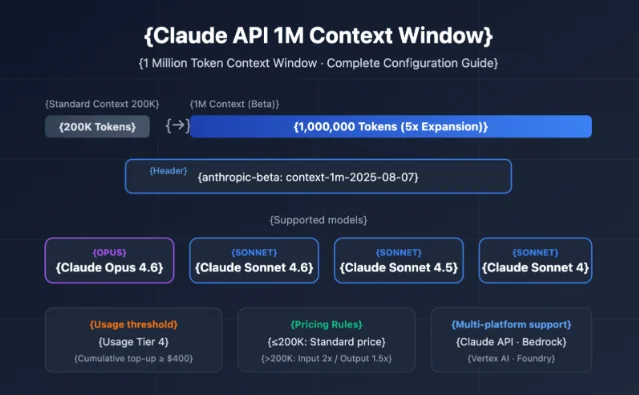
At a high level, it comes down to how each one is meant to live inside your organization.
You’ll see this play out across three big areas:
DeepSeek provides open-weight access and flexible deployment options, allowing companies to decide how the model behaves and where it runs. Claude is delivered through controlled environments, ensuring consistency while limiting customization.
DeepSeek’s pricing enables high-volume usage at a fraction of the cost of proprietary systems. This directly expands the scope of AI deployment across an organization.
With DeepSeek, companies manage integration, monitoring, and optimization. With Claude, these responsibilities are largely handled by the provider through built-in safeguards and managed infrastructure.
Together, these differences define where each system fits. DeepSeek becomes part of your internal stack. Claude becomes part of your operational workflow.
DeepSeek changes how AI is deployed inside a business by removing cost and integration constraints. As a result, AI shifts from a limited tool to a system-wide capability.
DeepSeek’s pricing is significantly lower than most proprietary models. For example, DeepSeek V3.2 operates around $0.28 per million input tokens and $0.42 per million output tokens, while comparable Claude models can reach $3 and $15 for the same volumes.
This difference directly affects how widely AI can be used. At higher costs, companies limit AI usage to high-value tasks. At lower costs, they can apply AI across internal tools, customer interfaces, and data workflows without constant cost constraints.
DeepSeek is designed to be integrated into internal systems. Its models can be self-hosted or embedded into existing infrastructure, allowing companies to control how AI interacts with their data and processes.
This shifts AI from an external dependency to an internal part of the stack. As a result, organizations gain tighter workflow integration, greater control over outputs, and the ability to adapt the model to specific operational needs.
DeepSeek reflects a broader shift in AI development toward delivering strong performance with lower compute usage. Its official model release notes show that DeepSeek-V3 was trained on 14.8 trillion tokens using 2.788 million H800 GPU hours.
Its architecture, including mixture-of-experts systems, activates only a portion of parameters during inference, reducing resource requirements.
For businesses, this makes continuous, high-volume AI usage economically viable and supports deployment across multiple functions.
DeepSeek enables a different deployment mindset. Companies no longer need to ask where AI justifies its cost. Instead, they can focus on where AI improves processes, products, and decision-making across the organization.
Lower cost and higher flexibility do not just improve efficiency. They expand the role AI can play inside the business.
Claude is designed for a different problem than DeepSeek. It is not focused on minimizing cost or maximizing flexibility. It is built to make AI usable, predictable, and safe inside complex organizations where reliability matters more than experimentation.
Claude’s primary strength is consistency. In real-world use, it produces clear, structured, and usable outputs across tasks such as writing, debugging, and analysis.
This matters in enterprise environments. Businesses need outputs that teams can trust, reuse, and integrate into workflows without constant validation. Claude is optimized for that level of reliability.
Claude is designed to operate within defined workflows such as document analysis, coding environments, and knowledge systems.
Its outputs prioritize clarity, step-by-step reasoning, and formats that fit directly into professional use cases. In coding scenarios, it often produces more maintainable and deployment-ready results, particularly in environments where long-term stability matters.
The objective is not maximum complexity. It is consistent in real-world use.
Claude’s architecture incorporates a safety-first approach. Frameworks such as constitutional AI guide how the model behaves, helping ensure that outputs align with defined principles and that harmful or unpredictable responses are reduced.
This is essential for enterprise adoption. Organizations need systems that operate within legal, ethical, and operational boundaries without requiring continuous oversight.
Unlike DeepSeek, Claude is a closed, proprietary system. Companies cannot modify its internal behavior or deploy it independently.
However, this constraint supports its value. By maintaining control over the system, the provider ensures stability, security, and continuous improvement without requiring companies to manage underlying complexity.
Claude enables a different deployment model. Instead of building AI into internal infrastructure, companies can integrate it into workflows with minimal operational burden.
This shifts the focus from running AI systems to applying them effectively within structured, high-stakes environments.
The most important difference between DeepSeek and Claude is not capability. It is the trade-off between cost, openness, and control, and how these factors determine how AI scales inside a business.
DeepSeek changes the economics of deployment by making high-volume usage viable. This allows organizations to apply AI across multiple layers, including internal tools, customer interfaces, and data workflows, without strict cost constraints.
Claude operates within a higher-cost structure, which leads companies to focus on tasks where reliability and output quality justify the expense.
DeepSeek is designed to integrate into internal systems, allowing organizations to control how AI interacts with their data, workflows, and infrastructure.
Claude operates as a managed system delivered through controlled environments. Companies integrate with it rather than build around it, which simplifies deployment but limits customization.
This distinction defines where AI operates. DeepSeek operates within the internal stack, while Claude operates within the workflow layer.
With DeepSeek, control sits with the organization. This includes model behavior, deployment decisions, and optimization, which provides flexibility but requires internal technical capability.
With Claude, control is largely externalized. The provider manages system behavior, updates, and safety mechanisms, reducing operational burden but increasing dependency on external design and constraints.
These three dimensions are tightly connected. Cost enables scale, openness enables integration, and control determines who manages complexity.
Together, they define how AI is structured within an organization. Some companies prioritize flexibility and internal capability, while others prioritize reliability and simplified deployment.
This decision shapes not only implementation, but also how far AI can extend across the business.
The difference between DeepSeek and Claude becomes most visible in how they are applied inside organizations. Each model fits a different layer of enterprise activity, and the choice depends on operational context rather than preference.
DeepSeek performs best in environments where AI must operate at scale and adapt quickly. This includes internal tooling, large-scale data processing, and product features where cost per request directly affects business viability.
In coding and technical workflows, DeepSeek delivers strong reasoning and detailed outputs, making it effective for iterative development and experimentation. Its cost structure allows companies to deploy it across multiple functions simultaneously, including internal copilots, workflow automation, and embedded product features.
In these scenarios, the priority is not perfect output in every instance. It is broad coverage across systems.
Claude is better suited for tasks where output quality and consistency directly impact business outcomes. This includes research, document analysis, communication, and decision support within organizations.
Its outputs are clear and structured, allowing teams to rely on them with minimal validation. This is critical in environments where accuracy and clarity carry more weight than speed or cost.
Both models perform well in coding, but they serve different roles. Claude produces more stable, maintainable code suited for production environments. DeepSeek supports rapid iteration, enabling teams to experiment at scale without cost constraints.
This creates a natural division between stable development workflows and exploratory development.
Organizations are increasingly using both systems. DeepSeek supports scale and system-wide deployment, while Claude supports reliability in critical workflows.
In some cases, companies combine them within the same pipeline, using one for planning and another for execution.
AI adoption is becoming function-specific. Different parts of an organization require different types of intelligence.
DeepSeek expands the scope of AI applications across systems, while Claude ensures consistent performance in workflows where reliability is essential.
The decision is no longer about selecting a single model. It is about aligning each model with the role it performs inside the business.
The comparison between DeepSeek and Claude reflects a broader shift in the AI market. Competition is no longer defined primarily by model capability. It is increasingly shaped by deployment models, cost structures, and system integration.
Earlier phases of AI development focused on benchmarks, reasoning ability, and output quality. That phase has matured.
Organizations are now making decisions based on how AI fits into their operations. Some approaches emphasize internal integration and scalability, while others prioritize managed deployment and operational reliability. This shift reflects a move from experimentation to practical implementation.
The market is organizing into two distinct approaches.
One approach centers on open, cost-efficient systems that can be integrated into internal infrastructure, enabling organizations to embed AI directly into their technology stack and scale its use across multiple functions.
The other centers on managed, enterprise-grade systems designed for usability, governance, and reliability within structured environments, reducing the need for internal infrastructure management.
These approaches reflect different priorities around control, flexibility, and operational simplicity.
Lower-cost models expand the range of viable use cases by making AI accessible across more workflows, products, and decision systems.
This shifts AI from a limited resource into a broadly deployable capability and introduces cost as a central factor in competitive positioning.
As model performance converges, the ability to integrate AI into workflows and systems becomes the primary source of differentiation.
This includes how effectively models connect to data, how reliably they operate in production, and how well they support real-world use cases.
The AI market is increasingly defined at the system level. Organizations are designing architectures that may include multiple models serving different roles.
DeepSeek expands the scope of AI deployment, while Claude ensures reliable execution in critical workflows.
As a result, competitive advantage depends less on selecting a single model and more on how effectively AI is deployed across the organization.
Understanding the difference between DeepSeek and Claude is only the starting point. The real challenge is deciding how these systems fit into your organization’s AI strategy. Most companies are still navigating this shift without a clear framework, resulting in fragmented adoption and missed opportunities.
At ChoZan, we work directly with global leadership teams to translate AI trends into practical decisions. From understanding China’s emerging AI ecosystem to evaluating deployment models and cost structures, we help you move from theory to execution.
If you want to go deeper, you can start by exploring our latest research on China’s AI innovators. If your goal is to see how these systems operate in the real world, our China learning expeditions provide direct access to the companies building them.
And if you are already making AI decisions, you can book a tailored consultation to align your strategy with where the market is heading.
There is no single best option. DeepSeek vs Claude for enterprise AI deployment depends on priorities. DeepSeek supports scale and cost efficiency, while Claude fits structured environments that require reliability and governance.
Yes, DeepSeek pricing vs Claude shows a significant gap. DeepSeek enables high-volume use at lower cost, making it more suitable for scaling AI across products and internal systems.
Yes, self-hosting DeepSeek models is possible and attractive for many companies. It allows better control over data, customization, and integration into internal systems, which is critical for a long-term AI strategy.
Enterprises choose Claude because it delivers consistent, structured outputs for knowledge work. This reliability reduces validation effort and makes it easier to integrate into workflows across teams.
The answer depends on context. DeepSeek vs Claude for coding shows DeepSeek works well for iteration, while Claude produces cleaner, more stable outputs for production environments and long-term maintainability.
Choosing between open and proprietary AI models depends on your internal capabilities. Open models offer flexibility and control, while proprietary systems simplify deployment and reduce operational complexity for most organizations.
Claude is generally considered safer. Claude’s safety vs DeepSeek reflects its built-in governance and structured design, which helps enterprises manage risk and ensure consistent behavior across critical workflows.
The main risks of using open AI models like DeepSeek involve integration complexity, monitoring, and governance. Companies need internal expertise to effectively manage performance, security, and long-term system stability.
DeepSeek’s cost advantage comes from efficient architecture and pricing strategy. Lower inference costs allow companies to expand AI usage across more functions without significantly increasing operational expenses.
Yes, many companies adopt both. DeepSeek and Claude together can support different use cases by combining cost-efficient scaling with reliable execution in workflows that require greater consistency and control.
For internal tools, DeepSeek is often stronger. DeepSeek for internal AI tools offers flexibility and lower cost, which allows companies to build and iterate without strict limitations.