CONTENT

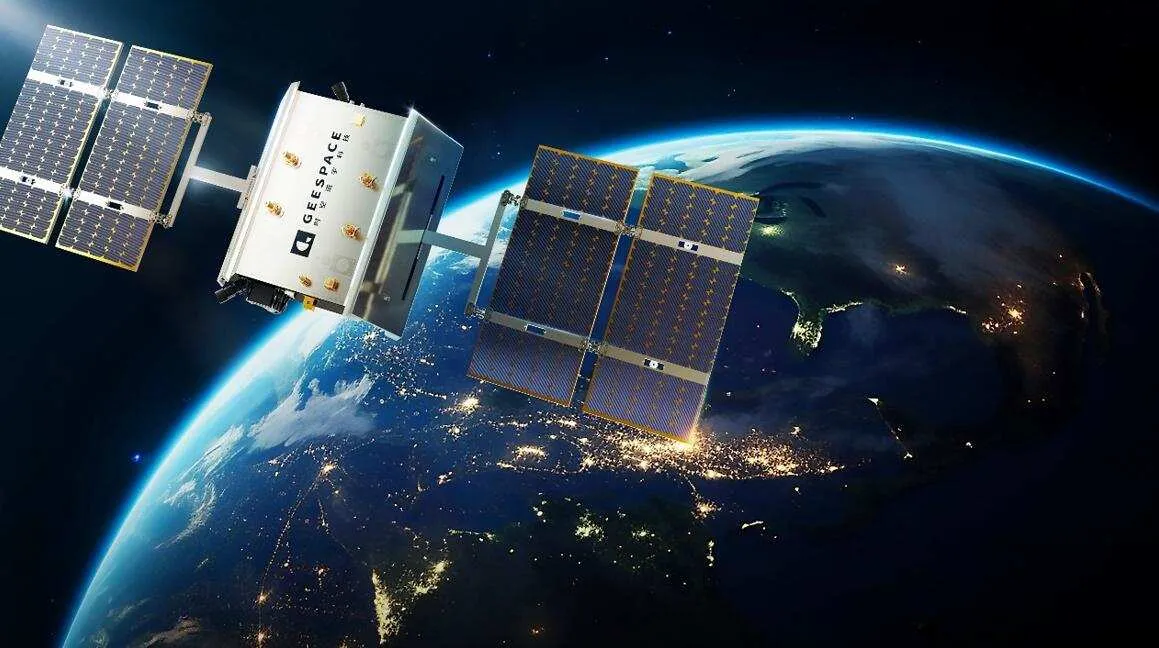
Geespace is Geely Holding’s satellite communications business. It develops and operates GEESATCOM, the low Earth orbit network associated with the Geely Future Mobility Constellation, to connect vehicles and industrial equipment beyond terrestrial mobile coverage. Its commercial value is keeping essential information moving when a cellular connection disappears.
The project offers a concrete example of China connecting automotive engineering with space infrastructure. The business questions concern reliability, integration costs, and the services customers can actually access.
The company’s September 2025 disclosure describes in-house capabilities spanning satellite design, manufacturing, mission control, communications chips, modules, and terminals. This gives the automotive group access to several parts of the same communications system.
The strategic logic is straightforward: teams can develop vehicle hardware and satellite services together. A communications requirement can influence antenna design, electrical integration, and the information a vehicle sends.
The potential advantage is closer engineering coordination. Its commercial value still needs to appear in installation costs and service performance. Ownership of infrastructure brings operating responsibilities alongside engineering control.
The automotive connection also creates a potential initial customer base. A useful commercial review should examine demand from other vehicle brands and industrial customers, contract renewals, and responsibility for replacing satellites. Those answers help establish the service business’s durability beyond its initial automotive applications.
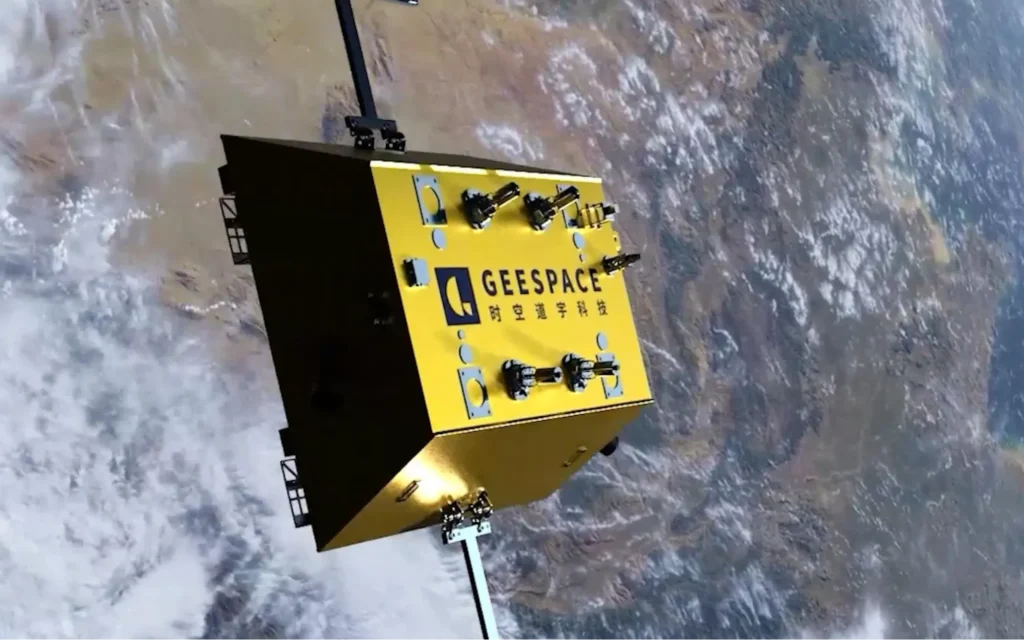
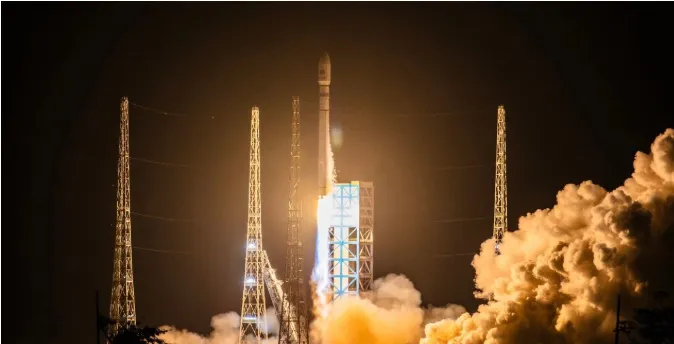
The company declared Phase I deployment complete after a September 24, 2025 launch carrying 12 satellites. Its current website reports 64 satellites in orbit, including test spacecraft. These are company-reported figures.
The Geely constellation is an operational LEO IoT network, meaning it connects devices through satellites in low Earth orbit. Its published specifications require careful interpretation:
| Published metric | Current company statement | Commercial interpretation |
| Coverage | Worldwide coverage excluding polar regions, with one or two coverage layers between 60° north and south. | Check availability along the actual operating route. |
| Daily communications capacity | Up to 340 million sessions. | This is designed throughput; actual traffic requires separate evidence. |
| Supported users | Up to 20 million. | This measures potential capacity; active subscribers require separate disclosure. |
They establish the scale of the infrastructure, but leave deployment questions open. A buyer still needs the relevant terminal, service configuration, and performance evidence for the intended application.
The Galaxy Zhanjian 700 made its global debut on July 24, 2026. On August 28, Geely unveiled its new AI off-road technology, naming the Zhanjian 700 as the first model to use it. Geespace reports integrating its LEO satellite IoT technology and services into the vehicle.
An off-road vehicle provides a logical application. A useful deployment would prioritize location reports and assistance messages when the driver travels beyond cellular coverage. The information can be small while its operational value remains substantial.
The hardware also matters. The published GM1003 automotive module measures 34 × 48 × 3.6 millimeters and has a stated average power consumption of 350 milliwatts. It targets factory installation. The module specifications make the integration proposition tangible.
These details help engineers assess packaging and electrical requirements before committing to a vehicle program. The product announcement establishes an integration milestone; it does not disclose the number of paying users or demonstrate performance across every driving environment.
Satellite navigation helps establish location. Precision positioning aims to reduce location error, while a communications link carries information between equipment and a network.
The company’s current vehicle solution advertises centimeter-level positioning services. That claim needs application-specific validation before it becomes a vehicle performance promise.
A procurement specification should define accuracy, availability, and recovery after signal loss separately. It should also state the receiver, correction service, and environmental conditions used during testing.
The company reports a July 2025 partnership with Cao Cao Mobility and subsequent robotaxi satellite communications tests. Its robotaxi program description supports the existence of that work. The evidence concerns a supporting connection. Any claim about autonomous driving safety requires separate evidence about the complete driving system.

China’s Ministry of Industry and Information Technology approved a two-year commercial trial for the company, announced on August 20, 2026. The authorization covers satellite IoT operations using the first phase of its constellation.
This creates a defined regulatory setting for customer operations in China. The authorized category centers on low-speed data connections for equipment and transport applications.
The trial status belongs in commercial planning. Customers should confirm the contracted service scope, support arrangements, and continuity provisions beyond the trial period. A supplier evaluation should identify which functions are available under the current authorization and which remain development proposals.
Local partnerships form a visible part of the expansion model. In April 2025, the company and Malaysia’s ALTEL established ADISB, a joint venture intended to develop localized satellite IoT services.
A January 2026 agreement with Pakistan’s Paksat International adds another example. The cooperation includes policy engagement, spectrum coordination, and work on network access and service integration.
These agreements suggest that market entry depends on local operating relationships as well as orbital reach. A partnership announcement establishes an intended route into a market. Buyers should seek separate confirmation of service launch dates, ordering channels, and support coverage before planning a rollout.
The strongest lesson is the connection between industrial demand and infrastructure development. Connected vehicles create specific requirements that can guide satellite hardware, terminals, and service design.
China’s growing technology capabilities become commercially relevant when these components work together around a customer problem.
A practical assessment of the Geespace satellite proposition should answer four questions:
A successful LEO IoT pilot should end with a clear decision: expand the service, change the design, or stop the project based on the agreed commercial and technical criteria.
Geespace raises useful questions about technology partnerships, product integration, and international expansion. ChoZan’s China market research and expert calls can help your team assess those questions in context.
Explore our China technology insights or book a consultation to discuss focused research, workshops, or a learning expedition.
The company’s August 2025 launch disclosure places its satellites in orbits approximately 600 kilometers above Earth. That altitude identifies the network as low Earth orbit. Actual message-delivery performance still depends on the full service configuration.
Do not assume ordinary smartphones can connect directly. One documented option uses a dedicated satellite handheld terminal linked to a mobile app through Bluetooth. The terminal provides the satellite radio, antenna, and associated communications hardware.
The published specifications support text, voice messages, and images, with up to 1,900 bytes per communication. This favors compact content. Ask the provider how it encodes, splits, charges, and delivers larger messages before designing an application.
Request a quote for the intended application. The company describes configurable message length, communication priority, and service frequency, so a useful comparison should specify those settings alongside terminal costs, installation, support, and the proposed contract duration.
Yes. The company’s partner framework supports chip and module integration, independent terminal development, and industry-specific solutions. Prospective manufacturers should request the relevant interface documentation, integration requirements, and commercial terms before committing engineering resources to a product.
The published partnership framework supports partner-built gateway stations and local data storage. The final arrangement depends on the deployment agreement. Customers should confirm routing, storage locations, access permissions, and operating responsibilities during technical and contractual review.
Its current corporate description identifies IoT non-terrestrial network technology trials and ongoing 6G satellite communications development. Those activities establish a research direction. They do not establish the availability of a standardized commercial 6G service for customers.
Yes. The company reports a 2025 application validation with Zoomlion for construction machinery. Its description emphasizes low-frequency, low-power communication settings. That makes equipment reporting a relevant application to investigate, with reporting intervals matched to operational needs.
The current container tracker combines satellite communications with positioning and supports location reports, tamper alerts, and low-battery notifications. Optional cellular and LoRa connections expand integration choices. External sensors can add temperature, humidity, or pressure information.
Accuracy varies by product. The published handheld terminal specifies two meters CEP. Buyers should check the exact hardware and positioning service combination, including the supplier’s explanation of its accuracy metric, before setting application requirements.