
CONTENT

The conversation around influencer marketing in China has shifted. It is no longer about participation. It is about execution quality and speed. The old model of paying top-tier KOLs for reach has lost its reliability as outcomes have become harder to predict.
R3’s 2026 data clearly shows the shift. KOL rate cards rose by 11.6%, yet actual transaction costs fell by 3.4%. This “scissors gap” signals a market where pricing power is weakening, and performance scrutiny is increasing.
At the same time, market growth is slowing to 1% despite reaching RMB 117.2 billion. This does not indicate a decline. It reflects a correction toward efficiency. Influencers now sit across commerce, customer interaction, and product feedback, which makes them operational, not just promotional within China social commerce strategies.
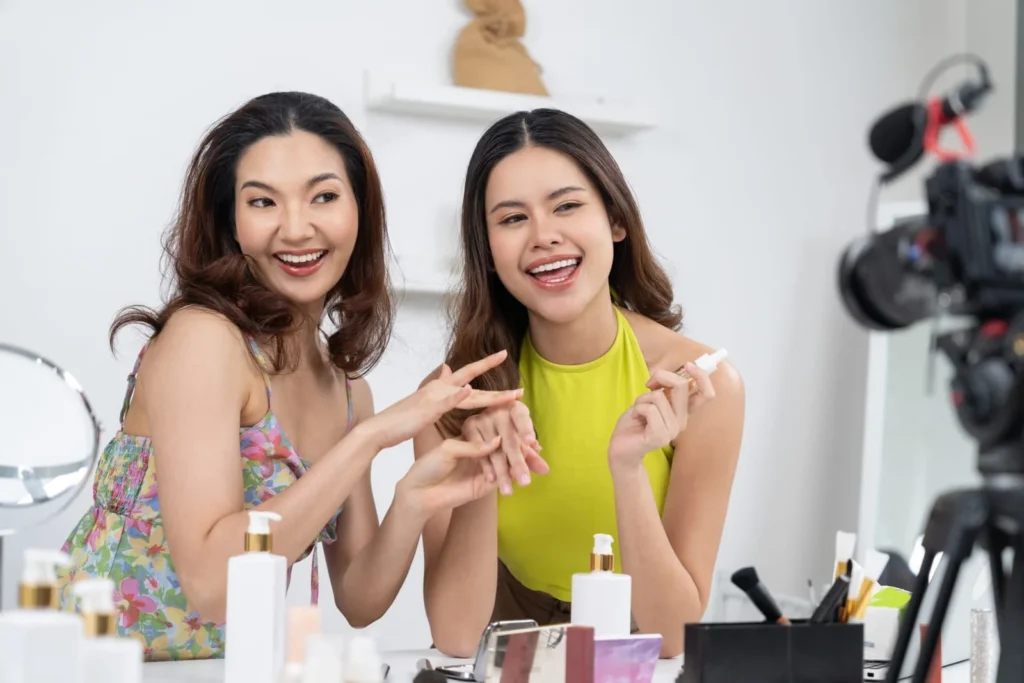
Chinese social platforms operate as integrated commerce systems, shaped by evolving China Gen Z consumer behavior. Users move from discovery to purchase within the same environment, compressing decision cycles and increasing the role of content in driving transactions.
In these environments, the line between content and commerce dissolves. The Charlesworth Group highlights that influencers thrive because social media platforms in China are tightly integrated with e‑commerce features like in‑feed shopping, mini storefronts, and payment systems.
This integration means that well-followed individuals not only promote brands but also directly drive sales and collect feedback, a shift aligned with broader China market trends and digital transformation. Consumers in China place a high level of trust in content creators they follow; they rely on influencers for product recommendations and believe that the authentic experiences shared by key opinion leaders and consumers provide more reliable guidance than traditional advertising.
By 2025, livestream commerce had evolved from a novelty to a mainstream purchasing channel. A 2026 marketing checklist notes that livestreaming has become a primary conversion channel and that influencers who host livestreams are expected to deliver immersive storytelling rather than pushy sales pitches.
Shoppers tune in to see product demonstrations, ask questions, and secure limited offers. Authenticity and entertainment value have become essential as audiences have grown weary of overproduced, overtly commercial content.
As a result, brands must identify creators who can connect on a personal level and present products through real-life scenarios.
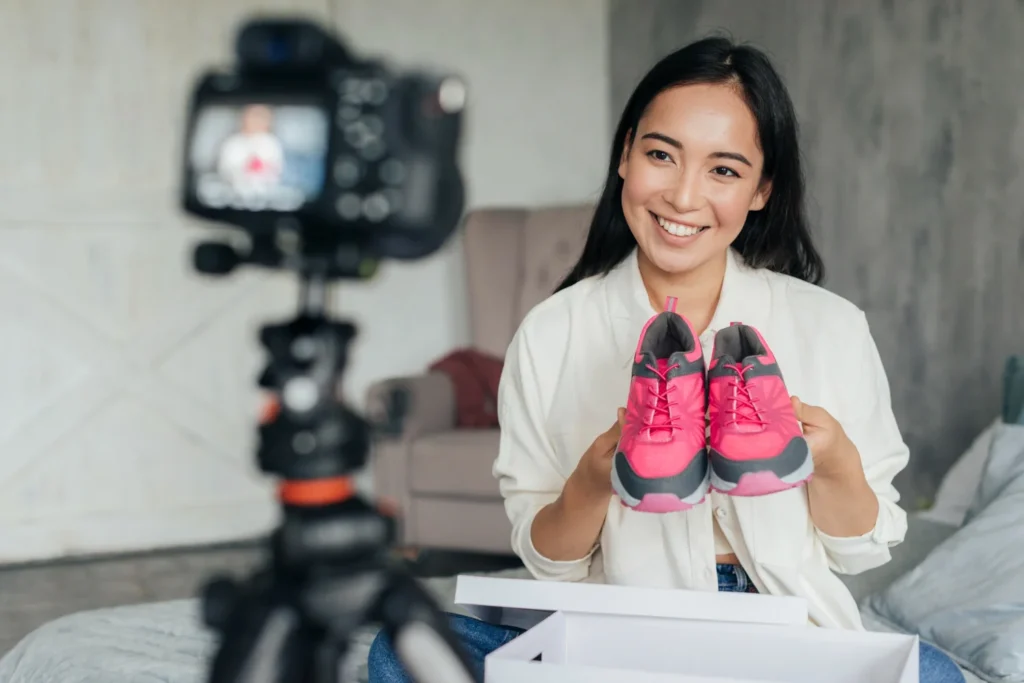
Budget allocation is moving away from top-tier creators. Rising costs and weaker efficiency at the top have pushed brands toward mid-tier and long-tail creators who deliver more consistent returns.
This reflects a stricter evaluation model. Brands now prioritize influence over reach. A group of smaller creators can shape product perception and drive purchase decisions more effectively than a single large endorsement.
This shift also reduces risk. Diversified creator portfolios produce more stable outcomes compared to reliance on high-cost, high-variance campaigns.
The bigger shift is trust. Consumers have become more skeptical of polished, commercial content. They want direct experience, not performance.
That is why key opinion consumers have gained importance. These micro-influencers often have fewer than 10,000 followers and build influence through relatability. Research suggests that famous wanghong increased product credibility by about 29%, while a relatable KOC raised purchase intent by 34%. That gap matters because it shows the difference between visibility and action.
Platforms like RedNote reward this model. More than 70% of users consult reviews from ordinary people before they buy. Trust builds through repeated exposure to believable posts, not one burst of visibility from a famous name. That long-tail effect now matters more than short-lived traffic spikes.
This is why influencer strategy in China now needs a KOC layer, supported by deeper China consumer research. These creators are harder to standardize and manage at scale, but they offer something larger creators often cannot: believable advocacy that moves consumers from awareness to action.
Artificial intelligence is improving how brands operate in China’s influencer market, in line with broader China AI and tech trends. However, it is not changing what actually drives influence. It increases precision, but it does not replace human judgment.
AI now sits at the front of the workflow. Brands use it to evaluate creator performance, map audience profiles, and predict campaign outcomes before spending begins. Instead of relying on surface metrics, teams can assess conversion signals, audience overlap, and consistency at scale. As a result, decision speed increases and selection errors decline.
The real shift is not automation. It is a simulation. Brands can now test multiple campaign scenarios before execution, comparing creators, formats, and budget allocation in advance. This turns influencer strategy into something that can be stress-tested rather than assumed.
This changes how budgets move. Spending no longer follows visibility or follower size. It moves toward predictable outcomes, where past performance and modeled results carry more weight than reach alone.
At the same time, AI exposes a hard limit. It can optimize distribution, but it cannot manufacture trust. As synthetic content becomes more common, audiences become more sensitive to tone, repetition, and scripted behavior. Content that feels engineered loses impact faster.
As a result, creators who maintain consistent, human engagement patterns become more valuable. Authenticity starts to function as a pricing advantage, not just a creative preference. Brands that rely too heavily on automation risk flattening their content into something audiences ignore.
AI should be treated as a decision system, not a creative shortcut. It improves how brands choose, allocate, and refine. It does not replace the need to build relationships with creators who can influence real behavior.
Douyin operates as a demand engine. Its algorithm prioritizes engagement, which allows content to scale beyond follower bases. Brands succeed when creators integrate products into narrative-driven content that drives direct purchase.
RedNote functions as a decision layer. Users search, compare, and validate products through peer-generated content. Seeding strategies that involve multiple smaller creators work better than isolated campaigns because they build consistent exposure.
WeChat operates as a retention system. It converts transactions into ongoing relationships through private traffic, loyalty programs, and direct communication channels. Influencers here maintain smaller but more controlled communities.
Bilibili supports in-depth content and works well for categories that require explanation. Kuaishou provides access to lower-tier markets where trust and relatability drive engagement. Both platforms require alignment with content format rather than pure reach.
Instant commerce platforms are reducing the time between exposure and fulfillment. Services like Meituan are expanding beyond food delivery into broader retail categories, which changes how influencer content drives immediate action.
At the same time, consumer response to discount-led campaigns is weakening. Brands are shifting toward experiential formats, including live events and immersive environments, to maintain engagement.
Influencer strategies now need to connect with both trends. Content should highlight immediacy while also creating participation beyond transactions.
Influencer marketing now operates as part of a broader system rather than a standalone activity. Brands need to align creators with specific stages of the customer journey, from discovery to retention.
The key shift is measurement. Surface metrics such as likes and follower counts are becoming less relevant. Behavioral signals, including search activity, product visits, and repeat engagement, provide a more accurate view of impact.
Long-term creator relationships improve performance by increasing familiarity and consistency. Short-term campaigns struggle to produce the same level of influence.
Influencer marketing in China is becoming more structured and performance-driven. Immediate access to products is shortening decision cycles, increasing pressure on content to convert quickly.
At the same time, authenticity is becoming easier to detect and harder to replicate. As synthetic content increases, audiences respond more strongly to consistent, human-led engagement patterns.
AI will expand content variety and improve decision-making systems, but it will not replace the creators’ role in shaping trust. Platforms will continue to specialize, with clearer roles across discovery, evaluation, conversion, and retention.
Single-platform strategies will continue to weaken. Influence will operate across coordinated systems rather than isolated campaigns.

Influencer marketing in China no longer works as a standalone tactic. It sits inside a system that connects consumer insight, platform dynamics, and social commerce execution. Most teams struggle because they optimize pieces, not the system.
ChoZan works with brands that need clarity, not noise. The focus stays on how influence actually drives business outcomes, from creator selection to platform strategy and conversion design.
What ChoZan helps with
If your current approach relies on visibility, isolated campaigns, or inconsistent results, the issue is structural.
Use it to pressure-test your current strategy, identify gaps, and understand what needs to change. The goal is not more activity. There is better alignment between content, platforms, and commercial outcomes.
Yes, but execution becomes harder. Contracts, payments, product shipping, tax handling, and store linkage are much easier when a brand has a local partner, distributor, or agency support structure in China.
An agency is often the better choice in the early stages. It helps with creator sourcing, negotiation, campaign management, compliance checks, and local platform execution while reducing the learning curve for foreign teams.
Most brands need at least eight to twelve weeks. Influencer content in China often affects search behavior, trust, and conversion over time, so performance should be judged across a full testing cycle.
A strong influencer contract in China should cover deliverables, timelines, payment terms, approval rights, usage rights, exclusivity, disclosure rules, crisis management, and content removal terms in the event of issues.
Yes. Premium positioning does not remove the need for localization. Messaging, tone, product claims, visual style, and cultural context still need to align with Chinese platform norms and audience expectations.
Content usage rights matter because brands often want to reuse influencer assets in paid ads, ecommerce pages, brand accounts, and private traffic channels. Those rights should be agreed upon before the content goes live.
Brands should respond quickly, calmly, and clearly. The first step is to identify whether the criticism relates to product quality, a creator mismatch, pricing, or service issues, and then address the concern with useful, specific information.
Yes. B2B influencer marketing in China works well when it leverages expert voices, such as founders, engineers, consultants, and niche industry creators, who can explain technical value and business relevance.
Product gifting can support seeding, but it rarely delivers predictable scale on its own. Most brands need a mix of gifting, paid collaboration, affiliate incentives, and longer creator relationships to build consistent results.
The biggest mistake is stopping at content publication. Brands need follow-through across search optimization, ecommerce conversion, comment management, retargeting, private traffic capture, and repeat engagement after posting.
Brands should look beyond likes and follower counts. Warning signs include weak comment quality, repetitive audience behavior, low save rates, poor search lift, and limited conversion despite high visible engagement.
The best budget structure depends on the goal, but most strong programs split spend across testing, seeding, paid creator collaboration, amplification, and measurement to improve performance over time rather than relying on a single burst.