
CONTENT

MaaS (mobility as a service) connects transport modes through coordinated journey planning, access, and payment services. In China, city transport systems work with consumer platforms to make those connections usable in everyday travel.
The commercial question is how much of the journey a platform can actually coordinate. Route recommendations, valid transit tickets, and revenue-sharing agreements require different capabilities. China’s recent deployments offer concrete ways to examine those differences before selecting partners or committing investment.
What is mobility as a service? It combines public transit, ride-hailing, bike-sharing, parking, and payment into one user-facing system. Most global MaaS projects remain in the pilot stage because they depend on voluntary private-sector cooperation.
China’s MaaS initiatives increasingly combine government-supported transport data sharing, platform integration, and green-travel incentives. For example, Beijing launched its MaaS platform in 2019 and introduced carbon incentives in 2020.
Beijing launched China’s first integrated green travel platform in November 2019. By 2025, Beijing had opened 14 transport data items across four categories to platforms including Amap and Baidu Maps, using a centralized “1-to-N” data supply model. The mobility-as-a-service platform becomes a public-private data broker rather than a purely commercial product.

China’s mobility ecosystem includes several approaches to platform integration, from navigation-based aggregation to mapping infrastructure and mini-program access. Three examples illustrate these approaches.
Amap, Alibaba’s navigation app with approximately 913 million monthly active users as of June 2026, has built a Robotaxi aggregation layer. In November 2025, XPeng announced a partnership with Alibaba’s Amap to integrate its planned L4 Robotaxi services into the navigation platform. XPeng began internal Robotaxi testing in July 2026.
Amap provides demand access while Robotaxi firms focus on vehicle technology and safety.
Baidu Maps opened its map AI platform in May 2025, exposing location data, routing engines, and MCP protocol support to developers. Its traffic agent reduced average vehicle delay by 20% at 81 test intersections in Beijing.
For mobility-as-a-service software builders, Baidu provides infrastructure without requiring them to construct their own mapping stack.
WeChat integrates Robotaxi services directly through Tencent’s Mobility Services mini-program. WeRide’s Robotaxi service went live on WeChat, allowing users to book and pay without downloading additional apps.
Pony.ai signed a similar agreement in April 2025. WeChat does not operate vehicles. It operates the identity, payment, and discovery layer that makes third-party mobility services accessible.
In July 2025, Beijing’s transport commission reported opening 14 transport data items across four categories to platforms including Amap and Baidu. These covered buses, rail transit, parking-related information, and road network operations.
The authority described a shift from many separate company-to-company negotiations to a centralized data-supply arrangement. That organizational detail matters. A common supply point can reduce the coordination work required to connect operators and consumer services.
The same official account described real-time arrival and crowding information, transfer guidance, and reminders to leave a vehicle. These features depend on transport information reaching the passenger interface in a usable form.
The transferable lesson concerns responsibility. A city can organize shared inputs while consumer platforms develop the journey experience. A supplier assessment should therefore identify who owns each feed, its update schedule, and its correction process.
That division also changes procurement. A polished route screen offers limited evidence about the quality of the underlying operating relationships. Buyers should examine those relationships before evaluating additional interface features.

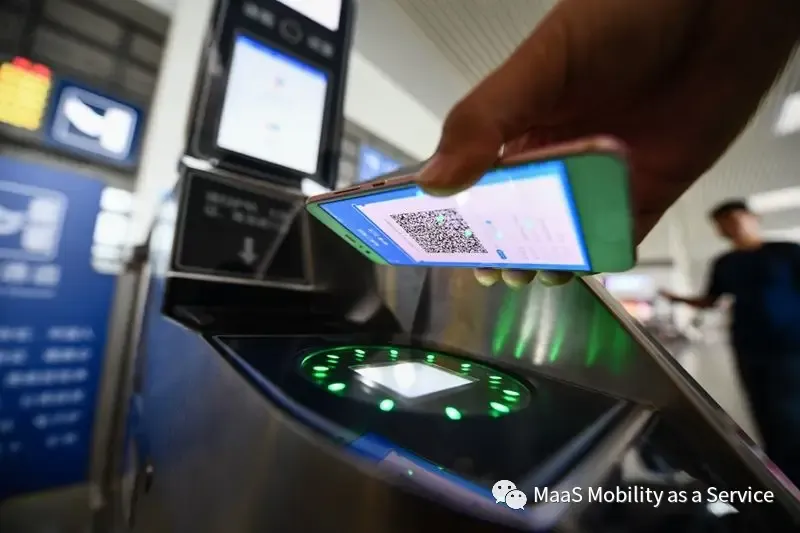
Shanghai shows how a mobility-as-a-service platform can reach people through several digital channels. The city’s “One Code Pass” allows travelers to access public transport through platforms including Alipay, WeChat, Amap, Baidu Maps, Railway 12306, and DiDi.
In December 2025, Shanghai expanded the service to Tongcheng Travel’s Chengshitong WeChat mini-program, allowing passengers to use a unified transport code for buses, metros, ferries, and the maglev without switching apps.
A separate March 2025 announcement documented interoperability between Suishenxing and Changxing Nantong. Travelers could remain in their home city’s app, switch the city setting, and activate the destination’s public transport code.
That distinction is useful. Regional interoperability can preserve local platforms while simplifying access for travelers. Anyone assessing expansion should confirm which cities, transport modes, and activation steps an agreement covers. This example connects two cities; nationwide coverage requires separate evidence.
Shanghai’s January 2025 app update described one-day, three-day, and seven-day passes for unlimited travel on buses, metro services, and ferries.
A pass creates a defined fare product. Its commercial assessment should examine covered services, exclusions, operator settlement, and actual usage. The presence of taxis or shared bikes elsewhere in an app does not establish their inclusion in a pass.
Beijing’s July 2025 explanation of its carbon program described platforms pooling users’ emissions reductions for verification and trading in the city’s carbon market. Project operators return benefits through mechanisms such as vouchers or donations.
This creates a funding connection between recorded travel behavior and passenger rewards. Its durability depends on verification costs, credit demand, and the value users receive. Registration totals alone cannot establish that the incentive system pays for itself.
A government case study published in May 2026, sourced to the National Data Administration, described Suishenxing’s use of MaaS data for major-event transport coordination.
The case described coordination among transport authorities, police, and transport providers. It also reported 44 data products listed on the Shanghai Data Exchange and services supplied to more than ten data customers.
The account states that these data services generate direct revenue, although it provides no overall revenue or profit figure. The strategic implication is that an integration operator can serve institutional customers through operational data services alongside its passenger offering.
For potential partners, the next questions concern permitted uses, customer renewal, and delivery costs. A product listing demonstrates availability; recurring paid demand establishes a stronger commercial case.
A useful evaluation of a mobility as a service app starts with a complete trip. Ask the supplier to demonstrate the normal journey and the exceptions that create support costs.
These tests establish acceptance criteria for the proposed service. A demonstration should expose the handoffs among organizations as clearly as it shows the passenger screen.
As of September 2026, Beijing MaaS served more than 6.2 million green-travel users daily, while its carbon incentive program had attracted 6.27 million registered participants.
Those measures describe service reach and program participation. They provide no direct measure of national market revenue or platform profitability.
A defensible market assessment should first define its revenue boundary: passenger fares, platform fees, software contracts, and data services represent different spending pools. The same journey can appear in several organizations’ operating figures, so aggregation requires care.
Next, select one customer problem and identify its budget owner. A regional ticketing project, an event transport service, and a consumer distribution partnership need different sales approaches. That specificity makes China’s MaaS experience commercially useful.
ChoZan offers China research, workshops, expert calls, and learning expeditions. If mobility as a service forms part of your strategy, discuss a focused brief covering platform roles, customer needs, and partnership options. Explore ChoZan’s China reports for broader context before defining the questions your team needs to investigate.
Shanghai’s English-language SH MaaS app supports registration with Chinese or overseas mobile numbers. Check the current payment setup and identity requirements for your chosen service before traveling.
SH MaaS allows a user to add codes for up to two companions. Each passenger scans their code separately. This helps families travel together without requiring each accompanying passenger to use a separate phone.
Shanghai’s Hub Connect service provides information about extended public transport hours and emergency service arrangements. Check live information after arrival, since listed transport options depend on their operating schedules and current availability.
Beijing’s 2025 service description includes accessible journey guidance. Before a trip, confirm the specific station entrances, transfer paths, and assistance arrangements you need. Pair digital directions with a check of relevant facilities and current operating conditions.
Keep the trip record, payment receipt, and any error message. Contact the support channel shown in the app and identify the transport operator involved. Ask how the charge will be reviewed and corrected.
MaaS can operate with conventional buses, trains, ferries, and shared transport. Shanghai’s documented services illustrate that approach. Vehicle automation concerns how a vehicle operates; service integration concerns how passengers access and combine transport options.
MaaS describes coordinating transport services for a traveler. SaaS describes a way to deliver software. A MaaS provider may purchase SaaS tools, while its passenger offering also depends on physical transport operations.
Start with one workplace and a defined group of volunteers. Record existing travel patterns, establish a clear allowance, and assess attendance, convenience, and employee feedback. Compare the results before expanding the program to additional locations.
Review the app’s requests for location, identity, and payment information. Check which permissions each feature needs and how to change them. Read the privacy notice for retention, sharing, and account deletion details before enrolling.
Agree on transition arrangements before signing. Specify access to transaction records, export formats, customer communications, and support during migration. Confirm how outstanding balances, active passes, and unresolved complaints would transfer when the supplier relationship ends.