CONTENT
Sanctuary AI sits in a practical corner of the humanoid race. Many companies compete on walking speed, stage demos, or lifelike design. Sanctuary AI focuses on a tougher enterprise question: can a robot learn useful physical work inside environments built for people?
That question matters because 2026 is becoming the year of real humanoid deployment. The Chozan 2026 humanoid robotics research names Sanctuary AI Phoenix among the global players pushing robots into operational settings, with the Phoenix robot positioned around intelligence, dexterity, and controlled industrial rollout.
The company’s edge does not come from theatrical movement. It comes from hands-on, task-based learning and software that turns human guidance into repeatable robot skills. That makes Sanctuary AI highly relevant for automotive manufacturing, logistics, and industrial support work.
Sanctuary AI is a Vancouver-based humanoid company building physical AI for industrial work. Its public mission focuses on industrial-grade humanoid robots to help address labor challenges, with Phoenix robots designed for automotive, manufacturing, and logistics environments.
That focus separates Sanctuary robotics from companies that lead with consumer personality or athletic mobility. Sanctuary AI is aiming at work that needs human-scale movement and fine manipulation. In practice, that means repetitive jobs in factories, distribution centers, energy sites, utilities, retail support, and other constrained labor markets.
This is why news about Sanctuary AI in 2025 and 2026 has centered on hands. The market already knows humanoids can walk. The next commercial bottleneck is useful manipulation.
The Phoenix robot is Sanctuary AI’s humanoid platform for physical work. The research describes the Phoenix robot as an eighth-generation humanoid, about 170 centimeters tall and 70 kilograms, with a payload capacity up to 25 kilograms.
It also highlights 21 degrees of freedom, proprietary haptic feedback, natural-language translation into physical action, auditable task planning, and teleoperation-based skill acquisition.
Those details matter because factory work often fails at the point of contact. A robot may reach the right shelf and still damage the object. It may locate a part and still grasp it badly. It may repeat a demo motion and still struggle with a small variation on a live floor.
This is where Sanctuary Phoenix becomes commercially interesting. It is not positioned as the fastest walker in the category. It is positioned as a work-focused machine with a strong hand manipulator stack. That makes its value closer to industrial labor augmentation than entertainment robotics.
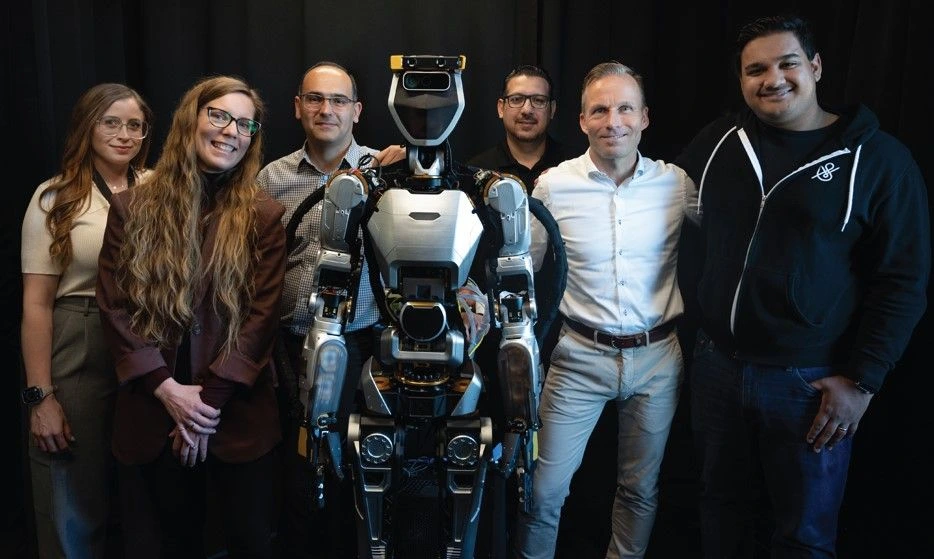
The Carbon AI system is the intelligence layer behind Sanctuary AI’s approach. This research identifies Carbon as the core differentiator for the Phoenix robot and frames it as a cognitive control system, shifting the value proposition from hardware to labor intelligence.
That distinction is commercially important. A robot body has limited value if every task needs custom programming. The stronger model is a robot that can learn skills, apply them across similar work, and improve through supervised experience.
The Carbon AI system connects perception, planning, reasoning, and physical action. The goal is to move beyond arm motion. The goal is to translate work instructions into safe and auditable actions.
This also explains why human-guided task learning remains central. Teleoperation does not mean the robot has failed autonomy. Instead, it creates a training pathway. Human pilots help the robot gather examples, understand edge cases, and build reusable skill data.
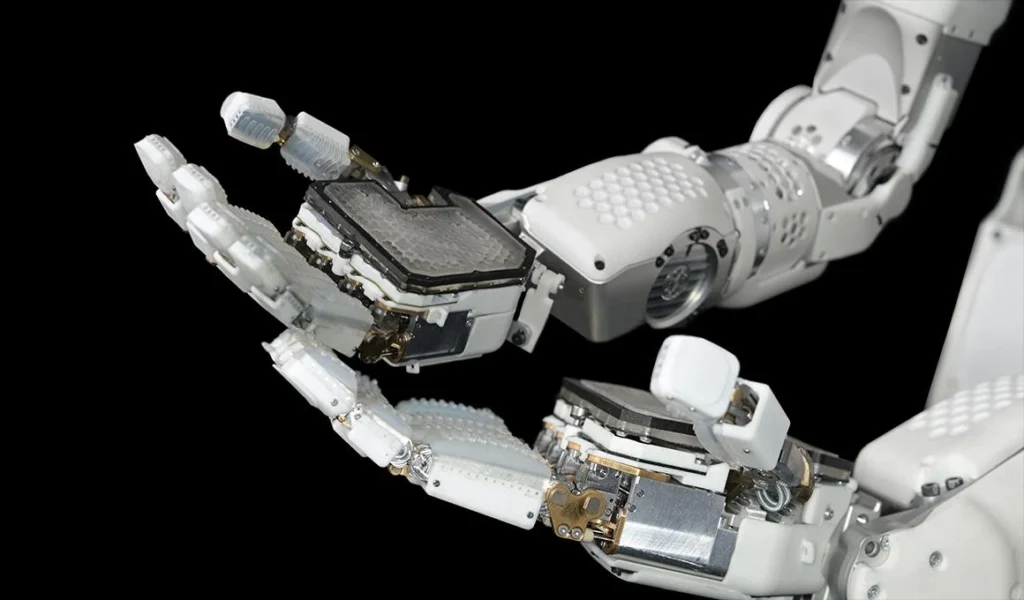
The most important technical signal from Sanctuary AI in 2025 was its focus on dexterous hands. In February 2025, the company announced new tactile sensor technology for the Phoenix robot, designed to improve precision and accuracy in touch-driven tasks. It also said richer tactile data would help embodied physical AI models perform better over time.
This is why robot dexterity matters so much. Vision helps a robot locate an object. Touch helps it understand contact, pressure, slippage, and secure grip. For many industrial jobs, the decisive moment happens after contact.
Dexterous manipulation is difficult because small objects behave unpredictably. A part can slip, rotate, catch on another surface, or require pressure that cameras cannot read well. Better tactile sensing helps close that gap.
The broader news about dexterous hands from Sanctuary AI shows a deeper learning strategy. The company combines tactile data, hydraulic actuation, reinforcement learning, and simulation to improve manipulation. That stack targets the aspect of robotics that often determines commercial viability.
In March 2025, Sanctuary AI said it uses NVIDIA Isaac Lab to train hydraulic hands for advanced manipulation tasks in simulation before real operation. The company also said that simulation allows thousands of hands to train at once, thereby speeding learning.
NVIDIA’s 2025 Isaac Lab research describes the framework as a GPU-accelerated simulation system for multimodal robot learning, supporting contact-rich dexterous manipulation, human demonstrations, reinforcement learning, and domain randomization.
For Sanctuary AI Vancouver, this simulation pathway matters because it gives a Canadian robotics firm a way to compete with faster hardware-iteration ecosystems. The answer is not to outbuild every competitor. The answer is to outlearn in the hardest layer of manipulation.
In April 2026, Sanctuary AI demonstrated zero-shot in-hand manipulation with a proprietary hydraulic hand. The hand reoriented a lettered cube ten consecutive times without dropping it, through fingertip manipulation rather than palm support.
That is a meaningful signal for robot dexterity. Many robots can pick and place an item. Far fewer can change an object’s orientation inside the hand without external support. This skill is important for insertion, tool use, assembly, packaging, inspection, and other industrial routines.
The same 2026 update explains that the policy moved from simulation to physical execution. That suggests Sanctuary software is improving at one of robotics’ hardest bridges: trained behavior in a virtual world and reliable behavior in the physical world.
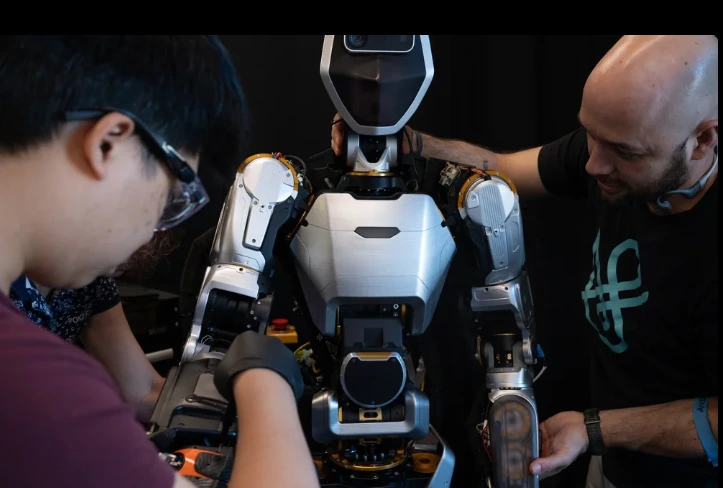
Automotive plants are one of the most logical early environments for Sanctuary AI Phoenix. They have structured workflows, repeatable processes, clear safety requirements, and a long history of automation. At the same time, they still contain tasks that resist fixed automation because parts, tools, and human movement vary across stations.
The same research connects the Phoenix robot to a Magna International partnership and to factory deployment, which makes automotive manufacturing a strong signal of traction rather than a vague future market.
This is the right test for a humanoid robotics company. Automotive work exposes a robot to parts handling, tool interaction, quality checks, logistics support, and process discipline. It also forces the robot to operate within enterprise expectations, rather than lab conditions alone.
The phrase “already in automotive plants” still needs careful handling. The evidence supports controlled industrial rollout and partner-led manufacturing exposure. It does not support broad mass deployment across car factories. That nuance protects credibility.
The case for labor-shortage automation is strongest where the work is repetitive, physically demanding, hard to staff, or subject to high turnover. Sanctuary AI frames its mission around these labor constraints, and its site specifically connects the Phoenix robot to automotive, manufacturing, and logistics.
This does not mean humanoids will replace entire job categories soon. The more realistic path is task-level automation. Robots handle narrow workflows first, then expand as reliability improves.
For warehouse robotics, this may start with object handling, bin interaction, tote movement, inspection support, and tool preparation. For automotive manufacturing deployment, it may begin with controlled stations where dexterity matters more than walking speed.
That is why general-purpose humanoid robots should be evaluated through learning speed, safety, task coverage, and operational fit. Appearance matters less than the ability to repeat useful work.
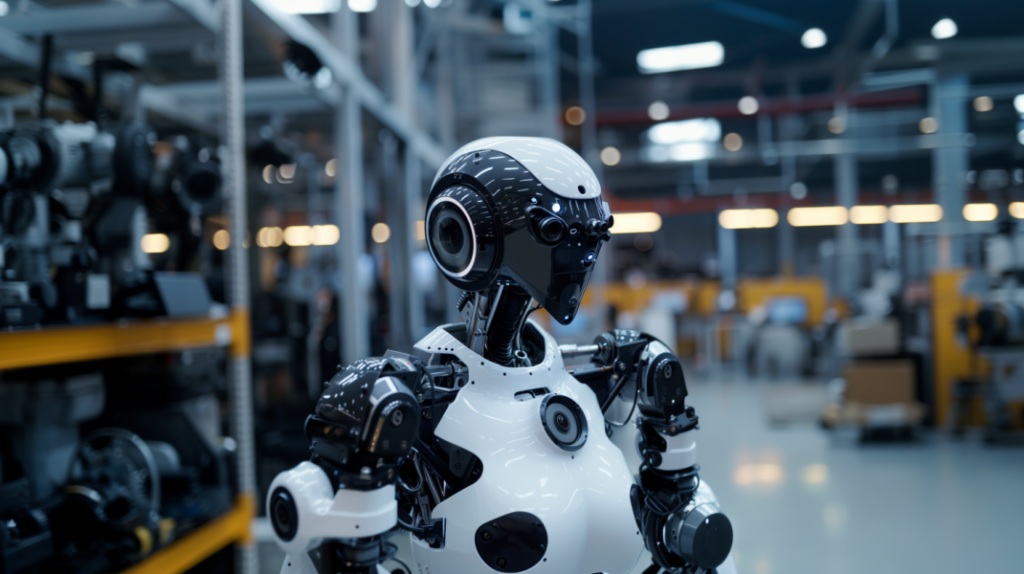
Sanctuary AI also gives the Canadian robotics ecosystem a more visible role in humanoids. Most global attention goes to China, the United States, Germany, and Norway. Yet Sanctuary AI Vancouver shows that robotics companies in Canada can compete through specialized intelligence, patents, and applied manipulation.
That positioning matters for investors and enterprise buyers. AI Startups in Vancouver, Canada, rarely receive the same global visibility as hardware companies in Shenzhen or Silicon Valley. Sanctuary AI sets a different benchmark for the market: deep technical specialization rather than ecosystem scale alone.
The company’s identity as Sanctuary Cognitive Systems Corporation reinforces the long-term focus of the contest on cognitive systems for physical work. Hardware becomes the visible expression.
Sanctuary AI is one of the more serious humanoid players to watch because it targets the least glamorous and most commercially important layer of robotics: hands that can learn work.
The Phoenix humanoid robot is not trying to win through spectacle. It is trying to make manipulation, touch, and cognitive control reliable enough for industrial labor. That makes Sanctuary AI Phoenix relevant for automotive, logistics, manufacturing, retail operations, utilities, telecom, and other sectors where physical work still depends on people.
The real question for 2026 is not which humanoid looks most advanced on stage. The real question is which platform can turn supervised skills into repeatable work inside enterprise environments. On that measure, Sanctuary AI has a distinct story.
Humanoid robotics is moving from concept videos into factories, logistics networks, retail sites, and care environments. For leaders, the real question is how these systems become commercially useful.
ChoZan helps executive teams study China’s innovation ecosystem through research, learning expeditions, briefings, and access to experts.
For companies tracking humanoid robotics, ChoZan offers a clearer way to move beyond headlines. Its China innovation tours include applied AI, robotics, enterprise AI, autonomous mobility, policy context, and commercial use cases in real settings.
To understand where robotics, AI, and physical automation are heading next, book a consultation with ChoZan and build a sharper view of China’s innovation playbook.
No. Sanctuary AI remains a private company, so it does not have a public stock ticker on major exchanges. Investors usually track private market updates, funding news, and potential future IPO signals.
There is no official Sanctuary AI stock symbol for public investors. Private market platforms may reference company shares, but that does not equal a public Nasdaq or NYSE listing.
Sanctuary AI Phoenix robot availability appears enterprise-focused rather than consumer-retail-focused. Public materials position Phoenix for industrial-grade deployment, so interested companies likely need direct commercial discussions with Sanctuary AI.
The official Sanctuary AI Phoenix price is not publicly listed in standard retail channels. Third-party robotics listings describe a contact sales model, which usually means pricing depends on scope, support, and deployment.
Sanctuary AI Phoenix is currently positioned for work environments, not household use. Sanctuary describes its mission as centered on industrial-grade humanoid robots that address labor challenges across business settings.
Sanctuary AI builds mobile humanoid systems for human-designed spaces. Industrial robot arms usually stay fixed in structured cells, while humanoids trade pure speed for mobility, adaptability, and broader task coverage.
Key Sanctuary AI competitors include Tesla Optimus, Figure AI, Agility Robotics, Boston Dynamics, Apptronik, Unitree, and 1X Technologies. Each company targets different deployment strengths, from logistics to manufacturing.
Sanctuary AI appears stronger in hand-focused manipulation and cognitive control. Tesla Optimus has stronger manufacturing scale potential through Tesla’s factory ecosystem. The better choice depends on task complexity, timeline, and deployment model.
Sanctuary AI robots are moving toward greater autonomy, but current humanoid deployments often rely on supervised rollout, training data, and controlled environments. Full independent operation across messy workplaces remains a broader industry challenge.
Companies should assess safety, integration cost, task repeatability, uptime, training needs, and support requirements. Sanctuary robotics may fit best where workflows are structured enough for controlled pilots and measurable ROI.