CONTENT

Founded in 2014 by He Xiaopeng (former CEO of UCWeb), XPeng Motors has quickly become one of China’s most innovative EV manufacturers. The company is expanding globally and filed its first GAAP profit in Q4 2025. XPeng focuses on software‑defined, intelligent EVs supported by its in‑house Turing AI chips and Vision‑Language‑Action (VLA) 2.0 software stack.
Nearly all new XPeng cars use lithium‑iron‑phosphate (LFP) batteries with a 5C ultra‑fast charging rate, enabling a 10 %–80 % charge in about 12 minutes and giving them a safety record with zero battery‑related fires. In 2025, the brand delivered 429,445 vehicles worldwide—a 126% year‑on‑year jump—and shipped 45,008 units overseas—an early sign of its ambition to become a global player.
XPeng cars stand out because the company treats the vehicle as an intelligent platform, not just an electrical product. This strategy links batteries, chips, software, cockpit systems, charging infrastructure, and assisted driving into one controlled technology stack.
That approach matters in China because EV competition has moved beyond battery range. Buyers now compare charging speed, intelligent driving features, cabin software, voice interaction, and long-term update potential.
XPeng has responded by investing in its own Turing AI chips, VLA 2.0 driving software, X World simulation tools, and fast charging battery systems. This gives the brand more control over cost, feature rollout, and product differentiation.
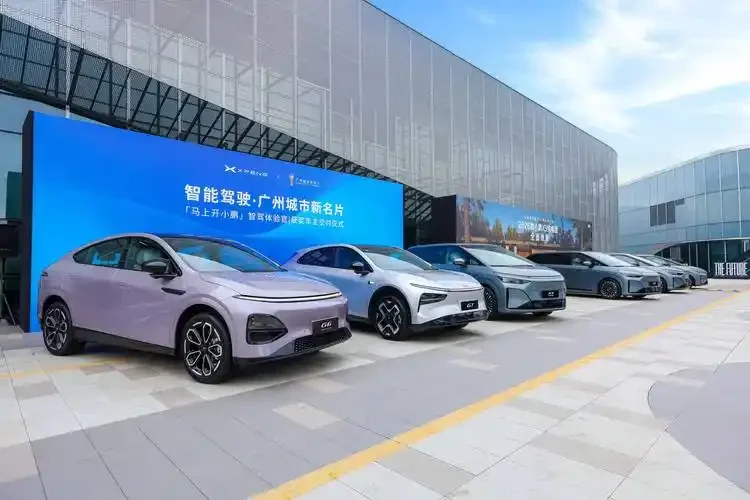
The result is a portfolio that competes across several price bands. MONA M03 targets entry-level smart EV buyers. G6 and G7 compete in mainstream SUV segments. G9, P7 Plus, and X9 move the brand toward premium family, sedan, and MPV categories.
XPeng’s model lineup shows a clear shift from niche smart EV positioning to broader market coverage. Instead of relying on a single flagship, the company now uses SUVs, sedans, MPVs, and lower-priced models to reach different buyer segments.
The G6 and G9 remain important because they represent XPeng’s core smart EV positioning. Both models received major upgrades around charging speed, cabin comfort, and intelligent driving.
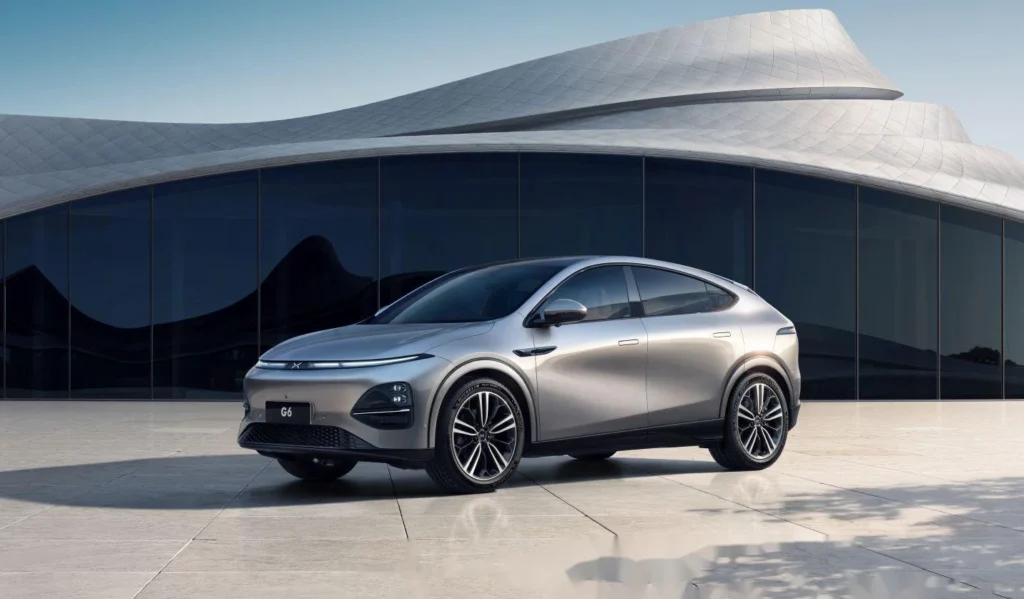
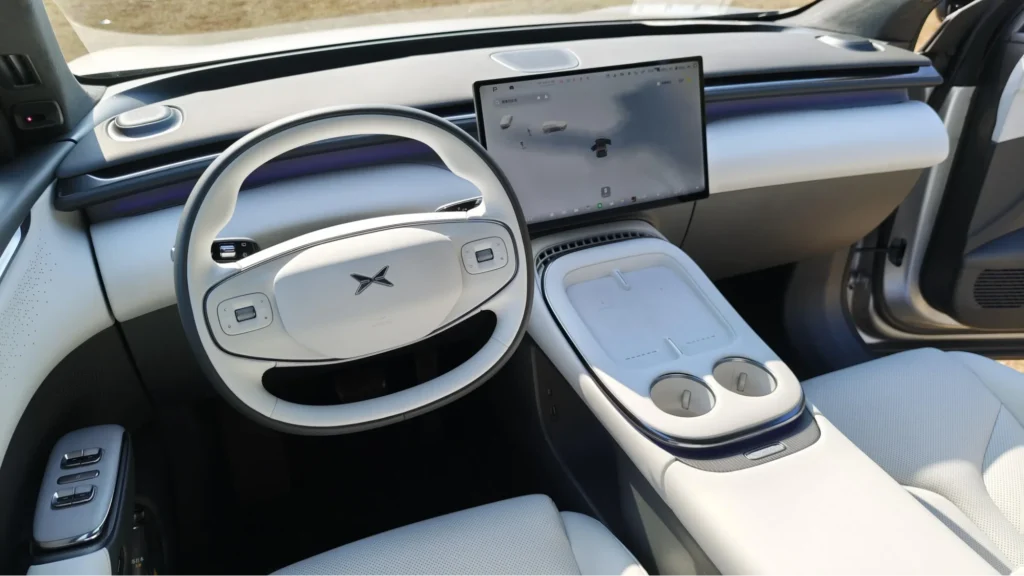
The G6 targets buyers who want a practical electric crossover with strong technology value. Its refreshed design, fast charging capability, and upgraded cockpit make it central to XPeng’s mainstream SUV strategy.
The G9 serves buyers who want a larger flagship SUV with longer range and a more premium cabin. It also strengthens XPeng’s position in the higher-end SUV segment.
The G7 adds another layer to XPeng’s SUV strategy. It launched in 2025 as a mid-size electric SUV priced from RMB 195,800.
With an 800 V platform, 5C charging, and up to 702 km CLTC range, it directly targets the competitive family SUV segment. More importantly, it shows how XPeng wants to bring advanced AI hardware into more accessible models.
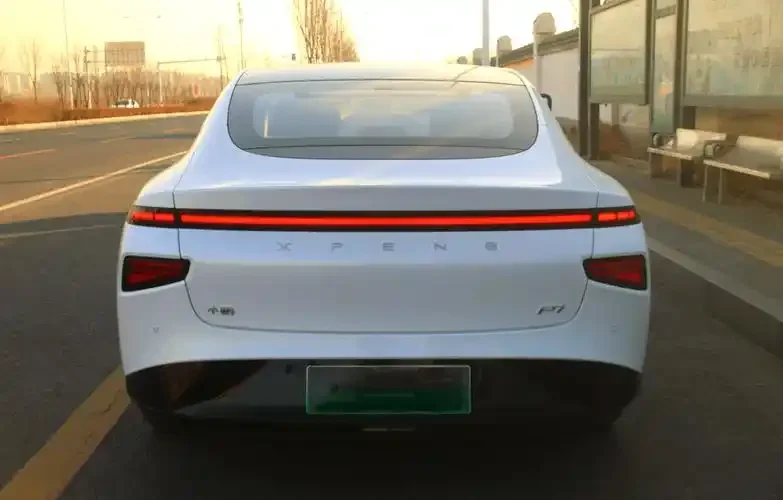
The P7 and P7 Plus give XPeng a stronger identity as a sedan. The original P7 built the brand’s sporty EV image through performance, design, and software features.
The P7 Plus adds more AI-focused positioning and stronger global market relevance. For Europe, XPeng has prepared local assembly through Magna Steyr in Austria, which helps reduce tariff pressure and shorten delivery timelines.
The X9 addresses a different market need. It is a seven-seat electric MPV built around family travel, executive transport, flexible seating, cabin comfort, and software-controlled interior modes.
In China, this matters because premium MPVs remain popular among families and business users. The X9 also helps XPeng compete beyond sedans and SUVs, where many Chinese EV brands already crowd the market.
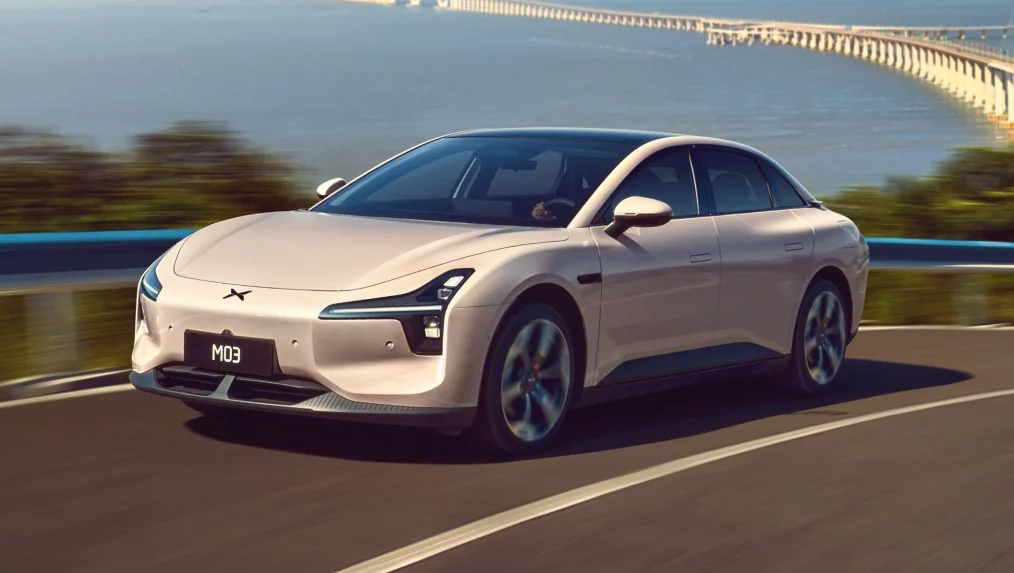
MONA M03 is the most important volume signal in XPeng’s lineup. It became XPeng’s best-selling model in 2025, with 175,689 deliveries.
That accounted for 41 percent of XPeng’s total deliveries, underscoring how much the brand now depends on broader affordability. The model also helps XPeng extend smart EV features to buyers who do not want to pay a premium.
The strategic point is clear. XPeng no longer wants smart driving to be limited to expensive models.
Instead, it is trying to push AI hardware, cockpit functions, fast charging, and connected features into more accessible price bands. This gives XPeng a wider growth path as China’s EV market becomes more competitive.
Fast charging is central to XPeng’s strategy because it reduces one of the biggest barriers to EV adoption. Range matters, but charging time affects daily confidence, road trip convenience, and buyer perception.
XPeng uses LFP batteries across most of its new vehicles and has pushed 5C ultra-fast charging to more models. In practical terms, this allows several XPeng cars to recharge quickly enough to compete with the convenience of fuel-powered vehicles in many daily scenarios.
This matters especially in China’s crowded EV market. When many brands offer a similar range and cabin features, charging speed becomes a visible point of difference. It also supports XPeng’s claim that smart EV value should not be limited to luxury models.
Battery safety also supports the brand story. XPeng says most of its new vehicles use LFP batteries and points to battery monitoring, risk prediction, side impact protection, and thermal safety as part of its system design.
The larger lesson is that XPeng treats charging as an infrastructure strategy, not only as a technical feature. A faster charging vehicle becomes more useful when charging networks, battery chemistry, and software monitoring work together.
XPeng developed the Turing AI chip to reduce reliance on third-party suppliers and support its own smart driving stack.
Computing power: about 700 TOPS
Neural processing: two in-house NPUs
Safety hardware: independent safety island
Perception hardware: dual image signal processors
Model support: up to 30 billion parameters
Main use: assisted driving and large model processing
The chip enables XPeng to run advanced driving models directly in the car. It also gives XPeng more control over cost, supply, and future software updates.
XPeng VLA 2.0 launched through an OTA update in March 2026. It uses an end-to-end vision-to-action model that converts camera data into driving commands.
Launch: March 2026
System: Vision Language Action 2.0
Computing power: up to 2,250 TOPS
Training data: 100 million extreme driving clips
Driving efficiency: 23 percent improvement
Hard braking: 99 percent fewer events
External customer: Volkswagen China
VLA 2.0 removes separate perception, planning, and control steps. This helps XPeng shorten the path from camera input to driving response.
X World supports VLA 2.0 testing before deployment. It simulates future road scenes from multi-camera inputs and driving commands.
XPeng used its 2025 AI Day to show how its AI strategy extends beyond cars. Next Gen IRON is a humanoid robot with a humanoid spine, bionic muscles, flexible skin, and 82 degrees of freedom. It uses three Turing AI chips with 3,000 TOPS and runs XPeng’s physical world large model.
The robot combines VLT, VLA, and VLM capabilities for conversation, walking, and interaction. XPeng uses an all-solid-state battery in IRON and aims to reach mass production by late 2026. Planned use cases include shopping malls and industrial inspections.
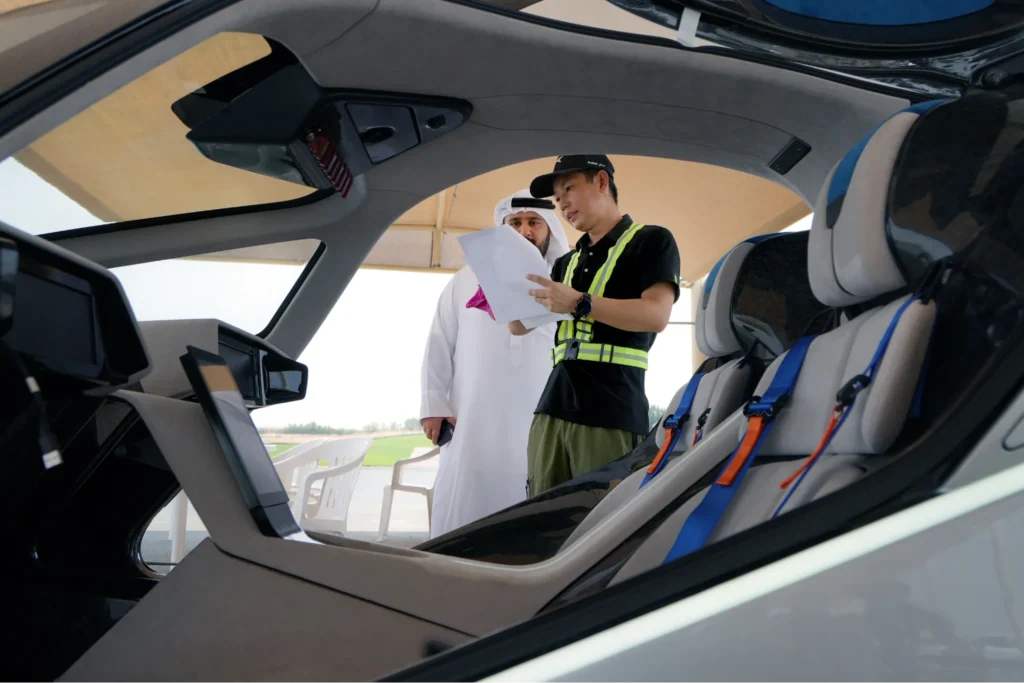
XPeng is also developing flying cars through ARIDGE. Its Land Aircraft Carrier entered trial production in November 2025. These projects show XPeng’s expansion from smart EVs into physical AI mobility.
XPeng’s global expansion is becoming increasingly important as Chinese EV makers seek growth beyond China’s crowded domestic market. Europe, Southeast Asia, and selected new markets give XPeng room to test its premium smart EV positioning.
By the end of 2025, XPeng had expanded its global footprint to 60 countries and regions. Its overseas deliveries reached 45,008 vehicles for the full year, up 96 percent from the previous year.
Europe is especially important. XPeng has entered more European countries, prepared local assembly with Magna Steyr in Austria, and expanded its store network. Local assembly can help with tariffs, logistics, and market confidence.
The Volkswagen partnership adds another strategic layer. Volkswagen invested in XPeng in 2023, and both companies have since expanded cooperation around electrical and electronic architecture. This gives XPeng a way to scale its technology through a global legacy automaker.
The partnership also strengthens XPeng’s credibility. For Volkswagen, XPeng offers China speed and smart EV technology. For XPeng, Volkswagen offers scale, manufacturing knowledge, and international validation.
XPeng grew quickly in 2025, but it remains a challenger in China’s NEV market. BYD led the market with 27.2% share, while Tesla ranked fifth with 4.9%. XPeng stayed outside the top ten because its total volume remained lower.
However, XPeng competes in premium mass market EV segments. The G7 targets Tesla Model Y buyers with faster charging, stronger computing power, and a lower price. Updated G6 and G9 models, with 5C charging and improved AI features.
XPeng’s self-developed chip strategy also separates it from Nio and Li Auto, which still rely more on third-party chips.
XPeng aims to blend high‑volume sales with premium technology. The company builds almost all critical components in‑house—from the Turing chips and X‑World simulator to battery packs and software—allowing it to control costs and update features over‑the‑air. Partnerships with Volkswagen broaden its addressable market by applying XPeng’s E/E architecture to gasoline and plug‑in hybrids.
Looking ahead, XPeng plans to launch four new models in 2026, expand VLA 2.0 across its line‑up, and continue its European rollout. The company’s physical AI initiatives—humanoid robots and flying vehicles—suggest a long‑term vision beyond traditional automobiles. By combining advanced hardware, AI‑driven software, and global manufacturing, XPeng is positioning itself as a leading mobility innovator.
XPeng’s rise shows how China’s EV market is becoming a testing ground for AI chips, fast charging, software-defined vehicles, robotics, and global mobility strategy. For leaders outside China, the real value is not only tracking one company. It is understanding how these systems reshape competition, product design, supply chains, and consumer expectations.
ChoZan helps global executives, innovation teams, and strategy leaders decode China’s fast-moving technology ecosystem through research, briefings, workshops, and learning expeditions. From smart EVs and autonomous driving to AI infrastructure and new mobility models, ChoZan turns complex market shifts into clear business insight that leaders can apply with confidence.
Book a ChoZan briefing or learning expedition to see how China’s smart EV and AI mobility ecosystem can inform your next strategic move.
XPeng is not only a luxury car brand. It sells smart EVs across different price levels, from affordable models like MONA M03 to premium options like G9, X9, and P7 Plus.
Yes, XPeng cars are sold outside China. The company has expanded into Europe, Southeast Asia, and other international markets as part of its global smart EV strategy.
Some XPeng models are priced below comparable Tesla models in China. The G7, for example, targets Model Y buyers with strong charging, range, and AI features at a lower starting price.
XPeng mainly focuses on electric vehicles, but it has also previewed range-extended models. This gives the company more flexibility for buyers concerned about charging access.
XPeng is best known for smart EV technology, advanced driver assistance, fast charging, AI cockpit features, and its push toward software-defined vehicles.
XPeng focuses more on smart driving, in-house AI chips, and fast charging. NIO focuses more on premium service, battery swapping, and the user community.
XPeng focuses on smart EV technology and autonomous driving systems. Li Auto is stronger in family SUVs and range-extended electric vehicles.
Yes, several XPeng cars are suitable for families. The X9 MPV, G9 SUV, G7 SUV, and MONA M03 cover different family needs in terms of space, comfort, range, and price.
XPeng is investing in humanoid robots to apply its AI, chips, sensors, and physical world models beyond cars. This supports its broader physical AI strategy.
XPeng’s biggest challenge is turning advanced technology into stable profits and global scale. It must compete with larger EV makers while funding chips, software, charging, and expansion.