CONTENT

The conversation about humanoid robots is moving from spectacle to operational discipline. This article adopts that deployment lens by examining Agility Robotics, the company behind Digit, and the warehouse conditions that make its progress meaningful.
The real story is practical: can a humanoid robot deployment enter human-designed spaces, handle repetitive material handling tasks, connect with existing systems, and deliver measurable ROI for operators?
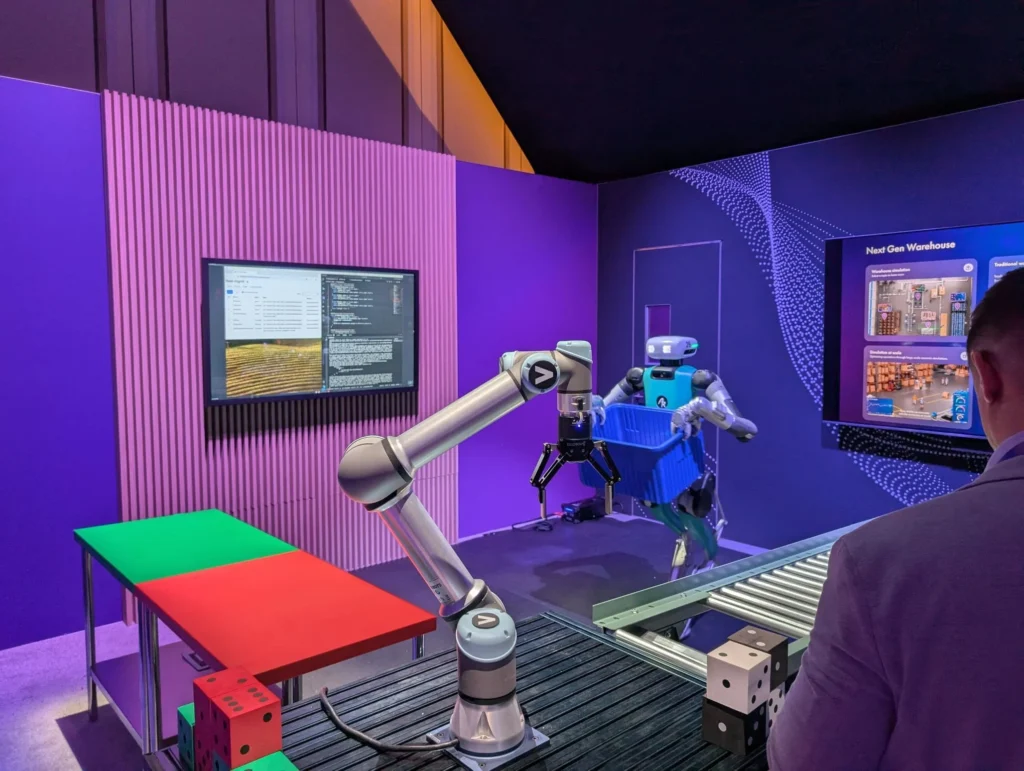
Agility Robotics matters because it has focused the humanoid category on paid industrial work. The company’s current positioning states that Digit is the first humanoid robot in production deployment, while Agility Arc is the cloud platform that runs it across facility floors, with a clear focus on ROI and safety.
That framing separates Agility Robotics from humanoid projects that still depend on stage demos. For executives, the value lies in a simple operational question. Can the machine help warehouses and factories handle work that remains difficult to staff, physically repetitive, and hard to automate with fixed systems?
Digit is a bipedal robot built for logistics work, tote handling, and repetitive movement in facilities already designed around people. The Digit robot walks, lifts, and moves material through aisles and workflows without demanding a full redesign of the warehouse floor.
This is the core Agility Robotics Digit proposition. The body shape matters because many warehouses were built around human reach, walking paths, totes, carts, conveyors, and workstations. A bipedal robot can enter those spaces more naturally than large fixed automation.
Agility describes Digit as a robot that can work in spaces where people already work. Its current solution material also states that the robot can address difficult workflow segments using interchangeable end effectors and AI-based learning.
Warehouse work gives Agility Robotics a practical entry point because the environment has repeated tasks, structured flows, measurable throughput, and constant pressure on labor availability. That makes it a better proving ground than open consumer settings, where variability can overwhelm early humanoid systems.
The work also suits facility floor automation. Moving totes from one machine to another, loading conveyors, and supporting packout flows are narrow enough to measure. At the same time, they still require mobility and manipulation that many conventional automation tools cannot handle on their own.
GXO Logistics 2025 testing gives a useful reality check. Business Insider reported that Digit was working in a GXO-operated Spanx warehouse in Atlanta, moving heavy containers from a 6 River Systems robot to a conveyor belt. The same report noted that GXO was testing humanoids from several companies, while Digit had shown the most progress in that program.
Agility Arc matters because humanoid value depends as much on orchestration as on movement. Agility describes Arc as a cloud-based automation platform that connects Digit with existing warehouse automation, including AMRs, management systems, and warehouse execution systems.
That makes fleet management central to the story. A single Agility robot can perform a task, but a warehouse needs monitoring, workflow assignment, exception handling, service support, and performance visibility. Arc gives operators the control layer needed for multi-site learning and repeatable deployment.
The March 2025 updates made this direction clearer. Agility said Arc could deploy and communicate with AMRs and their related platforms, while support expanded to chargers, workcell emergency systems, webhook integration, remote monitoring, MES, WMS, WES, and PLC integration.
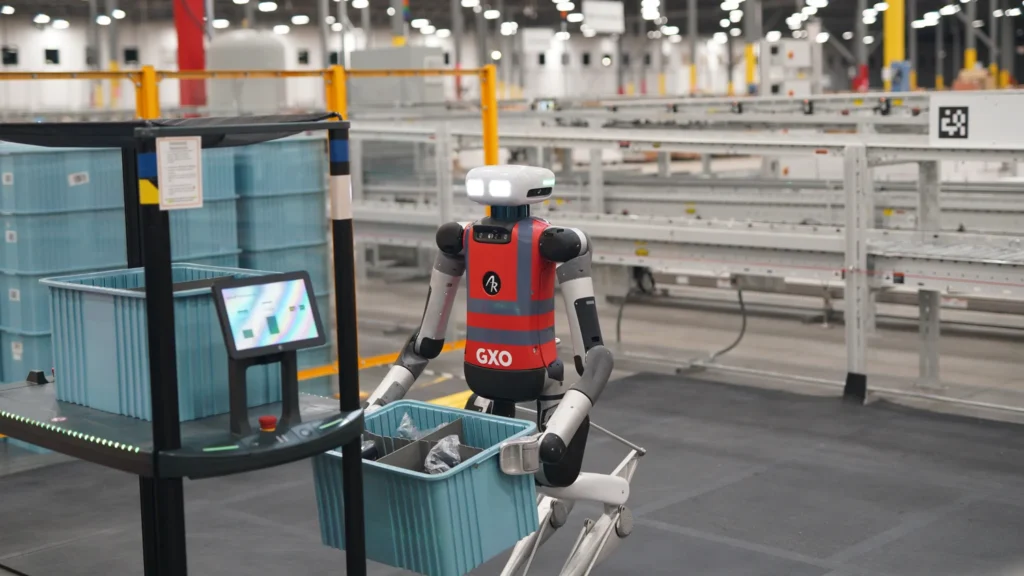
Commercial progress gives the strongest signal for Agility Robotics. In November 2025, Agility said Digit had moved over 100,000 totes at GXO’s Flowery Branch facility. That matters because throughput across thousands of cycles gives buyers a stronger basis for evaluating uptime, task repeatability, and ROI.
Mercado Libre added another proof point in December 2025. The company announced a commercial agreement with Agility to integrate Digit robots into a San Antonio fulfillment facility, with the initial focus on commerce fulfillment tasks and possible expansion across Latin American warehouses.
Toyota Motor Manufacturing Canada then expanded the industrial lens in February 2026. After a successful pilot, TMMC signed a Robots-as-a-Service agreement to deploy Digit across facilities that support manufacturing, supply chain, and logistics operations.
AMR integration is one of the most important parts of the Agility Robotics humanoid robot story. Agility states that humanoids and AMRs have complementary strengths: humanoids are suited to manipulation and human-designed spaces, while AMRs handle longer transport routes.
This is where Agility Digit becomes more than a walking machine. The 2025 updates showed Digit working with AMRs from MiR and Zebra Technologies, while Arc gained the ability to call and dispatch AMRs to tasks. That turns the robot into a single node within a broader automation network.
For executives, this matters because warehouse automation rarely fails due to a single weak robot. It often fails when systems do not hand off work cleanly. The useful question is how the humanoid receives tasks, coordinates with AMRs, reports exceptions, and supports throughput.
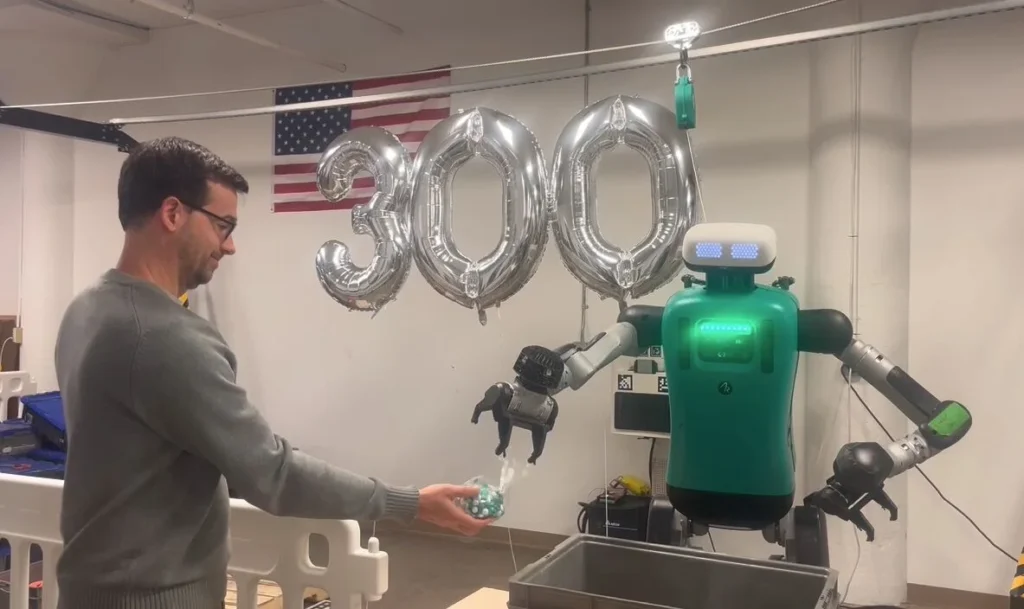
A serious evaluation of Digit, the robot from Agility Robotics, should begin with the task at hand. Buyers should identify the movement pattern, object type, tote weight, route complexity, exception frequency, and handoff points before they assess pilot scope.
Next, evaluate the operating model. A pilot should measure cycles completed, intervention rate, downtime, charging behavior, service response, worker interaction, and effect on adjacent workflows. These numbers show more than a polished demo ever can.
The integration checklist also needs depth. Buyers should review WMS and WES connectivity, AMR handoffs, network reliability, safety rules, floor markings, emergency stop procedures, and change management for associates. The best pilot tests the entire workflow rather than a single robot motion.
Commercial structure matters as well. Robots as a Service can make adoption easier by shifting attention from machine ownership to uptime, support, and workflow output. That model also suits a market where skills, software, and safety practices will continue to improve across deployments.
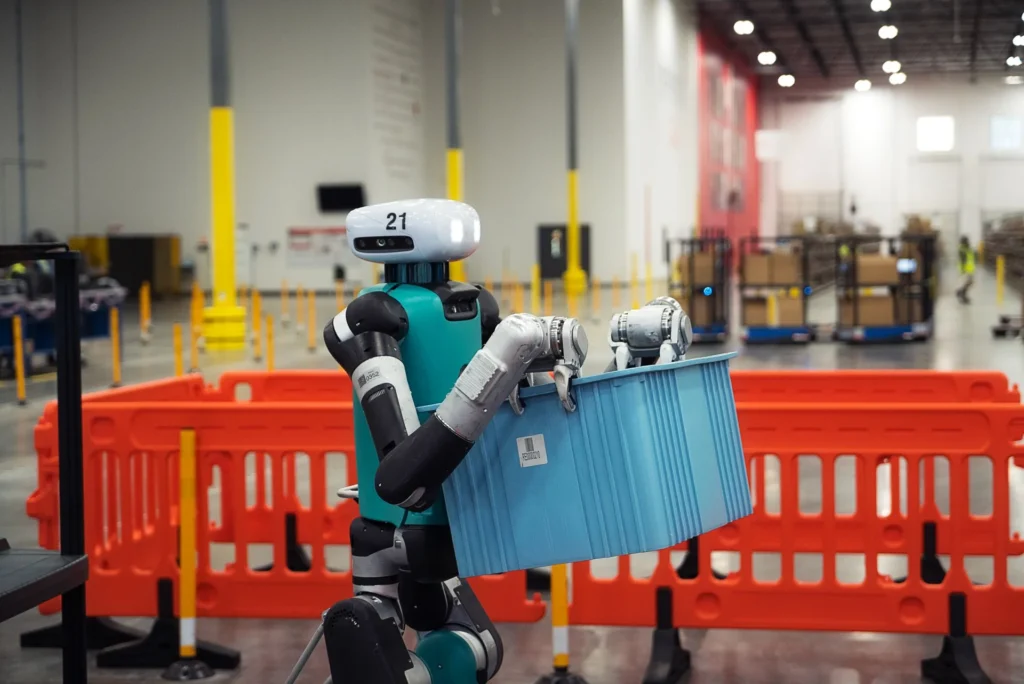
Agility Robotics signals that the next phase of humanoid robotics will reward companies that combine hardware, fleet software, service support, customer workflows, and repeatable deployment. The strongest systems will work reliably inside demanding operations, with human appearance treated as secondary.
That is why Agility Robotics Digit humanoid robot deserves close attention in 2026. Digit is entering facilities where throughput, safety, uptime, and integration matter every day. This gives the company a sharper commercial story than humanoids built mainly for public attention.
The broader lesson for senior leaders is clear. Humanoid robotics will scale through practical work cells, measurable use cases, fleet control, and operational trust. Agility Robotics is one of the companies testing that path on warehouse floors right now.
Humanoid robots are no longer a distant technology story. They are becoming part of real warehouse, manufacturing, and logistics decisions. For global leaders, the bigger question is how to read these shifts early and understand what they mean for business models, operations, talent, and competitive advantage.
ChoZan helps executive teams learn from China’s fast-moving innovation ecosystem through research, China learning expeditions, innovation tours, workshops, and expert-led strategy sessions. From AI and robotics to smart manufacturing and digital transformation, ChoZan gives leaders direct context on how emerging technologies move from pilot projects into commercial systems.
If your team wants to understand where automation, humanoid robotics, and intelligent operations are heading next, book a consultation with ChoZan. Learn from China’s innovation ecosystem, translate signals into strategy, and build a clearer view of what comes next.
No, the Digit robot is not sold like a consumer gadget. Agility directs companies to deploy Digit through an enterprise process, so buyers should expect a facility review, use case scoping, and commercial discussion.
Public pricing for Agility Robotics Digit is not listed on Agility’s site. Recent buyer-oriented coverage reports that enterprise cost can depend on purchase or rental terms, deployment length, support, and utilization.
The Agility robot is assembled in Salem, Oregon. Agility says that roughly 80 percent of Digit’s nearly 6,000 parts come from the United States, supporting supply chain resilience for enterprise deployment.
Current official specs say Agility Digit carries 35 pounds and runs for 4 hours. That gives buyers a practical starting point for task selection, shift planning, charging windows, and payload screening.
NVIDIA supports Digit Agility Robotics through simulation and robot learning tools. Agility said in 2025 that NVIDIA hardware and software were integrated into Digit training and simulation workflows for development speed.
Agility Arc is the cloud control layer behind Digit Robot deployments. It gives operations teams fleet visibility, task assignment, productivity metrics, role-based access control, encrypted communications, and system integration.
Buyers evaluating agility robots should ask about risk assessment, emergency stops, human proximity rules, protected work zones, operator training, cybersecurity, and service response. Safety readiness matters before any humanoid moves near people.
The Agility Robotics humanoid robot has stronger public evidence of its use in warehouse work today. Tesla Optimus carries a broader ambition. Current enterprise buyers still compare proven deployment, safety posture, integration tools, and support model first.
No, Agility Arc is presented as an enterprise cloud platform, not a public app store download. The Amazon Digit robot story points to workplace automation integration rather than a consumer software experience.
Future growth of Agility Robotics’ Digit humanoid robot will likely come from new manipulation skills, safer human proximity, better AI learning, and wider manufacturing workflows. Agility’s 2026 resources already point toward simulation and capability expansion.