
CONTENT

Ecommerce in China is the world’s largest digital retail market by any measure. It reached an estimated $2.42 trillion in 2025. China accounts for more than 50% of all online transactions globally. By 2035, projections place it at $5.68 trillion.
But scale alone does not explain why China’s ecommerce market matters to global executives. The structure matters more. China built a digital commerce model that is fundamentally different from anything operating in Western markets. It runs on different platforms and a different payment infrastructure. Consumer behaviors were shaped by different cultural and technological conditions.
Understanding all three layers is essential before any global business can operate effectively in China’s digital economy.
China’s ecommerce did not evolve from desktop retail. Chinese consumers went directly from cash to mobile digital commerce. This leapfrog created a commerce model built natively for smartphones, social interaction, and instant payment.
The result: shopping, entertainment, social connection, and financial services share one interface. A consumer discovers through a livestream, consults community reviews, purchases in one tap, and receives delivery within hours.
This integration is not a feature. It is the architecture. Understanding China artificial intelligence capabilities helps explain how platforms personalize this experience at enormous scale.
China’s ecommerce does not have a single dominant platform the way Western markets have Amazon. It has a competitive multi-platform ecosystem, with each major player occupying a distinct strategic position.
Alibaba operates China’s largest ecommerce network through three complementary platforms. Taobao is China’s largest consumer-to-consumer marketplace. It has approximately 938 million monthly active users and about $585 billion GMV in 2025. Tmall is a brand-to-consumer marketplace preferred by international brands and premium domestic sellers, generating about $568 billion GMV. 1688.com serves business-to-business wholesale trade.
Together, Alibaba’s platforms command approximately 44% of China’s ecommerce market. Alibaba Cloud powers the personalization and logistics intelligence behind these platforms. The Cainiao logistics network committed CNY 15 billion to expand fulfillment infrastructure across Southeast Asia in December 2025.
Tmall is the standard entry point for international brands. It requires product compliance and either a local entity or a Tmall Global account for cross-border merchants.
JD.com operates a B2C model with direct inventory ownership, which differentiates it from Alibaba’s third-party marketplace approach. JD generates more revenue than Alibaba due to its first-party model. It recorded approximately $547 billion GMV in 2025 and over 700 million monthly active users.
JD’s competitive advantage is logistics. Its 1,400-warehouse network achieves 90% same-day or next-day delivery coverage in tier-1 and tier-2 Chinese cities. For premium electronics, appliances, and fresh food, JD’s delivery reliability makes it the preferred platform for quality-sensitive shoppers.
JD Worldwide serves international brands entering China without a local entity.
Pinduoduo reached 911 million users and approximately $780 billion GMV in 2025. It grew by reaching price-sensitive shoppers in lower-tier cities and rural areas that Alibaba and JD had underserved.
Its group-buying model lets consumers form buying teams to unlock lower prices. Social sharing is the marketing engine. Pinduoduo grew from 7.2% market share in 2019 to 23.1% by 2024 (Deep Research Global, 2026). It overtook JD.com and is closing rapidly on Alibaba.
In 2024, parent company PDD Holdings briefly surpassed Alibaba’s market capitalisation. PDD Holdings’ trailing twelve-month revenue reached $58.06 billion as of March 2026. In late 2025, Pinduoduo entered instant retail.
It targeted 20 million daily transactions and coverage across all major Chinese cities. Its parent company also operates Temu globally, bringing the same value-pricing model to international markets. For global brands, Pinduoduo is a market to monitor closely. Its price-compression dynamics reshape consumer expectations across every category it enters.
Douyin is China’s TikTok. It generated approximately $656 billion GMV in 2025 with over 750 million monthly active users. Commerce is embedded inside short-form video and livestreaming. A viewer watching a product demonstration can purchase in the same session without leaving the video.
Chinese Gen Z consumers spend much of their discovery time on Douyin. For brands targeting younger demographics, it is now essential.
Xiaohongshu (Little Red Book) completes the landscape as a social-discovery platform combining content with commerce. It is effective for beauty, fashion, and lifestyle brands using influencer-driven storytelling.
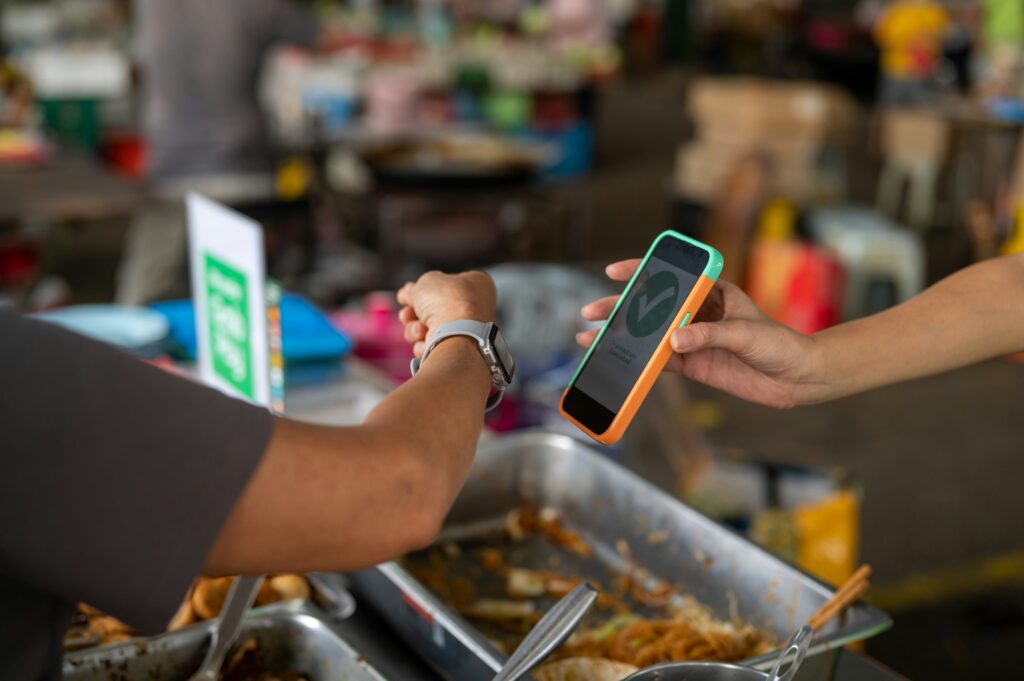
China’s payment infrastructure is the most consequential difference between its ecommerce model and Western markets. It moved directly from cash to mobile wallet. That transition produced a payment system more integrated and frictionless than anything in the West.
Alipay and WeChat Pay control over 90% of digital transaction volume. Alipay and WeChat Pay combined processed an estimated $20.1 trillion in payment volume in 2025 (ACI Worldwide). China generated $10.96 trillion in digital payment transactions in 2026, representing 40.8% of the global total. Mobile payment penetration reached approximately 969 million people in China. Rural penetration reached an estimated 65% in 2025, up from significantly lower levels a decade ago.
Alipay, operated by Ant Group (Alibaba’s fintech arm), is the dominant platform for ecommerce transactions. It offers wealth management through Yu’e Bao, micro-loans through Huabei, and cross-border payment in over 50 currencies. In April 2025, Ant Group acquired a Hong Kong securities firm for $362 million, reinforcing Alipay’s global ambitions.
WeChat Pay, operated by Tencent, dominates social payments and offline transactions. It is embedded inside WeChat, so payments occur within the same app as conversations. Over 95% of physical merchants accept both platforms. Public transportation in over 300 cities supports both.
Integrating both Alipay and WeChat Pay is not optional for any business in China. It is the baseline. Over 90% of mobile payment transactions use QR codes.
The Greater Bay Area, including Hong Kong and Shenzhen, has become the hub for cross-border payment infrastructure. International visitors can now link Visa or Mastercard to Alipay and WeChat Pay. This removes a historic barrier to Chinese retail access.
The digital yuan (e-CNY) is in phased deployment since 2020. It integrates with the existing digital payment ecosystem and is accepted by major platforms. Its full commercial scale remains an evolving policy priority.
China’s consumer behaviors in ecommerce reflect a market where mobile, social, and commerce are inseparable. Several patterns are distinctive enough to require explicit understanding.
Live commerce is mainstream. Approximately 600 million Chinese viewers (55% of all internet users) have shopped through live video streams. Livestreaming is not a novelty or an experimental channel. It is a primary commerce format. Brands use it for product launches, flash sales, and influencer-hosted demonstrations. Platforms including Taobao Live, Douyin, Kuaishou, and Xiaohongshu all offer native livestream commerce.
Social trust drives purchase decisions. Peer validation, KOL endorsements, and community reviews carry more weight than advertising. A product review from a trusted community member or influencer carries more weight than brand advertising. This is why Xiaohongshu’s community-driven content produces high purchase intent. Brands entering China without a social content strategy face a structural disadvantage.
Price sensitivity and premium coexist. The Chinese market is not homogeneous. JD attracts quality-seeking shoppers willing to pay for authenticity and fast delivery. Pinduoduo captures price-sensitive shoppers looking for maximum value. Tmall hosts premium global brands alongside accessible mid-market options. A brand’s platform selection must reflect where its target consumer segment actually shops.
Mobile is the primary and often the only channel. Over 80% of consumers use online payment methods. Mobile commerce dominates. The digital transformation of Chinese retail happened entirely through the smartphone, not the browser. Any platform experience, brand presence, or customer service interaction must be designed mobile-first.
Singles’ Day defines annual commerce peaks. The 2024 event generated approximately 1.44 trillion yuan ($197 billion) across platforms, a 26.6% increase year-on-year. 45 brands, including Apple and Nike, each surpassed 1 billion yuan in Alibaba platform sales alone. Planning for Singles’ Day, 618, and Double 12 is an essential part of any China ecommerce strategy.
Lower-tier cities represent the growth frontier. Tier-1 cities have very high ecommerce penetration. The next wave is coming from tier-3, tier-4, and rural markets. Pinduoduo pioneered this segment. Alibaba and JD are now investing in logistics to reach these consumers. Any brand needs to understand which tier it is targeting.
Platform selection, payment integration, and social content strategy are all interdependent in China. None works without the others.
Platform selection is strategic, not arbitrary. Tmall is the standard entry point for premium international brands. JD Worldwide suits brands where logistics reliability matters. Douyin suits brands targeting younger consumers through content. Xiaohongshu suits beauty and lifestyle brands with visual storytelling. The platforms are not interchangeable.
Payment integration is the entry ticket. Without Alipay and WeChat Pay, conversion rates will be low regardless of platform. Cross-border merchants need licensed payment service providers.
Community and content are not optional. Consumer trust in China is built through community interaction, not advertising. Without Xiaohongshu content, Douyin livestreaming, or KOL partnerships, a brand struggles to build the trust Chinese consumers require.
Understanding China’s ecommerce market from the inside requires access beyond market reports. ChoZan connects global executives to the platforms, practitioners, and ground-level intelligence needed to operate effectively.
Book a consultation with ChoZan and start learning from China’s ecommerce innovation frontier today.
Ecommerce in China is structurally different. Different platform architectures. A payment infrastructure that replaced cash rather than cards. Consumer behaviors shaped by mobile-first and social-first commerce.
Businesses that succeed in China understand each layer and design their strategy around all three together. ChoZan is the bridge.
China’s ecommerce market reached an estimated $2.42 trillion in 2025. China accounts for more than 50% of all online transactions globally. The market is projected to grow to $5.68 trillion by 2035.
The four dominant platforms are Alibaba (Taobao and Tmall), JD.com, Pinduoduo, and Douyin. Alibaba holds approximately 44% market share. JD.com holds approximately 24%. Pinduoduo has grown to approximately 19%. Douyin is the fastest-growing content-commerce platform.
Alipay and WeChat Pay control over 90% of China’s digital payment volume. QR-code payments are the default method for both online and in-store transactions. Mobile wallets account for 72.72% of total payment value. Cash is largely absent from everyday commerce.
Live commerce combines real-time video streaming with integrated purchasing. Approximately 600 million Chinese shoppers have purchased through live streams. Platforms including Taobao Live, Douyin, and Kuaishou all offer native livestream commerce. It is a primary channel, not an experimental one.
The typical entry points are Tmall Global or JD Worldwide for cross-border merchants. Brands establishing a local presence use Tmall or JD.com directly. Social content strategy on Xiaohongshu and Douyin is essential. Alipay and WeChat Pay integration is required for any consumer-facing commerce.