CONTENT

GWM Cars matter in 2026 because Great Wall Motor has moved beyond the old export story. The company now competes through SUVs, plug-in hybrids, battery electric vehicles, off-road models, pickups, and localized global expansion.
In 2025, GWM sold 1,323,672 vehicles worldwide, including 403,653 NEVs and 506,066 overseas units. Those figures make GWM Cars a stronger signal of China’s next export phase, where flexible powertrains matter as much as pure electric ambition.
For global executives, the story of Great Wall Motor Company offers a useful lesson. China’s automotive competition no longer runs through a single model, a single technology, or a single market.
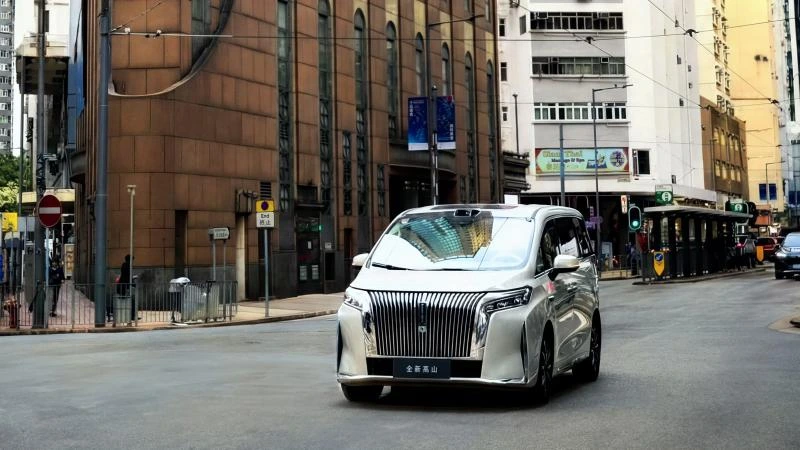
GWM stands for Great Wall Motor, one of China’s most important automakers and a global mobility group with brands across SUVs, pickups, NEVs, motorcycles, heavy-duty trucks, and luxury off-road vehicles. Its current portfolio includes GWM HAVAL, GWM WEY, GWM TANK, GWM ORA, GWM POER, and GWM SOUO.
ORA addresses urban electric driving. Haval carries a mainstream SUV scale. WEY supports premium family mobility. Tank gives the group a distinctive off-road identity. That structure gives GWM room to adjust across regions where charging access, buyer trust, incentives, and vehicle use cases differ sharply.
That breadth explains why search interest for GWM Cars often includes a range of buyer questions. Some users search for a compact electric model. Others look for an SUV, a hybrid family car, a pickup, or a rugged off-road option. A single GWM car can be driven by very different purchase logic depending on the brand, market, and powertrain.
The company’s own European positioning now uses the line “All Scenarios, All Powertrains, All Users.” That phrase captures the current strategic direction. Great Wall Motor aims to meet multiple driving needs through ICE, HEV, PHEV, BEV, and hydrogen fuel cell options.
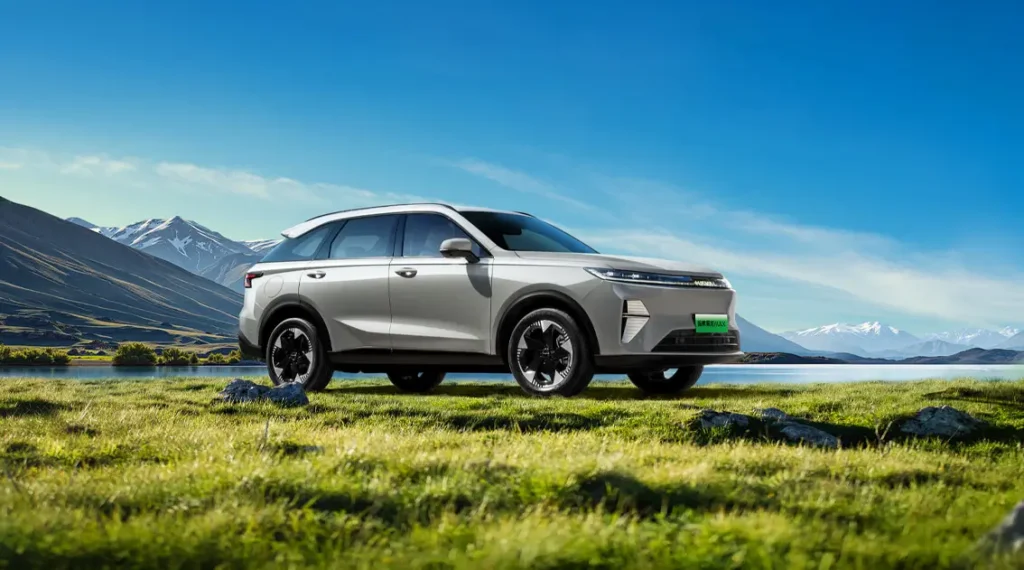
GWM Cars are gaining attention because the company achieved record scale in 2025 while expanding overseas and raising NEV volume. Its 2025 global sales rose 7.33 percent, NEV sales increased 25.44 percent, and overseas sales reached another record.
The numbers matter because Great Wall Motors’ cars do not depend on a single growth engine. Haval remains the volume anchor. WEY had the strongest brand growth in 2025, with full-year sales of 101,954 units, up 86.29 percent. Tank stayed highly visible in the boxy SUV and off-road category, with 232,713 vehicles sold in 2025. ORA remained the dedicated electric brand, even as its full-year volume declined.
This gives Great Wall Motor a more balanced position than many EV first challengers. The group can use hybrid SUVs in markets where charging infrastructure still limits EV adoption. It can use ORA for younger urban buyers. It can use Tank for high-margin lifestyle positioning. It can use Haval to defend mainstream SUV demand.
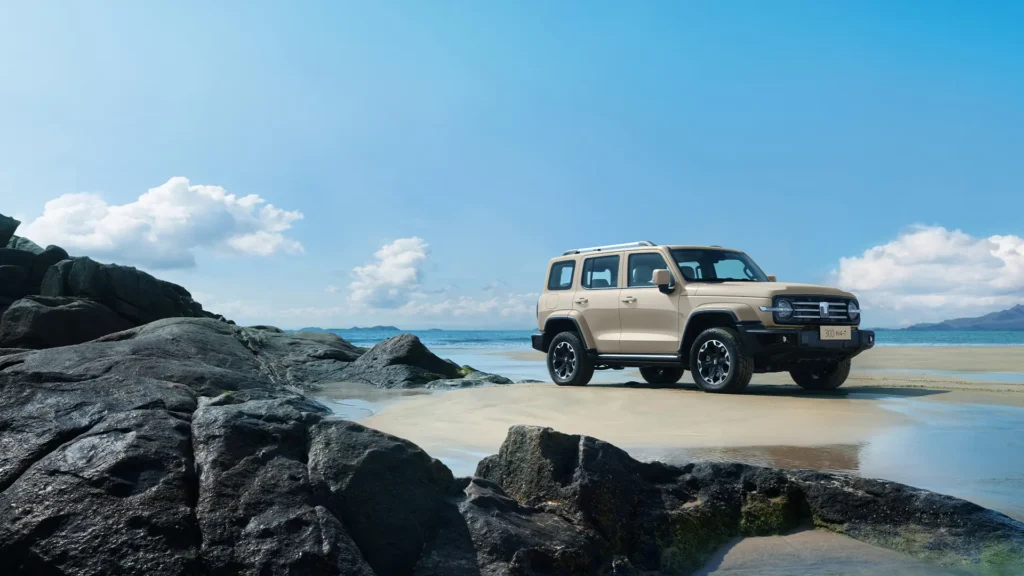
The strength of GWM Cars lies in the group’s multi-brand architecture. GWM Haval gives the company a mainstream SUV scale. GWM ORA gives it an electric urban identity. WEY targets premium family mobility. Tank gives the company credibility in off-road and adventure-oriented SUVs.
This architecture matters because Chinese automakers now face very different overseas adoption curves. A buyer in Thailand may be interested in a hybrid SUV. A buyer in Brazil may value localized service and road durability. A buyer in Europe may compare residual value, dealer support, charging access, and brand familiarity before considering a Chinese model.
For GWM, the answer is product segmentation. GWM Haval can carry the family SUV demand. WEY can move the company upward through larger, more refined family models. Tank can build brand memory because its boxy design language creates instant recognition. GWM ORA can support battery-electric visibility in cities where EV demand has room to grow.
This is where Great Wall Motors shows strategic patience. It is not chasing a single global model as the answer for every market. It is about building a wider product ladder and then matching that ladder to local market maturity.
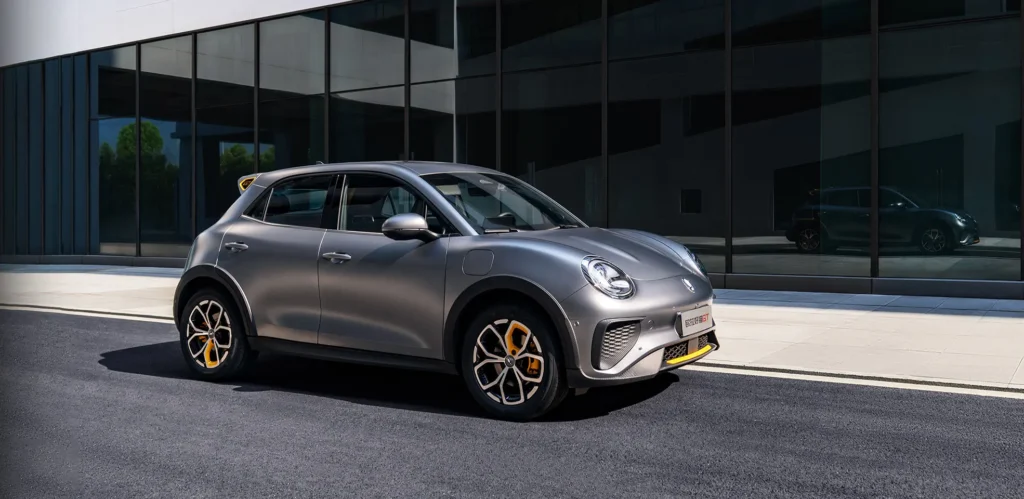
Great Wall Motors’ EV strategy is strongest when viewed through the lens of ORA and the broader NEV portfolio. ORA gives GWM a clear battery-electric brand, while Haval, WEY, and Tank extend electrification with hybrid and plug-in hybrid options.
The 2025 launch context for ORA remains important. GWM’s official communication around the all-electric ORA 5 describes it as a smart electric SUV with global intent, aimed at younger consumers and practical urban use.
This matters because compact EVs in Europe and Asia face a difficult value test. Buyers want design, efficiency, software, safety, dealer coverage, and acceptable pricing. ORA must compete against Chinese rivals, Korean brands, European small EVs, and lower-cost city cars. That makes brand clarity vital.
Still, the GWM ORA role is broader than a single model. It gives Great Wall Motor a clean EV identity within a wider group. That helps the company talk to urban buyers without forcing every brand to become electric in the same way.
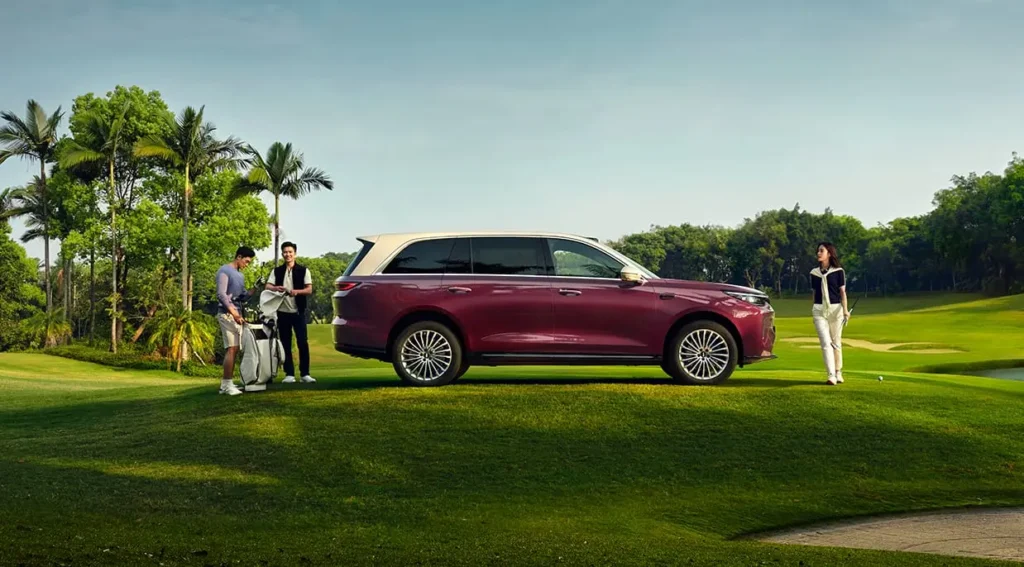
GWM Haval remains the scale engine inside GWM Cars. In 2025, Haval sold 706,234 vehicles, up 7.41 percent, which made it the group’s largest brand by volume.
Haval matters because SUV electrification is not only about battery electric vehicles. In many markets, buyers still want range confidence, cabin space, strong value, and easier ownership. Hybrids and plug-in hybrids can bridge that gap. This is why GWM Haval plays a central role in markets that want electrified practicality without full EV dependence.
The GWM car strategy here feels pragmatic. Haval can carry hybrid SUVs where pure EV charging remains uneven. It can also serve families who use SUVs for daily and weekend transport and value protection in a single purchase. That gives GWM a practical route into markets where EV adoption remains uneven.
Hi4 technology gives Great Wall Motor a stronger technical story in hybrids. GWM describes Hi4 as intelligent Four Wheel Drive electric hybrid technology that uses dual-motor series-parallel electric Four Wheel Drive across the front and rear axles. The system aims to deliver Four Wheel Drive performance with two-wheel drive energy consumption.
This is a meaningful direction for GWM Cars because hybrid competition is rising quickly. Chinese automakers have learned that global buyers often want electrification without range anxiety. Hybrid systems can also support larger SUVs, pickups, and off-road vehicles, where weight, towing, climate, and terrain impose greater demands.
GWM’s 2025 Auto Shanghai strategy expanded this logic. The company highlighted Hi4, Hi4 Performance Edition, Hi4 Z, Hi4 T, and Hi4 G as part of a broader hybrid ecosystem across passenger and commercial vehicles.
This gives Great Wall Motor a technology bridge across brands. WEY can use Hi4 for premium family comfort. Tank can use Hi4 T and Hi4 Z for off-road performance. Haval can use hybrid systems for mainstream SUV efficiency. That shared technical base can improve economies of scale while keeping the brands distinct.
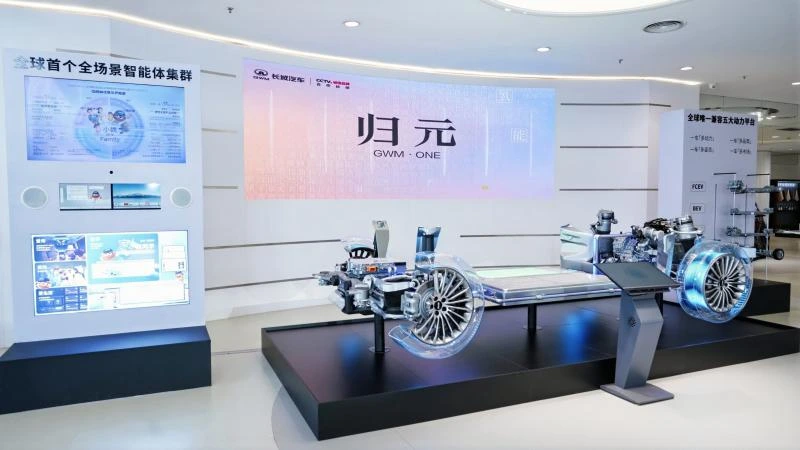
Tank gives GWM Cars a strong identity in a crowded Chinese export landscape. Many Chinese brands now talk about EV range, cabin screens, and price. Tank gives GWM a more distinctive story through rugged design, lifestyle positioning, and off-road credibility.
In 2025, the Tank brand sold 232,713 vehicles, with demand supported by models such as Tank 300 and Tank 500. The brand also benefits from hybrid technology because off-road buyers prioritize torque, control, and fuel efficiency in difficult terrain.
For global strategy, Tank can help Great Wall Motor Company avoid becoming another anonymous Chinese automaker in overseas markets. The boxy SUV category has emotional pull. It signals outdoor lifestyle, status, and toughness. That can help dealers introduce the wider GWM Cars portfolio with a clearer brand hook.
Europe is now one of the most important markets for GWM Cars. Reuters reported in 2026 that Great Wall Motor planned to launch at least 10 new models in Europe over two years. The company also planned sales in 13 European markets over the following 12 months, with Italy, Spain, and Poland included in the rollout sequence.
The European reset shows that GWM has learned from earlier EV-heavy positioning. Reuters also reported that the new push includes EVs, hybrids, and combustion-engine models, with the ORA 5 set to appear as an EV, petrol, and hybrid option.
This is important because Europe is crowded and unforgiving. Chinese brands now face BYD, Chery-linked Omoda and Jaecoo, Leapmotor, legacy European automakers, and tighter scrutiny on pricing, tariffs, aftersales, and residual value. GWM Cars need a clearer proposition than just a low price.
GWM’s planned European factory also shows how localization has become a strategic requirement. Reuters reported that the company has discussed a European plant with annual production capacity of 300,000 vehicles by 2029. Local production can support tariff management, logistics control, and consumer trust if the company executes consistently.
GWM Cars show that China’s auto export playbook is becoming more complex. Early global attention focused heavily on battery electric vehicles. The 2026 picture looks broader. Chinese automakers now need plug-in hybrids, SUVs, localized dealer networks, service training, software readiness, and brand portfolios tailored to different markets.
This is where Great Wall Motors feels strategically relevant. The company has a global R&D network that covers vehicle development, core components, new energy, and intelligent technologies. GWM also lists major R&D activity across China, Europe, Asia, and North America.
For global companies studying China, the lesson is clear. Chinese automakers are not simply exporting cars. They are exporting system capabilities. Those capabilities include battery supply, hybrid control, software development, fast product iteration, overseas dealer building, and local portfolio adaptation.
GWM Cars deserve attention because Great Wall Motor is developing a global strategy centered on powertrain flexibility, SUV strength, off-road differentiation, and multi-brand execution. Its 2025 results show stronger NEV and overseas momentum, while its 2026 Europe plan shows a more mature understanding of global market complexity.
The company still faces heavy competition, especially in Europe. Yet GWM Cars gives a clear view of how China’s auto leaders now think. They are not choosing one narrow path. They are building portfolios that can move across price points, powertrains, and regional adoption curves.
ChoZan helps global leadership teams understand China’s innovation ecosystem through learning expeditions, executive briefings, workshops, research, and access to experts. For companies tracking GWM Cars, BYD, Leapmotor, Xiaomi Auto, Huawei mobility, or China’s NEV supply chain, ChoZan turns fast market signals into strategic business insight.
Explore ChoZan’s China innovation research and executive learning programs to understand what China’s automotive transformation means for global competition, technology adoption, and future growth.
Book a consultation with ChoZan to understand how GWM Cars and China’s EV innovation are reshaping global mobility strategy.
GWM Cars handles after-sales support through local dealers, warranty programs, service plans, and roadside assistance. Buyers should check the official market website because coverage, service access, and support terms vary by country.
Yes, the GWM app can be useful for daily ownership because it supports remote controls, vehicle status checks, charging schedules, manuals, and access to service. Features depend on the model, market, and connected vehicle setup.
Used Great Wall Motors cars can be worth considering when the vehicle has a full service history, remaining warranty, and clear dealer records. Buyers should inspect battery condition, software updates, ownership documents, and local parts availability.
A GWM car warranty often competes well with those of other Chinese brands, but the exact terms depend on the local distributor. Compare coverage years, mileage limits, battery protection, roadside assistance, and transfer rules before buying.
Yes, GWM ORA owners can often schedule charging through the connected app, depending on market availability and vehicle configuration. This helps drivers use off-peak electricity, manage battery routines, and prepare the car before trips.
Buyers should check cabin space, child-seat access, boot capacity, hybrid efficiency, safety features, service locations, and warranty terms before choosing the GWM Haval. A proper test drive helps confirm comfort during daily family use.
Buyers compare Great Wall Motors EV models with those from MG and BYD because all three brands compete on value, technology, warranty strength, and electric range. The best choice depends on dealer support, charging habits, and model availability.
GWM Cars are well-suited to long-distance driving when they offer strong comfort, driver assistance, warranty support, and roadside assistance. For EV models, buyers should review real-world range, charging speed, and route compatibility first.
Buyers should compare NEVs from ORA, Haval, WEY, and Tank by use case. ORA suits city EV needs, Haval supports family efficiency, WEY targets premium comfort, and Tank focuses on rugged electrified capability.
The resale value of Great Wall Motor vehicles can depend on warranty transfer, dealer network strength, service history, parts access, battery health, and local brand trust. Newer markets may need more time to build resale confidence.