CONTENT
The map of China’s new energy vehicle manufacturing is being redrawn. While Shenzhen, Shanghai, and Hefei have long dominated the conversation, a quieter but more formidable force has emerged in central Zhejiang. Jinhua, China, has transformed from a traditional manufacturing hub into one of the country’s most dynamic NEV industrial clusters.
The 2025 numbers are difficult to ignore. Jinhua produced 665,000 new energy vehicles, close to half of Zhejiang’s total. Leapmotor delivered 596,555 vehicles and achieved its first full-year profit. Yiwu’s imports and exports reached RMB 836.5 billion. This combination connects manufacturing capacity with global market access in a way few inland Chinese cities can match.
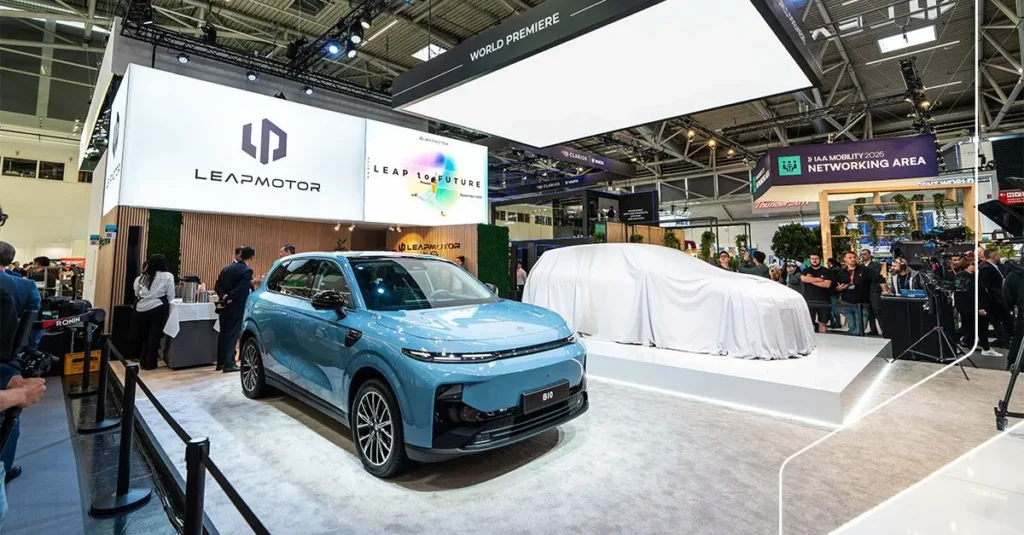
Leapmotor gives Jinhua, China, a nationally visible anchor company. In 2025, the automaker delivered 596,555 vehicles, up 103.1 percent, and ranked first among China’s emerging auto brands in annual sales. It reported RMB64.73 billion in revenue and RMB540 million in net profit. Cumulative deliveries passed 1.2 million by year-end.
Production scale changes the economics around a factory. Higher volumes can support specialized suppliers, larger local production lines, dedicated logistics routes, and deeper joint engineering. In September 2025, Leapmotor’s one millionth vehicle rolled off the line. The company needed 343 days to move from its 500,000th vehicle to the 1,000,000th vehicle.
The regional relationship gained a new capital dimension in January 2026. Jinhua Jinyi High Tech Industrial Investment Group entered into an agreement to invest RMB3 billion in Leapmotor. The transaction points to closer alignment between regional industrial policy and the automaker’s next stage of expansion.
A new foundry equipped with a 9,200-ton Bühler Carat 920 press opened in Jinhua in January 2026. The company’s 2026 sales target remains unchanged at one million units. In March 2026, Leapmotor delivered 50,029 vehicles, outranking most domestic rivals, and posted its fourth consecutive quarter of deliveries exceeding 100,000 units.
Leapmotor exported 67,052 vehicles in 2025. Its B10 was prepared for more than 30 countries and regions, while Leapmotor International had built more than 700 sales and service outlets across about 30 overseas markets by August 2025.
Global sales raise expectations around certification, traceability, product consistency, service parts, documentation, and regional adaptation. Jinhua’s opportunity depends on how quickly local suppliers turn proximity to Leapmotor into capabilities that remain valuable across several markets.
The Jinhua Development Zone has engineered what local officials call a five-minute industrial circle. More than 30 core Leapmotor suppliers are clustered within a five-minute radius of the assembly plant. Components from batteries and electric drives to seats and headlights move from supplier factories to the assembly line in minutes, not hours.
The zone has implemented a full-chain industrial service model that includes land-ready preparation, pre-installed infrastructure, and extended service support. The Jinhua Daya Auto Parts facility, located directly across from Leapmotor’s assembly workshop, went from construction to production in under nine months. Its second-phase project, with an annual output of 500,000 auto parts, entered the acceptance stage in mid-2026.
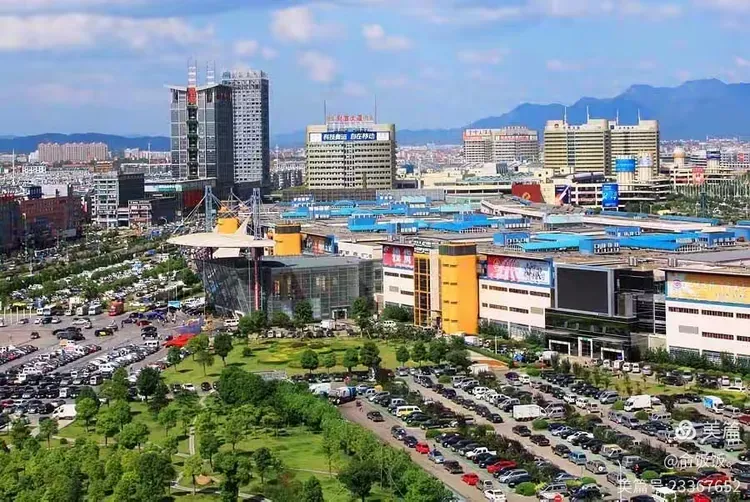
No analysis of Yiwu Jinhua is complete without addressing its role as the region’s trade artery. The State Council approved a plan for deepening comprehensive international trade reforms in Yiwu in December 2025.
Yiwu helped push Jinhua’s total exports to RMB 921.3 billion in 2025, up 19.4 percent year-on-year. The Yiwu-Xinjiang-Europe freight train routes ran more than 3,000 services, connecting Jinhua’s trade network to over 160 cities across Eurasia.
The connection to the EV industry is direct. In the first three quarters of 2025, Jinhua’s electric vehicle exports increased by 147.9 percent. Auto parts exports rose 41.8 percent. For the full year 2025, Jinhua’s electric vehicle export growth reached 99.6 percent.
Electromechanical product exports hit RMB 185.6 billion in the first half of 2025, up 20.2 percent, with electric vehicles leading the category at 212.1 percent growth.
The provincial and municipal policy framework has been carefully calibrated. Zhejiang Province’s Intelligent Connected Vehicle Industry Development Action Plan (2025-2027) was released in January 2025. The plan supports OEMs in transitioning suppliers from internal combustion engines to EVs and encourages pure-EV firms to integrate electrification with digitalization to enable premium vehicle production.
Jinhua has been designated as a key pilot city for promoting NEVs in rural areas, with plans to build over 2,700 public charging stations by 2025. The municipal government has adopted what it calls a chain-leader-plus-chain-master coordination mechanism.
In the first quarter of 2025, the NEV industrial chain achieved large-scale industrial output of RMB 32.74 billion, up 45.6 percent year on year, ranking first among all ten industrial chains in both output value and growth rate. The Jinhua Development Zone’s total large-scale industrial output exceeded RMB 100 billion in 2025.
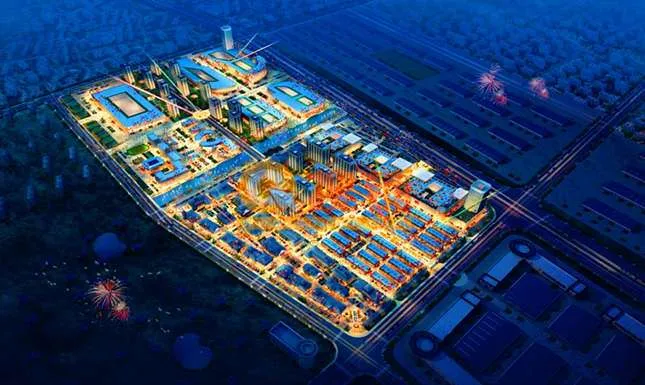
The Global Digital Trade Center opened in October 2025 as the flagship project of Yiwu’s sixth-generation market. The 1.25-million-square-meter complex includes market space, offices, commercial areas, apartments, and a digital trade port. More than 3,700 merchants had entered the market section, and 57 percent operated their own brands or intellectual property products.
The center supports product search, booth navigation, image-based product identification, cross-border e-commerce, and artificial intelligence applications. This gives Yiwu Jinhua, Zhejiang, China a stronger platform for combining physical sourcing with digital discovery and remote selling.
Payment infrastructure is also changing. By the end of September 2025, a cross-border settlement model linking local banks with ecommerce platforms or overseas payment institutions had connected with six platforms, served 7,731 merchants, and processed USD 600 million in receipts.
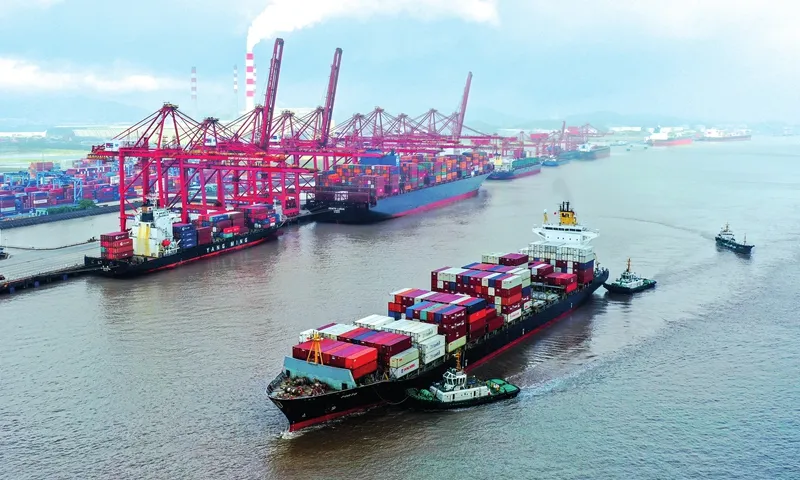
Ningbo Zhoushan Port
The Yiwu SuXi International Hub Port began operations in June 2025, moving selected seaport functions inland to a rail terminal. It connects to Ningbo Zhoushan Port via sea-rail services and supports customs processing closer to the goods’ source.
The hub operated four pairs of regular trains and handled about 800 standard containers daily. By January 2026, cumulative container arrivals and departures had passed 100,000 standard containers. Jinhua’s 2025 government work report also recorded 3,005 China-Europe freight train services and 492,000 standard containers transported via sea-rail transport.
For the EV cluster, the relevance lies in the choice of logistics. A stronger freight network can support the movement of imported equipment, production inputs, service parts, and export products. Automotive logistics must develop alongside the broader trade network. This is a strategic inference based on the region’s expanding freight capacity.
The strongest lesson from Jinhua China, is the interaction among manufacturing scale, supplier proximity, trade services, and logistics. Leapmotor provides demand and technical direction. The development zone concentrates component capacity. Yiwu contributes merchant networks, digital trade tools, payment systems, and export experience. 74
Three indicators deserve attention through 2026. The first is supplier upgrading across quality, software integration, traceability, and global compliance. The second is export service depth across parts availability, technical support, and market adaptation. The third is spillover beyond one anchor company. A resilient cluster should help local component makers win customers outside Leapmotor.
For businesses studying Jinhua city China, the opportunity extends beyond vehicle assembly. The region is becoming a hub for examining component sourcing, industrial partnerships, aftermarket products, digital trade channels, and international distribution. Its next phase will depend on capability depth rather than capacity alone.
Chozan helps global teams interpret China’s regional innovation systems through market research, competitive intelligence, trend analysis, and strategic advisory services. If Jinhua China is relevant to your sourcing, mobility, or expansion plans, Chozan can help turn local signals into a focused action plan.
Book a consultation with Chozan.
Jinhua is a prefecture-level city in Zhejiang province, and Yiwu sits within its administrative area. The location ties manufacturing zones to Yiwu’s trade system and the province’s port network through rail and sea rail service12
Yes. Yiwu sits within the wider Jinhua administrative area, though the two names refer to different city levels. Commercially, Yiwu contributes trade, logistics, digital commerce, and payment infrastructure to the broader regional economy
A visit to Jinhua China should start with technical drawings, target volumes, quality requirements, certification needs, and a supplier scorecard. At each factory, examine process control, engineering depth, traceability, customer concentration, and capacity plans.
It is a provincial-level characteristic town and a core platform for Jinhua’s new-energy-vehicle cluster. The 3.6 square kilometer area concentrates Leapmotor, component suppliers, industrial services, and a new manufacturing project14
Yiwu combines a large physical sourcing market with digital product discovery, cross-border payment services, customs support, and international logistics. These shared systems can lower the operational burden for smaller suppliers entering new overseas market12
Jinhua is inland, but the Yiwu SuXi International Hub Port connects local cargo to Ningbo Zhoushan Port via sea-rail services. Inland customs and rail operations bring selected port functions closer to factories and merchant12
Yes. The Jinyi Area is part of the Zhejiang Pilot Free Trade Zone in China. Jinhua’s 2025 work report highlighted reforms in this area as part of the city’s wider opening and trade development agenda.
Priority capabilities include international certification, product traceability, consistent quality, software integration, multilingual technical documentation, service parts planning, and faster engineering response times. Suppliers also need a broader customer base to reduce dependence on one vehicle bran15
Review access to anchor customers, supplier quality, land and utility needs, talent availability, logistics routes, local policy support, environmental approvals, and customer concentration. Commercial diligence should test both cluster advantages and dependency risks.
The Global Digital Trade Center combines physical showrooms with artificial intelligence tools, image based product search, digital navigation, cross-border e-commerce, and remote trade services. Its model links in-person sourcing with a more data-driven sales process