CONTENT
Tongwei is a Chengdu-based Chinese group that grew from aquaculture into one of the solar industry’s largest vertically integrated manufacturers. Its current chain spans high-purity crystalline silicon, solar cells, PV modules, and power projects, while feed and food remain substantial businesses.
That combination matters because manufacturing capacity alone no longer defines strength in China’s solar sector. Buyers and partners must assess technology, factory control, overseas channels, balance sheet pressure, and service together.
Tongwei offers a clear case study of how Chinese industrial scale can create leverage while exposing a company to a severe price cycle.
The company’s origin was practical rather than energy-related. Its current corporate history traces the business to Liu Hanyuan’s fish cage experiments in 1982 and the creation of a fishery company in 1986. Feed production then provided the operating base for a broader agriculture business.
In 2025, Tongwei sold 6.53 million metric tons of feed, while its fishery and solar power stations generated 4.94 billion kWh of electricity. These figures show that agriculture remains a substantial operating business rather than a historical footnote.
Tongwei Co., Ltd. (600438) is the world’s largest polysilicon producer by volume for six consecutive years, the largest solar cells manufacturer for nine straight years, and a top-five global PV module supplier for three years running. The company operates 90万吨 of high-purity polysilicon capacity, over 150 GW of solar cell capacity, and 90 GW of module capacity. This is not a company in retreat—it is a company placing its bets.
Feed manufacturing taught the organization to manage commodity inputs, biological production, distributed customers, and thin margins. Solar manufacturing demanded a similar focus on yield, process control, procurement, and scale.
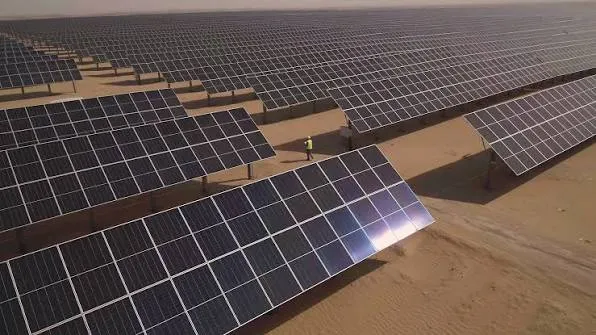
The two pillars still meet in Tongwei’s fishery and PV projects. Solar arrays generate electricity above ponds while aquaculture continues below. The company reports 56 such power stations and more than 5.1 GW of cumulative grid-connected capacity.
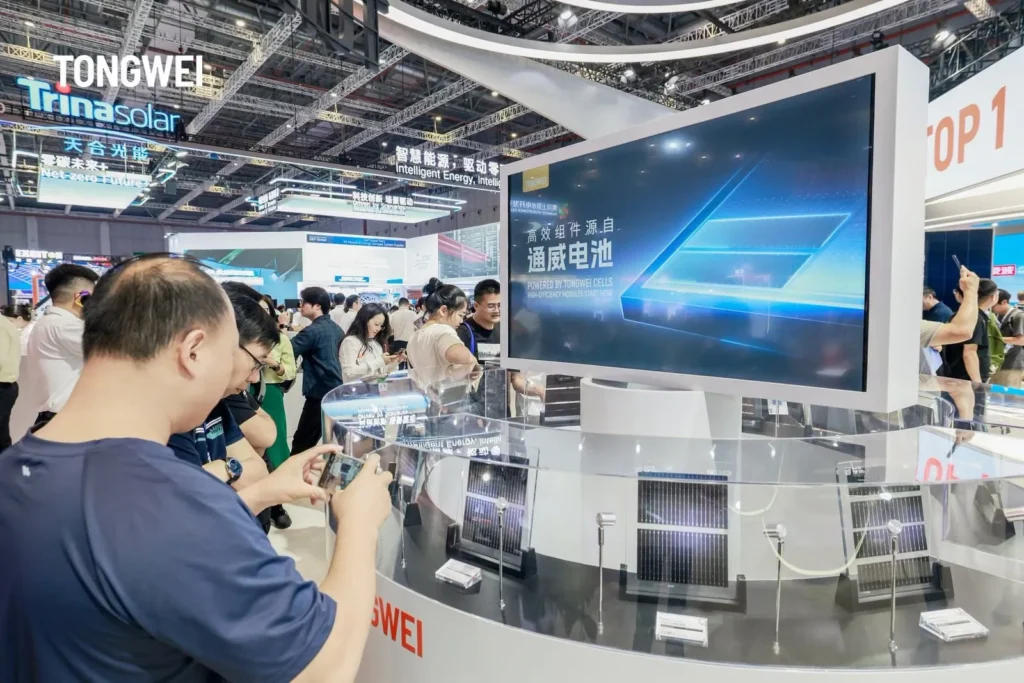
The cleanest view separates capacity from sales. Tongwei reports annual capacity of about 900,000 metric tons for high-purity crystalline silicon, more than 150 GW for N-type cells, and about 90 GW for modules.
Actual 2025 sales were lower, as expected in a market with heavy oversupply. The company’s audited 2025 annual report recorded:
Independent market data adds useful context. InfoLink’s 2025 cell ranking placed Tongwei first for external cell shipments. Its module ranking placed the company fifth.
This gap shows its position clearly: Tongwei solar cells remain the strongest market franchise, while finished modules represent a newer downstream growth engine.
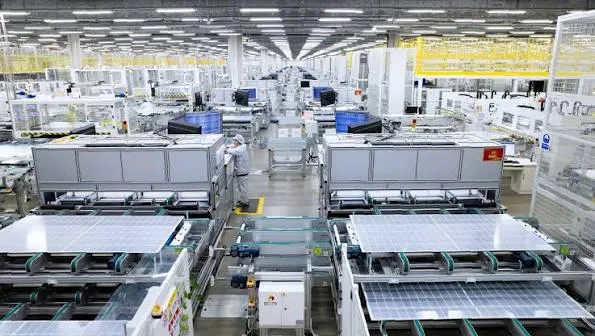
Tongwei’s chain creates three potential advantages. Internal knowledge can move from silicon purity and cell behavior into module design. Large purchasing volumes can support cost control. A broader product mix can capture value across several manufacturing stages.
Yet vertical integration does not guarantee profit or self-sufficiency. Capacity utilization, inventory pricing, product mix, customer concentration, and regional trade rules still shape returns. Large fixed assets can deepen losses when selling prices fall below sustainable levels.
Cost leadership cannot be inferred from nameplate capacity. It has to appear in conversion cost, energy use, material consumption, yield, and cash generation across the cycle.
That distinction matters when evaluating Tongwei solar panels. Upstream scale can support traceability and process consistency, but project teams still need model-specific certifications, warranty terms, degradation assumptions, local technical support, and bankability checks. A large factory cannot replace project-level diligence.
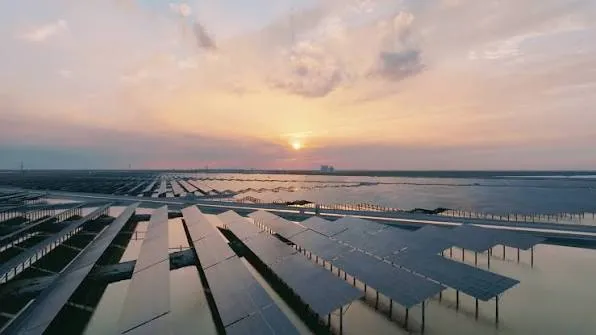
TNC is Tongwei’s N-type TOPCon platform. In May 2025, the company launched TNC 2.0 with four core elements:
The official launch information framed these changes around higher output, reliability, and stronger project economics.
After previewing TNC 3.0 at its November 2025 partner summit, the company began its commercial rollout in 2026. This generation combines upgraded TOPCon cells with a quarter-cell design that reduces current and resistive loss. The first products began rolling off the line in May, and initial commercial deliveries followed.
At SNEC 2026, the company presented G12R and G12 formats with up to 670 W and 770 W output, respectively. Module efficiency reached 24.8 percent.
These specifications need commercial interpretation. Higher wattage can reduce modules, racks, cables, and installation work per project megawatt. Strong bifacial performance can improve yield on reflective sites.
Lower operating current and a temperature coefficient of minus 0.26 percent per degree Celsius may support output in hot conditions. The actual benefit depends on system design, site reflectivity, spacing, climate, and validated energy modeling.
This TNC technology progression shows a shift from selling cell volume toward proving project economics at the module level.
Tongwei also continues research across HJT, back-contact, and perovskite tandem routes. That wider portfolio protects technical optionality, but TOPCon remains the main commercial pathway today.
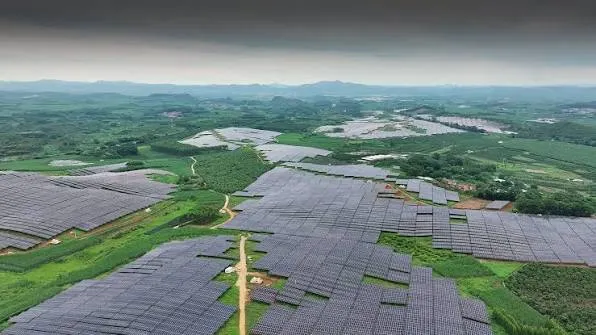
The World Economic Forum added Tongwei Solar’s Meishan cell plant to its Global Lighthouse Network in September 2025. The WEF assessment cited more than 50 advanced manufacturing use cases using machine learning, generative AI maintenance, and defect analysis.
WEF reported a 41 percent reduction in defects, a 37 percent fall in conversion costs, and a 33 percent decline in carbon emissions. These are site transformation results, rather than product warranty evidence. They still matter because cell consistency and defect control influence downstream module reliability.
Scale did not shield the business from China’s price correction. The 2025 annual report showed revenue of approximately $12.43 billion and a net loss attributable to shareholders of approximately $1.41 billion. Asset impairments contributed materially.
PV revenue reached approximately $8 billion, while agriculture and animal husbandry generated approximately $4.32 billion. The mix reveals a useful strategic point. Agriculture provides real diversification, yet solar now drives most revenue and capital risk. Tongwei must convert factory efficiency and overseas growth into healthier margins while managing a large asset base.
Sector restructuring adds another layer. In December 2025, Reuters reported that a Tongwei subsidiary held 30.35 percent of a new industry acquisition company created amid polysilicon oversupply.
In January 2026, China’s market regulator warned leading producers against coordinating capacity, output, market allocation, or prices.
Tongwei then proposed buying 100 percent of Qinghai Lihao Clean Energy through shares and cash. The February 2026 disclosure reported by PV Tech described a preliminary transaction, so it should not be treated as completed.
The plan signals a preference for reshaping polysilicon production through acquisitions, subject to financing, approvals, valuation, and antitrust scrutiny.
The company should be assessed through four separate lenses:
Tongwei’s path from fish feed to Tongwei polysilicon, cells, and modules reflects a core Chinese manufacturing pattern: process discipline first, scale second, and downstream brand building later.
Its aquaculture origins still provide diversification. Its next phase will depend less on adding capacity and more on turning integration into durable customer value during the current solar-industry consolidation phase.
Tongwei’s expansion shows how production efficiency, vertical integration, technology development, capacity discipline, and industry consolidation now shape China’s solar sector. These changes can directly affect supplier selection, investment priorities, partnership plans, and supply-chain risk.
ChoZan helps global leadership teams examine these developments through China technology trend watching, custom China research, and expert calls. A tailored engagement can track competitors, policy changes, factory expansion, overseas growth, consolidation activity, and emerging cell technologies. ChoZan can deliver findings through research reports, competitive benchmarking, expert interviews, executive briefings, and strategic working sessions.
Teams seeking firsthand exposure can also arrange a customized China Learning Expedition around manufacturing, supply chains, and green technology.
Book a consultation with ChoZan to define your questions and build the right research, advisory, or market immersion program.
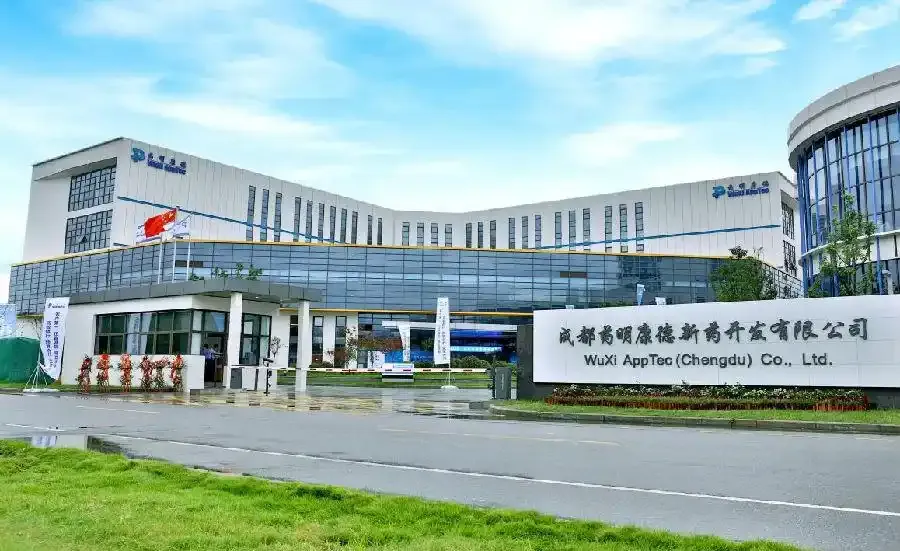
Tongwei is headquartered in Chengdu, Sichuan Province, China. Its photovoltaic manufacturing operations span several Chinese production bases, while its sales and project activity reach overseas markets through regional teams, distributors, and commercial partners.
Yes. Tongwei Co Ltd trades on the Shanghai Stock Exchange under stock code 600438. Investors should use the listed company’s exchange filings for financial analysis, since group websites may combine corporate, operating, and promotional information.
Liu Shuqi serves as chairwoman and CEO of Tongwei Co., Ltd. Corporate governance and leadership details can change, so readers should confirm the latest board information through Shanghai Stock Exchange disclosures before making formal decisions.
Yes. Tongwei Solar offers module formats for residential, commercial, industrial, and utility applications. Product availability varies across countries, so buyers should confirm the local distributor, exact model number, electrical compatibility, warranty provider, and installation requirements.
Tongwei provides module authenticity and dealer query functions on its corporate website. Buyers should also match serial numbers, packaging, invoices, warranty documents, and distributor authorization before accepting delivery or commissioning a solar installation.
Warranty length and degradation terms depend on the model and sales market. Buyers should rely on the product-specific datasheet and local warranty document, then confirm who handles claims, shipping, labor, and replacement costs.
Tongwei maintains HJT research and production capability alongside its commercial TOPCon program. HJT products should be evaluated by current availability, certified specifications, production status, and regional support rather than laboratory records or pilot-line announcements alone.
0BB refers to a busbar-free cell interconnection approach. Tongwei calls its implementation 908 Technology. The design aims to reduce shading and electrical losses, though buyers should judge the finished module through certification and field performance.
Yes. The company reports overseas cell and module sales across multiple regions. Availability remains market-specific because distributors, certifications, grid rules, import measures, and after-sales arrangements differ across countries and individual product lines.
Yes. Agriculture and animal husbandry remain material operations, including feed and related food activities. The 2025 annual report recorded RMB 29.26 billion in revenue from that segment, giving the group meaningful business diversification.
Tongwei maintains R&D programs across HJT, XBC (including TBC and HTBC), and perovskite-silicon tandem technologies. The company operates a 5 MW perovskite tandem pilot line and has achieved 34.94% efficiency in small-area tandem cells.