CONTENT

China’s industrial inspection landscape is undergoing a fundamental shift. The country is deploying inspection robots at scale across power grids, pipeline networks, and high-risk industrial sites. This is not a pilot phase or a future projection. It is happening now, with measurable results in efficiency, safety, and data intelligence.
The numbers tell the story. In 2025, the Chinese inspection robots market reached approximately 27.48 billion yuan, with电力智能巡检机器人 accounting for 88.54 percent of that total. Demand reached 7,738 units in the same year. These are not experimental deployments. They are operational assets replacing human workers in some of the most demanding environments on the planet.
Global business leaders watching China’s industrial automation trajectory need to understand what is driving this adoption, where the technology is most advanced, and what it means for supply chains, energy security, and industrial safety standards worldwide.
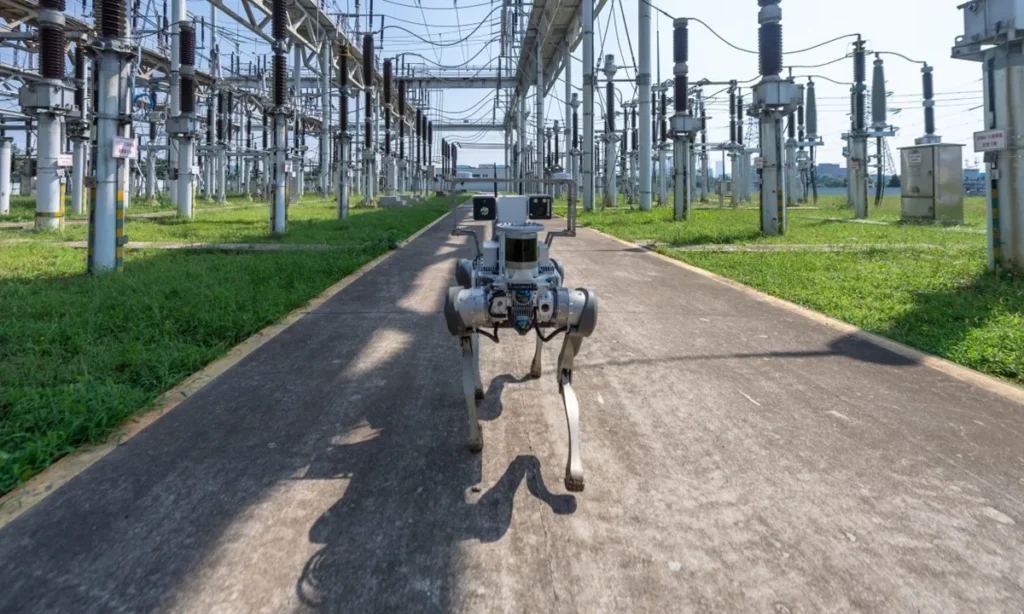
China operates one of the world’s largest networks of power transmission assets, industrial facilities, municipal utility systems, and transportation infrastructure. Maintaining these assets requires frequent inspections under challenging operating conditions.
The government’s industrial AI strategy increasingly promotes intelligent equipment that combines robotics, machine vision, sensing technologies, and data analytics. The 2025 MIIT guidance specifically mentions intelligent industrial robots, intelligent inspection vehicles, and predictive maintenance services powered by AI models and industrial data.
This policy direction aligns with the practical needs of infrastructure operators. High-voltage substations, petrochemical facilities, underground pipelines, confined spaces, and remote utility corridors expose workers to electrical hazards, toxic gases, difficult terrain, and extreme weather.
Deploying industrial inspection robots reduces human exposure while producing consistent inspection records that can feed digital asset management platforms.
Another notable shift is the growing importance of inspection data workflows. Infrastructure owners increasingly evaluate robotic systems based on how well inspection results integrate into maintenance software rather than on mobility alone. Images, thermal readings, gas measurements, equipment locations, and maintenance histories have become strategic operational data.
Power infrastructure has emerged as one of the most mature deployment environments for industrial robotic inspection in China.
Large substations contain transformers, switchgear, circuit breakers, relays, cooling systems, and monitoring equipment that require routine inspection. Traditionally, personnel conducted scheduled patrols and recorded equipment conditions manually.
Modern robotic platforms automate much of this process through cameras, thermal imaging, LiDAR, microphones, and environmental sensors.
China’s leading technology suppliers are developing inspection architectures that combine mobile robots, drones, fixed cameras, and AI software into unified monitoring platforms.
Huawei’s Smart Substation Intelligent Inspection Solution integrates inspection robots, unmanned aerial vehicles, intelligent cameras, inspection hosts, and AI analysis to support autonomous patrols, remote monitoring, equipment status analysis, and centralized management.
The emphasis is no longer limited to autonomous navigation. Today’s robotic inspection platforms are expected to identify abnormal temperatures, recognize equipment states, detect visible defects, collect inspection records, and transfer results directly into operational workflows.
Research is progressing in the same direction. In 2025, the Shenzhen Institute of Artificial Intelligence and Robotics for Society announced it had secured a project focused on embodied intelligent robots for substation inspection. The institute also reported several power robotics projects with a combined value reaching tens of millions of yuan.
The significance of embodied intelligence is practical. Instead of following fixed patrol routes, future systems are expected to understand their surroundings, interact with equipment, and adapt to changing operating conditions.
China’s power sector is also exploring robots capable of performing operational procedures within energized substations.
In Qinghai, a smart inspection robot project for cable tunnels was launched in January 2025. The robot travels along overhead tracks in the cable tunnel, lowering its telescopic arm at inspection points to check the cable’s operating status. The robot completed in one week what previously required two and a half months of manual inspection.
Shanghai’s municipal government reported in October 2025 that the self-developed “天擎” ultra-high-voltage transmission line operation robot was officially deployed, just two months after its debut at the World Artificial Intelligence Conference.
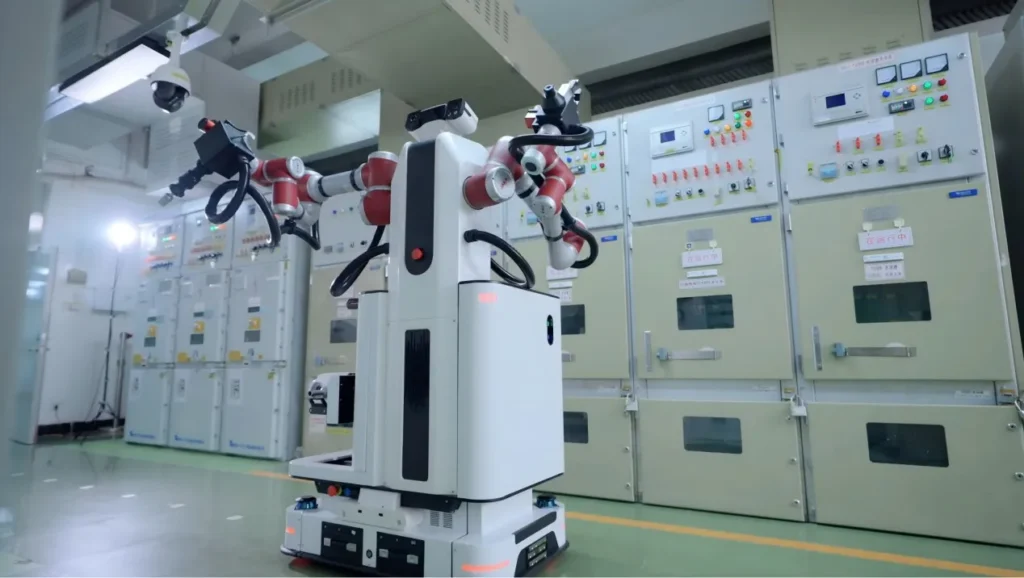
In November 2025, Guangzhou Power Supply Bureau and Shenzhen robotics company Youibot deployed an omnidirectional dual-arm collaborative robot at a 220 kV substation.
According to the Shenzhen Development and Reform Commission, the robot can perform inspection and operational tasks inside a live high-voltage environment while connecting with the utility’s production information systems.
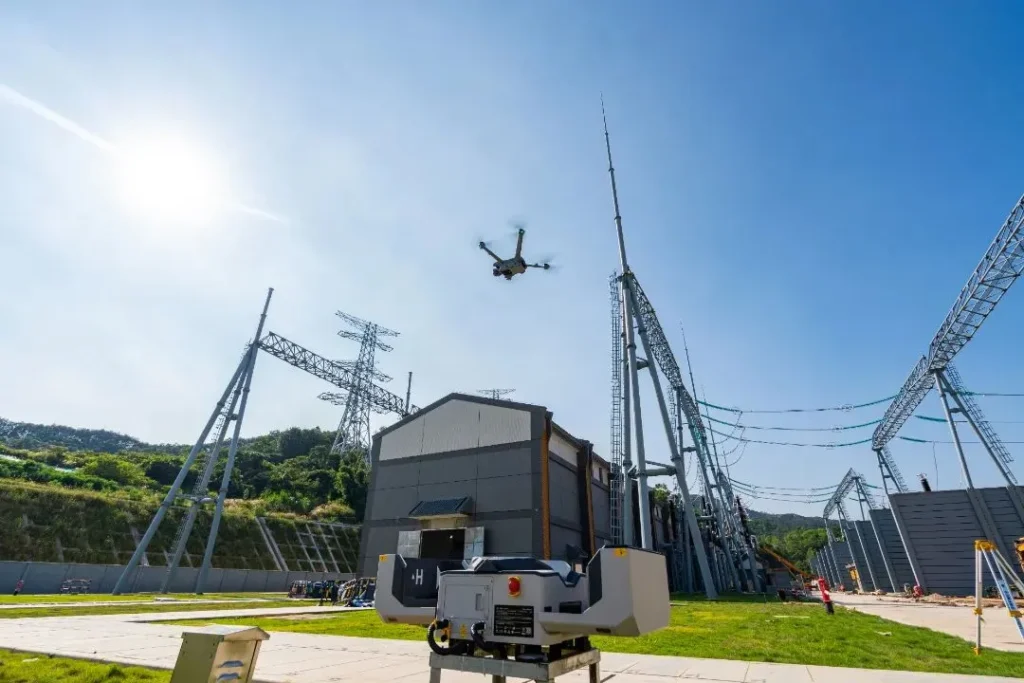
Southern Power Grid’s ultra-high-voltage transmission company in Baise received an international gold award at the 50th ICQCC in November 2025 for its overhead ground wire inspection robot. The robot integrates unmanned aerial vehicle 协同 deployment, fully autonomous walking, and AI-based defect diagnosis.
It can perform 全天候, uninterrupted, autonomous inspections along overhead ground wires. Field validation shows a defect recognition rate above 90 percent and inspection efficiency five times higher than manual methods.
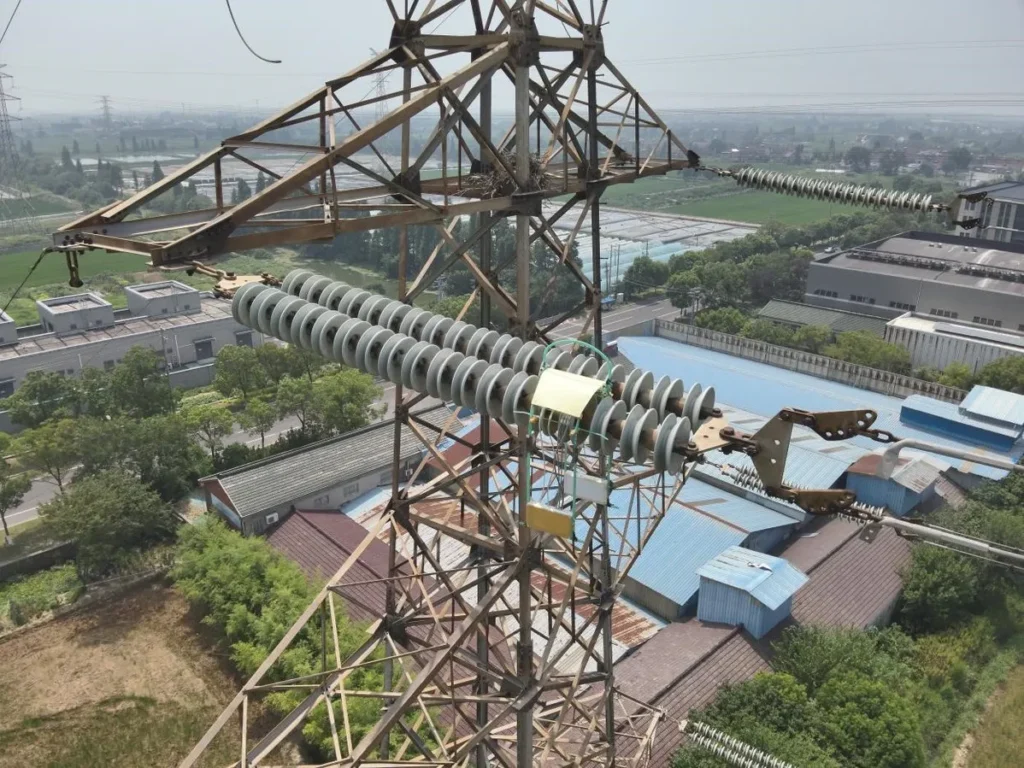
State Grid Taizhou Power Supply Company began pilot testing an insulator inspection robot in August 2025. The robot reduces inspection time by nearly 50 percent and eliminates exposure to working-at-height hazards. Live-line trials are now underway to verify electromagnetic immunity under operating conditions.
Underground infrastructure presents a very different challenge from substations. Pipelines and sewer systems contain confined spaces, poor lighting, standing water, sediment, corrosive materials, and hazardous gases. These conditions make manual inspection slow, expensive, and potentially dangerous.
As a result, demand for pipe inspection robot solutions and pipeline robotic inspection platforms continues to grow across Chinese municipalities and industrial operators.
China’s smart city initiatives increasingly treat underground utility networks as digital infrastructure rather than hidden physical assets. Modern inspection robots collect high-definition video, LiDAR point clouds, sonar data, and environmental readings during every inspection. Those datasets help operators build digital records that support maintenance planning, lifecycle management, and infrastructure investment decisions.
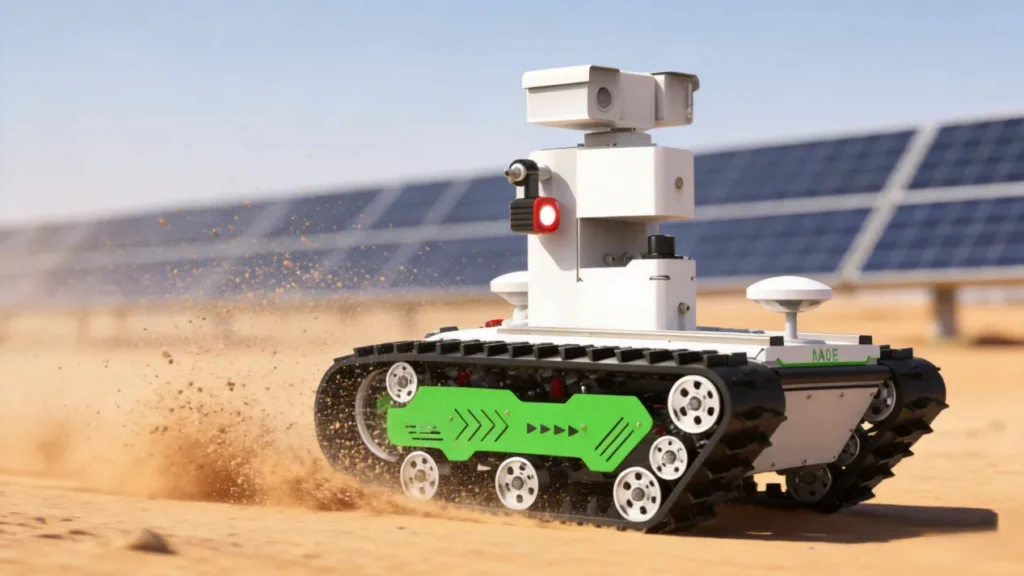
A notable example comes from Xiong’an New Area. In June 2025, local authorities introduced an intelligent underground pipe inspection system that combines AI, robotics, sonar, high-speed cameras, and explosion-resistant engineering.
According to the official report, the AI model was trained using hundreds of thousands of defect samples and achieved more than 90 percent diagnostic accuracy during deployment. The system also reduced operation and maintenance costs by 53 percent compared with conventional inspection methods.
In Warsaw, Poland, Chinese pipeline inspection robots have completed 30 kilometers of network inspection and repair. In Sydney, Australia, the robots performed a full-coverage inspection of a 3.5-kilometer地下排水箱涵.
For long-distance oil and gas pipelines, China Petroleum Pipeline Engineering reported in April 2025 that its “four full-capacity” pipeline welding and inspection robotic system has achieved large-scale application. The system covers pipe diameters from 33 millimeters to 1,422 millimeters, all terrain types, all weld joint types, and fully automated welding with ultrasonic testing.
In the East African crude oil export pipeline project, the welding pass rate reached above 98 percent. The system has received certification from France’s TotalEnergies and Saudi Aramco.
China’s municipal governments are also adopting sewer robot inspection systems to improve drainage management and infrastructure auditing.
In March 2025, the Zibo Municipal Audit Bureau described its use of CCTV pipeline robots equipped with high-definition cameras, laser scanning technology, sonar, and gas sensors. The robots inspected underground drainage systems for cracks, corrosion, deformation, sediment accumulation, and root intrusion while generating digital evidence for engineering audits.
For municipal operators, this represents an important shift. Infrastructure inspection now supports engineering decisions, financial accountability, and long-term asset management through standardized digital documentation.
Industrial inspection robots are gaining traction in petrochemical plants, chemical storage facilities, mines, LNG sites, and utility corridors where human inspection is risky.
In October 2025, Qinghai Yuntianhua deployed three customized inspection robots at its liquid ammonia tank farm and 110 kV substation.
The explosion-proof robot uses:
It conducts hourly inspections and has reduced abnormal response times from hours to minutes.
In July 2025, Xinjiang Yuanrui Shenghu Energy introduced a wheeled inspection robot for high-temperature areas with toxic and hazardous gases.
The robot includes:
Manual inspection previously required six to seven workers and about one hour. The robot completes the same inspection in approximately 10 minutes.
In August 2025, Huaihe Energy Gas Group deployed a smart inspection robot at its Wuhu LNG receiving station.
The robot uses overhead tracks, AI vision, infrared thermal imaging, multi-sensor fusion, and cloud analytics.
Its thermal imaging module detects equipment temperature anomalies at minus 162°C. The robot now provides continuous monitoring instead of inspections every two hours.
The MT/T 1263-2025 industry standard, issued in June 2025, covers inspection robots operating in underground explosive gas environments.
At No. 1 Coal Mine in Shaanxi, the robot system:
In January 2025, China North Industries Group reported that a 5G-enabled unmanned inspection robot project had entered service at a petrochemical enterprise after 18 months of development.
The system uses 5G connectivity and robotic inspection to monitor hazardous operating areas.
The quality of robotic inspection increasingly depends on sensor integration rather than mobility alone.
Typical inspection payloads include:
| Technology | Inspection purpose |
| LiDAR | Mapping, obstacle detection, and SLAM navigation |
| Thermal imaging | Detecting overheating equipment and insulation faults |
| Visible-light cameras | Reading gauges, labels, switches, and visible defects |
| Gas sensors | Detecting combustible or toxic gases in confined spaces |
| Acoustic sensors | Identifying abnormal vibration, leaks, and electrical discharge |
| Sonar | Imaging submerged pipelines and drainage systems |
The greatest operational value comes from combining multiple sensor streams into one inspection record. A thermal hotspot linked with equipment location, historical inspection records, and maintenance history provides much stronger operational insight than an isolated image.
Reliable navigation remains essential for industrial robotic inspection.
Many industrial facilities cannot rely on GPS because inspections occur underground, inside substations, or within enclosed industrial sites. Robots therefore use SLAM technology to build maps while calculating their own position in real time.
Some inspection tasks also require teleoperation. Remote operators can intervene when robots encounter unexpected obstacles, unusual equipment conditions, or complex operating procedures that require human judgment. This balance between autonomy and remote control provides greater flexibility for hazardous-site inspections.
Hardware often receives the most attention during robotics demonstrations. In practice, the software workflow determines the long-term value of industrial robot inspection.
Inspection results must integrate with maintenance management systems, asset databases, digital twins, and enterprise operational platforms. Images alone rarely improve maintenance performance.
The strongest deployments automate the complete inspection cycle:
China’s standards ecosystem reflects this direction.
A national standard covering safety requirements for inspection robots was published with contributions from power utilities, universities, metro operators, robotics companies, and research institutes.
In December 2025, another industry standard defined testing requirements for intelligent inspection systems used in substations operating at 35 kV and above, covering functionality, interfaces, reliability, operating conditions, and information security.
These standards indicate that China’s market is moving beyond pilot projects toward standardized large-scale deployment.
China demonstrates that successful inspection robots require much more than advanced hardware.
Commercial deployments increasingly depend on:
Organizations evaluating robotics suppliers should prioritize operational performance rather than promotional specifications. The most capable platforms deliver dependable inspection data that maintenance teams can immediately act on.
China’s experience also illustrates how robotics, artificial intelligence, industrial software, and infrastructure modernization are becoming tightly connected. Future market leaders will likely compete on data quality, workflow integration, and long-term operational performance rather than mobility alone.
China’s robotics industry is evolving rapidly across industrial automation, artificial intelligence, advanced manufacturing, and smart infrastructure. Chozan helps businesses understand these developments through market intelligence, strategic research, and China-focused technology insights.
If your organization is evaluating Inspection Robots, industrial automation, or China’s innovation ecosystem, Chozan provides practical analysis that supports informed business decisions. Book a consultation with Chozan.
Inspection Robots inspect industrial equipment, substations, pipelines, tunnels, and hazardous facilities using cameras, sensors, AI, and autonomous navigation to detect faults before they become major operational problems.
A pipe inspection robot travels through underground pipelines on wheels or tracks, collecting video, sonar, LiDAR, and other sensor data that engineers use to evaluate pipe condition and locate defects.
Pipeline robotic inspection improves worker safety, reduces manual inspections, identifies defects earlier, and provides digital inspection records that support predictive maintenance and infrastructure planning.
Most industrial inspection robots combine visible-light cameras, thermal imaging, LiDAR, gas sensors, microphones, and environmental sensors to inspect equipment under different operating conditions.
SLAM allows robots to map unfamiliar environments while calculating their own position. This capability supports autonomous navigation inside substations, tunnels, factories, and underground infrastructure.
Inspection robots reduce hazardous manual work and automate routine inspections. Skilled personnel still review results, investigate complex faults, and perform maintenance activities that require expert judgment.
Electric power, oil and gas, petrochemicals, water utilities, municipal infrastructure, mining, transportation, and manufacturing currently represent the strongest markets for inspection robotics.
Remote visual inspection allows operators to inspect equipment from a safe location using robotic cameras and communication systems, rather than entering hazardous environments.
High-quality inspection data supports predictive maintenance, equipment history, digital twins, regulatory compliance, and better maintenance planning across large infrastructure networks.
China combines large-scale infrastructure, supportive industrial policies, advanced manufacturing capabilities, and growing AI expertise, providing extensive real-world environments for developing and deploying advanced robotic inspection technologies.