CONTENT

Industrial robotics now sits at the heart of China’s economic transformation. China’s 15th Five‑Year Plan (2026‑2030) places AI‑powered robots at the center of the country’s modern industrial system.
According to the International Federation of Robotics (IFR), China already operates roughly 2 million industrial robots, about 4.5 times the number deployed in second‑placed Japan, and accounts for 54% of all industrial robots installed worldwide. IFR also notes that the global market value of industrial robot installations reached US$ 16.7 billion by early 2026.
These numbers underscore why EFORT Intelligent Robot Co., Ltd., a firm born within Chery Automobile, is attracting attention. EFORT has evolved from a local welding‑automation supplier into a diversified robotics player and now sits at the intersection of China’s domestic innovation, global partnerships, and fast‑changing market dynamics.
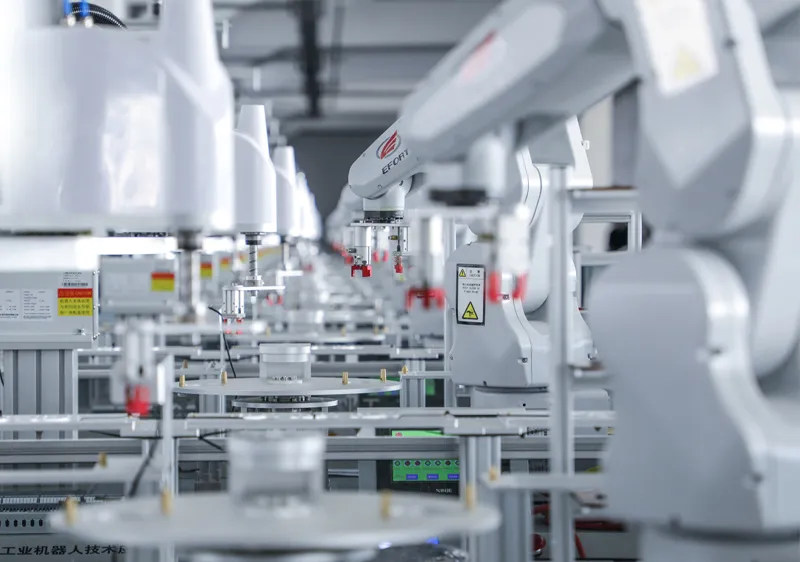
EFORT was incubated within Chery Automobile in 2007 and initially focused on welding automation. Over the past two decades, it has built a comprehensive research and development system for robot controllers, servo drives, and reducers.
The company achieved localization and self‑sufficiency in critical components. This capacity allows EFORT to supply robots for electronics, photovoltaics, lithium battery manufacturing, automotive, and shipbuilding.
EFORT’s technical credibility is reflected in its leadership role within the international robotics community—CEO Wei You serves as a delegate on the IFR’s industrial robot suppliers committee—and in the company’s frequent testing of its most advanced products at European trade fairs.
Here’s an updated version using full-year 2025 data:
Rapid Production and Sales Momentum of EFORT Robot
On January 19, 2026, China’s National Bureau of Statistics reported that national industrial robot output reached 773,074 units in 2025, up 28.0% year-on-year. December output alone reached 90,116 units, up 14.7%.
EFORT’s Wuhu factory reflects this broader automation push, though its 2025 performance was more mixed than earlier first-half expectations suggested. The company’s 2025 annual report shows that industrial robots remained a strategic business, but full-year robot sales volume declined slightly year on year, amid tougher pricing competition and lower-margin orders.
Even so, EFORT made strong gains in key downstream sectors. In 2025, its robot sales in the lithium battery sector grew by more than 1,400%, electronics manufacturing rose by over 30%, and automotive and auto-parts applications increased by around 10%. The company also said its current Wuhu site has been optimized to support a capacity of about 20,000 units per year.
Government policy continues to support this momentum. Trade-in subsidies for new-energy vehicles, electronics, and household appliances are encouraging manufacturers to upgrade production lines, creating more demand for automation.
The 15th Five-Year Plan’s focus on intelligent manufacturing should further support downstream demand, giving EFORT a stronger long-term growth base despite near-term pricing pressure.
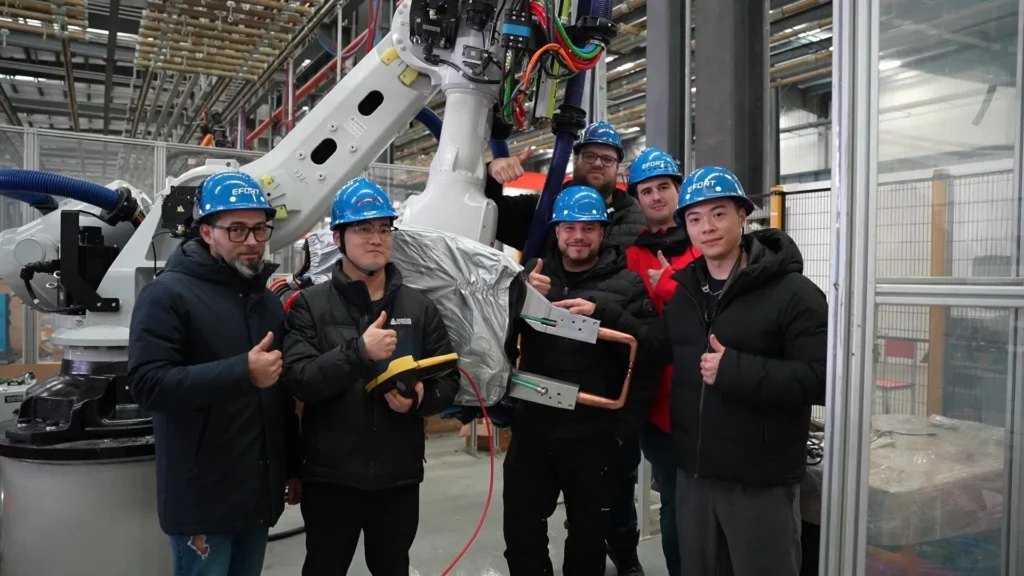
EFORT’s product strategy moves well beyond welding. The company offers welding robots, painting robots, palletizing robots, SCARA units, small- and medium-six-axis robots, and heavy‑load palletizers. Its diversified portfolio serves industries from electronics to shipbuilding. This diversification is crucial because EFORT’s early business was concentrated in photovoltaics.
In 2025, the firm aggressively expanded into the automotive and home appliances sectors, broadening its revenue streams. EFORT’s value proposition rests on combining cost‑effective localized components with high precision and reliability—a combination that helped domestic clients such as Qianchao Intelligent Manufacturing replace imported handling robots.
Qianchao switched to EFORT because the company’s handling robots cost more than 40% less than imported models yet exhibited comparable reliability, and EFORT’s nearby factory allows for rapid service support.
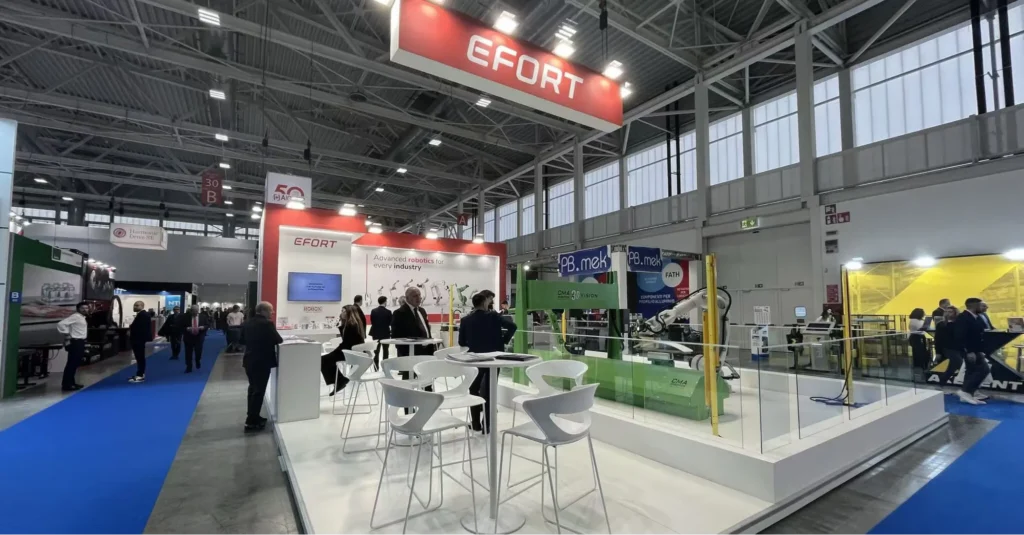
At a major automation event in Munich in 2025, EFORT presented dexterous robotic hands and intelligent painting and welding workstations. The focus was clear: practical factory automation, not showroom robotics.
At its Wuhu factory, EFORT operates a programming-free smart welding system that uses scenario data, machine vision, and AI to automatically generate welding programs. This reduces reliance on manual programming and makes high-precision welding easier for smaller manufacturers to adopt.
EFORT has also advanced the automation of automotive painting. Its test line uses six painting robots and two door opening robots to simulate interior and exterior car body painting. Built on more than 30 years of Italian robotics expertise from CMA Robotics, the technology has been applied in rail transit, passenger vehicles, and auto parts, with international users including Maserati and Alfa Romeo.
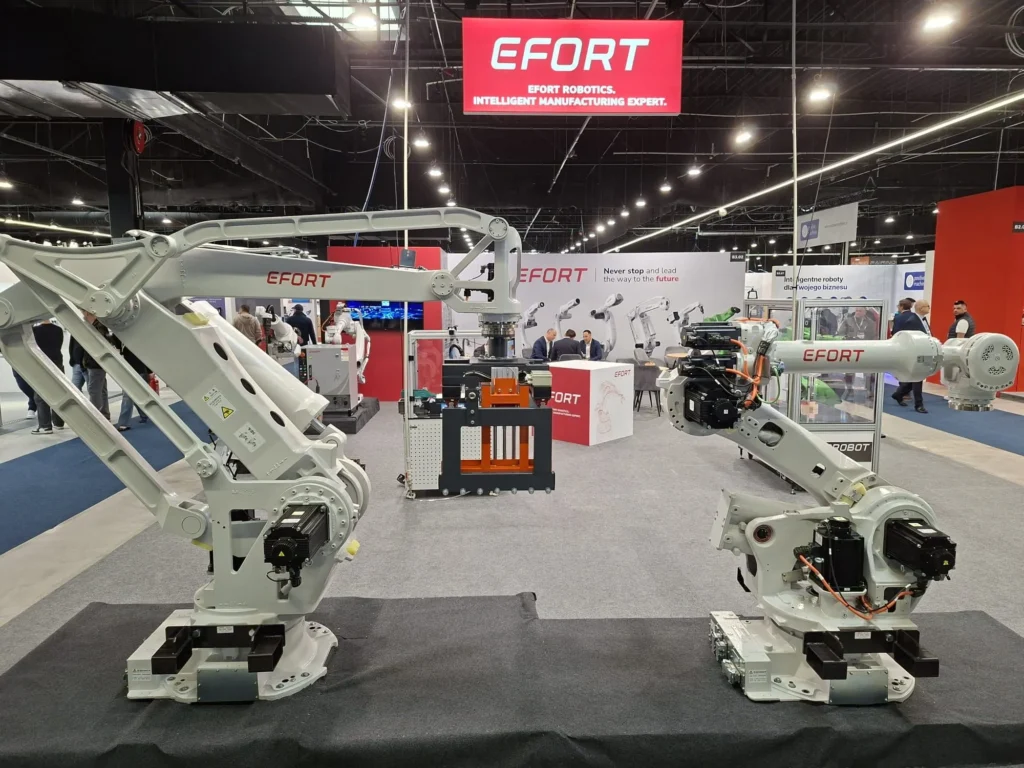
EFORT’s success also hinges on cooperation within China’s supply chain. The company partnered with an upstream supplier to overcome a longstanding bottleneck—the design of gear train‑driven joints used in high‑performance robots.
After 14 months of collaborative development, EFORT deployed this breakthrough technology on the production lines of new‑energy vehicle manufacturers BYD and Seres. This underscores how joint innovation across the supply chain can accelerate domestic substitution and boost competitiveness.
EFORT’s story also highlights the advantages of localizing production. The firm’s headquarters in Wuhu sits just 16 kilometers from key customers like Qianchao, allowing rapid response to technical issues. Such proximity, combined with price advantages and technical improvements, has convinced domestic clients to fully replace imported robots with EFORT units. These domestic successes provide a foundation for EFORT’s international ambitions.
To sustain its momentum, EFORT is investing in a robot super factory and global headquarters in Wuhu. The facility, under construction as of mid‑2025, had an annual production capacity of 100 000 industrial robots.
Once operational, the plant will feature intelligent robots that assemble other robots, bringing the concept of “robots building robots” to life. This facility will integrate automated assembly, three‑dimensional warehouses, CNC machining centers, and quality inspection. By expanding capacity and embedding digital processes, EFORT aims to lower unit costs while maintaining quality—an essential requirement for competing against global incumbents.
However, expansion is expensive, and profitability is not guaranteed. A European Parliament study on industrial overcapacity, released in March 2026, noted that EFORT and state‑affiliated SIASUN continued to make losses in 2025.
In contrast, smaller low‑end Chinese OEMs remained profitable, underscoring that entering high‑end robotics requires significant R&D and capital expenditure. Investors should weigh EFORT’s growth prospects against these profitability challenges.
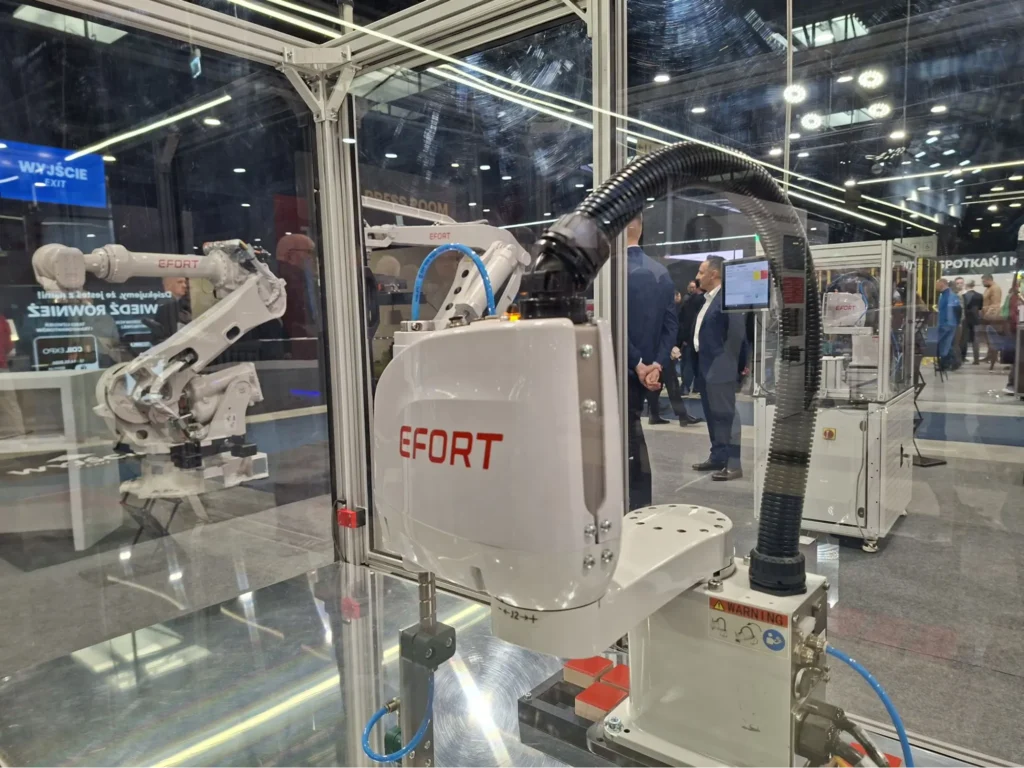
The IFR’s 2026 robotics trends point to five priorities: AI autonomy, IT and factory system integration, humanoid reliability, safety, cybersecurity, and robots that help close labor gaps. EFORT already connects with several of these themes.
Its programming-free welding system shows how AI can reduce manual coding and make high-precision automation easier to deploy. Its dexterous hands and material handling robots also point toward more flexible factory tasks, especially in automotive automation.
China’s policy direction strengthens this opportunity. The 15th Five-Year Plan places high-end intelligent robotics and AI-integrated manufacturing at the center of industrial upgrading. For EFORT, this creates a supportive market, but not an easy one.
The company still needs to prove reliability, after-sales support, overseas compliance, and financial discipline. As China’s robotics sector becomes more crowded, EFORT’s next advantage will depend on execution rather than demonstrations.
Looking to stay ahead in China’s fast‑moving digital economy? Join Chozan to access expert insights, market research, and hands-on training that help you navigate trends like industrial robotics, AI, and cross‑border innovation.
To understand how China’s robotics, automation, and smart manufacturing trends affect your business, book a consultation with ChoZan.
EFORT is commonly presented as “Efficient Robots for Intelligent Integrations.” For buyers, the name reflects its positioning around adaptable industrial robots, factory integration, and automation systems for manufacturing, machining, packaging, and process applications.
Yes. EFORT Robot is connected to EFORT Intelligent Robot Co., Ltd., which is listed on Shanghai’s STAR Market under the stock code 688165. This matters for investors tracking disclosures, reports, and governance updates.
Yes, in many searches, EFORT Intelligent Equipment refers to the EFORT group company behind industrial robot products, while EFORT Robot is a buyer-facing search phrase. Always verify the exact legal entity on contracts.
EFORT WFC refers to EFORT W.F.C. Holding S.p.A., part of the group’s overseas structure. It matters because EFORT’s European robotics business connects product distribution, automation integration, service, and body-in-white expertise.
EFORT does not publish a standard robot price. Final cost depends on payload, reach, controller, end tooling, safety guarding, software, installation, training, and service terms, so buyers should request cell-level quotes.
Buyers should match payload, reach, controlled axes, floor space, tooling weight, and process type before selecting an EFORT Robot model. EFORT’s product selector supports comparison by wrist load, reach, and axis configuration.
Overseas buyers should start with EFORT’s official sales network or regional group companies. In Europe, EFORT Robotics imports and distributes products, supported by subsidiaries in Poland, France, and Germany for EMEA coverage.
Yes. EFORT’s official site lists sales network, after-sales technical service, Robot College, and download resources. Buyers should confirm local response times, access to spare parts, and training language before signing.
No. Collaborative robots enable closer human-robot workflows, while traditional industrial robots typically prioritize speed, reach, payload, and guarded-cell performance. Buyers should assess the full application, not only the robot arm.
Buyers should review ISO 10218 safety requirements, cybersecurity controls, software update policies, data ownership, integration interfaces, and local service capacity. Future-ready robot cells need governance as much as mechanical performance.