CONTENT
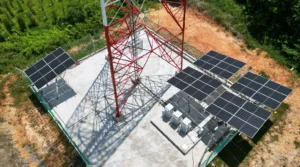
Huawei Solar Inverters sit at the power-conversion and control core of FusionSolar, Huawei Digital Power’s integrated system for PV generation, battery storage, backup, charging, and energy management.
The architecture spans residential SUN2000 controllers, commercial string inverters, a 506 kW utility platform, LUNA2000 batteries, optimizers, SmartGuard, SmartAssistant, and software.
Coordination can simplify delivery and plant management, but it makes compatibility, cyber controls, and local support part of the inverter decision. Wood Mackenzie’s 2026 assessment placed Huawei and Sungrow at the top of its manufacturer ranking, confirming Huawei’s relevance in global procurement.
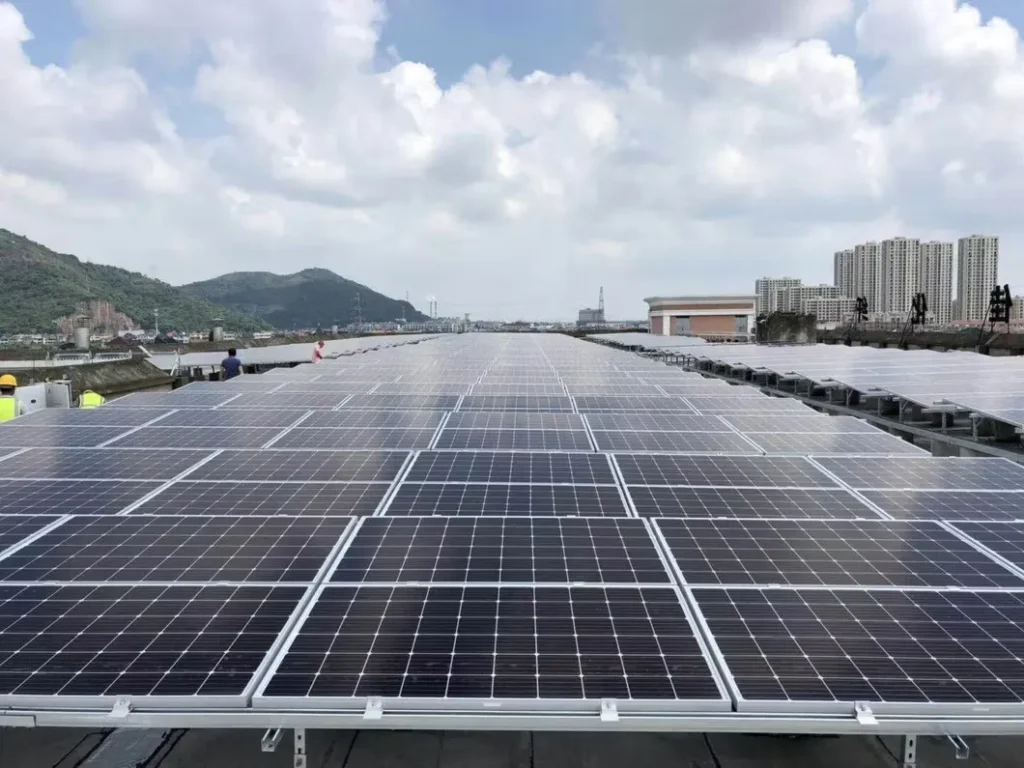
FusionSolar connects power equipment with management software across residential PV, C&I, and utility projects. Huawei described its 2025 direction as integrating bit, watt, heat, and battery technologies.
FusionSolar 9.0 later introduced a device-, edge-, and cloud-based architecture. Huawei reported more than 2,300 plant-level grid-forming tests in Xizang and Qinghai.
| Stack layer | Main Huawei components | Operational role |
| Project design | SmartDesign 2.0 | Module layout, electrical design, storage sizing, and solution comparison |
| Module control | SUN2000 and MERC optimizers | Panel-level output management, shutdown, and fault visibility |
| Power conversion | SUN2000 controllers and string inverters | DC to AC conversion, MPPT, grid response, and protection |
| Storage | LUNA2000 residential and C&I systems | Solar shifting, backup reserves, and tariff-based dispatch |
| Continuity and loads | SmartGuard, SmartAssistant, and chargers | Backup switching, metering, appliance control, and load priority |
| Fleet management | FusionSolar app and SmartPVMS | Monitoring, alarms, analysis, scheduling, and remote operations |
This structure explains why a Huawei inverter evaluation should cover more than peak efficiency. The Huawei solar proposition makes the inverter a control point inside a larger operating system.
SUN2000 is a family, not a single product. Capacity, phase configuration, storage support, optimizer compatibility, cooling, and grid functions change by model and country.
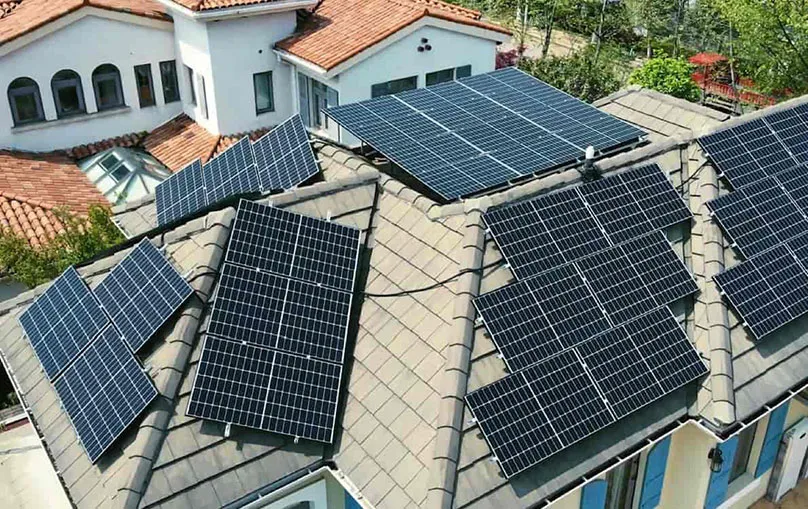
Huawei’s current global catalog features the 5 kW to 12 kW MAP0 series and the 12 kW to 25 kW MB0 series among its residential options. The Huawei hybrid solar inverter proposition combines solar conversion with supported LUNA2000 storage, backup equipment, and household energy controls, although Huawei calls many current units Smart Energy Controllers.
In supported configurations, these hybrid inverters place solar and battery conversion under one controller. The MB0 product page lists AFCI protection that interrupts a DC arc within 0.5 seconds, an IP66 enclosure, an operating range from minus 25°C to 60°C, and storage integration.
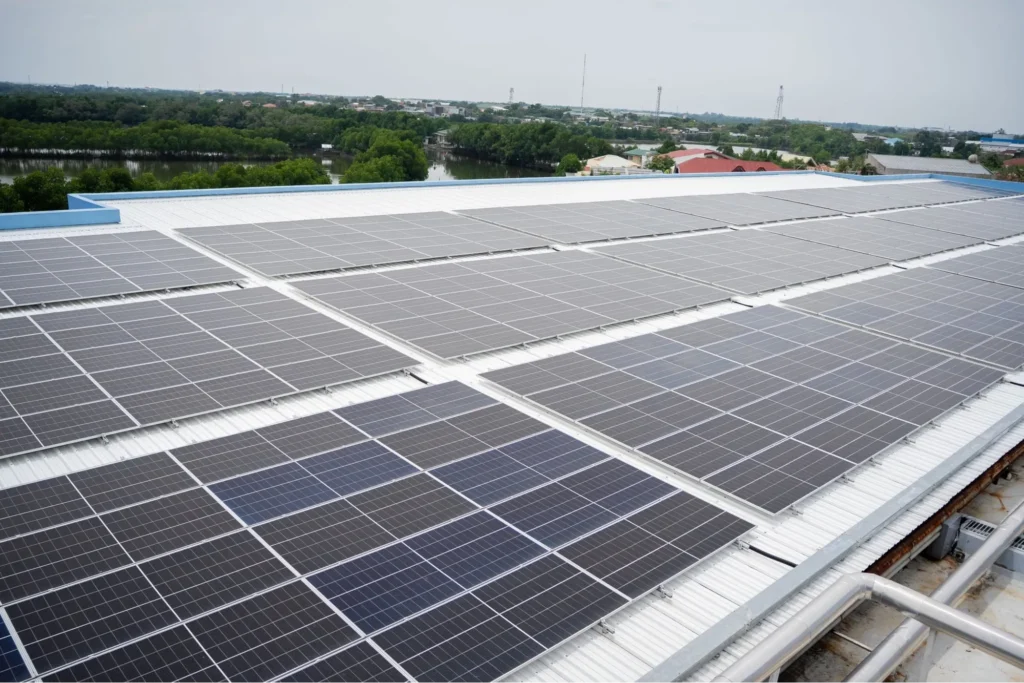
The Huawei residential solar inverter suits larger homes and three-phase sites, but installers must confirm the grid code, battery, optimizer, and backup pairing.
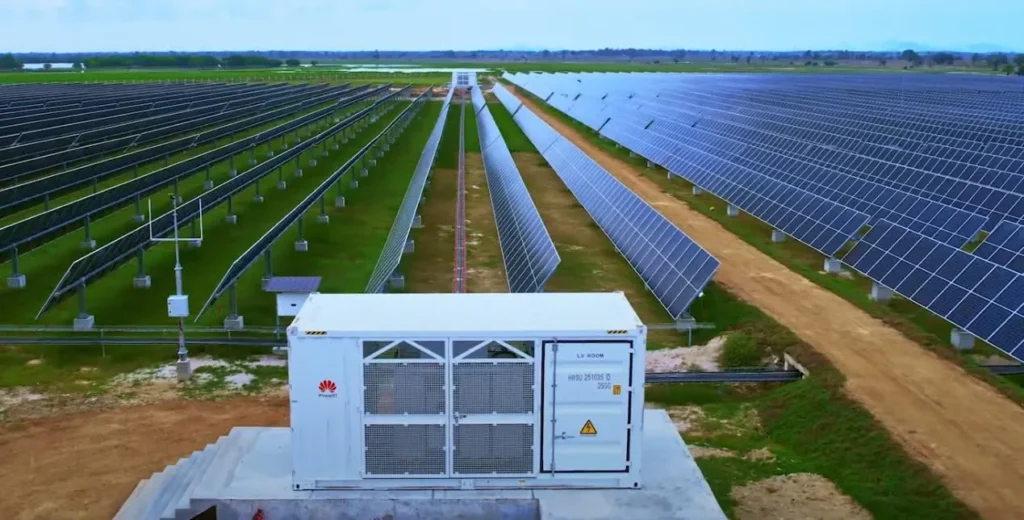
The SUN2000-150K-MG0 sits at the center of Huawei’s current C&I offer. Huawei’s October 2025 European showcase reported 98.8% maximum efficiency, seven MPPTs, Smart String-Level Disconnect, and ground-fault isolation within 15 milliseconds.
The same portfolio connects the inverter with MERC module controllers, LUNA2000-241 storage, charging, and SmartPVMS.
The commercial case for a Huawei solar string inverter rests on standardized design, string-level visibility, coordinated storage dispatch, and fewer supplier interfaces. A project model should test Huawei’s claims against local tariffs, shading, curtailment, labor, and service terms.
The 506 kW SUN2000-506KTL is Huawei’s current utility flagship. It won the Photovoltaics category at the smarter E AWARD 2026. Huawei positions it as a 1,000 Vac, grid-forming string inverter and reported more than 10 GW of FusionSolar 9.0 projects under construction globally in June 2026.
Grid-forming control can help establish voltage and frequency references instead of simply following an existing grid signal. Huawei estimates that the 1,000 Vac system and larger arrays can save 0.3 to 0.6 US cents per watt in balance-of-system costs.
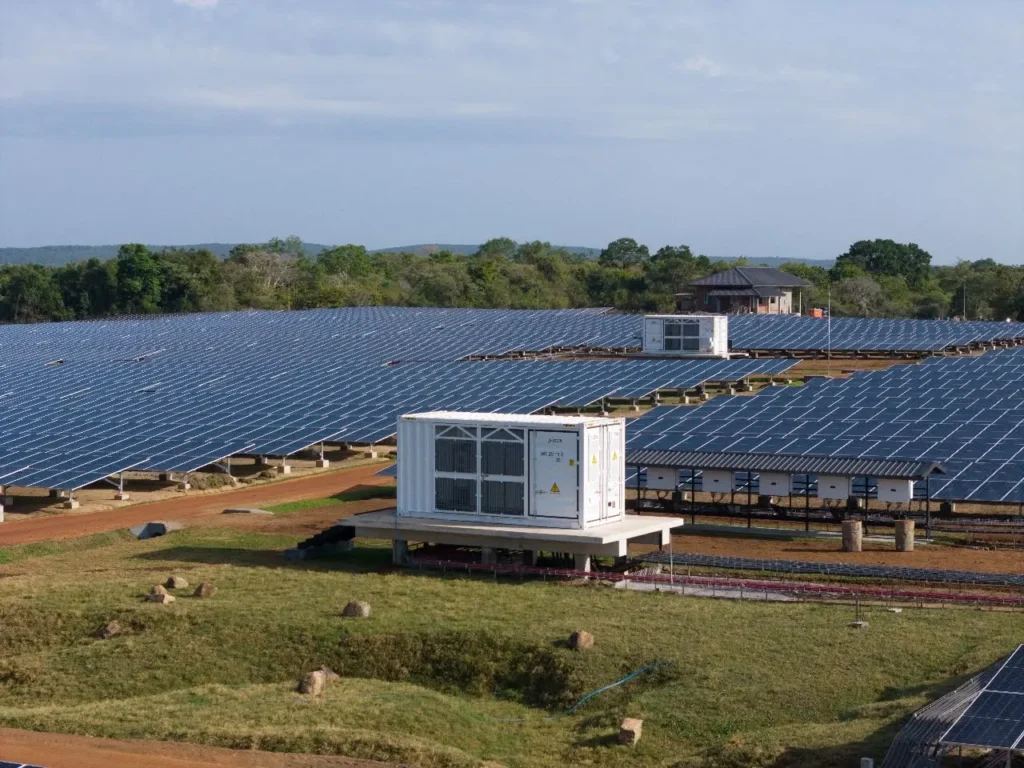
The inverter gains more strategic value when the surrounding components share data and control logic.
The current residential LUNA2000 S1 family combines 5 kWh and 7 kWh packs into nine options from 5 kWh to 21 kWh. An internal optimizer manages each module and supports expansion without state-of-charge calibration.
Solar optimizers add panel-level control where shading, mixed orientations, safety rules, or detailed fault location justify them. SmartGuard supports whole-home backup up to 63 A while on grid, subject to inverter capacity during off-grid operation.
SmartAssistant combines metering, communication, and energy dispatch. This makes the Huawei solar inverter SUN2000 part of a coordinated energy system.
SmartDesign 2.0 can create layouts from satellite views, automate electrical design, compare configurations, and recommend storage capacity. After commissioning, FusionSolar centralizes inverter monitoring, device alarms, energy flows, and performance trends.
Huawei’s SmartPVMS 25.1 manual documents generation and consumption forecasting, battery scheduling, C&I SmartEMO, and negative-price optimization. This smart energy management affects self-consumption, tariff response, maintenance, and reporting. Teams should confirm subscription, approval, meter, and software requirements.
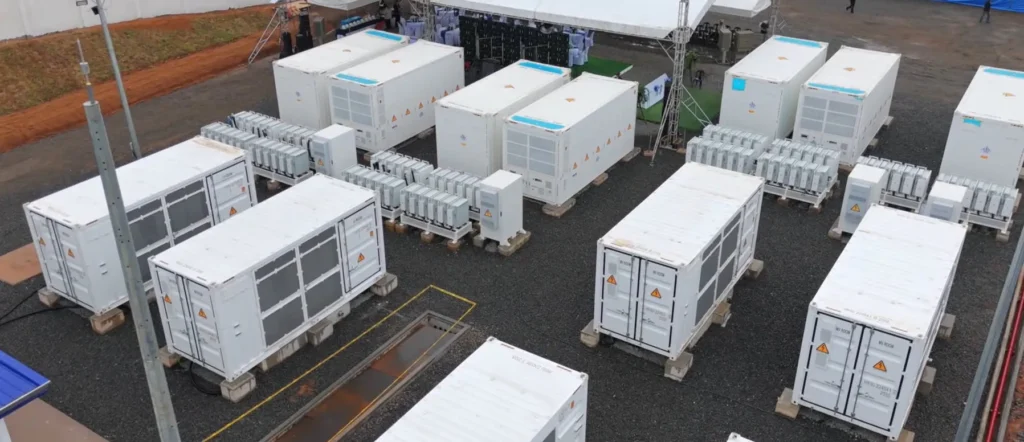
Current Huawei documentation includes SmartAssistant networking with third-party inverters. Huawei also permits supported gateways to connect with third-party management systems through configurable servers, ports, and TLS encryption. Its household ecosystem includes tested third-party chargers and appliances.
This creates meaningful openness at the communications layer. Universal battery coupling, equal feature depth, and support for every device do not follow automatically.
Teams should request the compatibility matrix, protocol documentation, API rights, data export process, and a tested cloud-outage fallback before selecting Huawei solar PV inverters.
Internet-connected inverters can receive updates and remote commands, so cybersecurity has become a finance and compliance issue. In May 2026, the European Union restricted public funding for projects using Chinese-made inverters.
Reuters calculated that the measure could affect at least 14 GW of new solar capacity each year. The rule concerns funding eligibility and supply-chain risk, rather than one model’s engineering.
As of June 30, 2026, US officials were also developing a possible restriction on foreign-made energy inverters, with Chinese equipment as the main focus.
Global buyers should review funding rules, approved-vendor lists, data residency, remote-access governance, firmware signing, vulnerability disclosure, software bills of materials, and incident-response duties. These checks belong beside efficiency, warranty, and price.
Five questions separate a strong system decision from a product comparison:
The main lesson from Huawei Solar Inverters is architectural. Huawei has carried a Chinese strength in power electronics and digital coordination from household panels to utility grid support.
Value depends on the fit among hardware, software, service, regulation, and project economics. A full-stack assessment gives a clearer answer than an efficiency ranking.
ChoZan helps teams assess the business meaning behind Chinese technology platforms such as Huawei Solar Inverters. Our services include China research, expert calls, digital transformation consulting, workshops, and learning expeditions.
Book a consultation to connect technology evidence with strategy, procurement, and market planning.
Actual service life depends on heat, humidity, installation quality, loading, maintenance, and firmware support. Ask the installer for the model’s design assumptions, warranty term, replacement process, and local spare-parts plan before purchase.
Warranty terms differ by model, market, sales channel, and installation date. Check Huawei’s current warranty document and serial-number status, then confirm labor, shipping, advance replacement, and installer obligations in the purchase contract.
Yes, when the design includes a compatible LUNA2000 battery, supported backup equipment, correct wiring, and sufficient inverter output. Backup capacity still depends on stored energy, appliance demand, phase arrangement, and local installation rules.
Core power conversion can continue without a cloud connection, subject to the installed configuration. Remote monitoring, notifications, updates, and some scheduling functions may pause, so buyers should document local controls and outage procedures.
No. Optimizer requirements depend on the inverter model, roof design, shading, module mismatch, rapid-shutdown rules, and monitoring goals. The designer should explain where panel-level control creates measurable value and confirm approved pairings.
Huawei’s current manuals require parallel strings on the same MPPT to match in module model, quantity, orientation, and tilt. Mixed arrays may need separate MPPTs, optimizers, or a revised electrical design.
Selected LUNA2000 systems support modular expansion, but rules vary by battery generation and inverter pairing. Confirm pack compatibility, age limits, maximum capacity, warranty treatment, software requirements, and installer availability before assuming future expansion.
Noise varies with model, output, cooling design, temperature, and mounting location. Review the exact acoustic specification and installation clearance, then keep power equipment away from bedrooms or workspaces when site design permits.
Yes, selected Huawei gateways support third-party management connections, including configurable TLS. Access still depends on hardware, firmware, permissions, and regional support. Request protocol documents and test required data points before signing the supply agreement.
Request network diagrams, remote-access controls, update and signing procedures, vulnerability reporting, log retention, data location, API security, software component records, incident-response commitments, penetration-test evidence, and a plan for operating during connectivity loss.