CONTENT

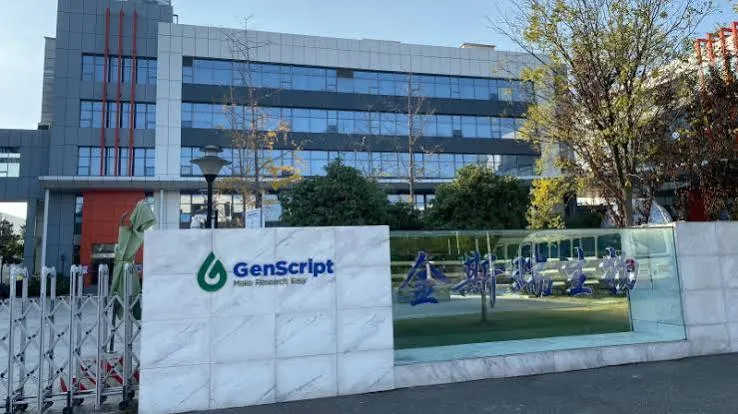
GenScript is a biotechnology group that supplies gene synthesis, protein and antibody research services, and drug development and manufacturing support through ProBio. Its portfolio also includes industrial enzymes through Bestzyme. It sells the picks and shovels of biotech: genes to order, proteins on demand, and factory capacity to make them at scale.
The company offers a useful perspective on China’s role in global biotechnology. Its commercial importance lies in the infrastructure that helps other organizations develop products: scientific expertise, production systems, and repeatable workflows.
The question is how effectively those capabilities translate into reliable delivery and sustainable earnings.

The listed parent is GenScript Biotech Corporation. Buyers searching for GenScript Corp should confirm the specific group company named in a quotation or contract.
Its three core businesses address different customer needs.
| Business | Main capabilities | Customer purpose |
| Life Science Group | Life-science services, including DNA, RNA, peptides, proteins, antibodies, and laboratory products | Obtain research materials and test biological ideas. |
| ProBio | Discovery, development, and contract manufacturing for biologics and cell and gene therapies | Advance therapeutic programs toward clinical and commercial production. |
| Bestzyme | Industrial enzymes and synthetic biology products | Apply biological processes in sectors such as food, feed, and industrial processing. |
This distinction matters when assessing a supplier. A research team ordering an experimental protein and a developer commissioning clinical manufacturing need different specifications, quality documentation, and contractual commitments.
Gene synthesis creates DNA from a specified sequence. In a protein project, that DNA provides instructions for producing the protein researchers want to study. Protein engineering then uses experiments to compare and improve properties such as activity, stability, or binding.
The business value comes from coordinating these steps. A customer comparing multiple candidates needs consistent production and testing conditions. Otherwise, differences between workflows can complicate result interpretation.
In the first half of 2026, the company said its Gene-to-Protein offering generated approximately 66% of Life Science Group revenue. That gives the integrated workflow measurable commercial importance. Its August 2026 update also reported that its AI-enabled drug discovery business doubled year over year.
Management stated in August 2026 that approximately 60% of its laboratories had AI-driven automated workstations. This is a company-reported deployment figure, rather than an independent measure of productivity.
The practical test is the resulting service performance. Customers should examine repeatability, failed-run handling, and the time needed to receive usable results. A faster production step has limited value if downstream testing still delays the project.

AI can prioritize biological designs, but experimental evidence determines how those designs perform. GenScript is expanding its role in generating that evidence.
On September 16, 2026, the company announced an agreement with Lilly TuneLab. It will offer preferred-rate laboratory services to participating biotechnology companies. The work includes producing, purifying, and characterizing prioritized sequences under documented protocols.
The commercial implication is a potentially recurring relationship: customers can order new experiments as their models produce revised candidates. That interpretation follows the service model; the announcement does not establish future order volumes or clinical success.
This also changes the purchasing question. Teams need to assess how well experimental outputs fit their development process, how results reach decision makers, and which party handles discrepancies. A large catalog alone cannot answer those questions.
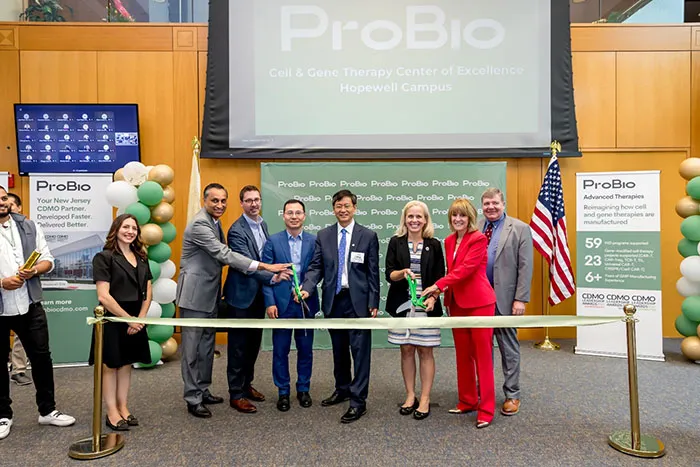
ProBio connects discovery services with development and manufacturing. Its contract development and manufacturing organization, or CDMO, model supports clients that need external capabilities to advance therapeutic programs.
In June 2025, the business announced the opening of its 128,000-square-foot facility in Hopewell, New Jersey, for plasmid DNA and viral vector manufacturing. The announcement highlights the facility’s role in clinical development and scale-up.
An August 2025 service launch added GMP adeno-associated virus manufacturing. The disclosed capabilities included plasmid production, vector manufacturing, formulation, and aseptic filling at the same location.
These announcements identify concrete manufacturing functions. They do not establish that every customer product has regulatory approval or that every production process suits the same development stage.
A developer should therefore define the required production grade, release tests, scale, and technology-transfer package before choosing a site. The commercial benefit of a broad service portfolio depends on how well its individual capabilities match the program.
The revenue figures require care. GenScript reported US$518.8 million for the first half of 2025, compared with US$404.2 million for the first half of 2026.
At the same time, management reported 27.3% comparable growth. That calculation excludes the financial impact of the LaNova licensing transaction recognized in the earlier period. The comparison methodology explains why reported revenue can fall while the adjusted comparison shows growth.
ProBio generated US$61.1 million in first-half 2026 revenue, with 34.2% comparable growth. It still recorded an adjusted operating loss of US$24.3 million. The segment figures show progress, but the path to profitability remains unfinished.
The useful distinction is between recurring service activity, licensing income, and the cost of maintaining capacity. A single headline growth rate cannot describe all three.
The group’s 2025 annual disclosure identifies production operations in mainland China, the United States, and Singapore. This makes the business a case of Chinese capabilities participating in an international delivery network.
The strategic lesson is operational. China’s contribution to biotechnology can include the systems that turn specialist expertise into services other companies can purchase repeatedly. Standard specifications, consistent documentation, and dependable capacity matter as much as scientific novelty.
Domestic demand also matters. For the first half of 2026, management reported that ProBio’s China revenue grew 43.1% and new orders grew 73.8% year over year, on a comparable basis excluding LaNova licensing. The regional figures indicate opportunities within China, although one supplier’s performance cannot establish a national market growth rate.
The model suggests that international competitiveness depends on the quality of the complete customer experience. Strong science needs dependable project management and commercially workable delivery arrangements.
A supplier review should link technical capability to the consequences of delay, failure, or changes in development plans.
Cross-border governance also deserves attention. Reuters reported renewed U.S. congressional scrutiny of the group’s China ties in July 2025.
The coverage described concerns and requests for information, not findings of wrongdoing. Procurement decisions should distinguish verified requirements from political claims and assess the actual contracting entity and production site.
The GenScript case raises a broader question: which Chinese operating practices could improve your own business? ChoZan helps teams investigate through:
Explore the China research resources or book a consultation to discuss your learning priorities.
In this company context, gene script is an alternative search spelling of the brand. Use GenScript when checking official product pages, invoices, and corporate filings to avoid confusing the business with unrelated genetics terminology.
Yes. GenScript Biotech Corporation trades on the Hong Kong Stock Exchange under stock code 1548. Use the listed parent’s name when reviewing disclosures, since individual operating companies and service brands can have different legal identities.
The 2025 annual filing classifies Legend Biotech as a significant associate and describes the group’s investment in it. Legend has its own Nasdaq listing, so readers should distinguish its financial disclosures from the parent group’s operating segments.
The FLASH Gene pricing from US$89 per construct, including synthesis, cloning, and a default plasmid preparation. Sequence length, eligibility, and additional requirements affect the final quotation, so confirm the complete specification before ordering.
No. FLASH Gene’s published turnaround refers to production time. Transport adds time after dispatch, and project specifications can alter the schedule. Ask for an expected arrival date that includes production, transport, and any destination requirements.
Yes. Customers can submit their own vectors for evaluation and onboarding. The ordering guidance states that this adds five business days. Confirm acceptance, fees, and the production start date before placing an order.
The GenSmart ordering platform checks sequence eligibility. The company offers Premium Gene for more demanding requirements. Customers should request a suitable service quotation and confirm the resulting turnaround and specifications before committing to a project schedule.
Gene synthesis creates DNA according to a chosen design. DNA sequencing reads the order of bases in existing DNA. A supplier can use sequence verification to check its output, so the services perform different but complementary tasks.
Yes. Its 2026 iGEM program offers eligible accepted teams up to ten free FLASH Gene orders. The offer excludes shipping, vector onboarding, and additional services, while regional ordering arrangements differ for participating teams.
A useful handover request specifies sample identifiers, raw measurements, assay methods, quality-control results, and records of unsuccessful experiments. Teams should also agree on file formats and permitted reuse so the outputs remain useful across subsequent research decisions.