CONTENT

Legend Biotech has grown from a Nanjing startup into what the company describes as the world’s largest standalone cell therapy company, with more than 10,000 patients treated with CARVYKTI as of December 2025.
The company reported $1.9 billion in CARVYKTI net trade sales for full-year 2025 and achieved franchise profitability, a milestone that few biotech firms reach before their first decade of commercialization.
For global business leaders watching China’s technology ascent, Legend Biotech offers a concrete case study in how Chinese-founded innovation can achieve regulatory approval, manufacturing scale, and commercial traction across the United States, Europe, and Asia.

Legend Biotech Corporation began operations in China in November 2014 as a subsidiary of GenScript, then incorporated in the Cayman Islands in May 2015.
The company is not a Chinese operating company in the conventional sense. It is a Cayman-incorporated holding company that runs operations through subsidiaries primarily in the United States, China, and the European Union.
Its Nanjing entity remains active in manufacturing and research, and the company completed a heat pump retrofit at a Chinese site in 2025 that eliminated steam usage and reduced roughly 400 metric tons of CO2 equivalent annually.
That structure matters for anyone answering the question “is Legend Biotech a Chinese company?” The honest answer is: it is a globally structured biopharmaceutical firm with Chinese roots, headquartered in Bridgewater, New Jersey, and with operations and manufacturing footprints across multiple regions.
As of Q2 2026, Legend Biotech reported more than 3,200 employees globally, while its current operations profile lists more than 1,500 employees in the United States.
CARVYKTI (ciltacabtagene autoleucel, or cilta-cel) is a BCMA-directed CAR-T therapy that Legend Biotech develops and markets with Johnson & Johnson. The therapy is approved for patients with multiple myeloma who have received at least one prior line of therapy, making it the only BCMA-targeted CAR-T cleared for second-line use.
A 2025 CARTITUDE-1 analysis followed 97 heavily pretreated patients for a median of 61.3 months. Thirty-two patients remained alive and progression-free for at least five years following a single cilta-cel infusion without maintenance treatment.
That result requires careful interpretation. It does not mean one-third of every future patient population will experience the same outcome. The study involved a defined group of heavily pretreated patients and represents long-term follow-up from a specific clinical trial.
The clinical data behind CARVYKTI’s commercial trajectory is unusually strong for a cell therapy. In the Phase 1b/2 CARTITUDE-1 study, 33 percent of heavily pretreated patients remained progression-free for five years or more after a single infusion, with no maintenance therapy.
More recent five-year data from CARTITUDE-2 Cohort A, presented in September 2026, showed that 10 of 20 patients treated after one to three prior lines remained alive and progression-free without further anti-myeloma therapy five years after CARVYKTI infusion. The five-year overall-survival rate was 69.2%. The cohort was small and involved patients treated earlier in their disease course, so these results should not be directly compared with CARTITUDE-1.
In the Phase 3 CARTITUDE-4 study, 80.5 percent of standard-risk patients who received cilta-cel as early as second line remained progression-free and off treatment at 30 months. The FDA and European Commission both approved label updates in 2025 to include overall survival benefit data from CARTITUDE-4.
Regulatory evidence continued to evolve during 2025. The FDA approved an update to CARVYKTI’s prescribing information incorporating an overall survival analysis from CARTITUDE-4.
Safety remains part of the picture. In October 2025, the FDA added immune effector cell-associated enterocolitis to the therapy’s boxed warning after reviewing clinical-trial and postmarketing cases involving severe gastrointestinal inflammation.
Another regulatory change reduced some delivery friction. In June 2025, the FDA removed REMS requirements for currently approved autologous CAR-T therapies, including CARVYKTI, after determining that the additional program was no longer necessary to ensure their benefits outweighed their risks. Product labeling and safety monitoring remain important.
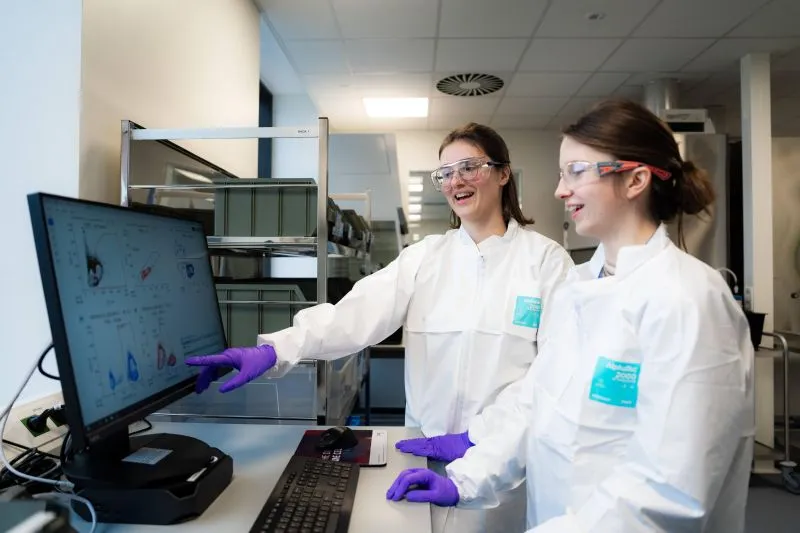
CAR-T commercialization depends heavily on manufacturing because every autologous treatment starts with cells from an individual patient.
During the first quarter of 2026, Legend Biotech reported a 99% manufacturing success rate and more than 95% on-time order releases for final-product delivery dates. CARVYKTI net trade sales reached approximately $597 million during that quarter.
Physical capacity has expanded alongside process performance. The company completed an expansion of its Raritan, New Jersey facility, providing installed capacity to support treatment of up to 10,000 patients annually. That number represents manufacturing capacity, not the number of patients actually treated each year.
Commercial reach also widened. During Q2 2026, CARVYKTI generated about $657 million in net trade sales and became available at 348 sites across 19 markets.
These numbers highlight a key lesson from advanced cell therapy. Scientific performance creates the product opportunity, while production reliability, turnaround times, treatment-center access, logistics, and quality control determine how far that product can scale.
For Legend Biotech, manufacturing has therefore become part of the commercial proposition rather than a separate operational function.
The Legend Biotech pipeline extends into autologous, allogeneic, and in vivo CAR-T research across hematologic cancers, solid tumors, and other potential indications.
One of the most closely watched programs is LB2501, an investigational in vivo CD19/CD20 dual-targeting CAR-T therapy for B-cell non-Hodgkin lymphoma.
Traditional autologous CAR-T requires cells to leave the patient for engineering and production. LB2501 instead aims to generate CAR-T cells inside the body.
Early 2026 Phase 1 results showed responses in all six evaluable patients at the higher dose level, with five complete responses. The company also reported in vivo CAR-T expansion without lymphodepleting chemotherapy. Median follow-up for that cohort was only 2.2 months in the preliminary disclosure, so the data remain very early.
Another program, LB2102, targets DLL3 in small cell lung cancer and large-cell neuroendocrine carcinoma. At higher dose levels, the company reported a 28.6% objective response rate and 78.6% disease control rate from its first-in-human study in 2026.
These programs make the Legend Biotech pipeline strategically interesting, but evidence levels matter. CARVYKTI has regulatory approval, commercial sales, large-scale manufacturing infrastructure, and long-term clinical follow-up. LB2501 and LB2102 remain investigational programs with early human data.
Legend Biotech pairs clinical validation with commercial execution. CARVYKTI supplies the clinical and regulatory evidence. Johnson & Johnson supplies global commercialization reach. Expanded manufacturing increases patient capacity. Early CAR-T programs test production and delivery methods that could lower cost and widen access.
China’s biotech sector benefits from this model. Licensing activity shows rising international demand for drug innovation tied to Chinese research. Global success still requires regulatory evidence, consistent manufacturing, intellectual property protection, safety management, financing, partners, and treatment networks.
China’s emergence as a biotechnology hub does not mean one country replaces another. Innovation can start in one research system, mature in another, and create value through international collaboration.
Legend Biotech shows why studying China innovation requires more than tracking individual products or funding announcements. Useful questions include how technology moves from research to commercialization, how companies build international partnerships, and which operating models can transfer across markets.
ChoZan supports this work through China-focused research and trend analysis, learning expeditions and innovation tours, workshops, consulting, and expert calls. These formats help teams examine developments in sectors such as technology, AI, robotics, retail, and digital transformation with local context and direct market exposure.
Explore ChoZan’s research and services or book a consultation to discuss what China’s innovation models could mean for your organization.
Yes. Legend Biotech Corporation trades on Nasdaq under the ticker LEGN. Public filings provide detailed information on its CARVYKTI collaboration revenue, operating expenses, cash position, pipeline investment, manufacturing development, and risks associated with commercial and investigational programs.
Ingrid Zhang became CEO of Legend Biotech on September 15, 2026. She previously served as Novartis’ international chief commercial officer and led its China business, bringing experience across international pharmaceuticals, commercialization, and the Chinese market.
Legend Biotech developed and commercialized CARVYKTI through a collaboration with Johnson & Johnson. This structure means total CARVYKTI net trade sales should not be treated as identical to the collaboration revenue reported directly in Legend Biotech’s financial statements.
The current U.S. indication requires at least one prior treatment line and lenalidomide-refractory disease. Legend Biotech reported that enrollment for the CARTITUDE-6 trial in newly diagnosed, transplant-eligible multiple myeloma was completed in August 2025.
No. CARVYKTI is an autologous CAR-T treatment made using T cells collected from the individual patient. During manufacturing, those cells undergo genetic modification before the finished therapy is returned for administration to that same patient.
Yes. The company’s research portfolio includes allogeneic approaches alongside autologous and in vivo technologies. These programs remain investigational, so their presence in the portfolio should not be interpreted as evidence of future regulatory approval or commercial success.
The company’s current research platform includes work across hematologic malignancies, solid tumors, and potential applications beyond its approved multiple myeloma therapy. Programs outside approved CARVYKTI indications remain experimental and require further clinical validation before commercial use.
Vein-to-vein time generally describes the period from collecting a patient’s cells through manufacturing and returning the finished CAR-T product for treatment. Shorter, reliable production cycles can matter commercially because patients may have rapidly progressing disease.
LUCAR-G39D is an investigational allogeneic gamma delta CAR-T therapy targeting both CD20 and CD19 for relapsed or refractory B-cell non-Hodgkin lymphoma. First-in-human data showed a 75 percent overall response rate with no dose-limiting toxicities.
Important factors include further CARVYKTI adoption, manufacturing reliability, access to treatment sites, clinical results from earlier-line studies, progress across investigational programs, regulatory decisions, competition in BCMA therapy, and the company’s ability to manage cross-border operating risks.