CONTENT

Rokid develops AI glasses and is expanding into a spatial AI platform that connects wearable hardware, application-building tools, and third-party services. Its AIUI Studio gives developers a browser-based way to create experiences for its glasses, moving the business beyond a device catalog.
The business relevance lies in a practical question: can an interface worn on the face help people complete useful tasks with less effort? The answer depends on application quality, access to services, and repeat use.
Rokid is a Chinese technology company based in Hangzhou. A June 2025 government report documents its collaboration with Lens Technology and a production milestone at the manufacturer’s Xiangtan plant in Hunan on June 24.
That relationship offers a clear lesson in China’s technological capabilities. An AI interface needs optical engineering, electronics, industrial design, manufacturing, and software to work together. Access to these capabilities can support commercialization, but production alone can’t build customer loyalty.
The strategic opportunity is to study how the company coordinates those dependencies. A business considering wearable AI should assess its manufacturing and service partners alongside its model provider.
The product name matters because different devices support different experiences.
| Product category | Documented experience | Business implication |
| Display-equipped Rokid Glasses | Short visual information, voice interaction, camera input, and audio | Suitable applications need concise information that people can read at a glance. |
| Rokid AI Glasses Style | Display-free voice assistance, camera workflows, and open-ear audio | Services need an effective audio interaction rather than an assumed visual interface. |
| Rokid AR Spatial | Spatial multitasking with a separate computing unit | Evaluate virtual-screen work and immersive content separately from everyday AI assistance. |
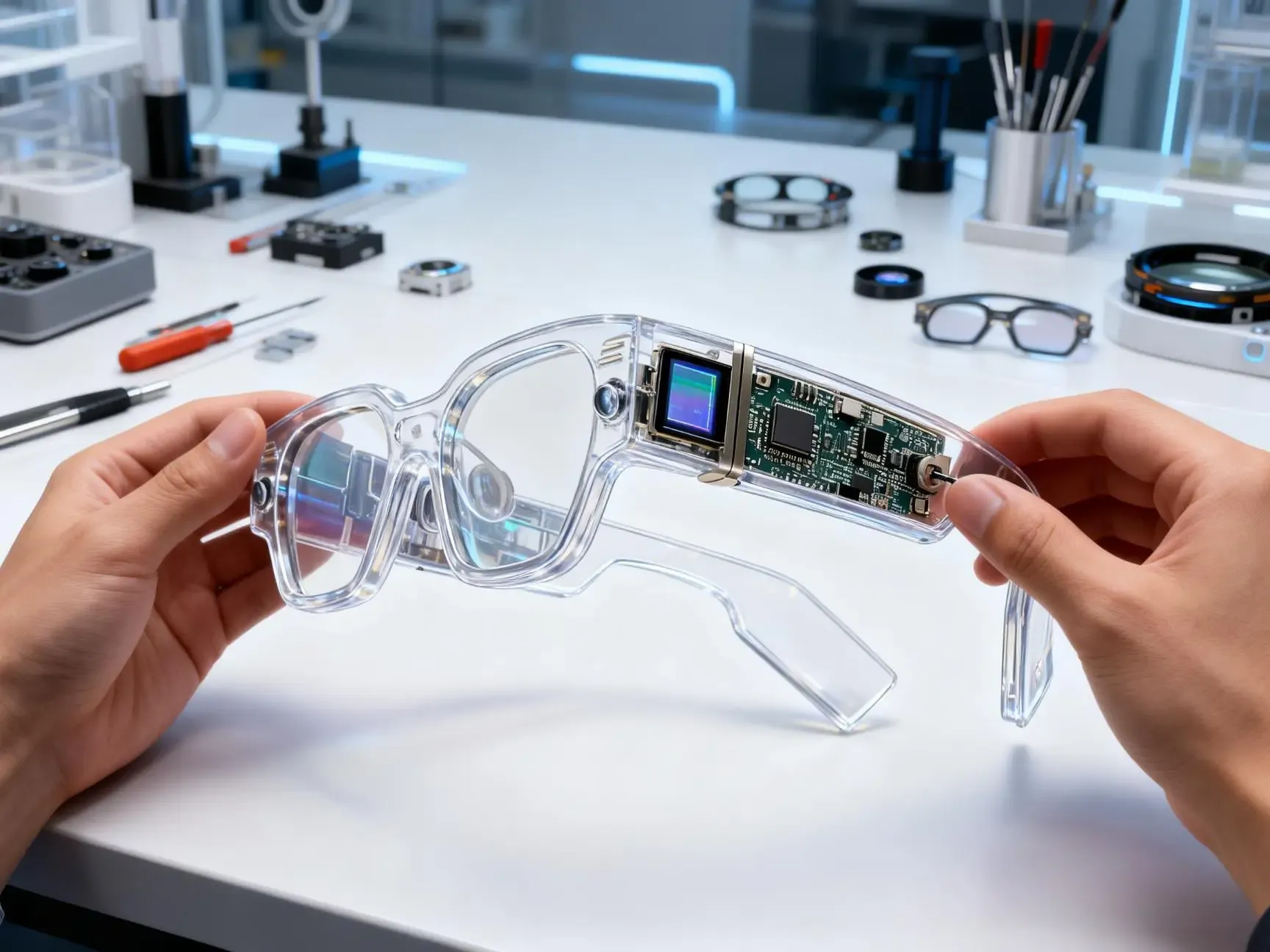
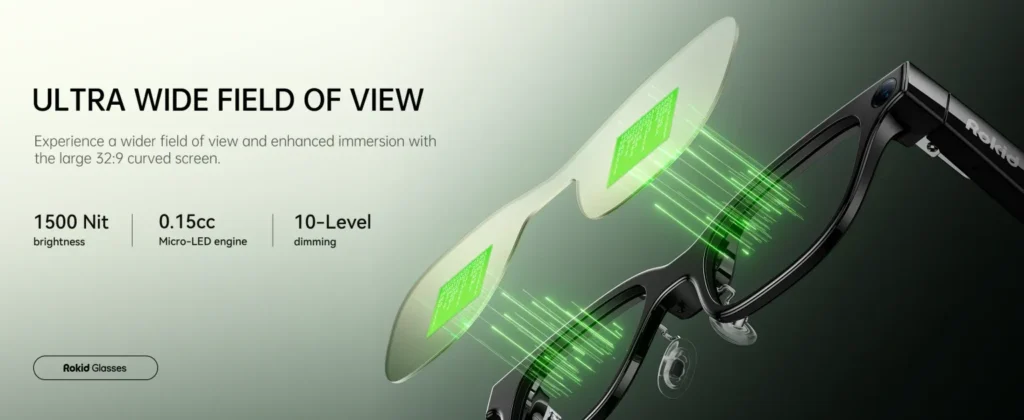
Optical waveguides carry projected information toward the wearer’s eyes. The company’s August 2026 documentation describes the original display-equipped model as a text-first interface for subtitles, scripts, directions, and status cards. Its optical architecture uses one Micro-LED engine with two outputs for binocular viewing.
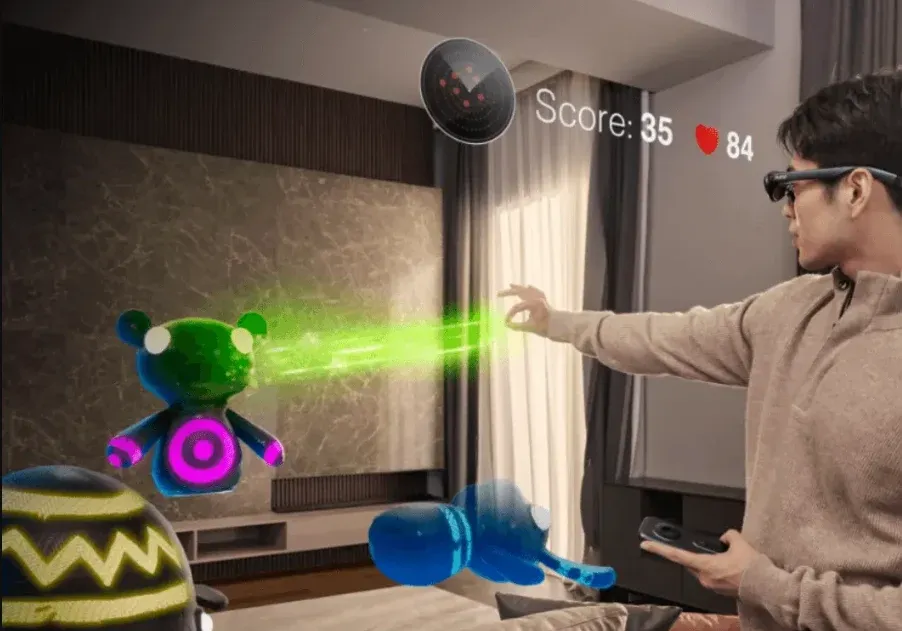
This creates a specific design brief. A useful application should prioritize the next relevant instruction and keep detailed material elsewhere. Teams should verify room mapping, world-anchored graphics, and other spatial capabilities separately before including them in a project specification.
The studio connects an idea with a development and publishing workflow. The official quick-start documentation describes natural-language code generation, imports from existing projects, browser simulation, device debugging, and submission for review.
The AIUI repository targets display-equipped AI glasses, so application compatibility needs confirmation across product families.
The less-discussed commercial benefit is the order of investment. A team can explore an application before committing to a large hardware purchase. An early prototype can test the proposed interaction, refine the information shown, and identify missing service connections.
A browser preview still leaves important questions open. Real working conditions introduce noise, movement, glare, and interruptions. A prototype should therefore establish what users must see, what they must hear, and what happens when an action fails.
The company’s creation tutorial calls for developer review, permission checks, and a final test on actual glasses. Its public framework repository also states that its coding benchmark does not verify rendering or behavior on real devices.
That distinction matters when judging development speed. Generated code and successful software checks are intermediate results. Deployment readiness requires evidence that the complete interaction works on the hardware under the conditions customers will face.
Qoder provides a concrete example of the platform direction. Its official glasses integration guide describes voice-initiated cloud tasks, desktop task access, progress notifications, and requests for user decisions. Full-length results go to the phone, while the glasses carry brief prompts and spoken summaries.
The guide also describes a confirmation step after camera capture: the system explains what it sees before proceeding. This gives the wearer an opportunity to correct a mistaken interpretation. These are documented functions, rather than independently tested performance claims.
The strategic insight is the division of work across devices. Glasses can capture context and request a decision while another system performs the task. A service provider considering AI agents should map that entire chain, including account connections, authority to act, and delivery of the finished result.

At the October launch, the company reported more than 45,000 registered developers and over 700 published agents. These figures describe participation and available supply. They do not measure active developers, repeat usage, or developer income.
A durable AR platform needs applications that remain useful after their first demonstration. The next questions concern retention, maintenance, discovery, and revenue: who returns, which tasks recur, and who pays?
A prospective partner should request evidence for its own use case. A broad developer ecosystem becomes commercially relevant when a specific application earns sustained use.
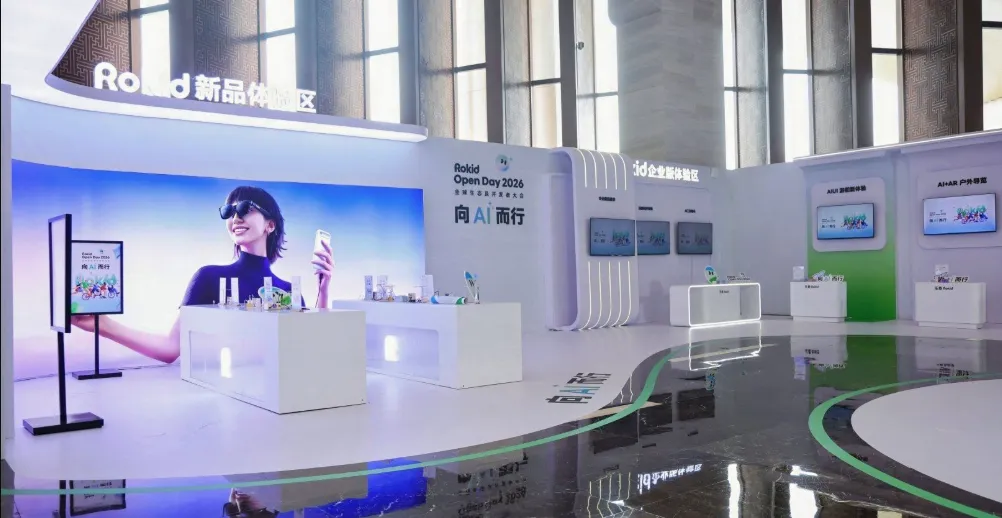
Distribution deserves attention alongside engineering. In October 2026, the company announced a Harbour City store in Hong Kong with self-directed demonstrations, eight experience zones, and automated checkout.
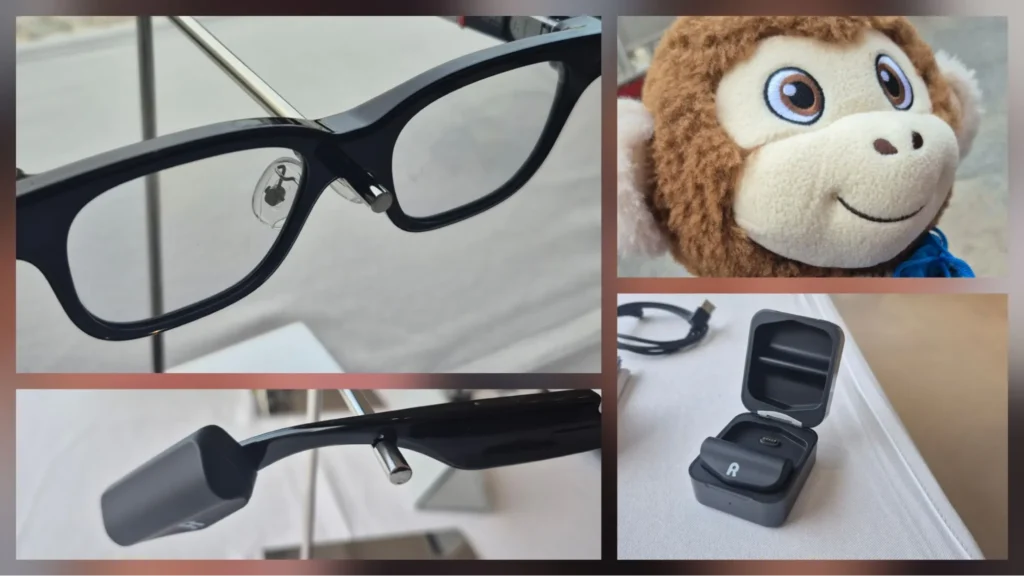
The format addresses a practical challenge: customers need to experience information in the lens to judge its value. A product video cannot fully communicate fit, readability, or interaction comfort.
Model choice adds another dimension. A March 2026 product update described Rokid AI Glasses Style’s smartphone access to ChatGPT, Gemini, DeepSeek, and Qwen. That approach offers flexibility across AI suppliers, although teams still need to verify service availability in their market.
The transferable lesson is to connect product development with customer education and service delivery. Language support, account setup, and after-sales assistance deserve attention when taking a China-developed product abroad. A strong domestic service connection may need a different provider or commercial agreement in another country.
Choose one recurring task and compare it with the existing phone or desktop process. Set acceptance criteria before the trial.
| Measure | What to record |
| Task completion | Successful outcomes and human corrections required |
| Attention | Interruptions, repeated commands, and time spent checking another device |
| Reliability | Failures under actual noise, lighting, and network conditions |
| Economics | Hardware, integration, service, training, and support costs |
| Continued use | Voluntary return to the application after the initial trial |
Include people who handle exceptions and support requests. Their experience can reveal costs that a successful demonstration conceals.
An expansion decision should rest on a measurable improvement in the chosen task, acceptable operating costs, and evidence that people want to keep using the system.
Rokid raises practical questions about how Chinese technology companies connect hardware, software, and services. ChoZan, founded by China digital expert Ashley Dudarenok, helps businesses examine those questions through China research, tailored learning expeditions, and consulting.
Explore our China reports for broader context, or contact ChoZan to discuss a focused research or learning brief around wearable AI and its relevance to your business.
The companion app supports both phone platforms. The August 2026 setup guide recommends iOS 16 or later and Android 12 or later. Check your specific handset and required features before purchasing, since compatibility extends beyond installation.
Supported offline translation requires initial app pairing, activation, and language-pack downloads. Check available packs and phone requirements before travel, since offline support covers fewer languages and can vary across software versions and regional configurations.
Yes, the display-equipped model supports an official magnetic prescription frame. Style uses lenses fitted into its main frame. Prepare your prescription and pupillary distance, then confirm model compatibility and the optical partner’s terms before ordering.
The current help center says personal ChatGPT and Gemini accounts cannot be linked within the companion app. Access to a supported assistant therefore should not be assumed to include your existing account history, subscription, or settings.
Some services can involve additional charges. The current display-glasses product page says full navigation access requires a subscription. Confirm the exact features included with your model, region, and service plan before calculating the total ownership cost.
The official camera guides list clips of up to ten minutes for the original display-equipped glasses and Style. Users can stop recording with a button or voice command. Verify limits separately for newly announced models.
Yes, the help center describes display settings within the translation and teleprompter sections of the companion app. These controls adjust font size and display area. Test readability with your actual prescription, fit, and working conditions.
Model selection matters. The help center says Max can act as a secondary Mac display but does not support multiple-screen expansion. Station 2 supports multiple application windows, so confirm the complete setup matches your intended workflow.
The company says it does not use translation history, voice conversations, or text content to train its models or for secondary marketing. Review the applicable privacy terms and third-party service policies before sharing confidential information.
The current global product page lists a 365-day limited warranty for eligible glasses, covering manufacturing defects and hardware malfunctions under normal use. Accidental damage, loss, misuse, and normal wear fall outside that stated coverage.