CONTENT
Ask most industry observers what Canadian Solar does, and they will describe a solar module manufacturer. That description is accurate but incomplete. In 2025, Canadian Solar Inc. (NASDAQ: CSIQ) operates as a vertically integrated renewable energy platform spanning high-efficiency PV modules, residential and utility-scale battery storage, global project development, and a rapidly expanding U.S. manufacturing footprint.
The company shipped 24.3 GW of solar modules and a record 7.8 GWh of energy storage in 2025. Understanding Canadian Solar today requires looking beyond the panel—into the full-stack energy business it has become.
The shift from volume-driven module sales to a diversified energy platform is not incremental. It is structural. And for global energy buyers, project financiers, and supply chain strategists, that distinction carries real commercial weight.
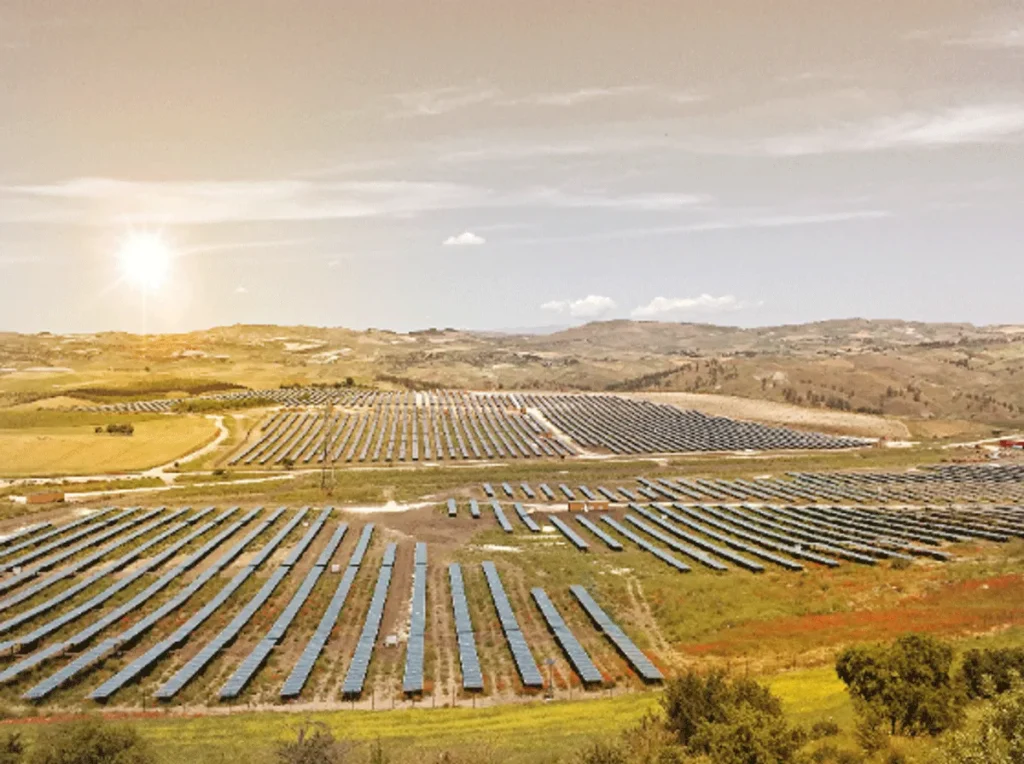
The manufacturing segment covers ingots, wafers, cells, PV modules, power electronics, and battery systems. At the end of 2025, annual capacity included 51.3 GW of modules and 15 GWh of battery energy storage systems.
The group delivered 24.3 GW of modules and 7.8 GWh of storage during 2025. Full-year 2025 results show how material storage has become beside the panel business.
This breadth supports packaged procurement. A customer can source modules, solar inverters, storage hardware, controls, and long-term service coverage within one group. It also lets Canadian Solar develop technology for several market layers, from a residential roof to a grid-scale battery plant.
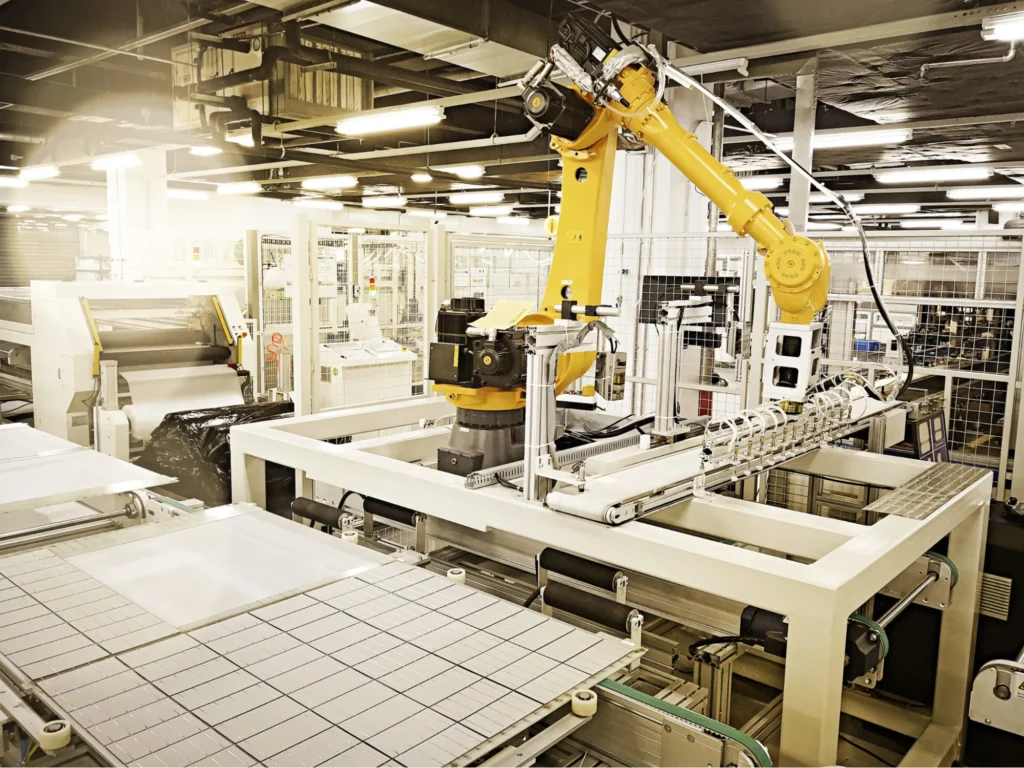
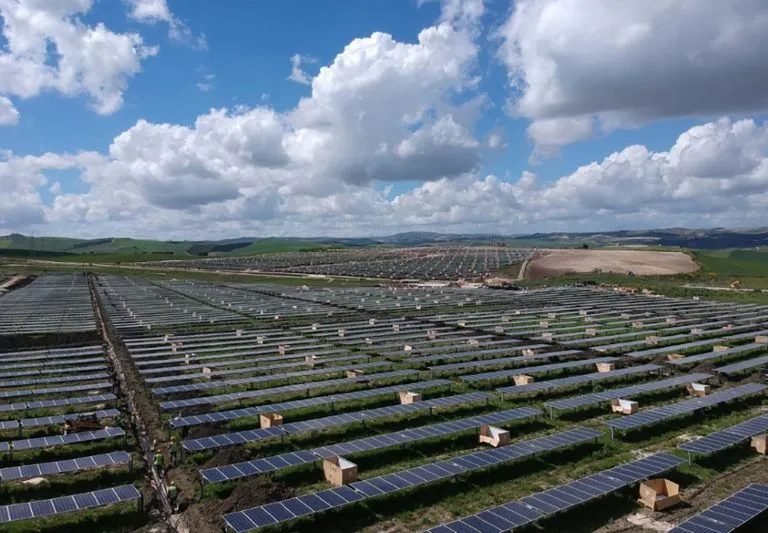
Recurrent Energy develops, builds, sells, owns, and operates utility-scale solar and storage assets. It also provides operations, maintenance, and asset-management services. At the end of 2025, Recurrent managed about 15 GW of solar and storage projects under service contracts.
The 2025 annual report also describes a strategy of retaining selected projects for electricity and service revenue.
This arm changes the group’s commercial logic. Canadian Solar can participate before a module order, during construction, and throughout operations. Recurrent also gives the manufacturing businesses direct insight into project design, financing expectations, component performance, and maintenance needs.
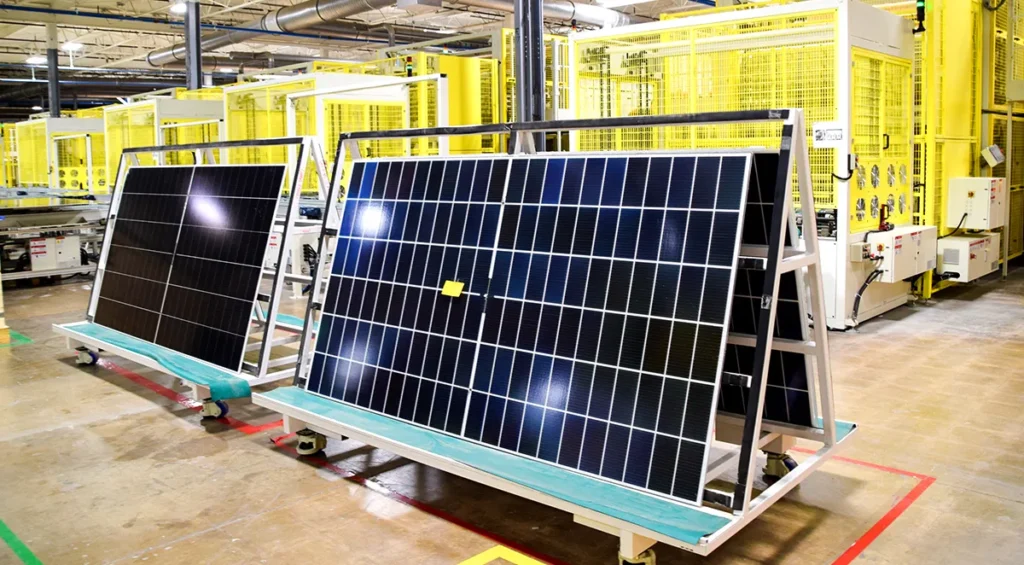
Panels still anchor the platform. The current range serves residential, commercial, industrial, and utility-scale applications. It includes monofacial and bifacial panels, plus N-type TOPCon and HJT designs.
The Canadian Solar TOPHiKu6 family uses N-type TOPCon technology. Product formats vary by region and application, so a single efficiency figure can mislead.
A 2025 Australian CS6R model reaches 455 W and 23.3% efficiency. A North American all-black CS6.1 model reaches 465 W and 22.8%. The current TOPHiKu6 datasheets show why buyers should compare exact stock-keeping units.
The group also reported a 2025 upgrade called TOPCon SMBB-Ultra for TOP(Bi)HiKu6 products. Its utility-oriented CS6.2-66TB reached up to 655 W and 24.2% module efficiency. Those figures apply to that configuration, rather than every Canadian Solar panel.
The August 2025 TOPHiKu warranty provides a 30-year performance term. It limits first-year degradation to 1% and subsequent annual decline to 0.4%. This leaves at least 87.4% of labeled output after year 30.
Product warranties can run for 12, 15, or 25 years, depending on model, installation type, and region. This distinction matters for Canadian Solar panels procurement. Product and performance warranties cover different failures.
Contract terms, claim procedures, local service responsibility, labor exclusions, and proof-of-purchase requirements can affect the practical value of coverage.
The current Canadian Solar EP Cube 2.0 combines modular battery storage, a hybrid inverter, monitoring, and backup control. Its United States configuration scales from 5 kWh to 40 kWh per system. Three systems can reach 120 kWh and 34.5 kW of output.
It supports AC and DC coupling, which allows installation with new panels or an existing compatible PV system. The commercial value reaches beyond backup power. EP Cube can manage self-consumption, time-of-use tariffs, generators, and selected smart-home loads. It gives the brand a direct position in household energy management, rather than limiting the relationship to rooftop hardware.
In 2025, EP Cube won both the prestigious iF Design Award and Gold at the MUSE Design Awards, followed by Japan’s Good Design Award. It also earned a Red Dot Award. The design pedigree signals intent: Canadian Solar is competing on user experience, not just kilowatt-hours.
The EP Cube system integrates a hybrid inverter with stackable LFP battery modules, each 3.33 kWh, configurable from 6.6 kWh to 19.9 kWh. The 1-phase variant supports PV arrays up to 12 kW through 2 MPPT channels, while the 3-phase EP Cube offers 10–40 kWh storage and 12 kW AC output. The system supports AC-coupled and DC-coupled configurations and can scale to 200 kWh by connecting five modular units in parallel.
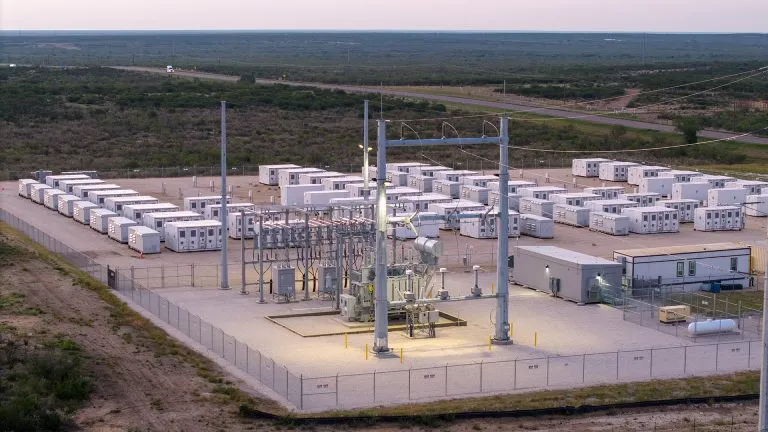
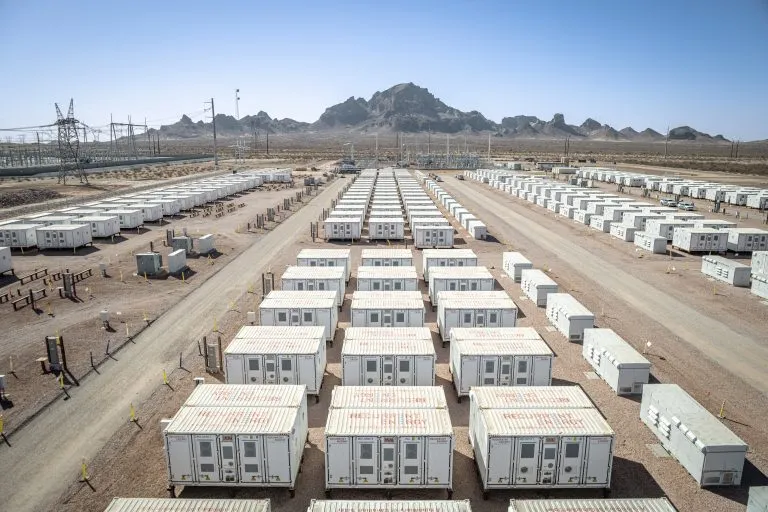
At utility scale, e-STORAGE supplies integrated LFP systems, energy management, project engineering, commissioning, and long-term service agreements. Canadian Solar ended 2025 with a $3.6 billion contracted e-STORAGE backlog.
Its 2025 launches also included FlexBank 1.0 for utility projects and KuBank 2.0 for commercial and industrial sites.
The inverter portfolio completes the system layer. It spans residential, commercial, industrial, utility, and storage power-conversion products. That capability helps CSI Solar coordinate modules, storage, and power electronics instead of treating each product as an isolated sale.
Through e-STORAGE, Canadian Solar’s utility-scale storage arm, the company has shipped over 16 GWh of battery energy storage solutions as of September 30, 2025, with a US$3.1 billion contracted backlog.
e-STORAGE operates manufacturing facilities with annual BESS capacity of 15 GWh and battery cell capacity of 3 GWh. In December 2025, e-STORAGE secured a contract to deliver a 408 MWh BESS for Vena Energy in South Australia.
China remains central to Canadian Solar’s manufacturing network. Current filings identify production assets in Jiangsu, Zhejiang, Henan, Inner Mongolia, and Qinghai. The group also operates facilities elsewhere in Asia and the Americas.
This Chinese base provides supply-chain density, technical talent, and production experience. However, the company’s geographic mix is changing.
The 2025 filing attributes 49.6% of consolidated revenue to the United States and 12.7% to China. In July 2026, CS PowerTech opened the first phase of its Jeffersonville, Indiana, HJT cell facility.
The project represents nearly $1 billion in investment and targets more than 6 GW of annual capacity at full scale. Its output will supply the Mesquite, Texas, module plant, which is moving toward 10 GW. Reuters reported the opening and production plan.
This is localization, rather than a clean separation from China. The operating model combines Chinese industrial depth with regional capacity shaped by tariffs, incentives, domestic-content rules, logistics, and customer demand.
Canadian Solar’s 2025 filing reports Tier 1 recognition from BloombergNEF for modules and storage, plus S&P Global recognition for battery systems.
Such labels indicate commercial scale and financing acceptance. They do not replace technical, contractual, or supply-chain review.
Buyers should examine five issues:
The last point deserves close attention. Canadian Solar’s 2025 sustainability report says factories in Suqian and Baotou completed Solar Stewardship Initiative assessments.
It also says two Qinghai polysilicon suppliers completed Responsible Business Alliance audits at the company’s request. The 2025 sustainability report announcement provides the current audit summary. Project teams should still request transaction-specific documentation.
Canadian Solar illustrates a broader shift among China-linked energy manufacturers. Hardware scale remains important, yet durable value increasingly comes from storage integration, software, services, local production, and project ownership.
The company’s strength lies in the connections between these capabilities. Canadian Solar modules feed project channels. Recurrent Energy creates development and operating knowledge. EP Cube and e-STORAGE extend the brand into power management. Regional factories address policy and supply-chain demands.
That combination makes the company more complex to assess, but also more strategically relevant. A sound evaluation should examine the full system, the operating entities behind it, and the service commitments that remain after installation.
Canadian Solar connects Chinese manufacturing depth with regional production, battery storage, project development, software, and long-term services. Understanding this model requires deeper analysis of competitors, policy changes, supply chains, localization strategies, and emerging energy technologies.
ChoZan’s custom China research and trend-watching services can track manufacturing shifts, regulatory changes, overseas expansion, emerging technologies, and competitive moves. China business consulting and expert calls can then translate those findings into practical recommendations for procurement, market planning, and corporate strategy.
Book a consultation with ChoZan to build the right research, advisory, training, or immersion program around your energy priorities.
Production origin varies by model and destination. Canadian Solar reports manufacturing across China, Southeast Asia, and the United States. Check the datasheet, carton label, certificate of origin, and purchase contract for the shipment rather than relying on the brand name.
Sales generally move through distributors, installers, contractors, and project partners. Homeowners should obtain the exact model number and warranty documents from their installer, then confirm that the installer is authorized to sell and support the specified product locally.
Yes, when electrical ratings and local codes align. The designer must match module voltage, current, string length, connector requirements, rapid-shutdown rules, and inverter input limits. Compatibility should be documented in the system design before equipment is ordered.
TOPHiKu6 usually refers to monofacial N-type TOPCon modules, while BiHiKu6 identifies bifacial configurations that can collect light from both sides. Product naming and availability vary, so compare the complete model code and regional datasheet before selection.
No. Their added rear-side generation depends on surface reflectivity, row height, spacing, shading, and mounting design. A credible energy model should calculate the expected bifacial gain for the actual site rather than applying a standard percentage.
Yes. EP Cube 2.0 can charge from the electrical grid and provide backup power without a solar array. Its economic value will depend on local electricity rates, time-of-use pricing, outage needs, incentives, and permitted operating modes.
A product warranty addresses qualifying defects in materials or workmanship. A performance warranty covers output declining below a stated curve. Neither automatically covers every labor, shipping, access, or reinstallation cost, so buyers should review exclusions and remedies closely.
Compare installed cost, expected annual yield, temperature behavior, degradation terms, physical dimensions, installer quality, service access, and financing acceptance. A higher nameplate efficiency may matter less than total system output and reliable support over the project life.
Some models carry IEC 61701 salt-mist certification, which supports use in corrosive coastal conditions. Buyers should still confirm the exact model, certification severity, mounting hardware, maintenance plan, site exposure, and regional warranty terms before procurement.
Request bills of materials, factory details, certificates of origin, supplier declarations, independent audit summaries, chain-of-custody records, and applicable customs documentation. Match each document to the contracted batch because corporate sustainability reports alone cannot prove shipment-level traceability.