CONTENT
CASC China refers to China Aerospace Science and Technology Corporation (CASC), the state-owned group that develops and manufactures rockets, satellites, and spacecraft for China’s space program. Its activities connect national missions with the industrial capacity behind commercial space services.
CASC offers a concrete way to examine China’s development as a technology hub. Its recent work links rocket engineering with modular production, shared facilities, and services built around customer needs. Those connections offer lessons for businesses developing complex products, even outside the space industry.
CASC was established in 1999 and operates through eight major research and production complexes. Its portfolio covers launch vehicles, satellites, crewed spacecraft, cargo spacecraft, deep space probes, space stations, and missile systems.
CASC states that it is China’s only manufacturer of intercontinental strategic nuclear missiles. This means the group spans both civil space and defense activities.
The China Aerospace Science and Technology Corporation operates through major research and development organizations including the China Academy of Launch Vehicle Technology, the Shanghai Academy of Spaceflight Technology, and the China Academy of Space Technology.
The group’s research academies and organizations divide work across rockets, spacecraft manufacturing, components, and applications.
| Organization | Principal role | Why the distinction matters |
| China Academy of Launch Vehicle Technology, or CALT | Rocket development and launch vehicles | Connects launch programs with their engineering organization |
| China Academy of Space Technology, or CAST | Spacecraft, satellites, associated equipment, and applications | Links mission development with hardware and service suppliers |
| Shanghai Academy of Spaceflight Technology, or SAST | Space systems, including Fengyun meteorological satellites | Connects satellite engineering with operational public services |
This state-owned aerospace structure combines specialized capabilities under a common parent. Its organizational logic matters: complex products require coordination across several engineering disciplines. Clear divisions of responsibility help connect research, production, testing, and operation without treating every activity as a separate venture.
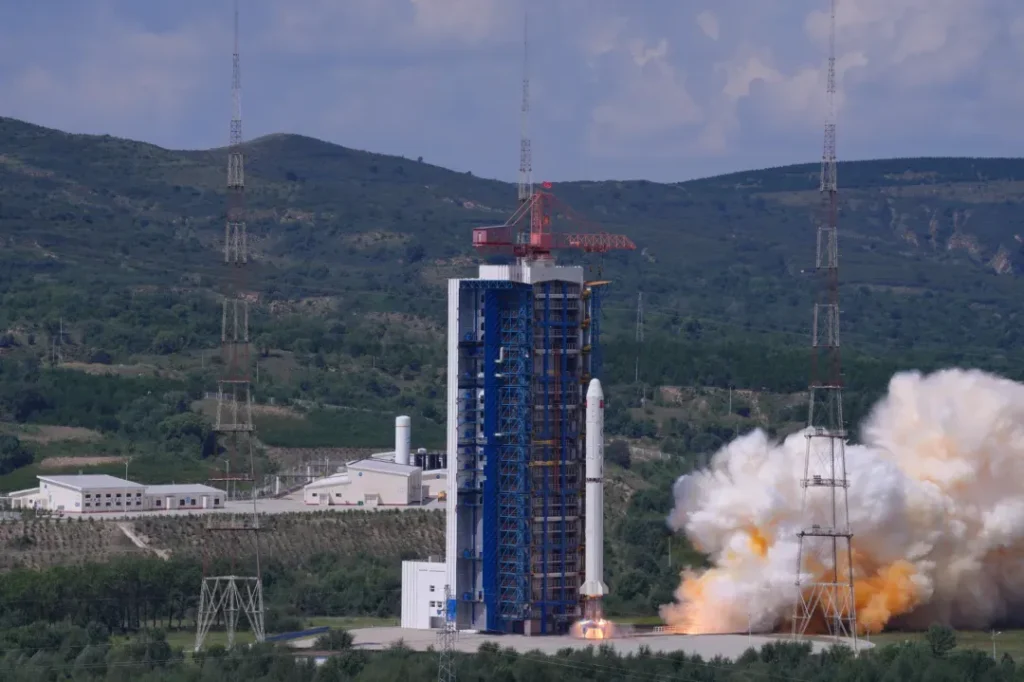
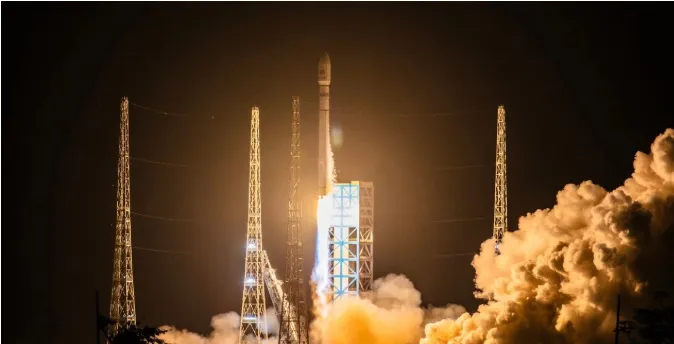
CASC reported 73 orbital launches during 2025, comprising 69 Long March missions and four Jielong-3 missions. Together, they carried more than 300 spacecraft, including rideshare payloads.
That activity gives the group a substantial operating base for introducing new vehicle designs. Recent projects address launch economics through both lighter structures and recoverable hardware.
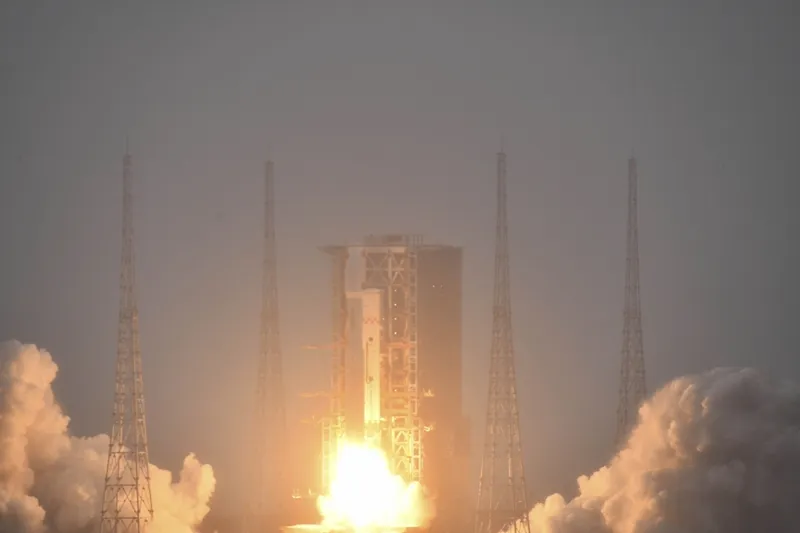
Long March-8A completed its first flight on February 11, 2025. Its chief designer described how engineers combined the satellite support structure, adapter frame, and instrument module into one multifunctional module, reducing rocket weight by 200 kilograms.
This broader engineering principle applies beyond aerospace. Teams can find performance gains at the interfaces between components, where separate design responsibilities may leave unnecessary material or duplicated functions.
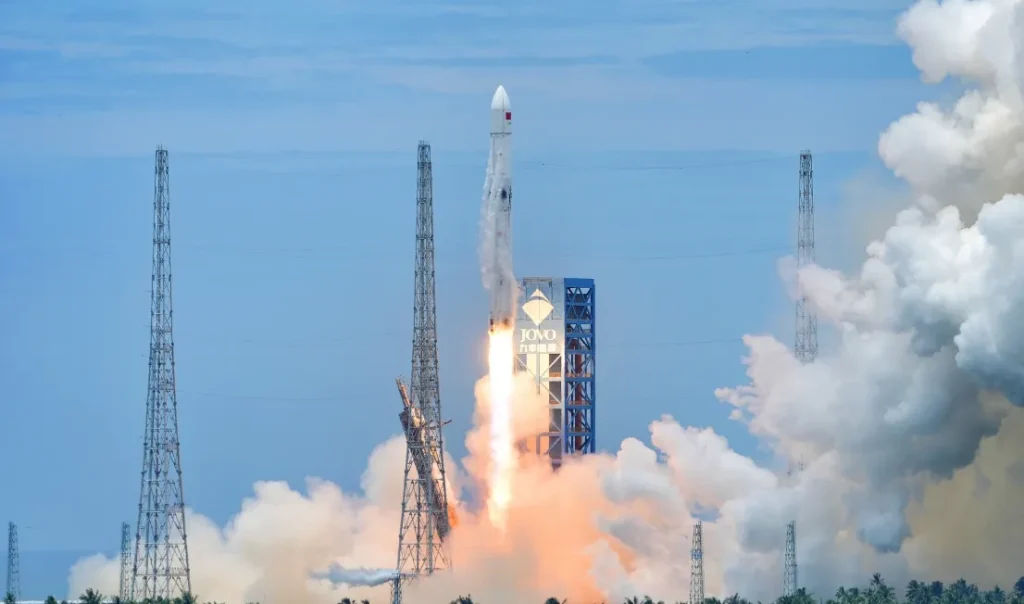
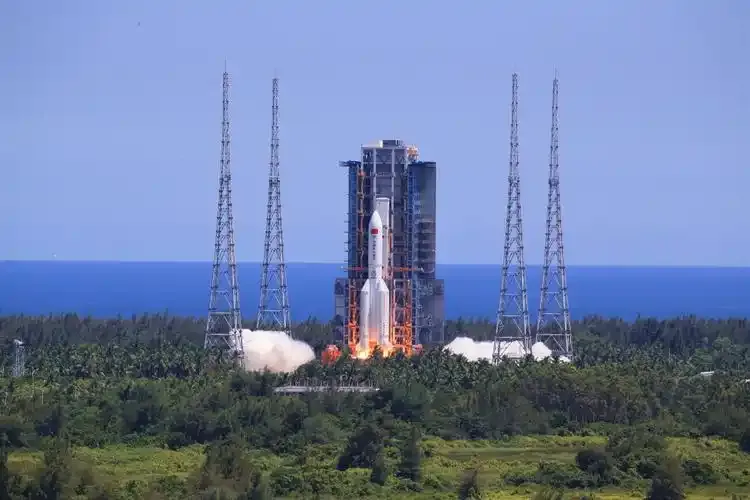
On July 10, 2026, Long March 10B delivered its payload into orbit and returned its first stage to a seaborne platform, where a net system captured it. Xinhua’s report, published by CASC, states the rocket’s low Earth orbit capacity is 16 metric tons in its reusable configuration.
The achievement advances China’s ability to preserve valuable rocket hardware after launch. Repeat flights and refurbishment costs will determine the eventual operating economics.
For CASC China, these projects show progress at two levels: better vehicle design and a new approach to hardware recovery. Both affect the cost of deploying space infrastructure.
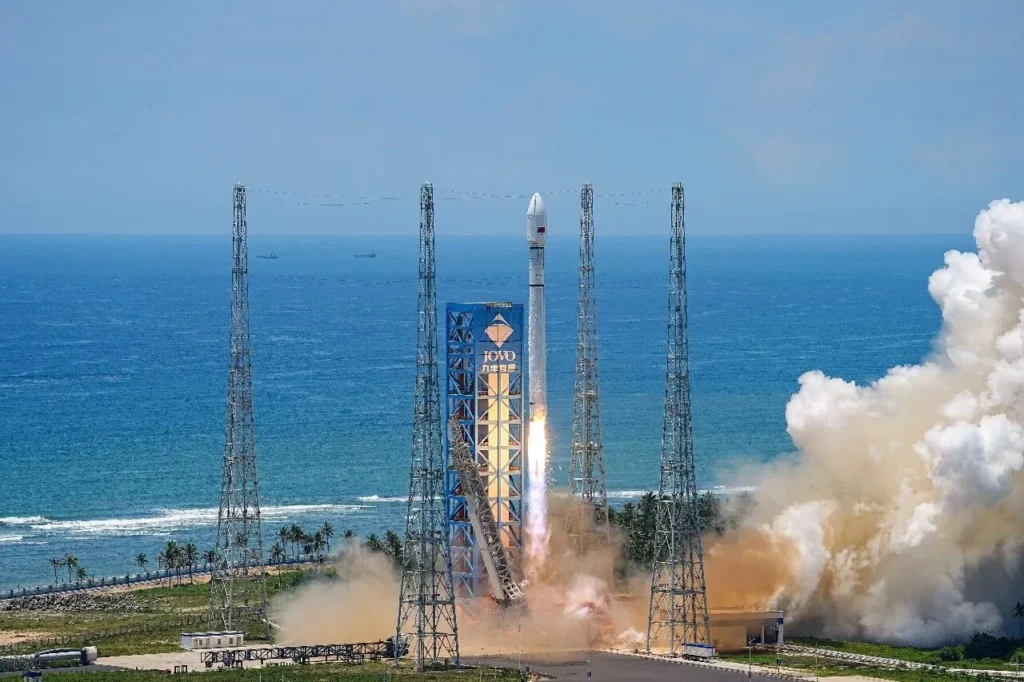
An industry analysis estimated that CAST, its subsidiaries, and the Shanghai Engineering Center for Microsatellites collectively developed 201 of the nearly 400 satellites China launched in 2025. The same analysis found that their combined output roughly doubled from 2024 as large constellation programs accelerated deployment.
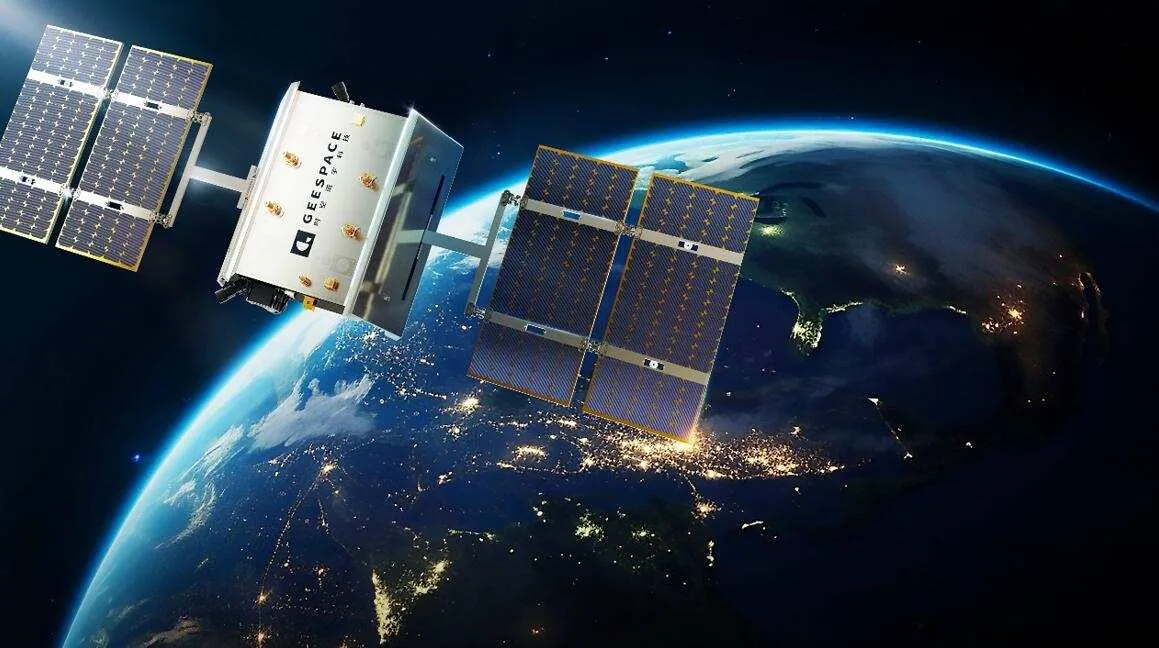
Guowang had 136 satellites in orbit by the end of 2025. China SatNet operates the constellation, while CASC companies participate through launch and hardware activities. Keeping those roles separate helps distinguish the network operator from its suppliers and launch providers.
In a June 4, 2026 announcement, the institute reported successful orbital verification of flexible solar arrays carried by three satellites launched on May 31.
The program uses a common architecture and standardized modules, including deployment mechanisms and flexible substrates. The institute also describes a supply model combining long-term agreements with multiple competing sources. It reports that its Hangzhou production line cut the product development cycle by more than half.
Other manufacturers can apply the same principle: identify which parts of a sophisticated product can become repeatable modules. A common technical foundation can support different customer requirements while reducing the engineering effort each order requires.
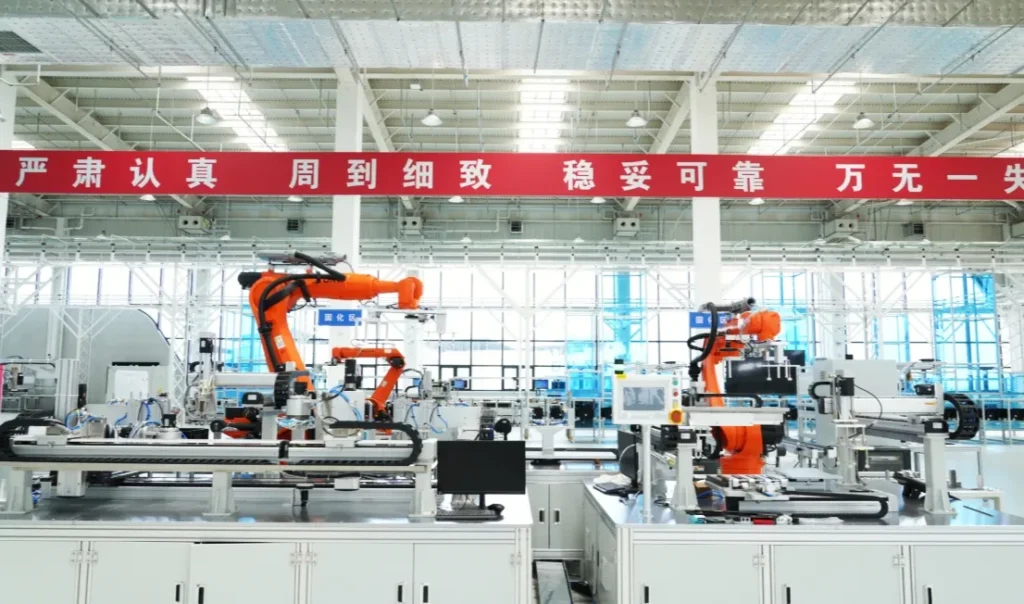
An April 15, 2026 service announcement describes assembly, integration, and testing (AIT), available through the institute’s Dongfanghong Tianxuan marketplace.
The offer covers satellite assembly, environmental testing, specialist tests, electrical testing, and transportation to the launch site. It also includes production line design and construction.
The same announcement reports that the team has applied its satellite production line methods to multiple automated drone production lines. This is a specific example of satellite manufacturing expertise finding an application in another industry.
This model lets established engineering teams sell specialized services. Customers can assess external support before investing in their own production facilities, while retaining responsibility for the product they want to bring to market.
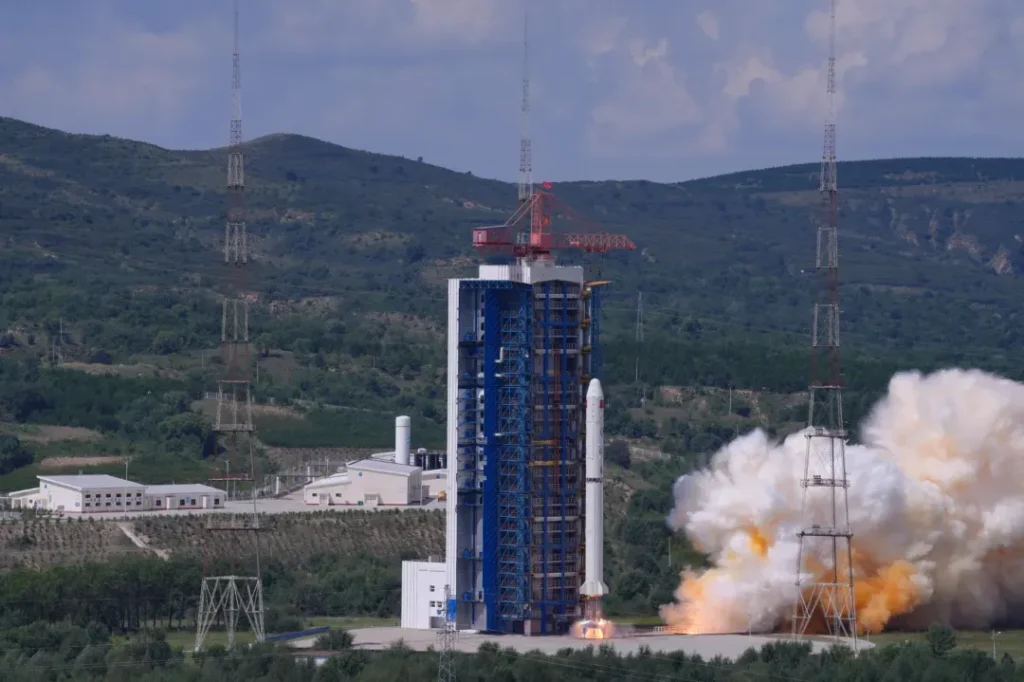
In November 2025, the China National Space Administration released an action plan to support commercial space development through 2027. The plan folds commercial space into national space strategy, opens civilian tracking and telemetry networks to commercial operators, and encourages firms to pioneer space resource utilization, on-orbit servicing, debris removal, space tourism, and in-space biomanufacturing.
CASC’s commercial activity extends into the ground systems and software that make satellite output useful. On September 1, 2026, CAST announced an integrated satellite, ground, and application service through its Tianxuan marketplace.
The offering starts with user requirements and extends to data processing, software interfaces, training, maintenance, and upgrades. It supports remote sensing, communications, and navigation applications, including the integration of mapping, weather, and hydrological information.
Operational weather monitoring offers another example of the value of connected space systems. SAST’s Fengyun satellites worked together to track Typhoon Dolphin. Fengyun-4B monitored the storm at one-minute intervals and 250-meter resolution.
For shipping, agriculture, or insurance, the relevant measure is how satellite information changes an operational decision. A service designed around that decision can be easier to evaluate than a list of sensor specifications. This customer-led approach offers a useful reference for companies commercializing complex technology.
China Aerospace Science and Technology Corp also develops hardware for demanding scientific missions. CAST led development of Tianwen-2, launched on May 29, 2025. A July 2026 update reported that the probe had reached about 20 kilometers from its target asteroid and begun scientific exploration.
The update also explains how optical observations improved knowledge of the asteroid’s position, reducing uncertainty from hundreds of kilometers to the kilometer scale. This provides a clear measure of progress in deep-space navigation and mission planning.
CASC announced plans in January 2026 to develop suborbital and orbital space tourism during the 15th Five-Year Plan period. The roadmap includes uncrewed and crewed verification flights and work toward an operating framework for commercial space travel.
CASC also outlined plans for gigawatt-scale space-based computing infrastructure, asteroid resource prospecting, and space traffic management technologies.
CGWIC, CASC’s commercial subsidiary, signed a letter of intent with Pahang State Development Corporation and Lestari Angkasa in April 2025 to explore a proposed spaceport in Pahang, Malaysia. The state government approved a one-year feasibility study for the project in Pekan.
CASC subsidiary CGWIC provided launch services for Pakistan’s PRSC EO1 Earth observation satellite, which launched aboard a Long March 2D rocket in January 2025. Separately, the China Manned Space Agency and SUPARCO signed an agreement in February 2025 to select and train Pakistani astronauts for a future mission to the Tiangong space station. Two Pakistani candidates were selected in April 2026, with one expected to eventually serve as a payload specialist on a short-duration mission.
Beyond CASC’s commercial activities, wider Chinese space programs are also expanding scientific and international cooperation.
China’s space station program also expanded its research activity in 2025. Tiangong added 86 scientific and application projects during the year. Research teams published more than 230 high-level SCI papers and obtained more than 70 patents from work associated with the station.
International cooperation is also extending into lunar exploration. According to the China National Space Administration, 17 countries, international organizations, and more than 50 international research institutions have joined cooperation on the International Lunar Research Station. China is also developing the Mengzhou crew spacecraft for its future crewed lunar exploration program.
Chang’e 7 had been scheduled to launch toward the lunar south pole in 2026. However, Chinese authorities announced on August 23, 2026, that the mission did not meet launch conditions and could not proceed during its planned launch window that year. As of September 2026, China had not officially announced a new launch date.
Developments at CASC show why China’s innovation systems deserve closer study. Modular production, shared engineering services, and customer applications can offer useful lessons for businesses in other sectors.
Chozan helps global teams interpret what China’s industrial and digital shifts mean for their strategy. Led by Ashley Dudarenok, Chozan delivers China research, digital transformation consulting, innovation tours, and expert briefings grounded in over a decade of in-market work.
Whether you need to understand aerospace supply chains, China’s commercial space players, or the policy signals shaping the 15th Five-Year Plan, Chozan turns fast-moving market signals into clear strategic choices.
Book a consultation to explore which lessons from China could apply to your business.
CASC and CASIC are separate organizations. CASIC stands for China Aerospace Science and Industry Corporation. The similar names make the acronyms easy to confuse, so check the full legal entity when reviewing a supplier or announcement.
China SatNet, also called China Satellite Network Group, operates Guowang. CASC’s participation in launches or hardware supply describes a different role. A launch provider and a constellation operator should appear separately in company comparisons.
A useful quotation needs a specified payload, orbit, launch configuration, integration scope, and schedule. Ask the provider to separate launch charges from testing, transportation, insurance, and additional services so competing offers cover the same mission requirements.
A CASC launch announcement does not establish a retail broadband offer. Check the named service operator for coverage, compatible terminals, pricing, and activation rules before treating a satellite constellation as an available consumer internet service.
Ask for the permitted territory, internal and commercial uses, redistribution rights, retention period, and ownership of derived outputs. The agreement should also identify any limits on cloud storage or sharing imagery with contractors and customers.
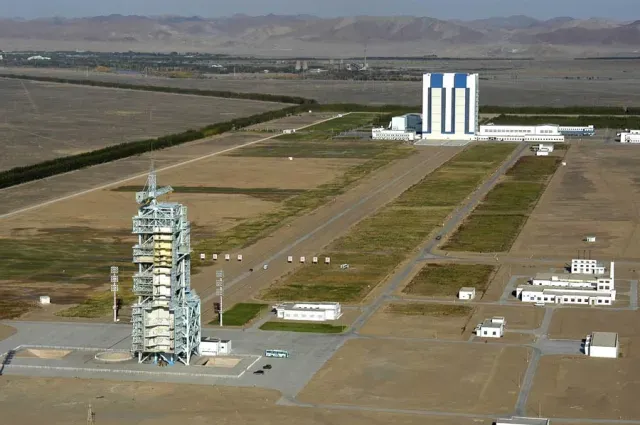
CASC’s September 2026 launch report places a Long March-4B mission at Jiuquan in northwest China. The launch location depends on the mission and vehicle, so confirm the site for the specific flight under review.
No. Chang’e-7 was scheduled to launch in 2026, but Chinese authorities announced on August 23, 2026, that the mission did not meet launch conditions and could not proceed during its planned launch window. No replacement launch date had been officially announced as of September 2026.
January 2026 Reuters reporting identifies space tourism among CASC’s development ambitions. That establishes a planning direction. A confirmed passenger service would need an identified operator, flight schedule, eligibility conditions, and a booking process before customers could evaluate it.
CAST is the China Academy of Space Technology, one of CASC’s major spacecraft development organizations. An industry analysis estimated that CAST, its subsidiaries, and the Shanghai Engineering Center for Microsatellites collectively developed 201 of the nearly 400 satellites China launched in 2025.
Yes. CASC is developing reusable launch systems. Long March 12A reached orbit during its December 2025 maiden flight, although its first stage was not successfully recovered. In July 2026, Long March 10B achieved China’s first controlled recovery of a carrier rocket first stage using a seaborne capture system.
CASC and SpaceX are both advancing reusable launch technology, but they are at different stages of deployment. CASC achieved China’s first controlled recovery of a carrier rocket first stage with the Long March 10B in July 2026. SpaceX has considerably more operational experience with booster recovery and reuse, with Falcon 9 first stages having completed repeated landings and reflights.