CONTENT

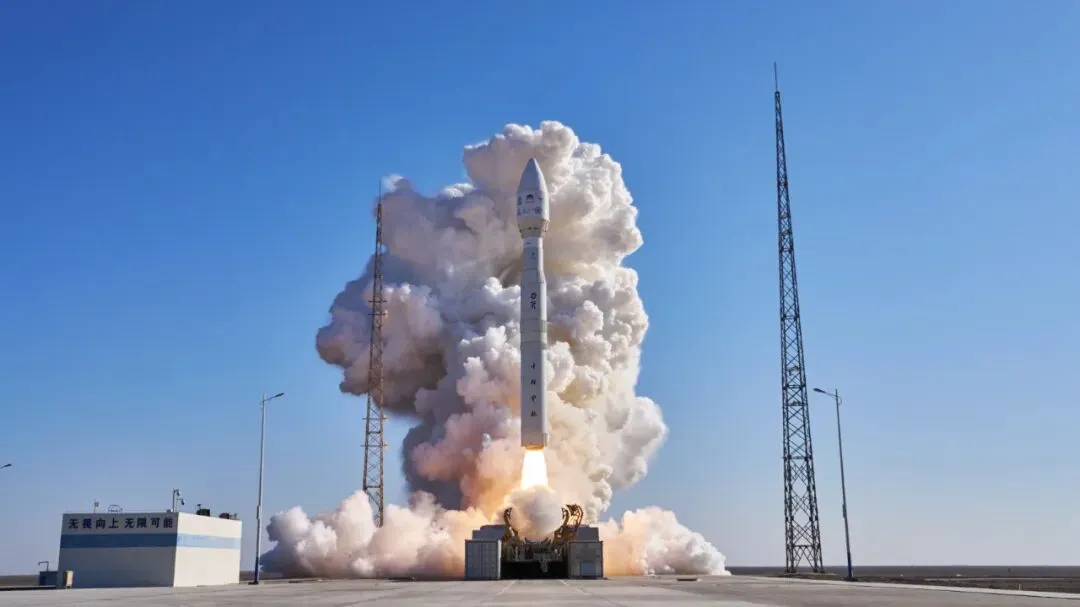
CAS Space is a Chinese commercial rocket developer and launch provider with roots in the Institute of Mechanics at the Chinese Academy of Sciences. Its Kinetica-1, also called Lijian-1, serves satellite missions, while Kinetica-2 expands its offering into larger liquid launch vehicles and cargo transportation. The larger rocket completed its maiden flight on March 30, 2026.
The business relevance extends across the production system: research, component testing, rocket assembly, and customer delivery. Its progress offers a practical case study in how China converts scientific capabilities into commercial infrastructure, raising key questions about production scale, operating reliability, and eventual reuse.
China’s commercial space sector conducted 50 launches in 2025, accounting for 54% of the country’s total space launches, according to the China National Space Administration. Commercial satellites placed into orbit reached 311, or 84% of the national total.
Global launch buyers, satellite constellation operators, and supply chain vendors now have a genuine alternative to Western launch providers. CAS Space’s trajectory illustrates how a state-incubated enterprise can scale into a commercial launch operator without abandoning the reliability standards that government and institutional clients require.
The two rockets address different payload requirements. The table compares capacity to the same destination: a sun-synchronous orbit, or SSO, at 500 kilometers.
| Specification | Kinetica-1 | Kinetica-2 |
| Propulsion | Solid propellant | Liquid oxygen and kerosene |
| Advertised payload to 500-kilometer SSO | 1.5 metric tons | 8 metric tons |
| Published fairing diameters | 2.65 or 3.35 meters | 4.2 meters |
| Mission emphasis | Small and medium satellite missions | Larger satellite batches and cargo spacecraft |
The larger vehicle offers more room to combine satellites on one mission or accommodate a heavier spacecraft. However, mass is only one constraint. Payload dimensions, mounting hardware, vibration limits, and the required orbit also determine compatibility.
A buyer should request the usable payload envelope and a mission-specific performance assessment. The protective fairing’s external diameter does not describe all the space available inside it.
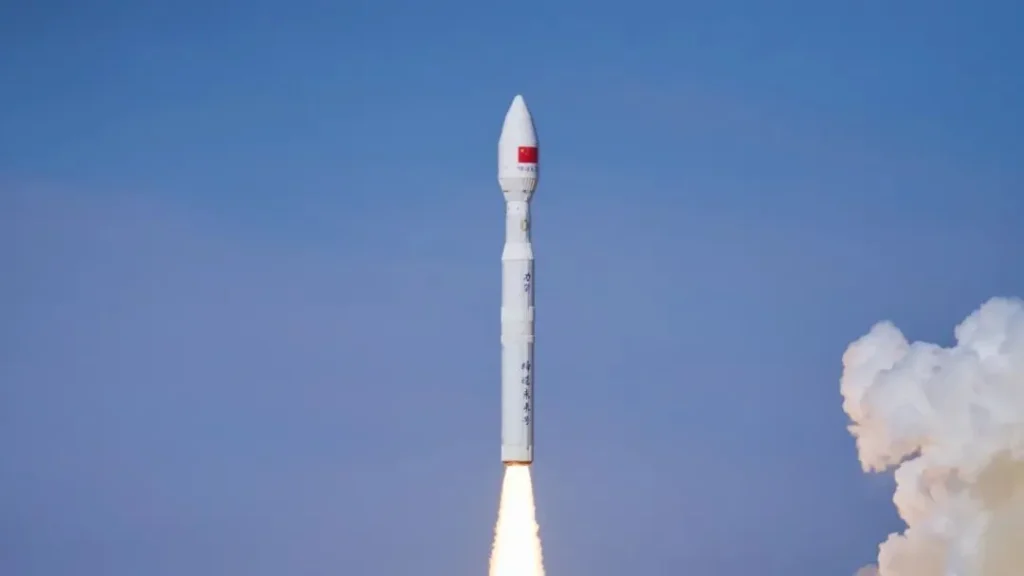
The December 2025 nine-satellite mission included payloads for the United Arab Emirates, Egypt, and Nepal. These missions provide documented examples of overseas organizations accessing Chinese launch capacity.
The range of customers creates an integration challenge. A shared mission must accommodate different spacecraft teams, technical interfaces, and documentation practices. For a smaller satellite project, the provider’s ability to coordinate these requirements can influence the workload and resources needed to reach launch readiness.
Frequency is another useful measure. A July 2026 company update reported launches in every month from April through July.
A recurring schedule can improve planning for satellite deployment and replacement. The relevant question is how closely a customer’s spacecraft readiness aligns with an available mission, including the time needed for integration and final checks.
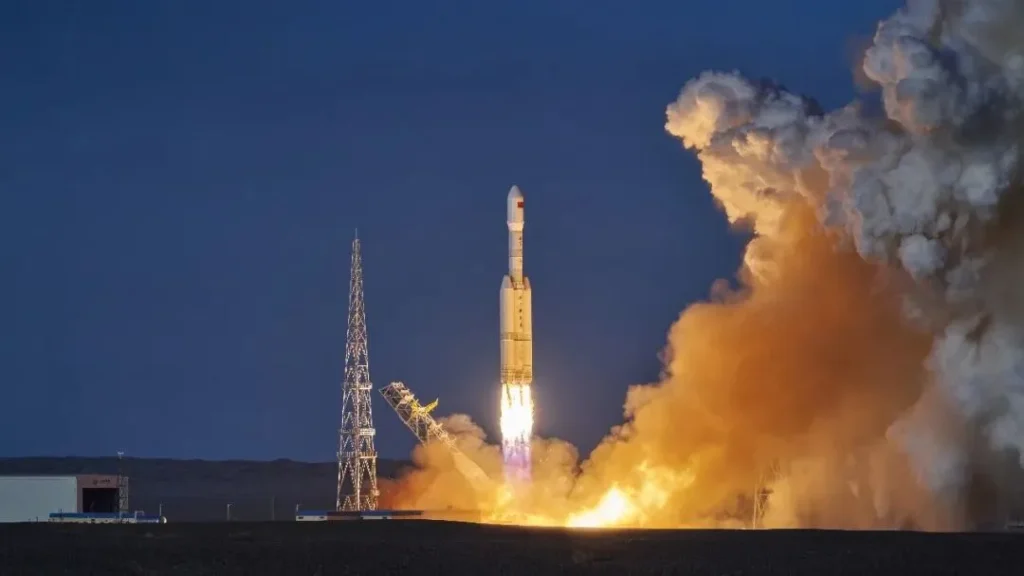
The rocket uses a central core and two side boosters built around a common booster design. The company’s maiden-flight announcement describes standardized cores as the basis for a configurable rocket family.
The commercial rationale is simpler production: shared hardware can reduce the number of distinct components and production processes a company must manage. That gives the design relevance beyond its headline payload rating.
Its inaugural mission carried the Qingzhou prototype spacecraft and two satellites. This demonstrated a cargo-related application, while routine space station resupply remains a separate operational milestone.
The August 26, 2026 production update said the second vehicle passed its factory review on August 25, with launch planned for October. That flight remained a future mission in the announcement.
Subsequent missions will show how consistently the larger rocket can move through production, preparation, and flight. Customers should assess that vehicle’s operating record separately from the smaller rocket’s established activity.
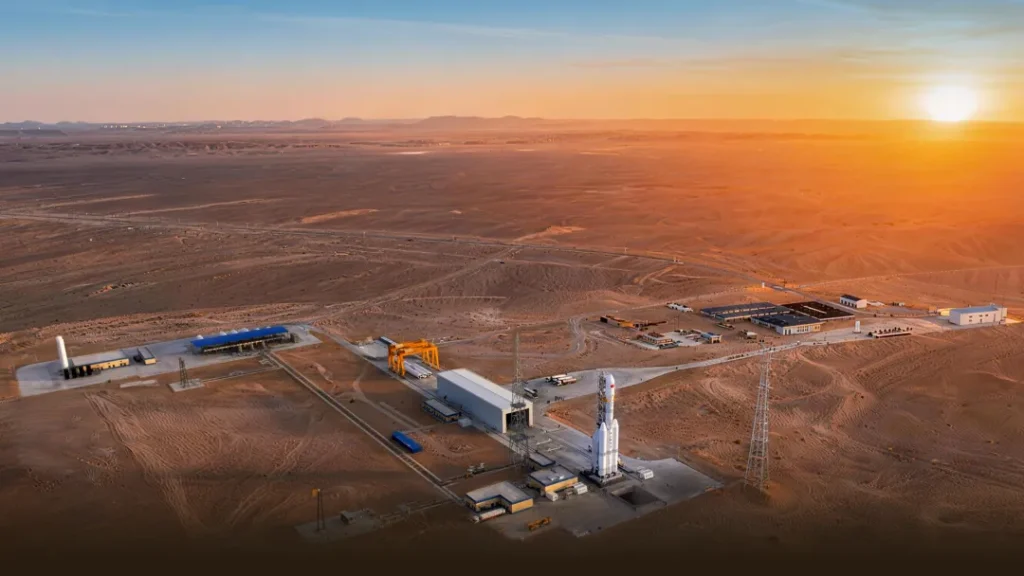
In June 2025, CAS Space completed a first-stage propulsion system test at its newly inaugurated Guangzhou liquid propulsion test center. The test covered interactions among propulsion, structures, electronics, and launch support equipment.
Its Shaoxing liquid rocket factory entered operation in 2026 with a stated annual capacity of 12 rockets. The company expects to spend two to five years optimizing processes and improving quality before reaching target output.
The company said its propulsion test center also welcomes research institutions and enterprises. That suggests a potential testing business alongside rocket launches. A prospective user would need to confirm the available test configuration, technical interfaces, and facility access for its project.
These facilities address different constraints in launch manufacturing. A test center checks how systems behave together under demanding conditions. A production facility supports repeat assembly and delivery.
The twelve-rocket figure describes factory capacity. Actual annual launches depend on completed vehicles, payload readiness, launch site availability, and customer demand.
Useful operating indicators include production time, acceptance-test results, supplier delivery performance, and the proportion of completed vehicles that reach launch readiness. These measures help distinguish installed industrial capacity from productive use of that capacity.
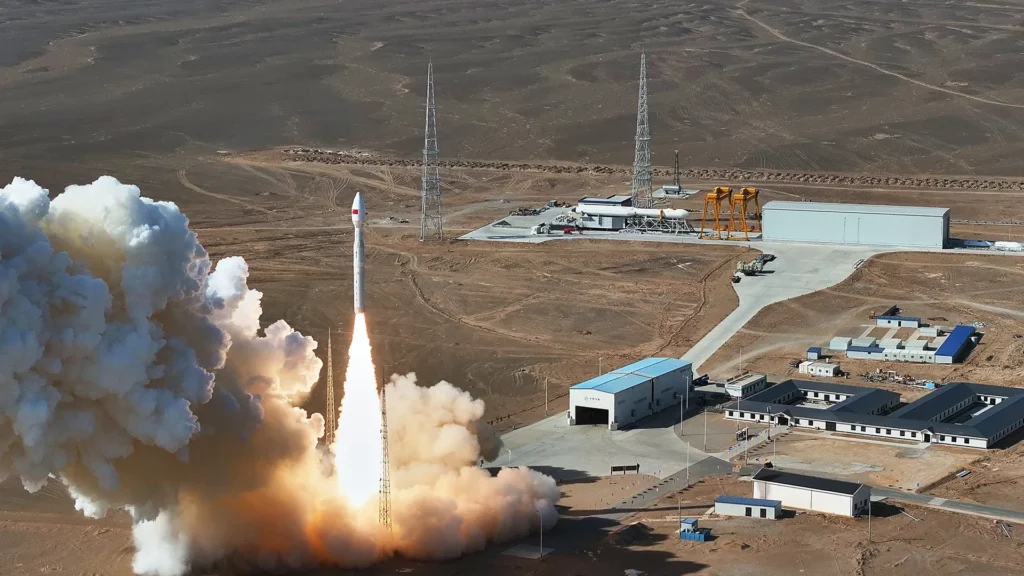
CAS Space‘s July 2026 technical update placed recovery technology in the transition from ground verification toward flight validation. It identified Li Hong-2 as a platform for recovery testing and microgravity experiments, with a first flight and recovery demonstration targeted for 2026.
For its larger orbital rocket, the proposed recovery approach brings the central first stage and side boosters back together. That remains a development program in the verified announcements.
The economics of reusable rockets depend on what happens after landing. Inspection, repairs, component replacement, and turnaround time determine how much value recovered hardware retains. Payload performance must also account for the resources needed for recovery.
A meaningful commercial milestone will combine successful recovery, a subsequent flight of that hardware, and evidence of manageable refurbishment costs.
For businesses studying China’s space sector, the useful starting point is the service a satellite will deliver. The December 2025 mission announcement identified applications including urban planning, disaster prevention, water management, and weather monitoring.
Consider a proposed flood-monitoring service. Its evaluation would begin with observation frequency, usable imagery during poor weather, delivery speed, and integration into emergency workflows. Those requirements would shape satellite selection and, eventually, the launch requirement.
That sequence gives commercial launch services a measurable role in a business case. A lower launch bill has limited value if the resulting satellite service cannot meet the customer’s operating needs. A stronger assessment connects the launch decision to the quality, availability, and usefulness of the service delivered on Earth.
Understanding China’s commercial space sector requires more than reading launch reports. It requires context on state incubation models, provincial industrial policy, capital market dynamics, and how Chinese enterprises structure international partnerships.
Chozan, founded by Ashley Dudarenok, provides China research and digital transformation consulting that helps global businesses interpret these developments and act on them.
CAS Space is a Guangzhou-based commercial rocket company founded in 2018 and incubated by the Chinese Academy of Sciences’ Institute of Mechanics. It develops the Kinetica launch vehicle family, Kinecore engines, and Lihong spacecraft.
Qingzhou is a low-cost commercial cargo spacecraft selected by the China Manned Space Agency. It features a 27-cubic-meter sealed cabin and 40 cargo slots, with its first formal mission planned for 2027 to supply the Tiangong space station.
Yes. Its current rideshare page offers access to environmental testing and deployers through company facilities and domestic partners. Ask which tests, equipment, reports, and integration tasks the quotation includes for your particular payload.
A rideshare booking reserves space alongside other payloads. Confirm the assigned orbit, deployment sequence, payload restrictions, and schedule flexibility before committing, since those shared mission conditions must suit your satellite’s operating plan.
A reliable price requires a quote for the specific mission. Ask for separate charges covering launch, payload integration, testing, transport, and any deployer. Confirm payment milestones and the commercial terms that apply if the schedule changes.
The company reported a successful sea-launch rehearsal on August 25, 2026. That announcement confirmed support-system testing, with the first sea launch still ahead. A completed orbital mission requires a separate launch confirmation.
The planned Kinastra-1 upper stage would extend its orbital reach. An August 2026 update reported completed propulsion-system tests and targeted a first flight in early 2027. That schedule describes development plans, with flight validation still ahead.
Yes. Li Hong-1 returned its research payload capsule by parachute after a suborbital test on January 12, 2026. The flight carried a microgravity manufacturing experiment, demonstrating a way to retrieve experimental material for examination on Earth.
The reviewed 2026 announcements describe experimental vehicles and research missions. They do not establish a commercial passenger timetable, ticket price, or booking program. A dedicated passenger-service announcement would be needed to confirm an available tourism offering.
Time zones can shift the calendar date. The July 2026 mission launched at 07:33 Beijing time on July 24, equivalent to 23:33 UTC on July 23. Compare time standards before assuming the records conflict.