CONTENT

GalaxySpace is a Chinese satellite manufacturer and satellite internet technology provider. Its low Earth orbit (LEO) strategy combines repeatable spacecraft production, internally developed communications hardware, and network validation with telecom partners.
The commercial significance lies in its attempt to make advanced satellites practical to manufacture, deploy, and integrate into customer operations. Its portfolio spans complete spacecraft, components, and connectivity solutions.
The company offers a concrete example of China’s development as a technology hub: industrial suppliers and specialized engineering teams are working together on space infrastructure. Its progress deserves attention, alongside careful scrutiny of what customers can purchase and operate.
The business serves several customer types. A satellite buyer can procure spacecraft, while a telecom operator can explore how satellite connectivity fits its network. The company also uses its Mini-Spider test constellation to validate applications.
In March 2026, GalaxySpace filed for A-share IPO counseling, one of the first substantive steps by a Chinese private space firm toward public listing.
As of August 25, 2026, the company reported 49 successfully launched, independently developed satellites across its portfolio. This cumulative figure includes different applications; it does not establish a 49-satellite commercial broadband network.
The strategic interpretation is that GalaxySpace can pursue hardware and systems business while connectivity services mature. Its commercial position therefore requires a broader assessment than a comparison of consumer internet subscriptions.
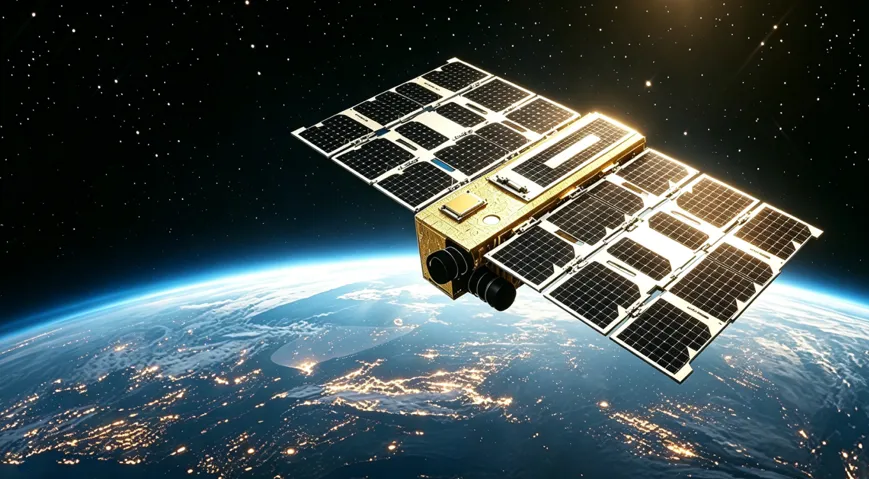
The Nantong manufacturing site forms the industrial base of this strategy. Its factory description covers assembly, integration, environmental testing, and component production, supported by automated measurement and digital manufacturing systems.
A January 2026 China Daily interview reported a company capacity of 100 to 150 medium-sized satellites annually, with manufacturing capabilities covering spacecraft weighing 100 to 2,000 kilograms. Those figures describe production capability. They do not establish annual shipments, factory utilization, or revenue.
Two hardware innovations complement this manufacturing strategy.
In June 2025, co-founder Liu Chang said the company worked with more than 1,300 industrial chain partners. Their capabilities included precision machining, electronics integration, materials, and electromechanical systems; small and medium-sized businesses represented over half of those partners.
This suggests a practical source of competitive strength: specialist suppliers can address different engineering requirements within a shared production system. The lesson for other markets is to develop supplier qualification and engineering coordination alongside investment in factory equipment.
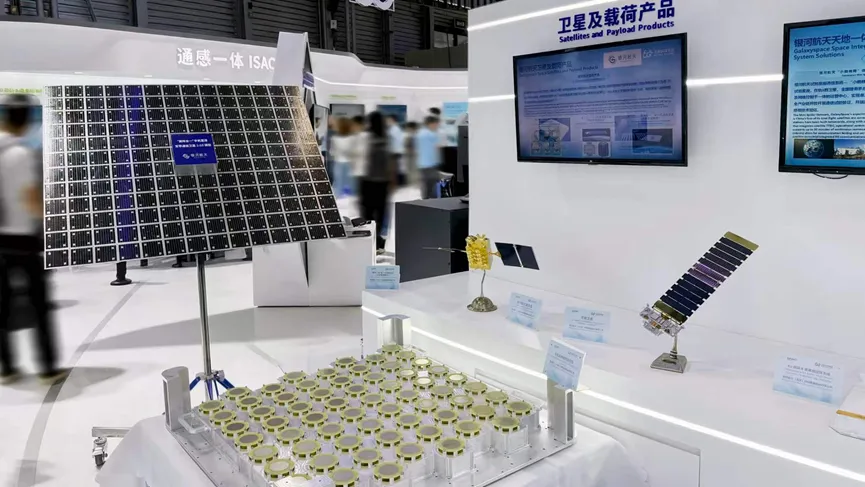
Component design affects how a spacecraft handles communications, electrical power, and launch packaging. The company’s product documentation shows how these engineering choices support its manufacturing approach.
| Capability | What the company documents | Commercial relevance |
| Ka-band phased-array antennas | Four independently controllable beams in its listed antenna design. | Buyers can assess how beam control fits their coverage and capacity requirements. |
| Flexible solar arrays | Lightweight power generation with compact storage requirements. | Power hardware must fit the spacecraft’s mass and volume limits. |
| Flat-panel separation mechanisms | Support for stacked spacecraft and sequential release. | Satellite design can account for deployment requirements before launch integration. |
A further product line targets direct-to-cell communications. At MWC Shanghai in June 2026, GalaxySpace introduced a second-generation antenna that it says supports L- and S-band operation with 128 independent simultaneous beams. These manufacturer specifications require assessment against mission requirements and test evidence.
The business implication is greater control over design tradeoffs. Internal component development can help align payload requirements with the rest of the spacecraft. It does not, on its own, lower total mission cost compared with competing systems.
These terms describe different technical and commercial propositions.
GalaxySpace’s chief scientist, Zhang Shijie, has framed the company’s work in explicit 6G terms. He describes 5G as a ground-level highway and 6G as an integrated space-air-ground network in which satellites, drones, and terrestrial base stations coordinate to provide connectivity in deserts, oceans, and space.
The company is building a 6G NTN satellite-ground integration laboratory. Founder Xu Ming has articulated a formula for the 6G communications architecture: terrestrial networks as the foundation, satellite broadband as “fiber in the sky,” and direct-to-cell connectivity as “base stations in the sky.”
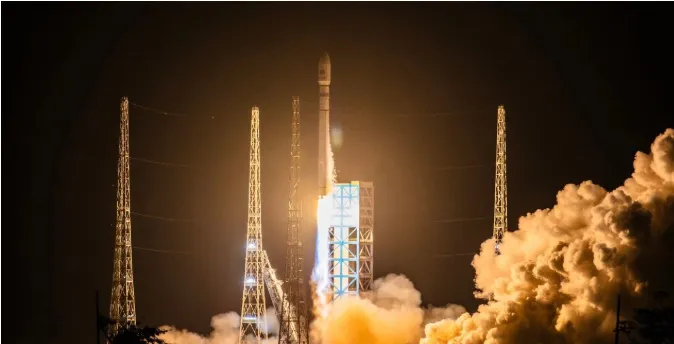
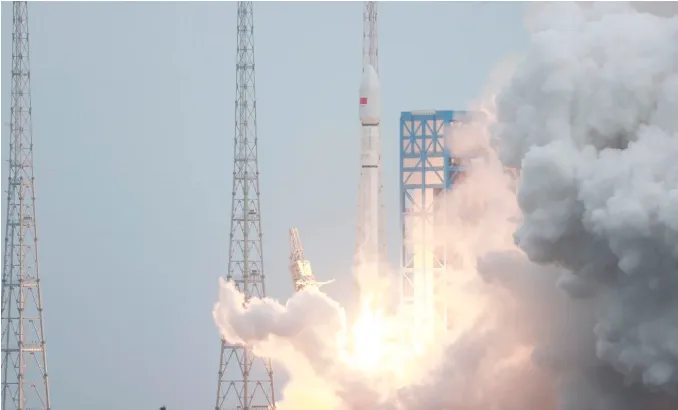
The direct-to-device route targets a satellite connection directly to the device. On June 9, 2026, the company announced the launch of China Mobile 02 to demonstrate and verify integrated terrestrial and space networks. The stated mission was technical validation.
The company’s 6G positioning concerns further development of integrated communications. Its June exhibition announcement identifies continued work on antennas, power systems, and digital payloads. This describes a development agenda, without establishing a commercially available network service.
Partner projects range from network experiments to complete satellite delivery. Each route has a different commercial milestone.
True Corporation announced a memorandum of understanding in February 2025 covering joint research, network integration, mobile backhaul, and direct-to-cell validation. The agreement also included business case analysis and enterprise application testing.
PCCW Global reported completed Hong Kong tests in April 2025, including bidirectional transmission at 100 Mbps through the experimental network. The tests covered high-definition video transmission and remote control of autonomous vehicles.
In August 2026, Omantel announced cooperation to explore proofs of concept, technical evaluations, and potential service scenarios. These included remote connectivity, maritime operations, logistics, and industrial applications. The agreement described an evaluation framework.
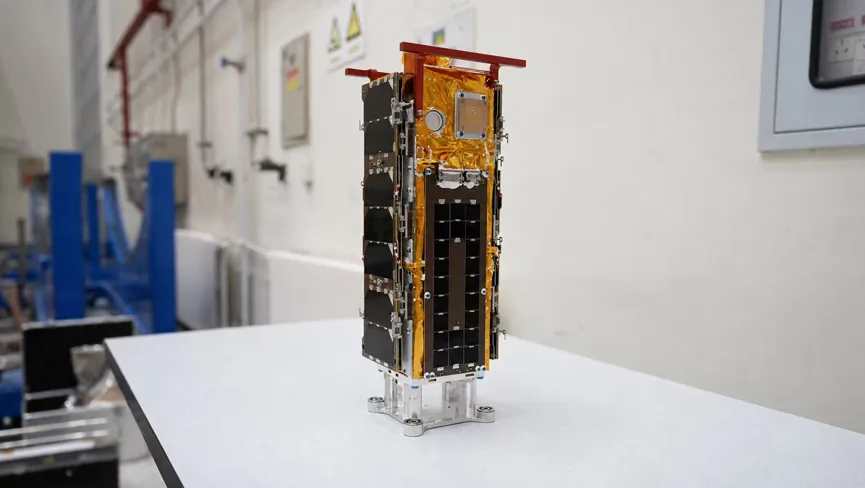
A separate project reached a hardware milestone on August 25, 2026, when the Lingzhi-09 Thailand CubeSat launched. The manufacturer described the GISTDA remote sensing project as its first export of a complete satellite and ground system.
Together, these examples suggest an international model built around local partners and defined customer needs. They also show why an agreement, a technical trial, and a delivered spacecraft should receive different weight in a commercial assessment.
The evidence supports a focused conclusion: GalaxySpace is developing industrial capabilities that could make Chinese LEO satellites relevant to more international projects. The next commercial question is how those capabilities translate into a workable customer contract.
A procurement team should tie payment milestones to agreed deliverables, specify who handles integration issues, and define the required post-acceptance support. A proposal for constellation manufacturing should also explain how later batches will accommodate design changes without disrupting the existing fleet.
The financial comparison should cover the full mission, including ground equipment, launch integration, operations, and replacement planning. A competitive spacecraft quotation matters only within that broader budget.
China’s technology development offers a useful lesson here. Product engineering, supplier coordination, and customer validation should be part of the same operating plan. Companies that study those connections can identify capabilities worth adopting and partnerships worth developing.
GalaxySpace is one example of a broader pattern: Chinese companies building industrial capability at a pace and cost structure that global competitors struggle to match. Understanding these patterns requires more than reading news summaries.
ChoZan is a China research and digital transformation consultancy that helps global businesses learn from China’s technology and commercial ecosystems.
Through consumer research, digital transformation consulting, and learning expeditions, Chozan’s team, led by founder Ashley Dudarenok, connects international companies with the strategies and operational models shaping China’s most competitive sectors.
Book a consultation to discuss your priorities.
The company’s Chinese name is 银河航天, transliterated as Yinhe Hangtian. It is based in Beijing. The Chinese name helps when searching domestic announcements, supplier information, and company records alongside English-language coverage.
Reuters reported on March 31, 2026, that the company began IPO tutoring, a preparatory process. That report does not confirm a completed listing, trading symbol, offer price, or an available public stock purchase.
The company uses external launch providers for its spacecraft. A Long March-6C carried its Thailand CubeSat in August 2026. Buyers should confirm which party contracts the launch and manages integration, scheduling, and launch-related responsibilities.
Yes. June 2025 reporting describes its production of synthetic aperture radar satellites. Buyers evaluating an imaging mission should request payload specifications, sample data, processing requirements, and delivery terms that match the intended application.
The sources reviewed do not establish a broadly available household subscription with published prices and a service map. Prospective users should request a country-specific offer identifying the service provider, required terminal, coverage, and support arrangements.
A verified public unit-price schedule was not available in the reviewed sources. Request a mission-specific quotation and clarify what the quoted price includes, which options cost extra, and how requirement changes affect the price.
The company lists a vehicle-mounted phased-array terminal designed for communications on the move. Before deployment, the project still needs confirmation of antenna installation, power requirements, supported network, and service availability along the intended route.
Yes. Its 2026 GISTDA project included intensive training in China and instruction in Thailand. The disclosed program covered satellite and ground-system capabilities, providing an example of technical knowledge transfer alongside equipment delivery to an overseas customer.
Ask what each figure measures: total payload capacity, terminal throughput, or an individual user’s download rate. Before comparing headline figures across suppliers, ask about test conditions, the number of simultaneous users, upload performance, and connection duration.
Ask for the planned disposal method, remaining propulsion requirements, tracking arrangements, and responsibilities if the spacecraft fails. The proposal should also explain how the supplier will verify mission completion and document the final orbital outcome.