CONTENT

Geely Cars now sits at the center of one of China’s most important automotive expansion stories. In 2025, Geely Auto sold 3,024,567 vehicles, with new energy vehicle sales reaching 1,687,767 units. For 2026, the company targets total sales of 3.45 million, including 2.22 million new energy vehicles.
That scale explains why Geely Cars deserves attention beyond model launches. The group uses a layered structure that connects Geely Automobile, Geely Galaxy, Zeekr, Lynk & Co, Volvo Cars, Polestar, and Lotus across different price bands, technologies, and export routes.
In 2026, that structure matters because China’s car competition now rewards platform control, brand discipline, and overseas execution.
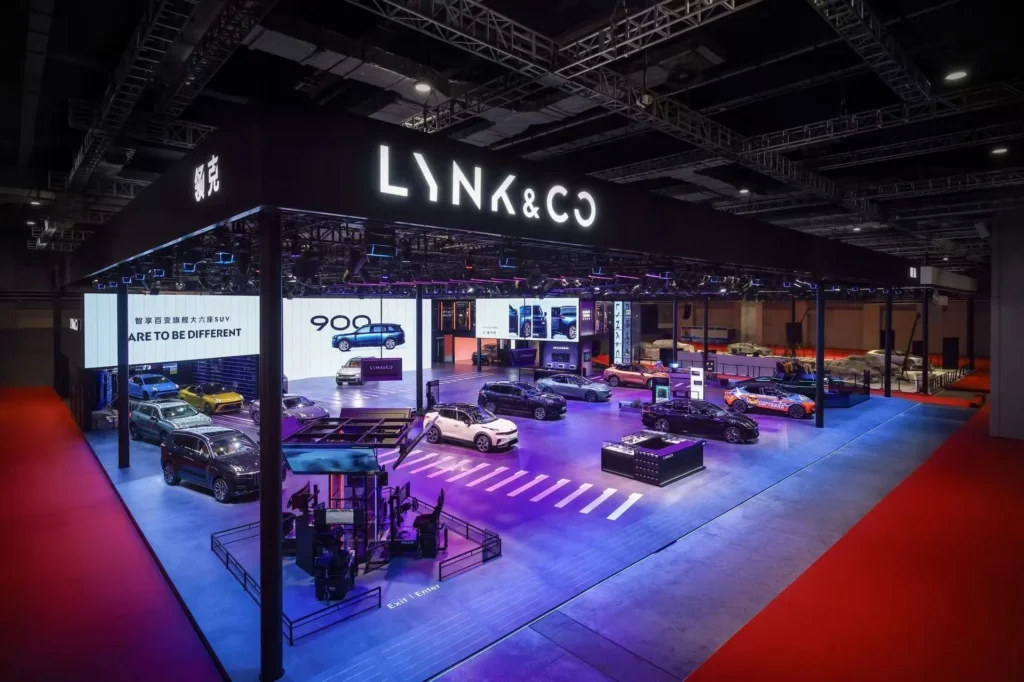
Geely Cars refers to more than the models carrying the Geely badge in overseas markets. It also points to a larger system built by Zhejiang Geely Holding Group, the parent ecosystem behind several connected automotive brands. Geely Auto itself develops passenger vehicles under the Geely, Lynk & Co, and Zeekr brands, according to the company’s 2026 profile.
This distinction matters for global buyers and business leaders. A Geely car can mean a mainstream SUV like the Geely Coolray, a pure-electric SUV like the Geely EX5, or an electrified model within the Geely Galaxy family in China. It can also lead researchers toward ownership questions around Volvo Cars, Polestar, and Lotus.
Geely Holding Group has built a global auto portfolio that allows each brand to play a distinct role. This reduces dependence on a single design language, price point, or technology path.
In 2025, Geely Holding Group delivered 4.116 million vehicles, up 26 percent from the prior year. Its new energy vehicle sales reached 2.293 million units, which lifted group-level new energy penetration to 56 percent. China Daily reported that Geely aimed for new energy vehicles to reach roughly 75 percent of total sales by 2030.
Inside Geely Auto, the momentum looks more concentrated. The company reported 3.024 million vehicle sales in 2025, up 39 percent. New energy vehicle sales rose 90 percent to 1.687 million units. That growth shows a clear transition from fuel vehicle resilience toward electric and hybrid scale.
The financial picture also supports the strategy. Geely Automobile reported 2025 revenue of RMB 345.2 billion, up 25 percent, while core net profit reached RMB 14.41 billion, up 36 percent. That matters because many Chinese automakers face heavy pressure from discounts, launch cycles, and rising export costs.
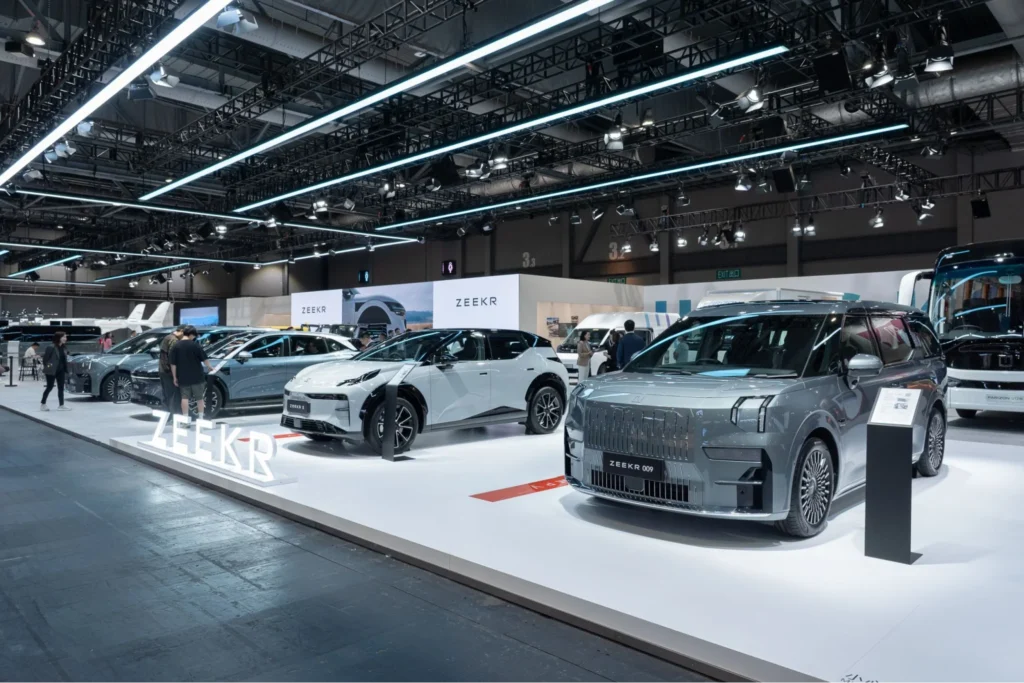
The core idea behind Geely Cars is portfolio separation. Geely Auto can compete in mainstream segments. Geely Galaxy can carry the new energy volume story in China. Zeekr can push premium electric technology. Lynk & Co can target younger urban buyers with a more design-led identity.
This structure became more disciplined in 2025. Zeekr completed its merger with Geely in December 2025, became a wholly owned subsidiary, and stopped trading as a public company. For Geely, this move tightened control over premium electric assets at a time when efficiency matters more than brand sprawl.
The Zeekr and Lynk & Co pairing also gives Geely a clearer premium new energy unit. Zeekr Group describes itself as a premium new energy vehicle group from Geely Holding Group, with Zeekr and Lynk & Co as its two brands. It says the group has more than 1.8 million users worldwide and nearly 20 models.
The Geely Cars EV strategy has three layers.
Geely Galaxy became the group’s most visible new energy growth engine in 2025. Geely said the lineup sold 1.24 million vehicles during the year, up 150 percent. It also said that Geely Xingyuan, known overseas as the Geely EX2, surpassed 530,000 in cumulative sales and topped the passenger vehicle model rankings in China.
Geely EX5 shows how the company turns domestic EV engineering into an exportable mainstream product. The official model page describes GEA as the intelligent architecture behind Geely EX5, with a focus on space, energy efficiency, safety, AI, and performance. It also lists an 11-in-1 electric drive unit with 160 kW peak power.
The SEA platform still matters because it connects Geely’s premium EV ecosystem. Zeekr says its vehicles use Sustainable Experience Architecture (SEA), and the SEA platform supports structural safety and advanced driver assistance systems in models such as the Zeekr X.
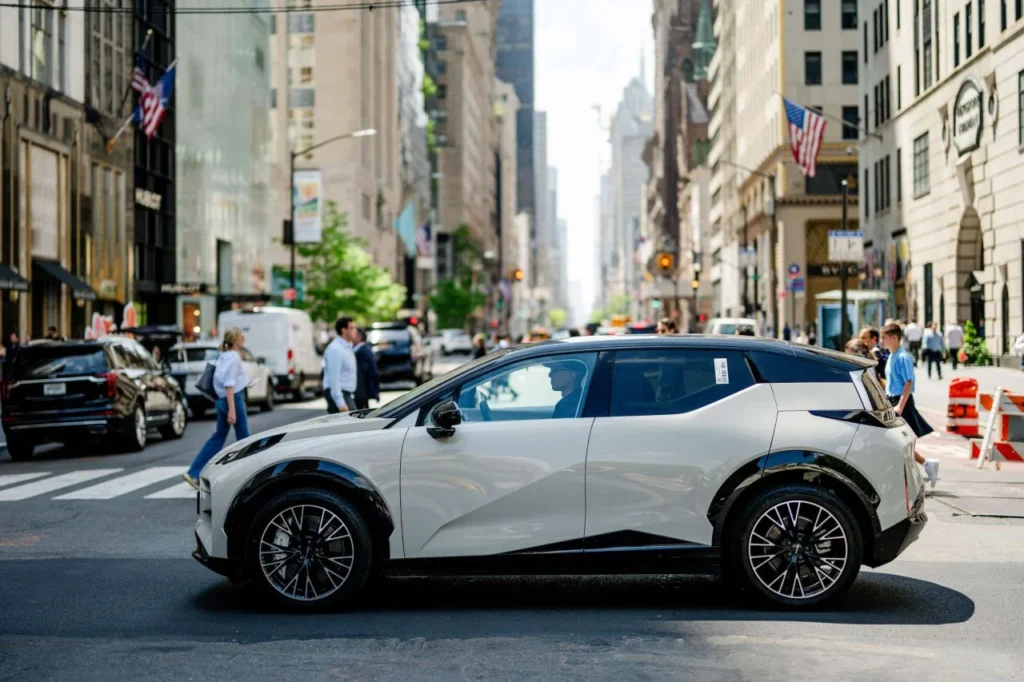
The Geely EX5 is important because it gives Geely Auto a globally understandable electric SUV. It avoids niche positioning and speaks to a large buyer segment that wants space, safety, charging convenience, and smart cabin features. The model page also notes five-star Euro NCAP and ANCAP safety ratings.
The Geely Coolray plays a different role. It keeps the brand visible in petrol- and value-oriented SUV markets, where full EV adoption still varies with charging access and income level. lists a 1.5TD engine, 128 kW maximum power, 290 N m torque, and 0 to 100 km per hour acceleration in 7.6 seconds.
Together, the Geely EX5 and the Geely Coolray illustrate the brand’s practical export logic. Geely Cars does not rely on a single powertrain story. Instead, Geely Auto uses electric SUVs, hybrid options, and efficient petrol models to fit different stages of market readiness.
EV exports have become a key test for Chinese automakers, and Geely Cars has entered that phase with more structure than many peers. In January 2026, Geely Auto reported 60,506 sales outside mainland China, up 121 percent year over year. New energy vehicles accounted for 32,117 of those overseas sales.
The company kept that export focus visible in April 2026. Geely Automobile reported total April sales of 235,164 units. Separate China EV coverage of the same month said overseas sales reached 83,186 vehicles, while new energy vehicles accounted for 57.7 percent of total sales.
Europe now shows how Geely is trying to localize its brand structure. In April 2026, Geely Auto announced new European leadership roles for Geely Brand Europe and Zeekr Brand Europe. The company said it had entered more than 20 mainstream European markets, including the Netherlands, Germany, Spain, and Hungary.

Many Chinese automakers compete by launching quickly and aggressively pricing. Geely adds another layer through ownership, architecture, and brand coordination. Its structure allows one group to operate mainstream Geely Cars, premium Zeekr models, lifestyle-focused Lynk & Co products, and European heritage brands under one strategic umbrella.
This does not remove risk. The group still faces price pressure in China, tariff uncertainty in export markets, and potential overlap across brands. Yet the 2025 and 2026 data show Geely moving toward tighter control. The Zeekr privatization, Europe’s structure, Geely Galaxy growth, and export acceleration all point in the same direction.
For executives, the lesson is clear. Geely Cars represents a Chinese auto model built around portfolio leverage, shared platforms, and market-by-market adaptation. It shows how a Chinese group can use scale at home, brand diversity overseas, and EV architecture to compete with both legacy automakers and China’s newer EV specialists.
Geely’s rise shows how China’s auto competition now depends on scale, software, platforms, and global execution. For executives, the key question is not only which car wins, but how Chinese automakers build ecosystems around vehicles.
ChoZan helps leadership teams understand these shifts through China-focused research, executive briefings, workshops, and learning expeditions. Its work connects EV strategy with battery supply chains, smart mobility, AI, retail behavior, and platform-based growth.
For companies tracking Geely, BYD, CATL, or other Chinese mobility players, ChoZan turns market complexity into practical strategic insight.
Book a China strategy briefing with ChoZan to understand what China’s EV ecosystem means for your market, partners, and next growth decisions.
Yes, Geely has improved its long-term ownership reputation through better safety standards, shared engineering, and wider global support. Its connections with Volvo, Zeekr, and international suppliers have also strengthened perceptions of quality in export markets.
Geely cars are officially sold across parts of Asia, Eastern Europe, the Middle East, Latin America, Africa, and selected European markets. Expansion has accelerated as Geely increases EV exports and builds localized dealer and service networks.
Geely Galaxy focuses on mainstream new energy vehicle buyers, while Zeekr targets the premium electric segment. Galaxy prioritizes affordability and scale, whereas Zeekr emphasizes advanced software, performance, intelligent driving systems, and higher-end cabin experiences.
Geely produces both hybrid and fully electric vehicles. The company still supports petrol and hybrid demand in markets with limited charging infrastructure, while expanding battery electric models through Geely Galaxy, Zeekr, and export-focused EV platforms.
Chinese automakers are expanding overseas because China’s domestic EV market has become highly competitive. Companies like Geely now use exports, localized partnerships, and regional manufacturing to build global scale and reduce dependence on one market.
Geely uses a multi-brand structure with Volvo, Zeekr, Lynk & Co, and Lotus, while BYD focuses more heavily on vertically integrated manufacturing. Geely emphasizes brand separation and platform sharing across different customer segments and international regions.
Smart cockpit technology refers to AI-driven in-car systems that manage navigation, voice interaction, entertainment, connectivity, and driving information. Geely increasingly uses these digital systems to compete with newer EV brands focused on software-led user experiences.
Yes, many Geely electric vehicles support fast charging compatibility depending on the market and charging standard. Newer Geely EV architectures increasingly focus on faster charging speeds, battery efficiency, and reduced charging downtime for daily use.
Analysts track Geely’s platform architecture because shared vehicle platforms reduce production costs and accelerate model development. This system also allows Geely to scale software, battery technology, and safety engineering across multiple automotive brands simultaneously.
Yes, Geely has the scale and portfolio structure to become one of the world’s largest EV groups. Its combination of exports, premium brands, mainstream EVs, and global partnerships gives it a broader positioning than many newer electric-vehicle competitors.
Zhejiang Geely Holding Group is the current controlling owner behind Volvo Cars through Geely Sweden Holdings. In January 2025, Volvo Cars stated that Geely Sweden Holdings held about 78.65 percent of Volvo Cars’ shares and votes.
Polestar sits inside the wider Geely ownership structure. Reuters reported in December 2025 that Geely Holding Group was Polestar’s majority owner when Polestar secured a loan agreement through Geely’s Swedish unit.
Geely Holding Group remains the parent company behind Lotus. Reuters described Lotus as backed by parent company Geely in 2026 coverage of the brand’s updated hybrid and electric vehicle plans.
These brands give Geely Cars a broader global portfolio. Volvo Cars strengthens safety credibility, Polestar adds premium electric positioning, and Lotus brings performance heritage. Together, they help Geely compete beyond mainstream Chinese auto segments.