CONTENT

The global warehouse automation industry has reached an inflection point. Labor shortages, rising e-commerce complexity, and margin pressure have forced logistics operators to rethink their approach to storage and fulfillment.
In China, where wage inflation and demographic shifts are reshaping the manufacturing and logistics landscape, one company has emerged as a defining force. Hai Robotics, the Shenzhen-based pioneer of Autonomous Case-handling Robots (ACRs), has spent the past decade building a technology stack that fundamentally rethinks how warehouses use vertical space.
For supply chain leaders, understanding this company’s strategy offers a window into where warehouse automation is heading—and how Chinese innovation is reshaping the global logistics technology landscape.
The core value proposition of Hai Robotics is not only labor reduction. Its real strategic relevance lies in how it changes warehouse capacity planning. Instead of treating a warehouse as a flat storage site, HaiPick systems turn vertical space into usable inventory capacity through autonomous case-handling robots, ACRs, and automated storage and retrieval workflows.
The company has built a global footprint, secured substantial funding, and filed for a Hong Kong IPO in early 2026. With over 1,800 projects implemented across more than 40 countries and over 30% global market share in ACR solutions by revenue and shipment volume, Hai Robotics has moved from a Chinese robotics startup to a genuine global competitor in automated storage and retrieval.
This is highly relevant for China because warehouse operators face SKU growth, peak-season volatility, high return flows, and pressure from instant retail and cross-border e-commerce. A dense goods-to-person model helps operations keep more inventory closer to demand without immediately expanding real estate. That is why the story of Hai Robotics China is really a story about using robotics to make constrained logistics space more productive.
For executives, that sector spread matters because it signals that tote and case handling are becoming horizontal infrastructure across supply chains, not a niche tool for a single category.
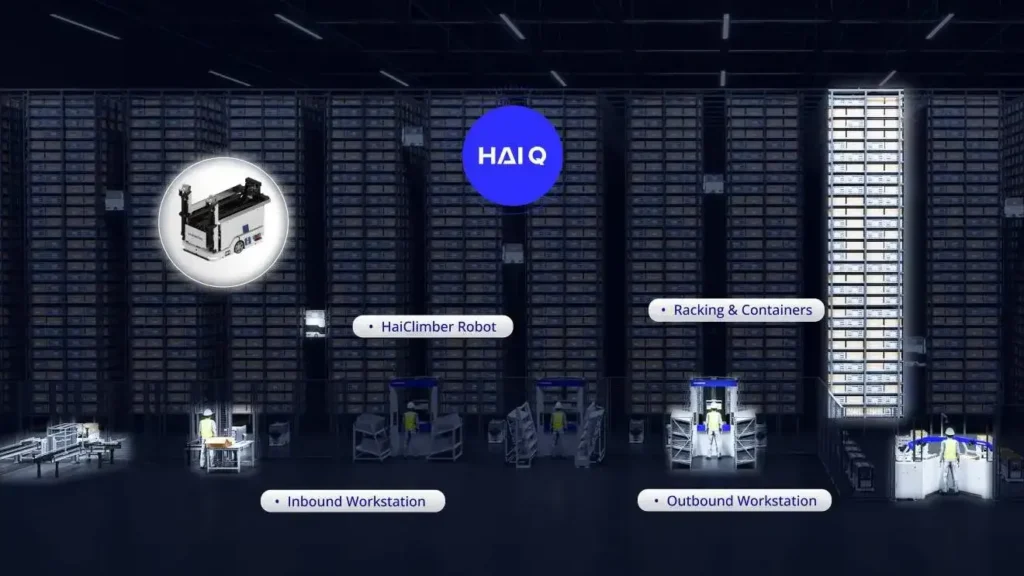
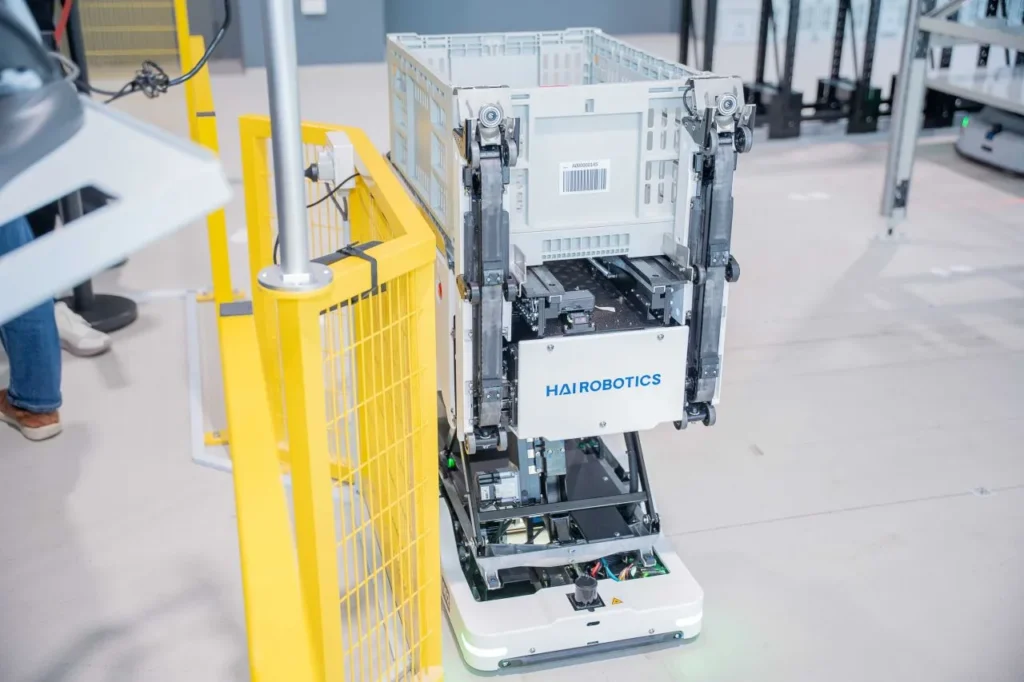
HaiPick is built around autonomous case-handling robots that retrieve totes, cases, or containers from storage racks and deliver them into a coordinated fulfillment workflow. The system typically includes robots, racking, containers, workstations, and software that connects warehouse tasks into a repeatable goods-to-person process.
This matters because many warehouses do not need a fully custom automation build. They need modular automation that fits existing buildings, supports mixed SKUs, and reduces walking, searching, lifting, and manual replenishment. In practical terms, Hai robots move the inventory while workers stay at ergonomic workstations for higher-value picking and exception handling.
HaiPick System 1 is positioned as a scalable ASRS for storage density, order throughput, and labor cost reduction. HaiPick System 2 adds mixed-picking capability for individual items, full cases, and palletized goods. HaiPick System 3 moves toward higher-density, high-throughput environments by combining vertical ACR movement with fast horizontal transport.
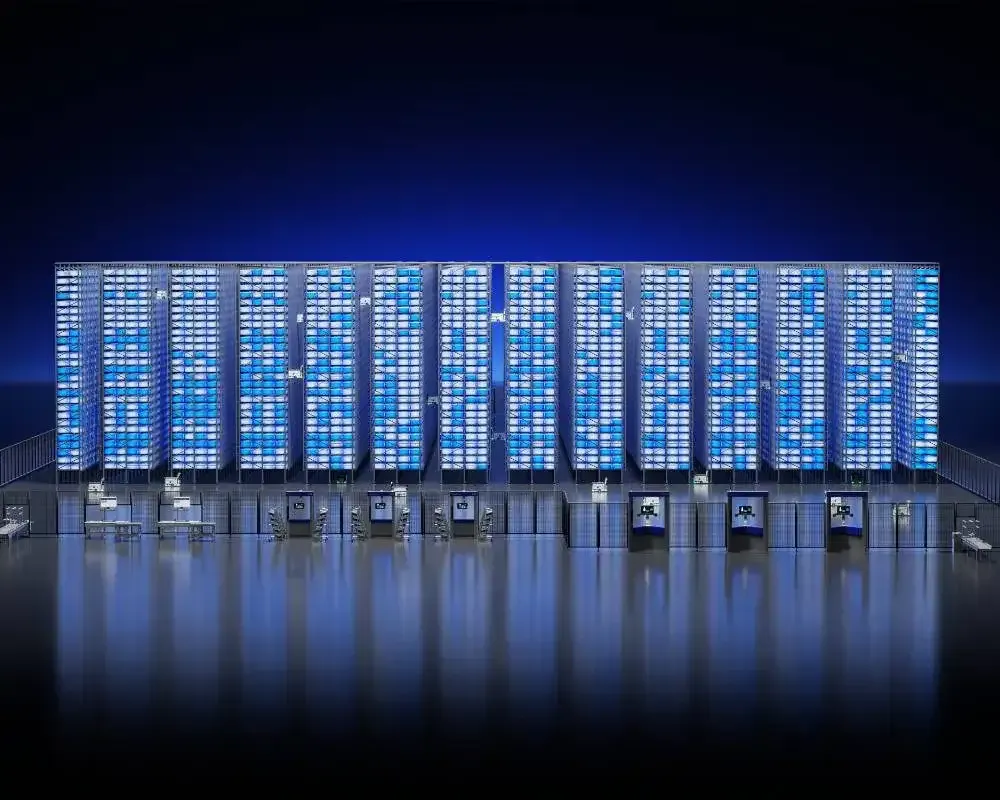
In May 2025, Hai Robotics introduced HaiPick Climb, a high-density, high-speed warehouse automation system that climbs racks up to 12 meters high and can deliver up to 4,000 totes per hour.
The business logic is clear. In urban or space-constrained facilities, height becomes a strategic asset. HaiPick Climb uses climbing robots and narrow-aisle layouts to increase warehouse storage density without requiring the same level of heavy, fixed infrastructure as some traditional ASRS projects.
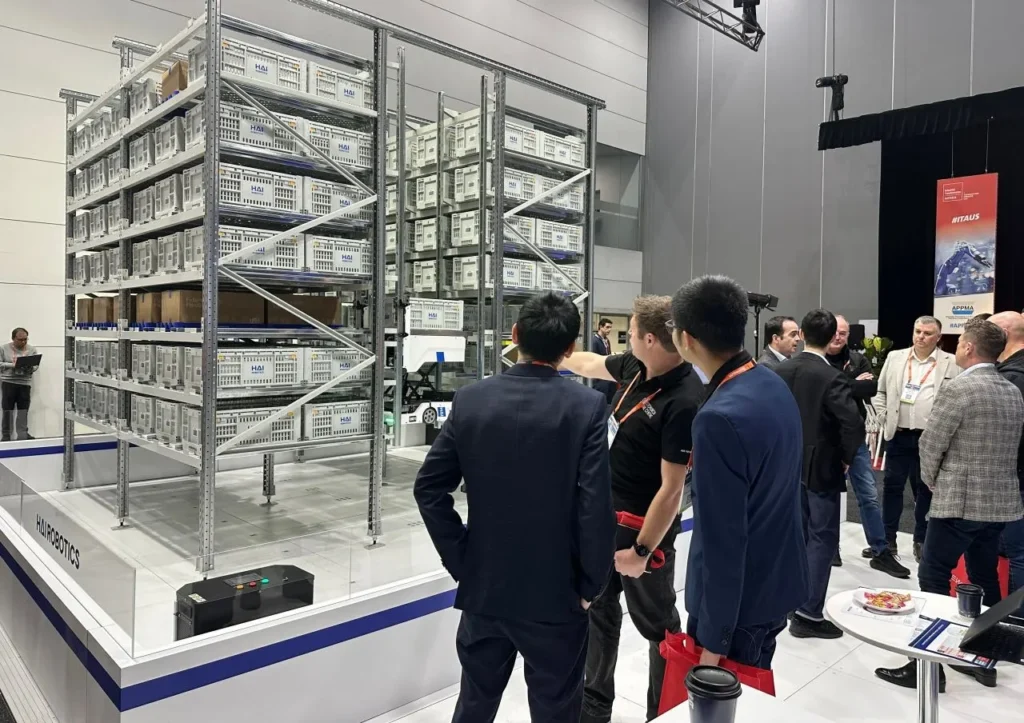
Hai Robotics Climb earned the Excellence in Automation award at The Archies Awards – IMHX 2025 and the Technology Excellence Award at Pack Expo Las Vegas 2025. Throughout 2025, the system was showcased across 36 partner-hosted exhibitions and demo sites across Europe
In March 2026, the company announced an upgrade to HaiPick Climb that supports up to 45,000 totes within 1,000 square meters. That figure is important for executives because it frames automation as much a real estate strategy as a throughput strategy.
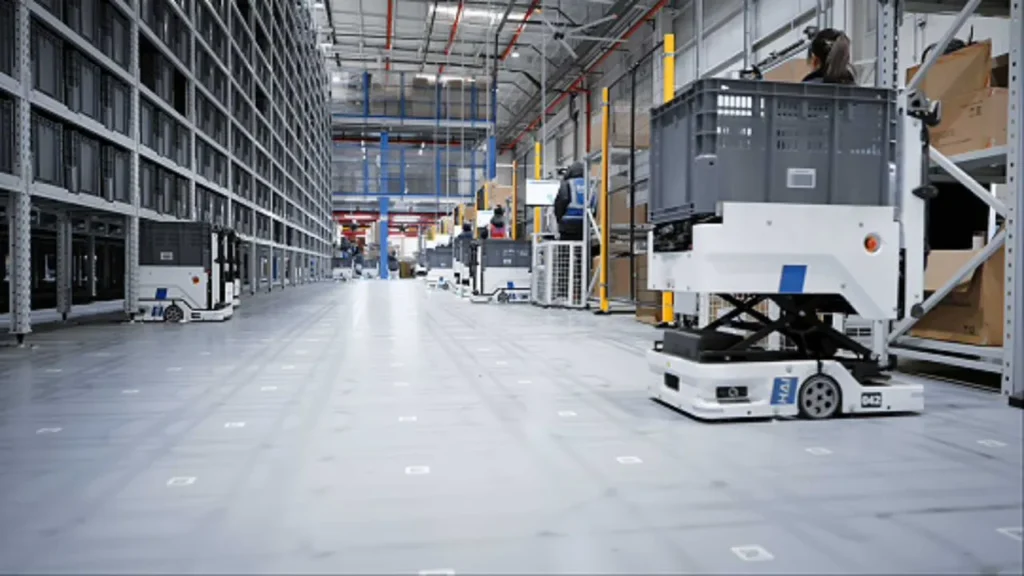
This system combines vertical case-handling robots with Companion AMRs. The ACRs pick and store totes up to 12 meters high in triple-deep configurations, while Companion AMRs move totes horizontally between racks and workstations at speeds up to 4 meters per second.
System 3 shows the difference between point automation and orchestrated fulfillment. The AMRs are not simply moving goods from one place to another. They operate within a larger ASRS logic in which storage density, SKU velocity, workstation flow, and order priority are coordinated.
HaiPick System 3 is positioned for high-throughput operations that need extreme-density vertical storage, fast order fulfillment, and batch picking. Hai’s official system page cites up to 43 totes per square meter, up to 3x throughput, and 99 percent-plus order-pick accuracy.
At KOHLER’s warehouse, the system delivered a 3.7x increase in storage capacity and a 2x increase in throughput while reducing labor costs by 80%. At Win.IT America’s Los Angeles fulfillment center achieved 32+ totes per square meter and up to 1,200 totes per hour with 99%+ order accuracy. These are not theoretical metrics. They represent operational outcomes at scale.
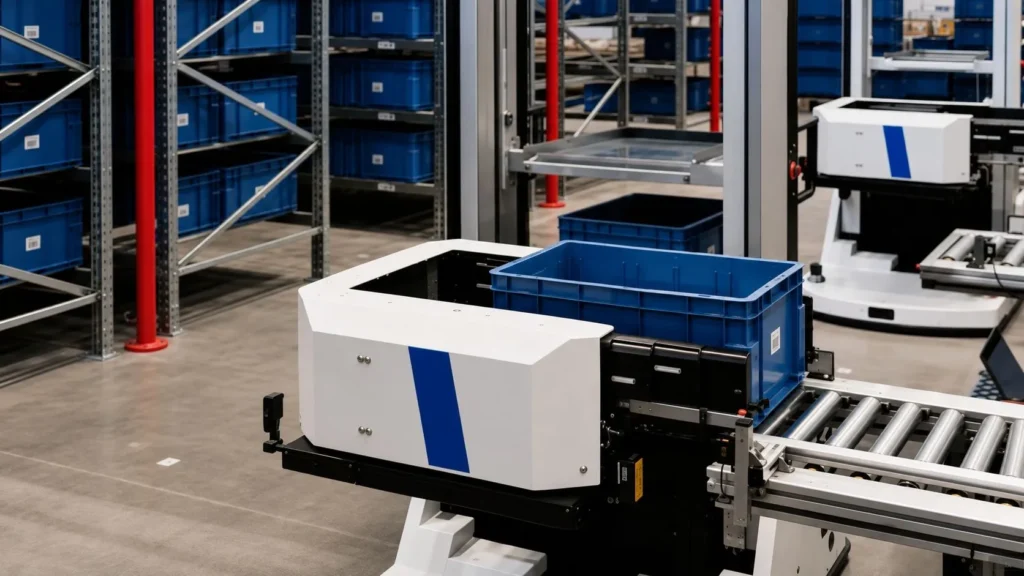
The Hai Robotics China strategy is tied to manufacturing scale. In September 2025, the company said it expanded global manufacturing with two facilities in Yancheng, China, and Penang, Malaysia, increasing production capacity for HaiPick System robots by 10x.
That matters because warehouse automation is increasingly judged by delivery confidence, installation speed, service continuity, and parts availability. A strong product can still lose deals if buyers worry about deployment risk. The Yancheng and Penang expansions give Hai Robotics a stronger supply chain base for global customers that need predictable rollout schedules.
There is also a China-specific lesson here. Chinese robotics firms compete in a dense supplier ecosystem where hardware, software, integration, learning, and production feedback loops sit close together. For Hai Robotics, that ecosystem supports faster product iteration and a more cost-disciplined path to international warehouse automation markets.
The Hai Robotics USA opportunity is tied to retailers, 3PLs, healthcare systems, and manufacturers that need more throughput from existing buildings. In August 2025, Hai Robotics appointed Adrian Stoch as CEO Americas to lead the next growth phase in the U.S. market. In June 2026, the company added senior Americas leadership for Latin America and delivery execution.
The company also moved through partnerships. In April 2026, Hai Robotics AMER announced a partnership with Maveneer to deliver integrated automation across manufacturing and distribution operations. This shows the importance of local integration depth in North America, where buyers usually need robotics to connect with existing WMS, conveyors, workstations, controls, and labor processes.
Beyond the Americas, Hai Robotics signed a global partnership with LX Pantos in May 2026 and a partnership with TGW Logistics in March 2026. TGW said HaiPick Climb forms the robotic foundation of its LivePick solution. This points to a channel strategy in which Hai Robotics scales through system integrators and logistics players rather than relying solely on direct sales.
For executives, Hai Robotics offers three lessons.
The first is that warehouse automation should be evaluated in terms of capacity economics. Storage density, SKU accessibility, order speed, and building constraints matter as much as robot count.
The second lesson is that automation now requires cybersecurity discipline. In April 2026, Hai Robotics achieved IEC 62443-4-1 certification, a cybersecurity standard for industrial automation and control systems. This matters because warehouse robotics now connects with WMS, cloud platforms, OT systems, and enterprise software.
The third lesson is that Chinese robotics firms are entering a more mature phase of capital and commercialization. HKEX posted a new listing application for Hai Robotics Innovation Group Co., Ltd. in February 2026. For investors and strategy teams, this makes Hai Robotics part of a wider shift in which China’s warehouse robotics firms are seeking scale, global credibility, and deeper enterprise adoption.
The next stage for Hai Robotics will likely be shaped by three commercial questions.
For global leaders, the company is worth watching because it shows how China’s robotics sector is moving from product innovation to system-level execution. The winners in warehouse automation will not be decided by robot specs alone. They will be decided by deployment reliability, integration skill, software orchestration, service networks, and the ability to turn warehouse space into a scalable commercial advantage.
Chozan helps leadership teams understand China’s fast-moving innovation sectors with research, executive workshops, learning expeditions, expert calls, and market strategy support. If your team is assessing Hai Robotics, Chinese warehouse automation, AMRs, ACRs, smart logistics, or broader China supply chain innovation, Chozan can help turn market signals into board-ready insight.
Book a consultation with Chozan to explore what China’s robotics and automation leaders mean for your business strategy.
Hai Robotics develops robotic ASRS and goods-to-person systems for inventory storage and order fulfillment. Its solutions focus on autonomous case-handling robots, tote handling, vertical storage, workstations, and software coordination for modern warehouses.
Yes, Hai Robotics is a Chinese warehouse robotics company associated with Shenzhen’s automation ecosystem. Its China base supports product development, manufacturing scale, and global supply chain execution for HaiPick robotic warehouse systems.
ACRs retrieve cases or totes from storage racks, while AMRs move goods horizontally through the warehouse. In HaiPick System 3, both robot types work together to support faster goods-to-person fulfillment.
Hai Robotics Climb refers to HaiPick Climb, a vertical ASRS designed for high-density tote storage. It is useful for warehouses that need more inventory capacity without major building expansion.
Hai Robotics System 3 is suited for high-throughput warehouses with dense SKU profiles and fast-moving order flows. It combines vertical ACR storage with Companion AMRs for quicker tote movement to workstations.
Hai Robotics USA supports American operators through regional leadership, partner networks, and integration activity. Its Americas strategy focuses on helping retailers, 3PLs, manufacturers, and distributors deploy robotic ASRS in real operations.
No, Hai robots are used across multiple sectors, including retail, 3PL, healthcare, electronics, grocery, automotive, and manufacturing. The common use case is high-density storage and faster inventory access.
Hai Robotics AMR technology fits into ASRS by moving totes between storage areas and workstations. In mixed robot systems, AMRs support speed and order responsiveness while ACRs handle vertical storage retrieval.
Tote handling is important because it standardizes inventory movement across picking, replenishment, returns, and storage. Standard containers help robotic systems move products faster and reduce manual touches in fulfillment automation.
Executives should assess building height, SKU velocity, labor constraints, WMS integration, service coverage, cybersecurity needs, and expansion plans. The strongest use cases usually combine storage density pressure with measurable throughput targets.