CONTENT

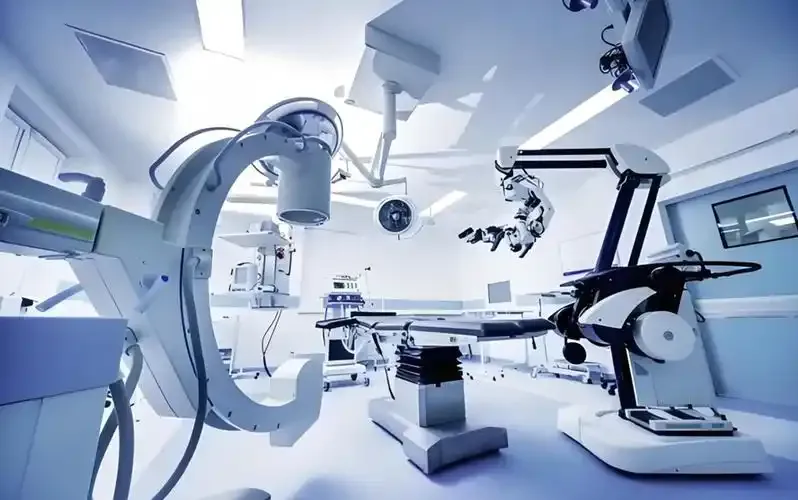
China’s medical robots sector is entering a more commercially disciplined phase. Product approval still matters, but hospitals now look closely at clinical value, physician training, service pricing, workflow integration, safety evidence, and long-term operating costs.
The policy framework is also becoming clearer. In July 2025, China’s National Medical Products Administration announced plans to develop classification guidance for surgical and rehabilitation robots as part of stronger lifecycle regulation for advanced medical devices. In January 2026, the National Healthcare Security Administration established national pricing categories for robot-assisted and remote surgical services.
These developments move medical robotics beyond isolated equipment trials. China is building the regulatory, payment, manufacturing, and clinical infrastructure needed to support wider adoption. The opportunity spans surgical systems, rehabilitation robots, pharmacy automation, logistics platforms, and other hospital automation applications.
China’s early robotics push concentrated heavily on technical localization and regulatory access. The current phase asks a more demanding question: can a system deliver measurable value throughout its working life?
The NMPA’s 2025 high-end medical device measures call for classification guidance covering surgical and rehabilitation robots. They also support work related to medical AI models and artificial intelligence medical devices. This signals closer attention to product naming, risk classification, clinical evidence, and lifecycle oversight.
Shanghai, Shenzhen, Beijing, and other major robotics centers are connecting manufacturers with hospitals, research institutions, and application sites. The aim is to shorten the path from engineering to clinical use while collecting evidence under real-world operating conditions.
For medical robotics companies, approval is now the beginning of commercialization rather than its final objective. Suppliers need clinician education, maintenance capacity, application support, compatible consumables, and evidence that helps hospitals justify procurement.
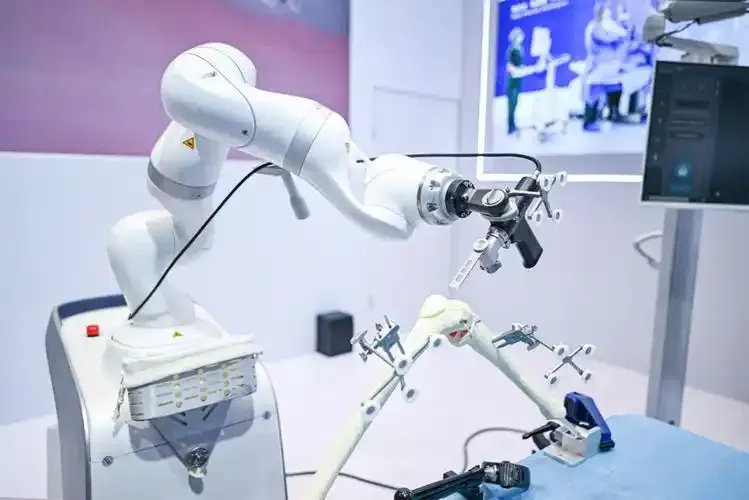
China’s surgical robots category includes laparoscopic, orthopedic, interventional, bronchoscopic, natural-orifice, and remote-surgery platforms. Competition is increasing across these specialties.
MicroPort MedBot received NMPA approval for its Toumai SP laparoscopic system in March 2025. The single-port platform was approved for use in urology, general surgery, and gynecology. According to the company’s approval announcement, its instruments and endoscope enter through a 2.5 centimetre umbilical incision.
This matters commercially because compact single-port systems can address operating rooms where floor space, incision strategy, and access to narrow anatomical areas influence purchasing decisions.
Clinical adoption also requires structured training. In April 2025, Peking University Shougang Hospital installed a domestically produced single-port laparoscopic robot. The hospital introduced a staged program that covers theory, simulated operations, animal practice, and formal assessment before clinical use.
That approach shows how robotics in medicine reaches the operating theatre. Hospitals procure a system, build specialist competence, adapt procedures, and monitor performance before increasing surgical volume.
China’s payment policy then addressed a major barrier to commercialization. The National Healthcare Security Administration’s January 2026 guidance established three levels of robot participation: navigation, participation in execution, and precision execution.
Higher participation can receive a higher charging coefficient. The policy also created a separate category for remote surgical assistance and included essential robotic-arm consumables in the pricing structure.
The national pricing guidance avoids separate categories based on surgical route, body area, or equipment brand. This supports technology-neutral procurement while linking charges to the robot’s clinical role.
Commercial success will still depend on procedure volume, network reliability, emergency protocols, surgeon credentialing, and local implementation. Regulatory approval alone cannot establish a remote surgery network.
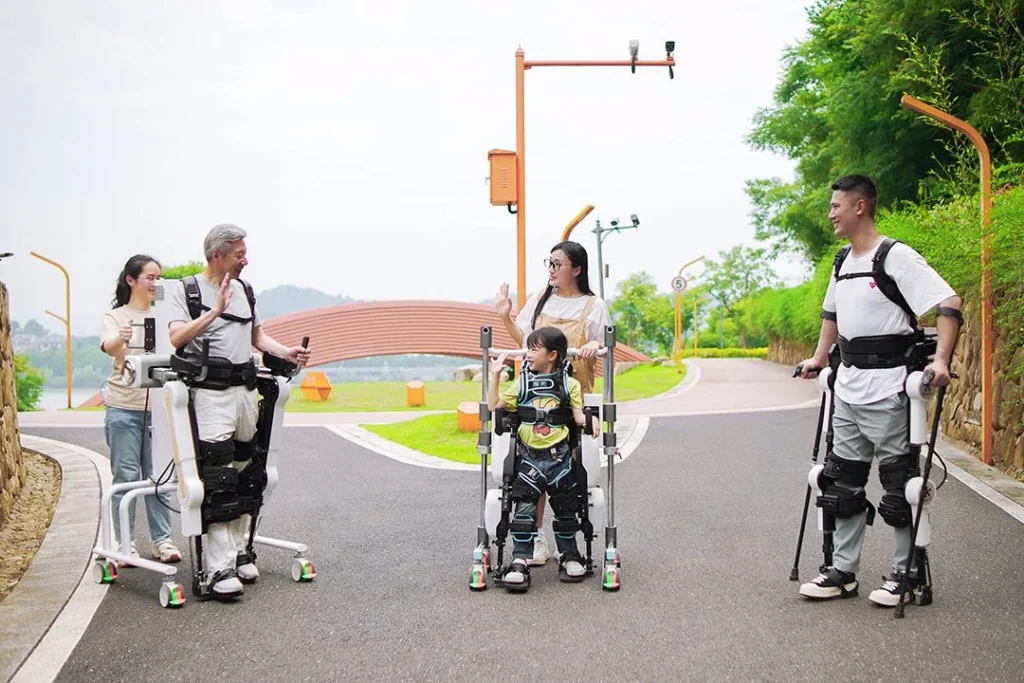
The rehabilitation robots segment is becoming increasingly connected to sensors, exoskeletons, brain-computer interfaces, interactive software, and personalized training plans.
The commercial value of robotic rehabilitation lies in repeatable therapy, detailed movement data, and the ability to adjust assistance according to a patient’s performance. These systems can help therapists manage training intensity while documenting progress across sessions.
In April 2025, Shanghai-based Fourier Rehab used its GReAT Summit to present embodied AI applications in rehabilitation. The RehabHub platform connects multiple robotic systems through a digital rehabilitation environment. The company positions the system around assessment, training, and data management rather than a single device.
Beijing is also supporting integrated rehabilitation platforms. In August 2025, the Beijing Economic and Technological Development Area reported that Da Ai Robot had signed projects covering multimodal rehabilitation data and intelligent eldercare. Its platform combines movement control, physical capability assessment, and training software to support an assessment, intervention, and feedback process.
The next commercial test is evidence quality. Hospitals need to understand which patient groups benefit, how progress compares with standard care, and how therapists use system data in treatment decisions. Vendors that provide devices without a credible clinical workflow will face a harder procurement process.
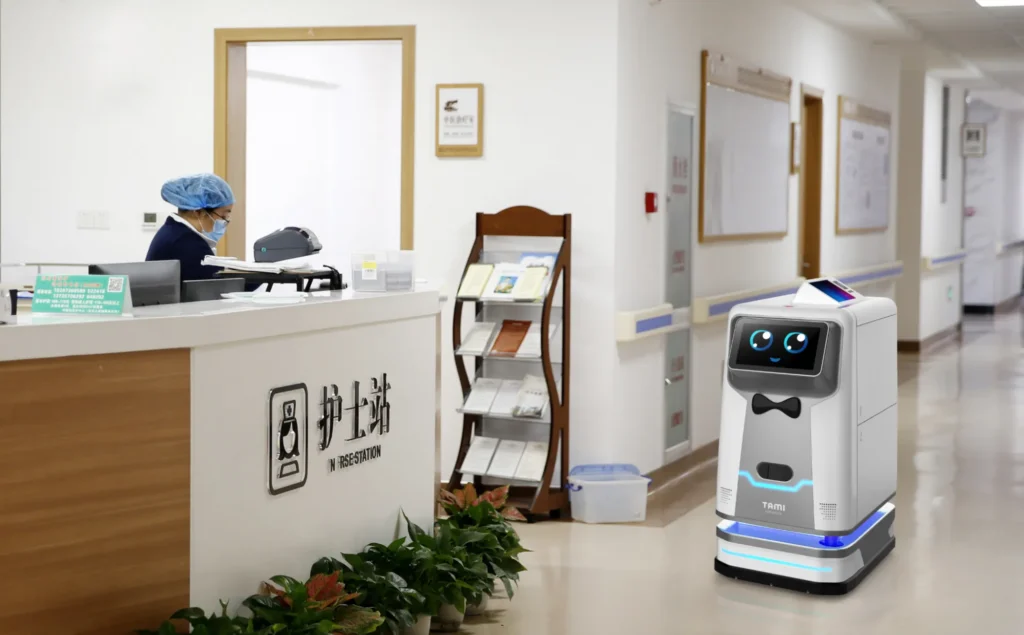
The strongest near-term opportunities for hospital robots may come from repetitive operational tasks rather than highly visible humanoid demonstrations.
Hospitals already use robots for material delivery, pharmacy support, disinfection, endoscope cleaning, consultation, and selected treatment procedures. These applications have narrower task boundaries and clearer performance indicators.
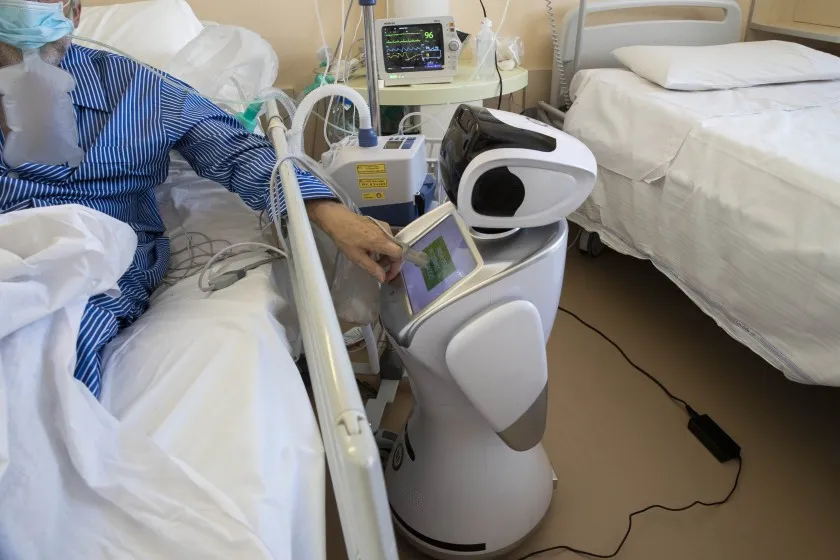
Shenzhen’s Luohu Hospital Group deployed logistics robots with autonomous navigation, obstacle avoidance, lift access, and intelligent dispatch. By February 2025, the robots had completed more than 6,000 deliveries and traveled over 286,000 meters.
The same hospital group proposed further trials covering surgical, nursing, rehabilitation, cleaning, consultation, pharmacy, and logistics robots. Its model is valuable because a hospital group can test a product across multiple facilities and collect comparable data.
At Zhanjiang Central People’s Hospital, logistics robots were carrying inpatient medicines between departments in 2025. The robots used autonomous navigation, route planning, obstacle avoidance, and lift integration.
These deployments show what buyers expect from healthcare robots. A robot must connect with lifts, access controls, pharmacy processes, digital records, and human work schedules. Navigation performance matters, but integration determines operational value.
In Shenzhen’s Longgang district, 14 automated intravenous preparation robots were operating inside a pharmacy preparation center in 2025. The local development authority reported an 80 percent improvement in preparation efficiency and a reduction in exposure to medicines.
Shenzhen hospitals have also tested robots for endoscope cleaning, moxibustion, rehabilitation, and surgery. The Shenzhen Municipal Health Commission documented these applications in March 2025.
This diversity suggests that China’s healthcare robotics market will develop through specialized systems before general-purpose nursing robots assume complex patient-facing work. Controlled tasks are easier to validate, monitor, and integrate into clinical accountability structures.
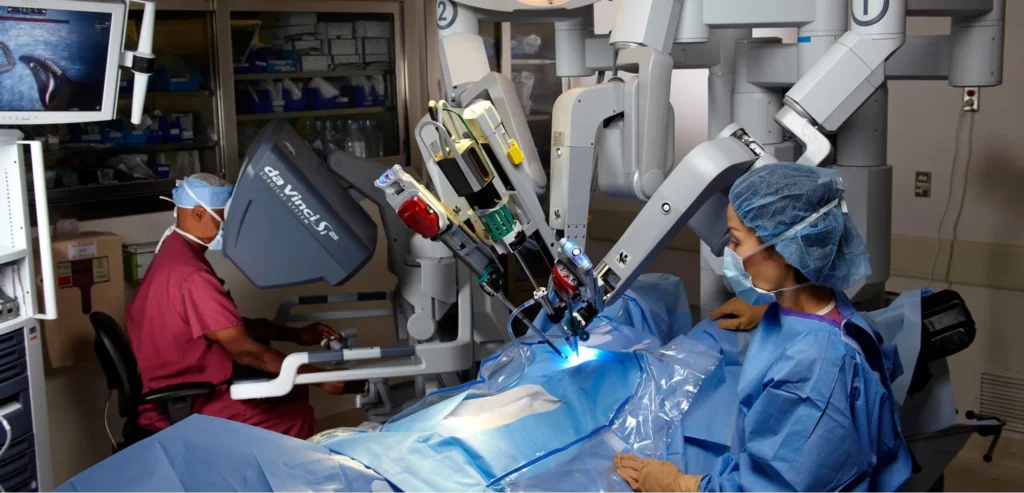
Hospitals are becoming more selective as the number of available systems grows. A credible medical robot procurement case needs to cover more than the acquisition price.
Key evaluation areas include:
For logistics platforms, buyers will examine delivery accuracy, fleet uptime, door and lift integration, route congestion, cleaning protocols, and manual recovery procedures. For surgical systems, the focus shifts toward procedure outcomes, instrument availability, training curves, and conversion protocols. Rehabilitation purchasing requires evidence around patient selection, therapy intensity, clinician workload, and outcome measurement.
This is where safety validation becomes part of commercial strategy. Strong suppliers will help hospitals document responsibilities, operating limits, fallback processes, and performance indicators.
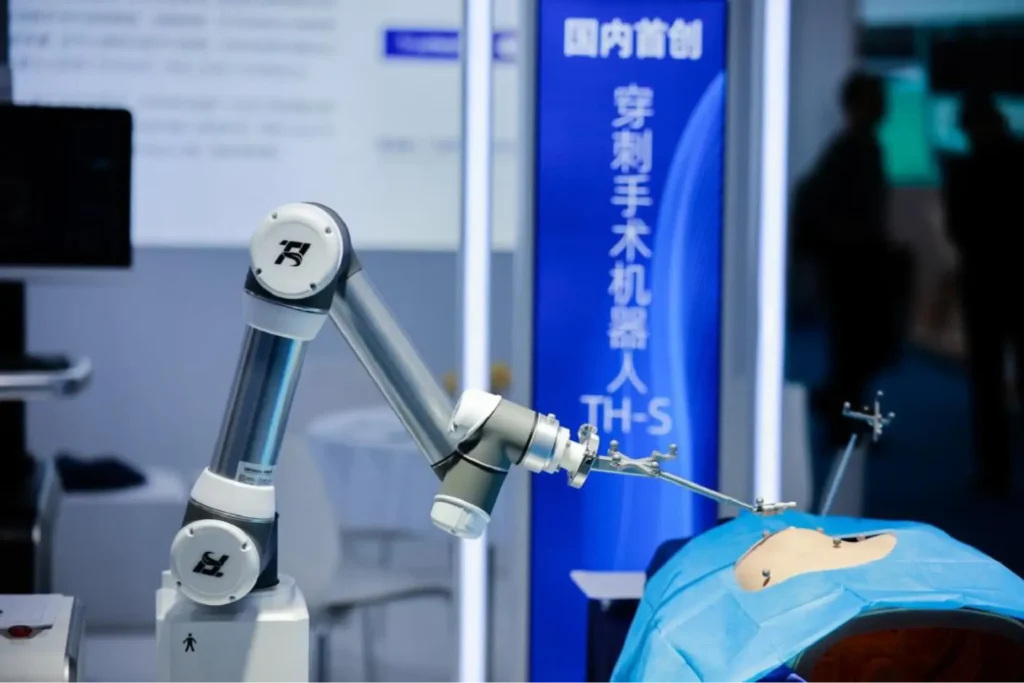
China is combining domestic manufacturing with access to large clinical networks. This gives companies a valuable environment for product iteration, workflow testing, and cost reduction.
The market is far from uniform. Procurement authority, medical service pricing, hospital budgets, clinical demand, and local implementation capacity vary across provinces and institutions. National policy creates direction, while local health and insurance authorities shape practical adoption.
Three strategic conclusions stand out.
China’s medical robots market sits at the intersection of healthcare policy, clinical demand, local innovation, and hospital purchasing. ChoZan helps global teams interpret these shifts through tailored China research, strategic workshops, and market intelligence grounded in current developments.
Explore ChoZan’s China business resources and services to identify the technologies, companies, and adoption signals most relevant to your strategy.
Book a consultation for a smarter healthcare strategy.
Imported medical robots generally require NMPA registration before commercial clinical use. The required evidence depends on device classification, intended use, risk level, and existing overseas data. Local testing or clinical evaluation may form part of the submission.
Private hospitals can purchase approved medical robots, subject to their operating licenses, clinical capabilities, budgets, and relevant local requirements. Vendors still need to provide training, technical support, maintenance, and documentation suited to the hospital’s approved services.
There is no universal timetable. Registration length depends on classification, testing requirements, product novelty, clinical evidence, and submission quality. Innovative devices may qualify for special review pathways, but acceptance does not remove technical or evidence requirements.
Yes. Chinese medical robotics companies are pursuing approvals and installations across Europe, Latin America, Asia, the Middle East, and Africa. Each destination requires its own regulatory, clinical training, maintenance, cybersecurity, and distribution strategy.
Responsibility depends on the event, hospital procedures, operator actions, maintenance records, product instructions, and applicable law. Hospitals and suppliers need clear incident reporting, device traceability, technical investigation, and patient safety protocols before routine clinical deployment.
Hospitals may assess procedure or task volume, staff time, room use, consumables, maintenance, training, reimbursement, downtime, and clinical outcomes. A realistic model should include the ramp-up period before utilization reaches its expected level.
Many hospital robots can connect with pharmacy, logistics, access control, lift, scheduling, or clinical systems through interfaces. Integration depth varies by product, so hospitals should test data exchange, permissions, cybersecurity, and manual fallback procedures.
No. Rehabilitation robots deliver controlled and repeatable exercises under professional supervision. Therapists still assess the patient, select suitable activities, adjust treatment, interpret progress, manage discomfort, and decide when robotic assistance should be adjusted or discontinued.
Connected systems may face unauthorized access, data interception, software tampering, service disruption, or compromised remote control. Hospitals should review encryption, identity management, network separation, software updates, audit logs, vendor access, and incident response arrangements.
Complex environments, unpredictable human behavior, patient privacy, physical safety, accountability, and integration costs can limit the use of nursing robots. Adoption is more practical when robots handle defined support tasks under staff supervision rather than making independent clinical decisions.