CONTENT

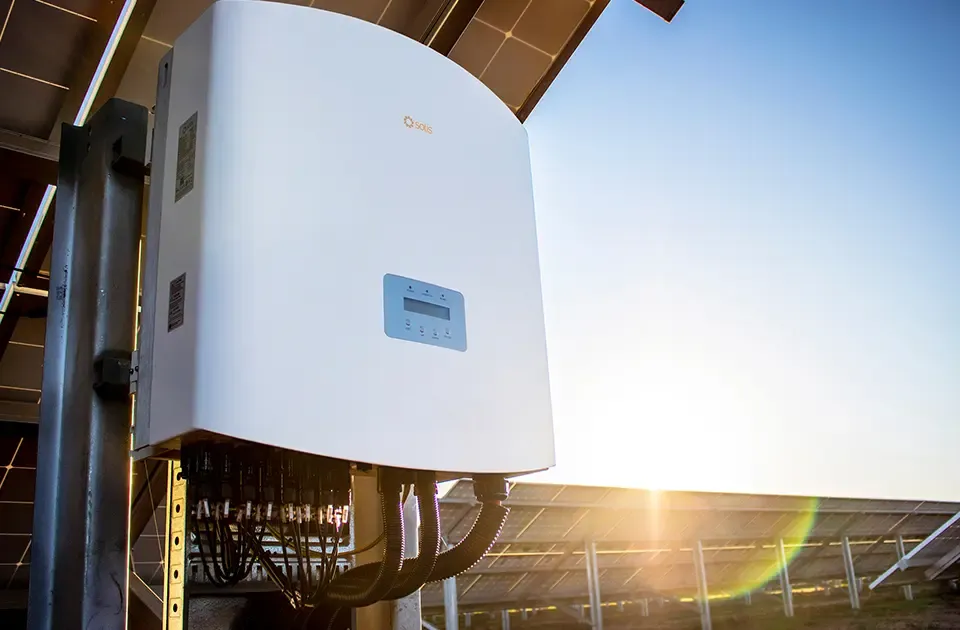
Solis Inverters are the grid conversion and energy storage products of China’s Ginlong Technologies. The company still builds its business around string architecture, but its growth strategy now reaches far beyond conventional solar conversion. Ginlong is adding hybrid power control, batteries, cloud monitoring, and automated energy management across residential, commercial, industrial, and utility applications.
That shift matters because an inverter now influences battery economics, backup performance, grid compliance, software control, and long-term service risk. A current assessment must therefore examine the whole operating system, rather than compare efficiency figures alone.
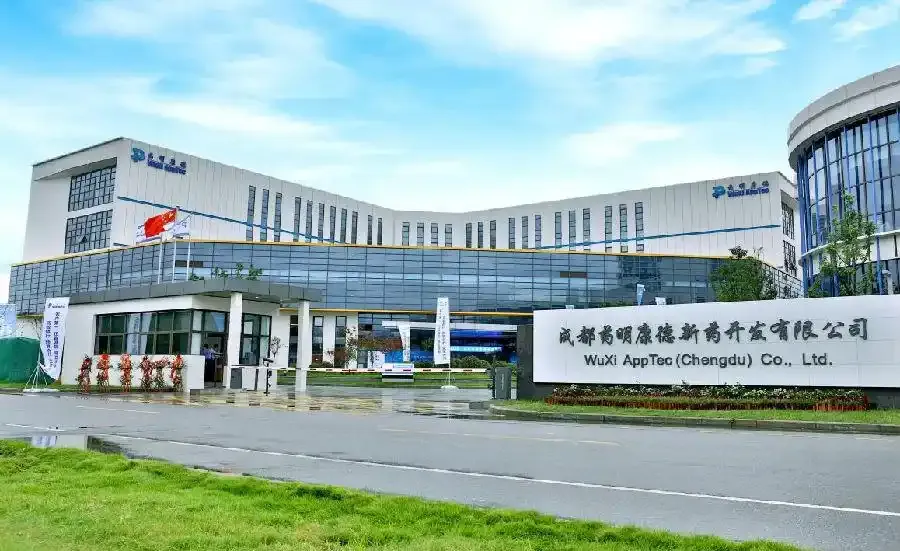
Ginlong Technologies develops and sells its inverter portfolio under the Solis brand. The Ningbo company trades on the Shenzhen Stock Exchange under code 300763.
The company’s 2025 annual report shows how broad the business has become. Ginlong reported CNY 6.952 billion in revenue, up 6.26 percent, and CNY 743 million in net profit attributable to shareholders, up 7.53 percent. Its core operations covered string inverters, distributed photovoltaic generation, and newly developed energy storage systems.
The audited product range included grid-connected residential models from 0.7 kW, commercial models from 50 to 200 kW, and ground-mounted models from 230 to 350 kW. Storage inverter categories ran from 3 kW household units to 125 kW commercial systems.
Ginlong reported a maximum inverter efficiency of 99.1 percent across its portfolio, although actual performance depends on the model and operating conditions.
The company’s market position strengthened considerably in 2025. According to Wood Mackenzie, Solis ranked No. 1 globally in residential inverter shipments.
The company also continued its recognition as a BloombergNEF Tier 1 PV Inverter Manufacturer for Q1 2025, a designation awarded to manufacturers demonstrating strong bankability and consistent product performance.
In India, the CRISIL–Bridge to India Rooftop Map (June 2025) ranked Solis as the No. 1 inverter supplier in the rooftop solar segment, accounting for 25% of total deployments
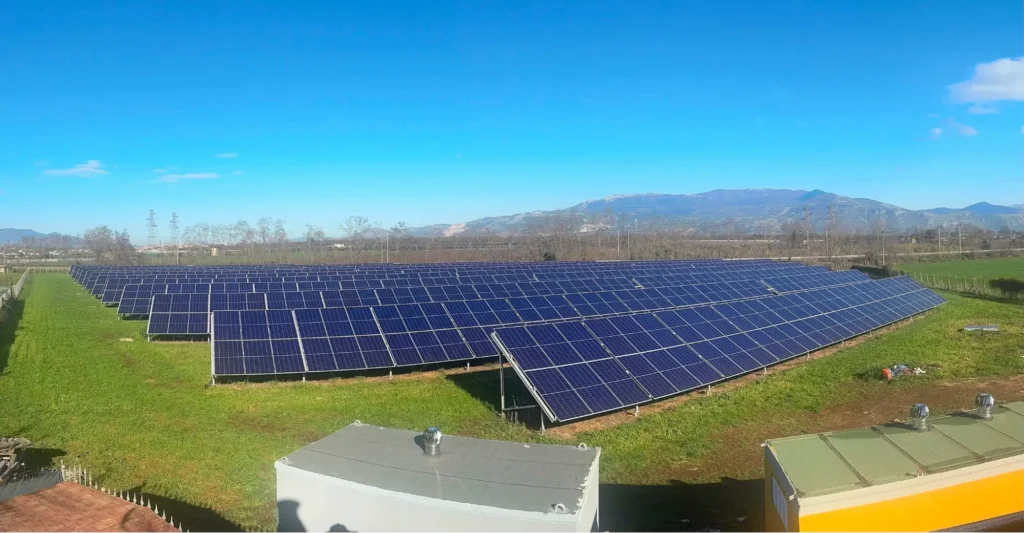
The Solis solar product architecture spans residential inverters, commercial inverters, utility-scale inverters, and hybrid inverters. Buyers should compare the correct regional model because power classes, grid approvals, connectors, battery lists, and software functions differ across countries.
| Product layer | Main role | Current strategic value |
| Residential grid-tied | Converts rooftop PV output for household use and export | Compact deployment, multiple array orientations, and consumption monitoring |
| Commercial string | Manages larger rooftops and distributed assets | Multiple MPPTs, export control, safety functions, and third-party integration |
| Utility-scale string | Serves ground-mounted projects at higher voltage and power | Modular field design, granular monitoring, and reduced single-point exposure |
| Hybrid and storage | Coordinates PV, batteries, loads, grid supply, and generators | Backup, tariff response, peak management, and flexible energy use |
The S6 series now carries much of the company’s product development. It spans residential grid-tied equipment, commercial units, utility-scale products, and Solis hybrid inverters. The older RHI hybrid inverter family remains visible in current Solis support materials, but the S6 naming now signals the newer generation across many markets.
This segmentation explains why a single Solis PV inverter verdict has limited value. A household export-only system, a factory with peak demand charges, and a solar farm face different operating requirements. Model selection must start with the electrical design, local grid code, load profile, and service arrangement.
The Solis hybrid inverter proposition now centers on energy orchestration. In September 2025, Solis launched a 9.6 to 16 kW low-voltage residential hybrid series for North America. The platform included a 200-amp pass-through, automatic bypass, a configurable smart port, generator support, and microgrid operation. Battery charge or discharge current reaches 290 amps.
These functions reduce external hardware and give installers more design choices. Still, compatibility must be confirmed at the model level. Battery voltage, communications protocol, firmware, backup loads, and local approval determine if the promised functions work as designed.
Solis also introduced 30 to 60 kW commercial hybrids in the United States during 2025. The series supports generator connections, flexible battery configurations, high-current modules, and capacity expansion. TÜV Rheinland later awarded the series a cTUVus mark following evaluation against US and Canadian requirements.
At Intersolar Europe 2025, Solis debuted its 75 to 125 kW three-phase wall-mounted hybrid series. It incorporated ten MPPTs, two independently controlled battery ports, generator coordination, and parallel operation. The official launch details show a clear attempt to compress several commercial energy functions into one power electronics platform.
SolisCloud connects inverter monitoring with plant commissioning, alarms, organization management, operating data, and remote settings. Official 2025 guidance covers account setup, plant creation, dataloggers, alarms, and organization access. Its importance grows when a Ginlong Solis inverter controls storage because software decisions affect charging, export, backup reserves, and tariff response.
Solis began rolling out Solis AI in Europe during 2025. The software forecasts generation, analyzes consumption patterns, and schedules battery behavior around dynamic prices. It runs within SolisCloud for systems on supported firmware, without added control hardware.
The commercial logic is significant. Hardware efficiency gains have become incremental, while software can influence daily energy value. Solis can now compete across device sales, system integration, monitoring, service relationships, and future energy management features.
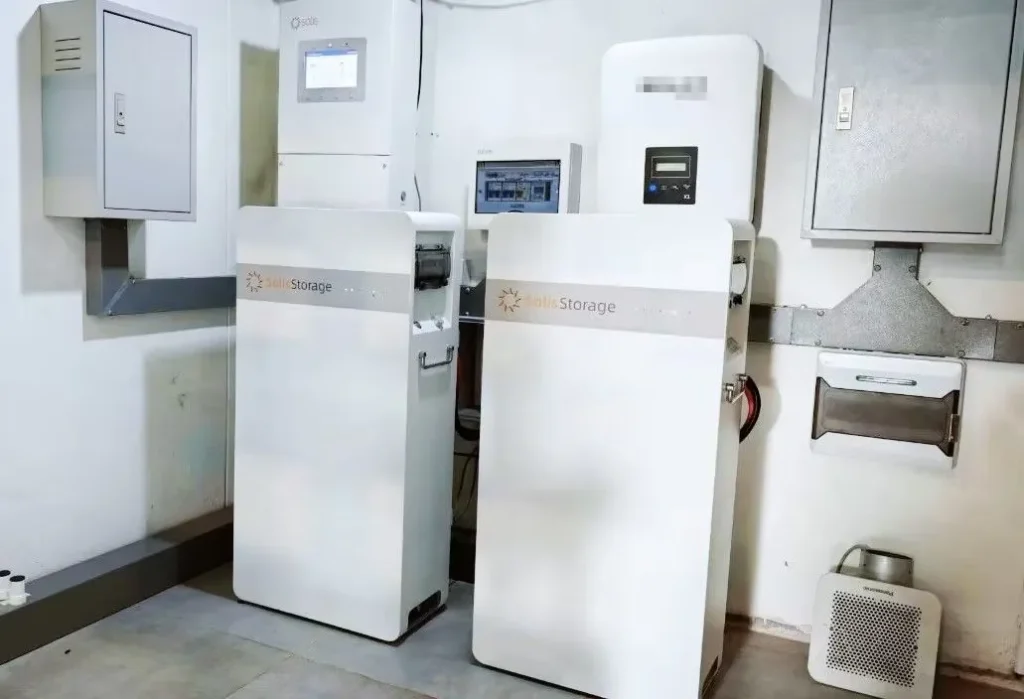
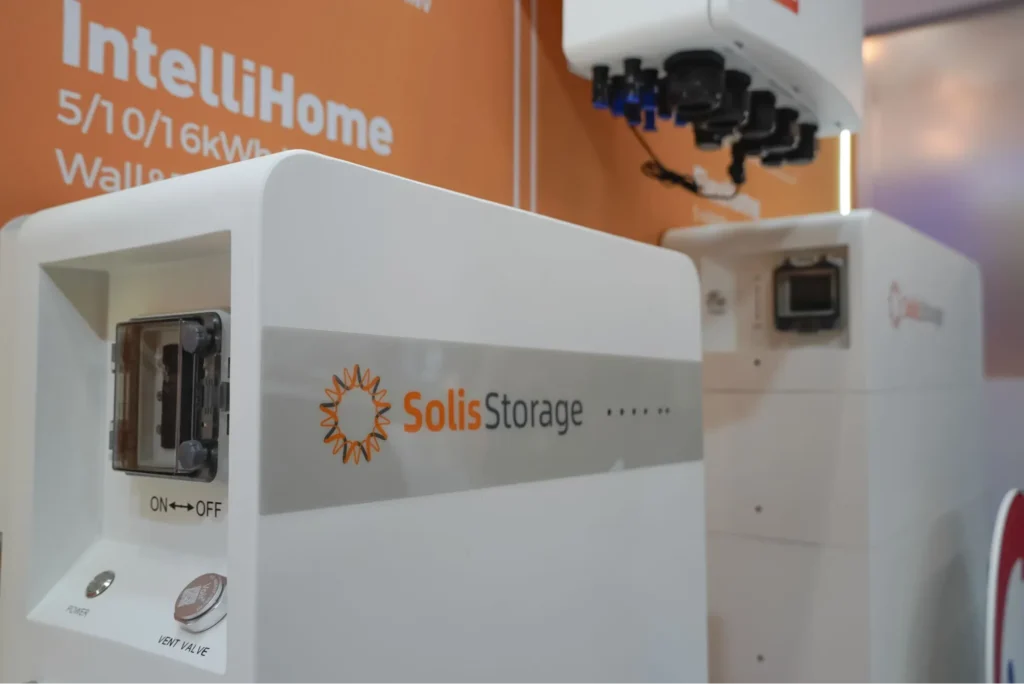
The company advanced this strategy in 2026 with integrated energy-storage systems. FlexAIO combines a high-voltage battery, inverter, and energy management in a stackable residential system.
In November 2025, Solis launched EverCore, the company’s first all-in-one commercial and industrial energy storage system. The system combines inverter, battery, and energy management system technology within a single package. EverCore debuts in two configurations: a 100/120 kWh system paired with a 50/60 kW hybrid inverter, and a 261 kWh model supported by the 125 kW hybrid inverter.
The system is IP66-rated for outdoor use, supports modular expansion up to 1.25 MW / 15.66 MWh, and switches between on- and off-grid in under 10 ms. It uses high-capacity 314 Ah LFP cells with multi-layer protection and a patented air-cooling design
Execution moved beyond exhibition launches in July 2026. Solis reported its first UK commercial battery installation at RJAH Hospital, using six 109 kWh batteries paired with six 50 kW hybrid inverters.
This development changes the competitive frame for Solis solar power. Ginlong can sell a coordinated system instead of relying solely on the inverter inside a multi-vendor design. Integration can simplify procurement and support.
It can also deepen vendor dependence, making software access, replacement terms, data portability, and battery service more important during evaluation.
A technically suitable Solis solar inverter still requires commercial and operational due diligence.
The final point has become commercially material. Reuters reported in May 2025 that US energy officials were examining undocumented communications components found in some Chinese-made solar equipment. The report did not attribute those devices to Solis. It did show why cybersecurity evidence now belongs beside efficiency, price, and warranty in connected equipment procurement.
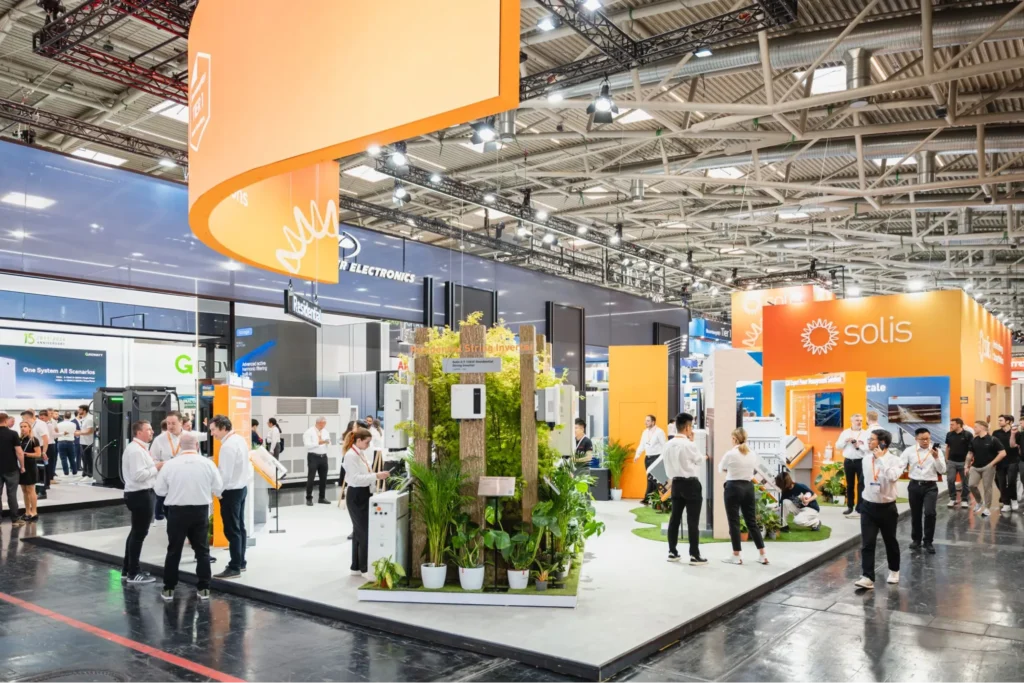
The current Solis solar inverters portfolio reflects a familiar Chinese technology scaling model. Ginlong retains manufacturing strengths, expands across use cases, localizes products for regional rules, and moves into higher-value control layers.
The 2025 financial mix makes storage the central growth signal. The 2026 integrated systems push that logic further. Ginlong’s next test will involve execution across batteries, software, certification, service, and data governance. Product breadth creates opportunity, but long-term value will depend on how consistently the company supports each regional ecosystem.
Solis Inverters show how Chinese clean energy companies are moving from component manufacturing into integrated hardware, software, and service systems. ChoZan helps global teams interpret these shifts, compare Chinese innovation models, and turn market evidence into practical strategic decisions. Explore ChoZan’s China strategy insights or book a consultation.
The inverter can continue converting power without an internet connection. However, SolisCloud monitoring, remote alerts, firmware support, and some smart energy functions need connectivity. Confirm local controls and offline operating behavior for the exact model.
Grid-tied models operate without batteries and convert solar output for immediate use or export. Hybrid models may support battery-free operation in certain configurations, but backup and storage functions will remain unavailable. Check the regional manual before commissioning.
RHI identifies an earlier Solis residential hybrid family that still receives support documentation. S6 covers newer product generations with broader power classes and functions. Compatibility, firmware, backup behavior, and approvals vary, so model codes matter more than family names.
Yes, many existing systems can add storage through an AC-coupled battery inverter or a redesigned hybrid configuration. The right path depends on the installed inverter, meter arrangement, battery protocol, grid rules, and desired backup capability.
Warranty length varies by country, product family, installation date, and purchased extensions. Buyers should download the current regional warranty document, confirm who handles labor and shipping, and record the serial number immediately after commissioning.
Compatibility depends on inverter model, battery voltage, battery management protocol, and firmware version. Solis maintains model-specific compatibility resources. Installers should confirm the exact battery code and approved firmware combination before ordering either component.
Several current S6 hybrid models include dedicated or configurable generator connections, but support differs across regions and power classes. Check generator sizing, start controls, neutral arrangement, transfer behavior, and the model’s approved wiring diagram.
SolisCloud can present plant generation, consumption, storage status, alarms, device information, and organization access. Available controls depend on device type and permissions. Owners should secure administrator access and complete the installer handover before project closeout.
Ginlong Technologies is based in Ningbo, Zhejiang, China, where its core power electronics and manufacturing capabilities originate. Product availability, certification, service teams, and warranty administration remain regional, so buyers should assess the local operating structure.
Ask for training status, relevant model experience, grid approval knowledge, battery commissioning records, monitoring handover procedures, and service response commitments. A strong installer should document settings and explain backup limits before the system enters operation.